Results by title
22279 books match the query 'Social Science' and 1104 start with p

Passionate Work
Endurance after the Good LifeRenyi Hong
Duke University Press, 2022
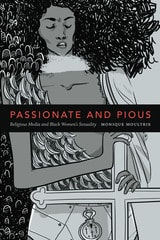
Passionate and Pious
Religious Media and Black Women's SexualityMonique Moultrie
Duke University Press, 2018
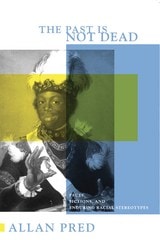
Past Is Not Dead
Facts, Fictions, and Enduring Racial StereotypesAllan Pred
University of Minnesota Press, 2004
A study of the genealogy and perpetuation of stereotyping
Through one figure—Badin, an eighteenth-century Afro-Caribbean slave given to the Swedish royal court—Allan Pred shows how stereotypes endure through the repeated confusion of facts and fiction, providing a highly original perspective on the perpetuation of racializing stereotypes in the West.
In the first of two interlocking montages inspired by Walter Benjamin, the book focuses on Badin, who died in Stockholm in 1822, and representations of his life that appeared from the 1840s through the 1990s. In the second montage, Pred brings the late nineteenth century and the present into play, shifting to urban sites where racialized stereotyping is on public display, including a museum that has exhibited the bodily remains of the African male.Intriguing for its insight into the workings of race and immigration on the national imagination of a European nation—but with implications and ramifications far beyond that specific example—The Past Is Not Dead is a bold inquiry into both the collective memory and the amnesia of those who stereotype versus the personal remembering and forgetting of the stereotyped.
Past Scents
Historical Perspectives on SmellJonathan Reinarz
University of Illinois Press, 2014
In this comprehensive and engaging volume, medical historian Jonathan Reinarz offers a historiography of smell from ancient to modern times. Synthesizing existing scholarship in the field, he shows how people have relied on their olfactory sense to understand and engage with both their immediate environments and wider corporal and spiritual worlds.
This broad survey demonstrates how each community or commodity possesses, or has been thought to possess, its own peculiar scent. Through the meanings associated with smells, osmologies develop--what cultural anthropologists have termed the systems that utilize smells to classify people and objects in ways that define their relations to each other and their relative values within a particular culture. European Christians, for instance, relied on their noses to differentiate Christians from heathens, whites from people of color, women from men, virgins from harlots, artisans from aristocracy, and pollution from perfume.
This reliance on smell was not limited to the global North. Around the world, Reinarz shows, people used scents to signify individual and group identity in a morally constructed universe where the good smelled pleasant and their opposites reeked.
With chapters including "Heavenly Scents," "Fragrant Lucre," and "Odorous Others," Reinarz's timely survey is a useful and entertaining look at the history of one of our most important but least-understood senses.
Past Titan Rock
Journeys into an Appalachian ValleyEllesa Clay High
West Virginia University Press, 2021
Past Titan Rock, a winner of the Appalachian Award for Literature, is available in a new edition as part of the series Sounding Appalachia, with an introduction by series editor Travis D. Stimeling.
In 1977 Ellesa Clay High thought she would spend an afternoon interviewing Lily May Ledford, best known as the lead performer of an all-female string band that began playing on the radio in the 1930s. That meeting began an unexpected journey leading into the mountains of eastern Kentucky and a hundred years into the past. Set in Red River Gorge, an area of steep ridges and box canyons, Past Titan Rock is a multigenre, multivocal re-creation of life in that region. With Ledford’s guidance, High traveled and lived in the gorge, visiting with people who could remember life there before the Works Progress Administration built roads across the ridges and into the valleys during the New Deal. What emerges through a unique combination of personal essay, oral history, and short fiction is a portrait of a mountain culture rich in custom, oral tradition, and song. Past Titan Rock demonstrates the depth of community ties in the Red River Gorge and raises important questions about how to resist destructive forces today.

Pasta, Pizza and Propaganda
A Political History of Italian Food TVFrancesco Buscemi
Intellect Books, 2021
In this dynamic interdisciplinary study at the intersection of food studies, media studies, and politics, Francesco Buscemi explores the central role of food in Italian culture through a political history of Italian food on national television. A highly original work of political history, the book tells the story of Italian food television from a political point of view: from the pioneering shows developed under strict Catholic control in the 1950s and 1960s to the left-wing political twists of the 1970s, the conservative riflusso or resurgence of the 1980s, through the disputed Berlusconian era, and into the contemporary rise of the celebrity chef. Through this lively and engaging work, we learn that cooking spaghetti in a TV studio is a political act, and by watching it, we become citizens.
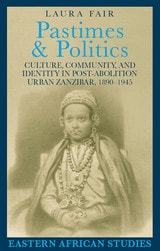
Pastimes and Politics
Culture, Community, and Identity in Post-Abolition Urban Zanzibar, 1890–1945Laura Fair
Ohio University Press, 2001
The first decades of the twentieth century were years of dramatic change in Zanzibar, a time when the social, economic, and political lives of island residents were in incredible flux, framed by the abolition of slavery, the introduction of colonialism, and a tide of urban migration. Pastimes and Politics explores the era from the perspective of the urban poor, highlighting the numerous and varied ways that recently freed slaves and other immigrants to town struggled to improve their individual and collective lives and to create a sense of community within this new environment. In this study Laura Fair explores a range of cultural and social practices that gave expression to slaves’ ideas of emancipation, as well as how such ideas and practices were gendered.
Pastimes and Politics examines the ways in which various cultural practices, including taarab music, dress, football, ethnicity, and sexuality, changed during the early twentieth century in relation to islanders’ changing social and political identities. Professor Fair argues that cultural changes were not merely reflections of social and political transformations. Rather, leisure and popular culture were critical practices through which the colonized and former slaves transformed themselves and the society in which they lived.
Methodologically innovative and clearly written, Pastimes and Politics is accessible to specialists and general readers alike. It is a book that should find wide use in courses on African history, urbanization, popular culture, gender studies, or emancipation.
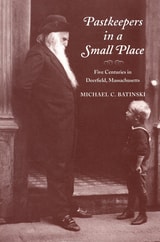
Pastkeepers in A Small Place
Five Centuries in Deerfield, MassachusettsMichael C. Batinski
University of Massachusetts Press, 2004
Like many small places in the American landscape, Batinski points out, Deerfield does not fit into the history we learn in textbooks. With the exception of the famous French and Indian raid on the town in 1704, nothing of national significance has happened there. Yet that has not diminished the interest of local inhabitants in establishing and maintaining a vital connection to the past.
Different groups, from Native Pocumtuck to Puritan settlers to the grandchildren of Polish immigrants, have told the Deerfield story in varied and sometimes conflicting ways, each drawing on the past to shape its own sense of collective identity. Together their efforts at pastkeeping reveal how people organize and explain the motion of time, why they feel it important to pass on family stories, and why they keep family heirlooms. In doing so, Batinski argues, they illustrate why the preservation of the past remains a civic concern to us all.
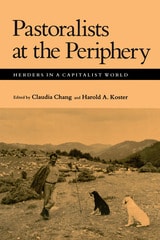
Pastoralists at the Periphery
Herders in a Capitalist WorldClaudia Chang
University of Arizona Press, 1994
The authors of this collection of essays examine the impact of capitalism on nineteenth- and early twentieth century pastoralists and discuss the historical transformations that have occurred in the lives and societies of herding peoples around the world. They argue that pastoralists were not simply passive recipients of change imposed by capitalist polities and that historical and economic factors impinging on their societies were as important as ecological ones. Collectively, these papers demonstrate that twentieth-century pastoralists and their nineteenth-century predecessors should not be seen as immutably locked in a pastoral "mode of production" but rather as actively negotiating encounters between themselves and the expanding power of capitalist states.
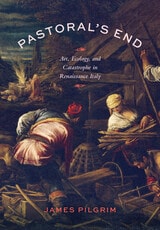
Pastoral’s End
Art, Ecology, and Catastrophe in Renaissance ItalyJames Pilgrim
University of Chicago Press, 2026
In the sixteenth century, Italian artist Jacopo Bassano painted pictures of herdsmen and animals moving through dark and muddy landscapes. But he also participated in the agricultural development of the region in which he lived, producing topographical maps of local mountains and forests, inventing new methods of drainage and irrigation, and studying the latest techniques of crop rotation and fertilization. The relationship between Bassano’s rustic art and his participation in environmental transformation has, however, never been explored.
One of the first studies of Italian Renaissance art to grapple with the connections between visual culture and the environment, Pastoral’s End explores this crucial, formative relationship. James Pilgrim looks at Bassano’s career holistically, demonstrating how his involvement in a world marked by agricultural expansion, industrialization, resource extraction, environmental degradation, social transformation, and radical philosophical development informed his paintings of country life. Introducing new archival and visual evidence of Bassano’s knowledge of hydrology, agronomy, husbandry, and architecture, Pastoral’s End argues that he transformed the more placid rustic imagery of previous Renaissance artists into visions of dangerous ecological instability.
Pastplay
Teaching and Learning History with TechnologyKevin Kee, editor
University of Michigan Press, 2014
In the field of history, the Web and other technologies have become important tools in research and teaching of the past. Yet the use of these tools is limited—many historians and history educators have resisted adopting them because they fail to see how digital tools supplement and even improve upon conventional tools (such as books). In Pastplay, a collection of essays by leading history and humanities researchers and teachers, editor Kevin Kee works to address these concerns head-on. How should we use technology? Playfully, Kee contends. Why? Because doing so helps us think about the past in new ways; through the act of creating technologies, our understanding of the past is re-imagined and developed. From the insights of numerous scholars and teachers, Pastplay argues that we should play with technology in history because doing so enables us to see the past in new ways by helping us understand how history is created; honoring the roots of research, teaching, and technology development; requiring us to model our thoughts; and then allowing us to build our own understanding.
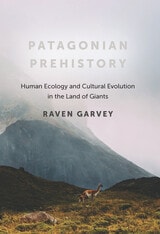
Patagonian Prehistory
Human Ecology and Cultural Evolution in the Land of GiantsRaven Garvey
University of Utah Press, 2021
Garvey’s novel hypotheses question common assumptions regarding Patagonia’s suitability for prehistoric hunter-gatherers. She makes four primary arguments: (1) the surprising lack of clothing in parts of prehistoric Patagonia supports a relatively slow initial colonization of the Americas; (2) the sparse record of human habitation during the middle Holocene may be due to prehistoric behavioral changes and archaeological sampling methods rather than population decline; (3) farming never took root in Patagonia because risks associated with farming likely outweighed potential benefits; and, finally, (4) the broad trajectory of cultural change in Patagonia owes as much to feedback between population size and technology as to conditions in the rugged Patagonian outback itself.
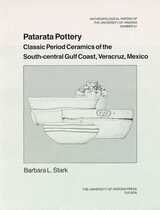
Patarata Pottery
Classic Period Ceramics of the South-Central Gulf Coast, Veracruz, MexicoBarbara L. Stark
University of Arizona Press, 1989
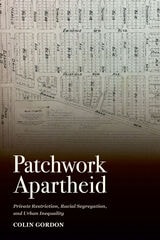
Patchwork Apartheid
Private Restriction, Racial Segregation, and Urban InequalityColin Gordon
Russell Sage Foundation, 2023
Gordon also explores the role of other policies and practices in sustaining segregation. Enforcement of private racial restrictions was held unconstitutional in 1948, and such agreements were prohibited outright in 1968. But their premises and assumptions, and the segregation they had accomplished, were accommodated by local zoning and federal housing policies. Explicit racial restrictions were replaced by the deceptive business practices of real estate agents and developers, who characterized certain neighborhoods as white and desirable and others as black and undesirable, thereby hiding segregation behind the promotion of sound property investments, safe neighborhoods, and good schools. These practices were in turn replaced by local zoning, which systematically protected white neighborhoods while targeting “blighted” black neighborhoods for commercial and industrial redevelopment, and by a tangle of federal policies that reliably deferred to local and private interests with deep investments in local segregation. Private race restriction was thus a key element in the original segregation of American cities and a source of durable inequalities in housing wealth, housing opportunity, and economic mobility.
Patchwork Apartheid exhaustively documents the history of private restriction in urban settings and demonstrates its crucial role in the ideas and assumptions that have sustained racial segregation in the United States into the twenty-first century.
Patchwork Ethnography
A Methodological GuideGökçe Günel and Chika Watanabe
University of Chicago Press, 2027
Offers an accessible new way to think critically and transparently about how researchers, especially those doing ethnographic work, can balance their personal commitments with long-term research.
For ethnographers, spending a year or longer in a faraway place conducting fieldwork is increasingly untenable amid life responsibilities, rising workloads, and constraints imposed by disability, precarity, and geopolitical factors. If ethnographic methods are to remain viable and broadly relevant for a diverse group of people in anthropology and beyond, Gökçe Günel and Chika Watanabe argue, we need to examine how our personal and professional lives intersect and shape one another.
In Patchwork Ethnography, Günel and Watanabe take seriously the conditions that render long-term fieldwork difficult for so many. Without being prescriptive, the book offers concrete ways for scholars to unpack competing commitments and make the attendant challenges more manageable. Blending theoretical analysis with practical exercises, the authors guide readers to rethink the relationship between their personal lives and their scholarship. Ultimately, they point to ways to transform limitations into catalysts for fresh insights. By highlighting how shifting labor and living conditions profoundly alter knowledge production, Patchwork Ethnography calls for a paradigm shift in ethnographic research.

Paternal Tyranny
Arcangela Tarabotti
University of Chicago Press, 2004
Paternal Tyranny, the first of these works, is a fiery but carefully argued manifesto against the oppression of women by the Venetian patriarchy. Denouncing key misogynist texts of the era, Tarabotti shows how despicable it was for Venice, a republic that prided itself on its political liberties, to deprive its women of rights accorded even to foreigners. She accuses parents of treating convents as dumping grounds for disabled, illegitimate, or otherwise unwanted daughters. Finally, through compelling feminist readings of the Bible and other religious works, Tarabotti demonstrates that women are clearly men's equals in God's eyes.
An avenging angel who dared to speak out for the rights of women nearly four centuries ago, Arcangela Tarabotti can now finally be heard.

Paternalism in the Japanese Economy
Anthropological Studies of Oyabun-Kobun PatternsJohn Bennett
University of Minnesota Press, 1963
Pathogenic Policing
Immigration Enforcement and Health in the U.S. SouthNolan Kline
Rutgers University Press, 2019
Pathos and Power
Interdisciplinary Perspectives on Widowhood in Africa, Past and PresentBenjamin N. Lawrance and Joanna Davidson
Ohio University Press, 2025
The collected essays in Pathos and Power provide a critical exploration of widowhood in Africa through a series of historical and contemporary case studies. The book challenges a simplistic understanding of widowhood by highlighting how the experience varies according to age, class, race, religion, and geographic location. The contributors investigate how the category of widowhood can obscure or reveal various social dynamics while demonstrating the diversity of material, symbolic, and embodied circumstances faced by African widows. The volume considers the forces shaping the lives of widows by examining the structural and legal challenges they encounter, including discriminatory practices in social, economic, and political spheres. Through discussions of precolonial, colonial, and postcolonial contexts, it explores the intersections of custom, law, patriarchy, and feminism while delving into the potentially liberatory opportunities that widowhood sometimes presents. The book also raises broader questions about gender, personhood, marriage, autonomy, and national identity, emphasizing how widowhood informs key conceptual debates in African studies. Editors Joanna Davidson and Benjamin N. Lawrance bring together scholars across such fields as anthropology, gender studies, history, law, and political science. The authors employ a range of methodologies, including archival research, ethnography, and storytelling, to illuminate widowhood in new and innovative ways. The volume’s rich empirical studies and theoretical insights offer a valuable resource for scholars seeking to understand widowhood and its broader implications in African societies. CONTRIBUTORS Rogaia Mustafa Abusharaf Fisayo Ajala Catherine E. Bolten Abbass Braham Mariana Candido Joanna Davidson Mariana Dias Paes Ramadan El-Khouli Casey Golomski Juelma Gomes de Matos Ngãla Benjamin N. Lawrance Kenda Mutongi Richard L. Roberts Enid Schildkrout Kate Skinner Wallace Teska Benjamin Twagira Sarah J. Zimmerman

Paths of Life
American Indians of the Southwest and Northern MexicoEdited by Thomas E. Sheridan and Nancy J. Parezo
University of Arizona Press, 1996
Paths to Power
Elite Mobility in Contemporary ChinaBy David M. Lampton with the assistance of Yeung Sai-cheung
University of Michigan Press, 2000
Pathways of Desire
The Sexual Migration of Mexican Gay MenHéctor Carrillo
University of Chicago Press, 2017
Further, Carrillo shows that sexual globalization must be regarded as a bidirectional, albeit uneven, process of exchange between countries in the global north and the global south. With this approach, Carrillo challenges the view that gay men from countries like Mexico would logically want to migrate to a “more sexually enlightened” country like the United States—a partial and limited understanding, given the dynamic character of sexuality in countries such as Mexico, which are becoming more accepting of sexual diversity. Pathways of Desire also provides a helpful analytical framework for the simultaneous consideration of structural and cultural factors in social scientific studies of sexuality. Carrillo explains the patterns of cross-cultural interaction that sexual migration generates and—at the most practical level—shows how the intricacies of cross-cultural sexual and romantic relations may affect the sexual health and HIV risk of transnational immigrant populations.
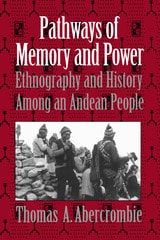
Pathways of Memory and Power
Ethnography and History among an Andean PeopleThomas A. Abercrombie
University of Wisconsin Press, 1998
Making clear the early and deep intermingling of practices and world views among Spaniards and Andeans, Christians and non-Christians, Abercrombie critiques both the romanticist tendency to regard Andean culture as still separate from and resistant to European influences, and the melodramatic view that all indigenous practices have been obliterated by colonial and national elites. He challenges prejudices that, from colonial days to the present, have seen Andean historical knowledge only in mythic narratives or narratives of personal experience. Bringing an ethnographer’s approach to historiography, he shows how complex Andean rituals that hybridize European and indigenous traditions—such as libation dedications and llama sacrifices held on saints’ day festivals—are in fact potent evidence of social memory in the community.
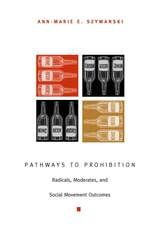
Pathways to Prohibition
Radicals, Moderates, and Social Movement OutcomesAnn-Marie E. Szymanski
Duke University Press, 2003
Combining historical research with the insights of social movement theory, Pathways to Prohibition shows how a locally based, moderate strategy allowed the early-twentieth-century prohibition crusade both to develop a potent grassroots component and to transcend the limited scope of local politics. Szymanski describes how the prohibition movement’s strategic shift toward moderate goals after 1900 reflected the devolution of state legislatures’ liquor licensing power to localities, the judiciary’s growing acceptance of these local licensing regimes, and a collective belief that local electorates, rather than state legislatures, were best situated to resolve controversial issues like the liquor question. "Local gradualism" is well suited to the porous, federal structure of the American state, Szymanski contends, and it has been effectively used by a number of social movements, including the civil rights movement and the Christian right.

Patient Citizens, Immigrant Mothers
Mexican Women, Public Prenatal Care, and the Birth Weight ParadoxGalvez, Alyshia
Rutgers University Press, 2011
According to the Latina health paradox, Mexican immigrant women have less complicated pregnancies and more favorable birth outcomes than many other groups, in spite of socioeconomic disadvantage. Alyshia Gálvez provides an ethnographic examination of this paradox. What are the ways that Mexican immigrant women care for themselves during their pregnancies? How do they decide to leave behind some of the practices they bring with them on their pathways of migration in favor of biomedical approaches to pregnancy and childbirth?
This book takes us from inside the halls of a busy metropolitan hospital’s public prenatal clinic to the Oaxaca and Puebla states in Mexico to look at the ways Mexican women manage their pregnancies. The mystery of the paradox lies perhaps not in the recipes Mexican-born women have for good perinatal health, but in the prenatal encounter in the United States. Patient Citizens, Immigrant Mothers is a migration story and a look at the ways that immigrants are received by our medical institutions and by our society
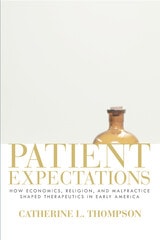
Patient Expectations
How Economics, Religion, and Malpractice Shaped Therapeutics in Early AmericaCatherine L. Thompson
University of Massachusetts Press, 2015
During the first half of the nineteenth century a major shift occurred in the medical treatment of illness in the United States, as physicians abandoned the use of “heroic” depletive therapies—the pukes and purges made famous in the 1790s by Dr. Benjamin Rush of Philadelphia—in favor of a let-nature-take-its-course approach to most diseases. Standard histories of American medicine have long attributed this shift to new theories and training methods as well as increased competition from homeopaths and botanical doctors. In this book, Catherine L. Thompson challenges that interpretation by emphasizing the role of patients as active participants in their own health care rather than passive objects of medical treatment.
Focusing on Massachusetts, then as now a center of U.S. medical education and practice, Thompson draws on data from patients' journals, medical account ledgers, physicians' daybooks, and court records to link changes in medical treatment to a gradual evolution of patient expectations across varied populations. Specifically, she identifies three developments—the increasing use of cash in medical transactions, growing religious pluralism, and the rise of malpractice suits—as key factors in transforming patients into active medical consumers unwilling to submit to doctors' advice without considering alternatives.
By showing how nineteenth-century patients shaped therapeutic practice “through the medical choices they made or didn't make,” Thompson's study alters our understanding of American medicine in the past and has implications for its present and future.
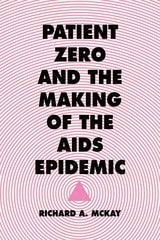
Patient Zero and the Making of the AIDS Epidemic
Richard A. McKay
University of Chicago Press, 2017
The search for a “patient zero”—popularly understood to be the first person infected in an epidemic—has been key to media coverage of major infectious disease outbreaks for more than three decades. Yet the term itself did not exist before the emergence of the HIV/AIDS epidemic in the 1980s. How did this idea so swiftly come to exert such a strong grip on the scientific, media, and popular consciousness? In Patient Zero, Richard A. McKay interprets a wealth of archival sources and interviews to demonstrate how this seemingly new concept drew upon centuries-old ideas—and fears—about contagion and social disorder.
McKay presents a carefully documented and sensitively written account of the life of Gaétan Dugas, a gay man whose skin cancer diagnosis in 1980 took on very different meanings as the HIV/AIDS epidemic developed—and who received widespread posthumous infamy when he was incorrectly identified as patient zero of the North American outbreak. McKay shows how investigators from the US Centers for Disease Control inadvertently created the term amid their early research into the emerging health crisis; how an ambitious journalist dramatically amplified the idea in his determination to reframe national debates about AIDS; and how many individuals grappled with the notion of patient zero—adopting, challenging and redirecting its powerful meanings—as they tried to make sense of and respond to the first fifteen years of an unfolding epidemic. With important insights for our interconnected age, Patient Zero untangles the complex process by which individuals and groups create meaning and allocate blame when faced with new disease threats. What McKay gives us here is myth-smashing revisionist history at its best.
Patients of the State
The Politics of Waiting in ArgentinaJavier Auyero
Duke University Press, 2012
Patina
A Profane ArchaeologyShannon Lee Dawdy
University of Chicago Press, 2016
In Patina, anthropologist Shannon Lee Dawdy examines what was lost and found through the destruction of Hurricane Katrina. Tracking the rich history and unique physicality of New Orleans, she explains how it came to adopt the nickname “the antique city.” With innovative applications of thing theory, Patina studies the influence of specific items—such as souvenirs, heirlooms, and Hurricane Katrina ruins—to explore how the city’s residents use material objects to comprehend time, history, and their connection to one another. A leading figure in archaeology of the contemporary, Dawdy draws on material evidence, archival and literary texts, and dozens of post-Katrina interviews to explore how the patina aesthetic informs a trenchant political critique. An intriguing study of the power of everyday objects, Patina demonstrates how sharing in the care of a historic landscape can unite a city’s population—despite extreme divisions of class and race—and inspire civil camaraderie based on a nostalgia that offers not a return to the past but an alternative future.

Patriarchy on the Line
Labor, Gender, and Ideology in the Mexican Maquila IndustrySusan Tiano
Temple University Press, 1994
Patriotic Professionalism in Urban China
Fostering TalentAuthored by Lisa M. Hoffman
Temple University Press, 2010
In the post-Maoist era, China adopted a strategy for investing in the “quality” of its people—through education and training opportunities—that created talented labor. In her significant ethnographic study, Patriotic Professionalism in Urban China, Lisa Hoffman explains why the development of “human capital” is seen as fundamental for economic growth and national progress. She examines these new urban employees, who were deemed vital to the success of the global city in China, and who hoped for social mobility, a satisfying career, and perhaps a family.
Patriotic Professionalism in Urban China addresses the emergence of this urban professional subject in Dalian, a port city in China. Hoffman identifies who these new professionals are, what choices they have made, and how they have remained closely connected with the nation—although not necessarily the Communist party—leading to a new social form she calls “Patriotic Professionalism.”
Hoffman contributes to the understanding of changing urban life in China while providing an analysis of the country’s “late-socialist neoliberalism.” In the process, she asks pressing questions about how such shifts in urban life reshape cities, impact individual and family decisions, and reflect economic growth in China in tandem with “global” neoliberal practices.

Patriots from the Barrio
The Story of Company E, 141st Infantry: The Only All Mexican American Army Unit in World War IIDave Gutierrez
Westholme Publishing, 2018
The Inspiring True Story of a Segregated Unit Whose Exploits Underscore the Forgotten Latino Contribution to the Allied Victory in World War II
As a child, Dave Gutierrez hung on every word his father recalled about his cousin Ramon, “El Sancudo” (the mosquito), and his service in World War II, where he earned a Silver Star, three Purple Hearts, and escaped from the Germans twice. Later, Dave decided to find out more about his father’s cousin, and in the course of his research he discovered that Ramon Gutierrez was a member of Company E, 141st Infantry, a part of the 36th “Texas” Division that was comprised entirely of Mexican Americans—the only such unit in the entire U.S. Army. The division landed at Salerno, Italy, in 1943, among first American soldiers to set foot in Europe. In the ensuing months, Company E and the rest of the 36th would battle their way up the mountainous Italian peninsula against some of Nazi Germany’s best troops. In addition to the merciless rain, mud, and jagged peaks, swift cold rivers crisscrossed the region, including the Rapido, where Company E would face its greatest challenge. In an infamous episode, the 36th Division was ordered to cross the Rapido despite reports that the opposite bank was heavily defended. In the ensuing debacle, the division was ripped apart, and Company E sustained appalling casualties. The company rebounded and made the storied landings at Anzio and ultimately invaded southern France for a final push into Germany. The men of Company E distinguished themselves as rugged fighters capable of warring amid the rubble of destroyed villages and in the devastated countryside.
Based on extensive archival research and veteran and family accounts, Patriots from the Barrio: The Story of Company E, 141st Infantry: The Only All Mexican American Army Unit in World War II brings to life the soldiers whose service should never have gone unrecognized for so long. With its memorable personalities, stories of hope and immigration, and riveting battle scenes, this beautifully written book is a testament to the shared beliefs of all who have fought for the ideals of the American flag.
Patron Gods and Patron Lords
The Semiotics of Classic Maya Community CultsJoanne Baron
University Press of Colorado, 2016
Using semiotic theory, Baron draws on three bodies of evidence: ethnographies and manuscripts from Postclassic, Colonial, and modern Maya communities that connect patron saints to pre-Columbian patron gods; hieroglyphic texts from the Classic period that discuss patron deity veneration; and excavations from four patron deity temples at the site of La Corona, Guatemala. She shows how the Classic Maya used patron deity effigies, temples, and acts of devotion to negotiate group membership, social entitlements, and obligations between individuals and communities. She also explores the wider role of these processes in politics, arguing that rituals and discourses related to patron deities ultimately formulated Maya rulership as a locally oriented institution, which limited the ability of powerful kingdoms to create wider religious communities.
Applying a new theoretical approach for the archaeological study of ideology and power dynamics, Patron Gods and Patron Lords reveals an overlooked aspect of the belief system of Maya communities.
Pattern Discrimination
Clemens Apprich
University of Minnesota Press, 2018
How do “human” prejudices reemerge in algorithmic cultures allegedly devised to be blind to them?
How do “human” prejudices reemerge in algorithmic cultures allegedly devised to be blind to them? To answer this question, this book investigates a fundamental axiom in computer science: pattern discrimination. By imposing identity on input data, in order to filter—that is, to discriminate—signals from noise, patterns become a highly political issue. Algorithmic identity politics reinstate old forms of social segregation, such as class, race, and gender, through defaults and paradigmatic assumptions about the homophilic nature of connection.
Instead of providing a more “objective” basis of decision making, machine-learning algorithms deepen bias and further inscribe inequality into media. Yet pattern discrimination is an essential part of human—and nonhuman—cognition. Bringing together media thinkers and artists from the United States and Germany, this volume asks the urgent questions: How can we discriminate without being discriminatory? How can we filter information out of data without reinserting racist, sexist, and classist beliefs? How can we queer homophilic tendencies within digital cultures?
Pattern and Loom
A Practical Study of the Development of Weaving Techniques in China, Western Asia and EuropeJohn Becker
National University of Singapore Press, 2014
Patterns in Circulation
Cloth, Gender, and Materiality in West AfricaNina Sylvanus
University of Chicago Press, 2016
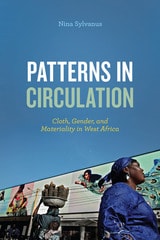
Sylvanus brings wax cloth’s unique and complex history to light: born as a nineteenth-century Dutch colonial effort to copy Javanese batik cloth for Southeast Asian markets, it was reborn as a status marker that has dominated the visual economy of West African markets. Although most wax cloth is produced in China today, it continues to be central to the expression of West African women’s identity and power. As Sylvanus shows, wax cloth expresses more than this global motion of goods, capital, aesthetics, and labor—it is a form of archive where intimate and national memories are stored, always ready to be reanimated by human touch. By uncovering this crucial aspect of West African material culture, she enriches our understanding of global trade, the mutual negotiations that drive it, and the how these create different forms of agency and subjectivity.
Patterns of Policing
A Comparative International AnalysisBayley, David
Rutgers University Press, 1990
He considers how contemporary police institutions have developed. Police forces worldwide tend to be public rather than private, to concentrate on crime fighting rather than services, and to be professionally trained and recruited. There is, however, great variation in the structure of police forces, which are generally either centralized or, as in the United States, decentralized.
The behavior of the police toward their constituents also varies by nation. As urbanization and industrialization increase, the public finds itself in greater contact with police and may begin to rely on them more for protection. There are also marked differences cross-nationally in the way police relate to political and community life.
Patterns of Soviet Thought
The Origins and Development of Dialectical and Historical MaterialismRichard T. De George
University of Michigan Press, 1966

Patterns of Time in Hospital Life
A Sociological PerspectiveEviatar Zerubavel
University of Chicago Press, 1979
Patterns of Time will be valued for its several distinctive achievements. Foremost among these is a demonstration of the importance of "temporality" as a topic in its own right. Because measurements of time are a commonplace of social life, sociologists have tended to ignore the significance of temporality as a feature of social organizations. Zerubavel's work is a corrective to this neglect. In addition, the author's imaginative integration of ethnographic description and theoretical analysis bridges the gap between contrasting methods that has characterized much recent sociological and anthropological work. Finally, because of the author's selection of the hospital setting, sociologists of medicine and the professions will find his study useful for its rich and well-observed ethnography, as well as its novel analytical approach.
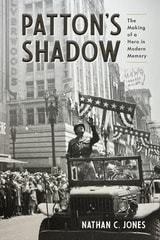
Patton's Shadow
The Making of a Hero in Modern MemoryNathan C. Jones
University of Alabama Press, 2024
An engrossing account of the myth and legend of George S. Patton and what his reputation illuminates about American culture and hero worship
Patton’s Shadow by Nathan C. Jones, a leading authority on George S. Patton, offers a definitive account of the creation of the Patton legend and what it illuminates about American culture and the worship of heroes. Jones traces how the persona of Patton, a brash and brilliant general in the European theater of World War II, transcended the individual man and became a cultural icon and byword for triumphal American might.
Patton was a hero lionized and celebrated in his own time. Patton as well as the US Army cultivated his persona during and after the war. His image was used to promote patriotism, commercial goods, and military recruitment. The 1970 Academy Award–winning film starring George C. Scott cemented his iconic image for millions of Americans, further embellishing Patton’s persona and introducing him to entirely new generations of young Americans.
Patton’s Shadow is an intellectually omnivorous tour de force that draws on ideas about heroes from sources as timeless as ancient mythology and as contemporary as Abraham Maslow, Max Weber, and Carl Jung. Jones artfully locates the honored altar that heroes occupy in the human heart and then answers insightful questions about what America’s embrace of Patton in particular as a military hero illuminates about the United States, about Patton’s generation, and about our own.
Jones’s engrossing work will fascinate readers interested in American history, military history, and the psychology of heroism.
Paul Robeson and the Cold War Performance Complex
Race, Madness, ActivismTony Perucci
University of Michigan Press, 2012
Actor and singer Paul Robeson's performances in Othello, Show Boat, and The Emperor Jones made him famous, but his midcentury appearances in support of causes ranging from labor and civil rights to antilynching and American warmongering made him notorious. When Robeson announced at the 1949 Paris Peace Conference that it was "unthinkable" for blacks to go to war against the Soviet Union, the mainstream American press declared him insane.
Notions of Communism, blackness, and insanity were interchangeably deployed during the Cold War to discount activism such as Robeson's, just a part of an array of social and cultural practices that author Tony Perucci calls the Cold War performance complex. Focusing on two key Robeson performances---the concerts in Peekskill, New York, in 1949 and his appearance before the House Committee on Un-American Activities in 1956---Perucci demonstrates how these performances and the government's response to them are central to understanding the history of Cold War culture in the United States. His book provides a transformative new perspective on how the struggle over the politics of performance in the 1950s was also a domestic struggle over freedom and equality. The book closely examines both of these performance events as well as artifacts from Cold War culture---including congressional documents, FBI files, foreign policy papers, the popular literature on mental illness, and government propaganda films---to study the operation of power and activism in American Cold War culture.
Paul Robeson
The Artist as RevolutionaryGerald Horne
Pluto Press, 2015
“A fine, taut analysis of the great African American athlete, singer, actor, and political activist.”
—Choice, Highly Recommended
Paul Robeson should be remembered today as the forerunner of Malcolm X, Dr. Martin Luther King, Jr. and Muhammad Ali. He sacrificed his fame and fortune a performer and athlete in order to fight for the rights of African Americans during the time of Jim Crow and U.S. Apartheid.
A world-famous singer and actor, a trained lawyer, an early star of American professional football and a polyglot who spoke over a dozen languages: these could be the crowning achievements of a life well-lived. Yet for Paul Robeson the higher calling of social justice led him to abandon both the NFL and Hollywood and become one of the most important political activists of his generation, a crusader for freedom and equality who battled both Jim Crow and US Senator Joseph McCarthy during the communist witch hunt of the 1950s.
In Paul Robeson: The Artist as Revolutionary, Gerald Horne discovers within Robeson's remarkable and revolutionary life the story of the twentieth century's great political struggles: against racism, against colonialism, against poverty—and for international socialism. Chapters include:
*”The Best Known American in the World"
*Rising Revolutionary
*From Moscow to Madrid
*"Black Stalin"?
*Robeson: Primary Victim of the "Blacklist"
*Triumph—and Tragedy
*Death of a Revolutionary
In the Introduction, Horne writes: “Paul Robeson—activist, artist, athlete—experienced a dramatic rise and fall, perhaps unparalleled in U.S. history. From mingling with the elite of London society and Hollywood in the 1930s, by the time he died in 1976, he was a virtual recluse in a plain abode in a working-class neighborhood of Philadelphia. What helps to explicate this tragic art of his life is a fateful decision he made when fascism was rising: he threw in his lot with those battling for socialism and decide to sacrifice his thriving artistic career on behalf of the struggle against Jim Crow—or U.S. apartheid.”
This critical and searching biography provides an opportunity for readers to comprehend the triumphs and tragedies of the revolutionary progressive movement of which Paul Robeson was not just a part, but perhaps its most resonant symbol.
Paying the Price
Ignacio Ellacuría and the Murdered Jesuits of El SalvadorTeresa Whitfield
Temple University Press, 1994
On November 16, 1989, on the campus of El Salvador's University of Central America, six Jesuits and two women were murdered by members of the Salvadoran army, an army funded and trained by the United States. One of the murdered Jesuits was Ignacio Ellacuría, the university's Rector and a key, although controversial, figure in Salvadoran public life. From an opening account of this terrible crime, Paying the Price asks, Why were they killed and what have their deaths meant? Answers come through Teresa Whitfield's detailed examination of Ellacuría's life and work. His story is told in juxtaposition with the crucial role played by the unraveling investigation of the Jesuits' murders within El Salvador's peace process.
A complex and nuanced book, Paying the Price offers a history of the Church in El Salvador in recent decades, an analysis of Ellacuría's philosophy and theology, an introduction to liberation theology, and an account of the critical importance of the University of Central America. In the end, Whitfield's comprehensive picture of conditions in El Salvador suggest that the Jesuits' murders were almost inevitable. A crime that proved a turning point in El Salvador's civil war, the murders expressed the deep tragedy of the Salvadoran people beyond suffering the heartless cruelty, violence, and deceitfulness of a corrupt military and their patrons in the U.S. government.
Whitfield draws on her extensive research of Jesuit archives and private papers, Ellacuría's diaries, documents declassified by the U.S. government, and 200 interviews conducted with sources ranging from Jesuits to Salvadoran military officers, U.S. officials and congressmen to human rights campaigners.
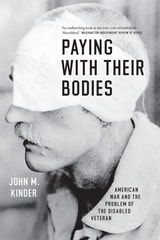
Paying with Their Bodies
American War and the Problem of the Disabled VeteranJohn M. Kinder
University of Chicago Press, 2015
America has grappled with the questions posed by injured veterans since its founding, and with particular force since the early twentieth century: What are the nation’s obligations to those who fight in its name? And when does war’s legacy of disability outweigh the nation’s interests at home and abroad? In Paying with Their Bodies, John M. Kinder traces the complicated, intertwined histories of war and disability in modern America. Focusing in particular on the decades surrounding World War I, he argues that disabled veterans have long been at the center of two competing visions of American war: one that highlights the relative safety of US military intervention overseas; the other indelibly associating American war with injury, mutilation, and suffering. Kinder brings disabled veterans to the center of the American war story and shows that when we do so, the history of American war over the last century begins to look very different. War can no longer be seen as a discrete experience, easily left behind; rather, its human legacies are felt for decades.
The first book to examine the history of American warfare through the lens of its troubled legacy of injury and disability, Paying with Their Bodies will force us to think anew about war and its painful costs.
Peace and Mind
Part 3: Seriatim Symposium on Dispute, Conflict, and Enmity, Volume 8Jeffrey M. Perl, ed.
Duke University Press, 0
One contributor, a longtime president of the American Council of Learned Societies, calls for "intellectual philanthropy" and suggests that academics should transcend their ideological differences and form cooperative partnerships in the public service. A pair of essays, by key figures of the 1989 Velvet Revolution in Eastern Europe, analyze the ways that self-confidence and self-regard undercut efforts toward the resolution of complex social problems. The qualities of ideological self-subversion and even weakness, Common Knowledge maintains, are essential if the intellectual community is to become an agent for peace in a time of war.
Contributors. Wayne Andersen, Sissela Bok, Yves Bonnefoy, Caroline Walker Bynum, Clare Cavanagh, Charles-Albert Cingria, Caryl Emerson, Clifford Geertz, Stanley N. Katz, Aileen Kelly, Adam Michnik, Péter Nádas, Eugene Ostashevsky, Jeffrey M. Perl, Marjorie Perloff, Nina Pelikan Straus, Rei Terada, Gianni Vattimo, William Vesterman, Aleksandr Vvedensky, Adam Zagajewski.
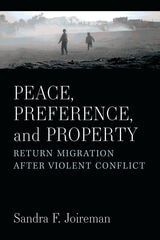
Peace, Preference, and Property
Return Migration after Violent ConflictSandra F. Joireman
University of Michigan Press, 2022
Growing numbers of people are displaced by war and violent conflict. In Ukraine, Afghanistan, Ethiopia, Myanmar, Syria, and elsewhere violence pushes civilian populations from their homes and sometimes from their countries, making them refugees. In previous decades, millions of refugees and displaced people returned to their place of origin after conflict or were resettled in countries in the Global North. Now displacements last longer, the number of people returning home is lower, and opportunities for resettlement are shrinking. More and more people spend decades in refugee camps or displaced within their own countries, raising their children away from their home communities and cultures. In this context, international policies encourage return to place of origin.
Using case studies and first-person accounts from interviews and fieldwork in post-conflict settings such as Uganda, Liberia, and Kosovo, Sandra F. Joireman highlights the divergence between these policies and the preferences of conflict-displaced people. Rather than looking from the top down, at the rights that people have in international and domestic law, the perspective of this text is from the ground up—examining individual and household choices after conflict. Some refugees want to go home, some do not want to return, some want to return to their countries of origin but live in a different place, and others are repatriated against their will when they have no other options. Peace, Preference, and Property suggests alternative policies that would provide greater choice for displaced people in terms of property restitution and solutions to displacement.

Peace
An Idea Whose Time Has ComeAnatol Rapoport
University of Michigan Press, 1992

Peacemakers
Violence and Desire in Native American Myth and FictionScott Richard Lyons
Michigan State University Press, 2027
Employing the mimetic theory of René Girard as its heuristic, Peacemakers offers a unique analysis of Native American myth and fiction. It explores two important founding myths (Lac du Flambeau Ojibwe and Acoma Pueblo) and analyzes four modern novels: three from the Native American Renaissance of the 1960s and 1970s (N. Scott Momaday’s House Made of Dawn, James Welch’s Winter in the Blood, Leslie Marmon Silko’s Ceremony) and the fourth from the twenty-first century (Sherman Alexie’s Flight). While Native American literary criticism typically points to continuities across the traditional-modern divide, Scott Richard Lyons emphasizes a decisive break happening in the progressive era. Following Girard’s theory, Lyons finds that the Indigenous worlds of sacred tradition and secular modernity confront situations of mimetic desire and violence in significantly different ways, given their different cultural resources. Ultimately problems of violence and desire come down to questions of how people can live together peacefully with a sense of meaning and transcendence, questions that are more “religious” than “political.” Thus, the outlook of Peacemakers is more Shakespearian than Marxian.
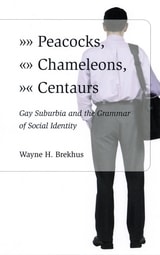
Peacocks, Chameleons, Centaurs
Gay Suburbia and the Grammar of Social IdentityWayne Brekhus
University of Chicago Press, 2003
In this first-ever ethnography of American gay suburbanites, Wayne H. Brekhus demonstrates that who one is depends at least in part on where and when one is. For many urban gay men, being homosexual is key to their identity because they live, work, and socialize in almost exclusively gay circles. Brekhus calls such men "lifestylers" or peacocks. Chameleons or "commuters," on the other hand, live and work in conventional suburban settings, but lead intense gay social and sexual lives outside the suburbs. Centaurs, meanwhile, or "integrators," mix typical suburban jobs and homes with low-key gay social and sexual activities. In other words, lifestylers see homosexuality as something you are, commuters as something you do, and integrators as part of yourself.
Ultimately, Brekhus shows that lifestyling, commuting, and integrating embody competing identity strategies that occur not only among gay men but across a broad range of social categories. What results, then, is an innovative work that will interest sociologists, psychologists, anthropologists, and students of gay culture.

Peak Oil
Apocalyptic Environmentalism and Libertarian Political CultureMatthew Schneider-Mayerson
University of Chicago Press, 2015
In Peak Oil, Matthew Schneider-Mayerson takes readers deep inside the world of “peakists,” showing how their hopes and fears about the postcarbon future led them to prepare for the social breakdown they foresee—all of which are fervently discussed and debated via websites, online forums, videos, and novels. By exploring the worldview of peakists, and the unexpected way that the fear of peak oil and climate change transformed many members of this left-leaning group into survivalists, Schneider-Mayerson builds a larger analysis of the rise of libertarianism, the role of oil in modern life, the political impact of digital technologies, the racial and gender dynamics of post-apocalyptic fantasies, and the social organization of environmental denial.