Results by title
3258 books match the query 'Art' and 209 start with p
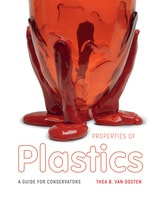
Properties of Plastics
A Guide for ConservatorsThea B. van Oosten
J. Paul Getty Trust, The, 2022
Almost every museum in the world is confronted with plastics in their collections. Research initiatives and knowledge concerning the conservation of heritage objects made of plastics have proliferated over the last twenty-five years, necessitating this up-to-date, comprehensive resource. Intended as a highly practical guide for the conservation community, this authoritative book offers information essential to understanding plastics, polymers, and rubber/elastomers and their behaviors in the cultural heritage context. Numerous graphs, diagrams, and illustrations allow readers to compare the mechanical, physical, thermal, and optical properties of these substances during conservation. Aimed at the hands-on museum practitioner, this book will assist professionals in choosing the appropriate methods and materials for preserving and treating plastic objects.
Complementing the main chapters, fifty-six illustrated “fact sheets” summarize, at a glance, the properties of those plastics most commonly found in museum collections. Six informative case studies present real-world examples of current conservation approaches to works of art and design made of plastics and rubber/elastomers. Under the expert authorship of Thea B. van Oosten, conservation scientist, educator, and internationally regarded authority on the behavior and properties of plastics, this instructive volume is destined to become an invaluable resource for the field.
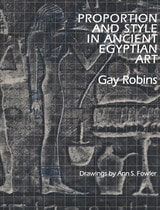
Proportion and Style in Ancient Egyptian Art
By Gay Robins
University of Texas Press, 1993
The painted and relief-cut walls of ancient Egyptian tombs and temples record an amazing continuity of customs and beliefs over nearly 3,000 years. Even the artistic style of the scenes seems unchanging, but this appearance is deceptive. In this work, Gay Robins offers convincing evidence, based on a study of Egyptian usage of grid systems and proportions, that innovation and stylistic variation played a significant role in ancient Egyptian art.
Robins thoroughly explores the squared grid systems used by the ancient artists to proportion standing, sitting, and kneeling human figures. This investigation yields the first chronological account of proportional variations in male and female figures from the Early Dynastic to the Ptolemaic periods. Robins discusses in detail the proportional changes underlying the revolutionary style instituted during the Amarna Period. She also considers how the grid system influenced the composition of scenes as a whole. Numerous line drawings with superimposed grids illustrate the text.
Provenance Research for Mediterranean Antiquities
Methods and ResourcesJudith Barr
J. Paul Getty Trust, The, 2026
The first of its kind, this book is an accessible, comprehensive primer of methods and resources for researching the provenance of Mediterranean (Greek, Roman, and Etruscan) antiquities. In addition to outlining effective strategies for documentation and investigation, the volume features an annotated guide to key archives, databases, and twentieth-century dealers to facilitate a broad spectrum of research endeavors. Building upon a decade-long review of the Getty Museum’s antiquities collection, it draws together instructive case studies, legal perspectives, and practical experience to provide an efficient reference for museum professionals, scholars, collectors, and students. The authors aim to emphasize the need for diligent provenance research and to shorten the learning curve for such projects.
The free online edition of this open-access publication is available at getty.edu/publications/provenance-research and includes zoomable illustrations. Also available are free PDF and EPUB downloads of the book.

Provoking the Field
International Perspectives on Visual Arts PhDs in EducationEdited by Rita Irwin and Anita Sinner
Intellect Books, 2019
This book brings together a global range of authors to examine visual arts PhDs using diverse theoretical perspectives; innovative arts and hybrid methodologies; institutional relationships and scholarly practices; and voices from the field in the form of site-specific cases. A compendium of leading voices in arts education, Provoking the Field provides a diverse range of perspectives on arts enquiry, and a comprehensive study of the state of visual arts PhDs in education.

Public Lettering
Script, Power, and CultureArmando Petrucci
University of Chicago Press, 1993
buildings, commercial graphics, signs, epitaphs on tombstones,
graffiti—is a fixture of urban life. In Public
Lettering, Armando Petrucci reconstructs the history of
public writing in the West and traces its social functions
from the eleventh century through the modern period.
Taking the city of Rome as a case study, Petrucci begins
with a consideration of the first civic inscriptions after
ancient times. Substantial chapters on the uses of public
writing in the industrial revolution and the early twentieth
century prepare the way for his provocative discussions of
public lettering in the the contexts of fascism, post-war
radicalism, and the student revolutions of 1968 and 1977.
Throughout, Petrucci is concerned with the relations
between the functions and styles of letters and the places
where they appear. Writing, he argues, is one of the
instruments of public power; display lettering is often the
image and mirror of power itself, making the social use of
written forms a type of conquest. Because of Rome's role as
a “World-City,” Petrucci's interdisciplinary study has
wide-ranging implications for our understanding of the social
function of graphic design.
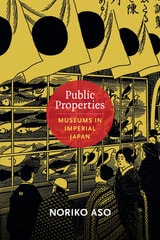
Public Properties
Museums in Imperial JapanNoriko Aso
Duke University Press, 2013
Punctuation
Art, Politics, and PlayJennifer DeVere Brody
Duke University Press, 2008
Brody provides a playful, erudite meditation on punctuation’s power to direct discourse and, consequently, to shape human subjectivity. Her analysis ranges from a consideration of typography as a mode for representing black subjectivity in Ralph Ellison’s Invisible Man to a reflection on hyphenation and identity politics in light of Strunk and White’s prediction that the hyphen would disappear from written English. Ultimately, Brody takes punctuation off the “stage of the page” to examine visual and performance artists’ experimentation with non-grammatical punctuation. She looks at different ways that punctuation performs as gesture in dances choreographed by Bill T. Jones, in the hybrid sculpture of Richard Artschwager, in the multimedia works of the Japanese artist Yayoi Kusama, and in Miranda July’s film Me and You and Everyone We Know. Brody concludes with a reflection on the future of punctuation in the digital era.
Puppet
An Essay on Uncanny LifeKenneth Gross
University of Chicago Press, 2011
The puppet creates delight and fear. It may evoke the innocent play of childhood, or become a tool of ritual magic, able to negotiate with ghosts and gods. Puppets can be creepy things, secretive, inanimate while also full of spirit, alive with gesture and voice. In this eloquent book, Kenneth Gross contemplates the fascination of these unsettling objects—objects that are also actors and images of life.
The poetry of the puppet is central here, whether in its blunt grotesquery or symbolic simplicity, and always in its talent for metamorphosis. On a meditative journey to seek the idiosyncratic shapes of puppets on stage, Gross looks at the anarchic Punch and Judy show, the sacred shadow theater of Bali, and experimental theaters in Europe and the United States, where puppets enact everything from Baroque opera and Shakespearean tragedy to Beckettian farce. Throughout, he interweaves accounts of the myriad faces of the puppet in literature—Collodi’s cruel, wooden Pinocchio, puppetlike characters in Kafka and Dickens, Rilke’s puppet-angels, the dark puppeteering of Philip Roth’s Micky Sabbath—as well as in the work of artists Joseph Cornell and Paul Klee. The puppet emerges here as a hungry creature, seducer and destroyer, demon and clown. It is a test of our experience of things, of the human and inhuman. A book about reseeing what we know, or what we think we know, Puppet evokes the startling power of puppets as mirrors of the uncanny in life and art.
Purity Is a Myth
The Materiality of Concrete Art from Argentina, Brazil, and UruguayZanna Gilbert
J. Paul Getty Trust, The, 2021
Purity Is a Myth presents new scholarship on Concrete art in Argentina, Brazil, and Uruguay from the 1940s to the 1960s. Originally coined by the Dutch artist Theo van Doesburg in 1930, the term concrete denotes abstract painting with no reference to external reality. Van Doesburg argued that there was nothing more real than a line, color, or plane. Artists such as Willys de Castro, Lygia Clark, Waldemar Cordeiro, Hermelindo Fiaminghi, Judith Lauand, Raúl Lozza, Tomás Maldonado, Hélio Oiticica, and Rhod Rothfuss would reinvent this concept in postwar Latin America.
Drawing on research conducted by Getty and international partners, the essays in this volume address a variety of topics, including the general history, emergence, and reception of Concrete art; processes and color; scientific analysis of works; illustrated chronologies of the paint industry in Brazil and Argentina; and Concrete design on paper. An innovative technical study of the Concrete art movement in Latin America, this volume will be indispensable to scholars, practitioners, and students of Latin American art.