Results by title
8642 books match the query '20th century' and 449 start with p
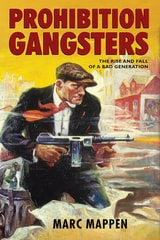
Prohibition Gangsters
The Rise and Fall of a Bad GenerationMappen, Marc
Rutgers University Press, 2013
On January 16, 1920, the Eighteenth Amendment to the Constitution went into effect in the United States, “outlawing the manufacture, sale, or transportation of intoxicating liquors.” A group of young criminals from immigrant backgrounds in cities around the nation stepped forward to disobey the law of the land in order to provide alcohol to thirsty Americans.
Today the names of these young men—Al Capone, Lucky Luciano, Dutch Schultz, Legs Diamond, Nucky Johnson—are more familiar than ever, thanks in part to such cable programs as Boardwalk Empire. Here, Mappen strips way the many myths and legends from television and movies to describe the lives these gangsters lived and the battles they fought. Placing their criminal activities within the context of the issues facing the nation, from the Great Depression, government crackdowns, and politics to sexual morality, immigration, and ethnicity, he also recounts what befell this villainous group as the decades unwound.
Making use of FBI and other government files, trial transcripts, and the latest scholarship, the book provides a lively narrative of shootouts, car chases, courtroom clashes, wire tapping, and rub-outs in the roaring 1920s, the Depression of the 1930s, and beyond. Mappen asserts that Prohibition changed organized crime in America. Although their activities were mercenary and violent, and they often sought to kill one another, the Prohibition generation built partnerships, assigned territories, and negotiated treaties, however short lived. They were able to transform the loosely associated gangs of the pre-Prohibition era into sophisticated, complex syndicates. In doing so, they inspired an enduring icon—the gangster—in American popular culture and demonstrated the nation’s ideals of innovation and initiative.
View a three minute video of Marc Mappen speaking about Prohibition Gangsters.

Prohibition, the Constitution, and States' Rights
Sean Beienburg
University of Chicago Press, 2019
Sean Beienburg recovers a largely forgotten constitutional debate, revealing how Prohibition became a battlefield on which skirmishes of American political development, including the debate over federalism and states’ rights, were fought. Beienburg focuses on the massive extension of federal authority involved in Prohibition and the passage of the Eighteenth Amendment, describing the roles and reactions of not just Congress, the presidents, and the Supreme Court but political actors throughout the states, who jockeyed with one another to claim fidelity to the Tenth Amendment while reviling nationalism and nullification alike. The most comprehensive treatment of the constitutional debate over Prohibition to date, the book concludes with a discussion of the parallels and differences between Prohibition in the 1920s and debates about the legalization of marijuana today.
Projections of Power
The United States and Europe in Colonial Southeast Asia, 1919-1941Anne L. Foster
Duke University Press, 2010
Prolegomena to Any Future Materialism
The Outcome of Contemporary French PhilosophyAdrian Johnston
Northwestern University Press, 2013
Adrian Johnston’s Prolegomena to Any Future Materialism, planned for three volumes, will lay the foundations for a new materialist theoretical apparatus, his “transcendental materialism.” In this first volume, Johnston clears an opening within contemporary philosophy and theory for his unique position. He engages closely with Lacan, Badiou, and Meillassoux, demonstrating how each of these philosophers can be seen as failing to forge an authentically atheistic materialism. Johnston builds a new materialism both profoundly influenced by these brilliant comrades of a shared cause as well as making up for the shortcomings of their own creative attempts to bring to realization the Lacanian vision of an Other-less, One-less ontology. The Outcome of Contemporary French Philosophy yields intellectual weapons suitable for deployment on multiple fronts simultaneously, effective against the mutually entangled spiritualist and scientistic foes of our post-Enlightenment, biopolitical era of nothing more than commodities and currencies.
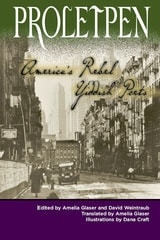
Proletpen
America’s Rebel Yiddish PoetsEdited by Amelia Glaser and David Weintraub
University of Wisconsin Press, 2005
This anthology presents a rich but little-known body of American Yiddish poetry from the 1920s to the early 1950s by thirty-nine poets who wrote from the perspective of the proletarian left. Presented on facing pages in Yiddish and English translation, these one hundred poems are organized thematically under such headings as Songs of the Shop, United in Struggle, Matters of the Heart, The Poet on Poetry, and Wars to End All Wars. One section is devoted to verse depicting the struggles of African Americans, including several poems prompted by the infamous Scottsboro trial of nine African American men falsely accused of rape. Home to many of the writers, New York City is the subject of a varied array of poems. The volume includes an extensive introduction by Dovid Katz, a biographical note about each poet, a bibliography, and a timeline of political, social, and literary events that provide context for the poetry.
Winner of the Fenia and Yaakov Leviant Memorial Prize in Yiddish Studies for Outstanding Translation
A Choice Outstanding Academic Title
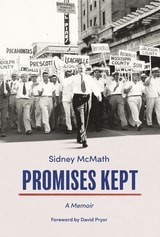
Promises Kept
A MemoirSidney S. McMath
University of Arkansas Press, 2003
Winner of the 2006 Booker Worthen Literary Prize and the 2004 Ragsdale Award
A dominating spirit of public service animated the life of Sidney Sanders McMath (1912–2003), the thirty-fourth governor of Arkansas. Promises Kept, completed and published when McMath was in his nineties, tells his story in his own words—from the piney hills of South Arkansas to the battlefields of World War II; through the human dramas of the courtroom to the marbled corridors of the State Capitol.
In Promises Kept, McMath recounts a rural upbringing that grounded him in the concerns of everyday Arkansans. He tells his life story through key milestones, including distinguished military service and a dramatic political rise to governor of Arkansas. During his four years in office, he pursued reform and modernization by expanding roads and electricity to rural areas, fighting the poll tax, building the state’s first medical center, opening Democratic primaries to Black voters, and standing with President Harry Truman in resisting the segregationist Dixiecrats. McMath’s political career ended amid unproven allegations tied to the highway program—charges he addresses directly here—and concludes with his return to the law, where landmark cases earned him honors.
Throughout, McMath reveals the excitement and the hard choices of real democracy, offering compelling human stories and a crucial perspective of a pivotal time in Arkansas history.
Promises and Predicaments
Trade and Entrepreneurship in Colonial and Independent Indonesia in the 19th and 20th CenturiesEdited by Alicia Schrikker and Jeroen Touwen
National University of Singapore Press, 2015
The authors deal with entrepreneurship and economic specialization within different ethnic groups, the geographical distribution of exports and resource drains from exporting regions, and connections between an export economy and mass poverty. One recurring issue is the way actors from different ethnic groups occupied complementary niches, highlighting the rich variety of roles played by Asian entrepreneurs. A study of the international sugar trade shows how regime change fostered co-operation between different ethnic groups and nationalities involved with trading networks, inter-island shipping, urban public transport, and the construction sector. A comparison of export earnings and population groups involved in trade before and after 1900 shows that unexpected agricultural and industrial transitions could underpin a fundamental shift in income growth, with improved living standards for broad sectors of the population.
Promises of 1968
Crisis, Illusion and UtopiaVladimir Tismaneanu
Central European University Press, 2011

Proofs of Genius
Collected Editions from the American Revolution to the Digital AgeAmanda Gailey
University of Michigan Press, 2015
Propaganda and Aesthetics
The Literary Politics of Afro-American Magazines in the Twentieth CenturyAbby Arthur Johnson
University of Massachusetts Press, 1979
Little work has been done on individual Afro-American periodicals and nothing, up to this point, has been published on twentieth-century black journals as a group. Studies of magazines in general are relatively rare, with only The Little Magazine, by Frederick Hoffman, Charles Allen, and Carolyn P. Ulrich, attempting a survey of small journals in this century. This book fills a considerable gap in literary history by detailing the development of Afro-American magazines in this century.
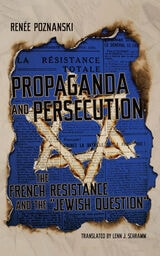
Propaganda and Persecution
Renée Poznanski
University of Wisconsin Press, 2024
Poznanski argues that Jews in France suffered a double persecution: one led by the Vichy government, the other imposed by the Nazis. Marginalization and exclusion soon led to internment and deportation to terrifying places. Meanwhile, a propaganda war developed between the Resistance and the official voice of Vichy. Poznanski draws on a breathtaking array of sources, especially clandestine publications and French-language BBC transmissions, to show how the Resistance both fought and accommodated the deeply entrenched antisemitism within French society. Her close readings of propaganda texts against public opinions probe ambiguities and silences in Resistance writing about the persecution of the Jews and, in parallel, the numerous and detailed denunciations that could be read in the Jewish clandestine press. This extensive synthesis extends to the post-Liberation period, during which the ongoing persecution of Jews in Europe and North Africa would be portrayed as secondary to the suffering of the nation.
The winner of the 2009 Henri Hertz Prize by the Chancellerie des Universités de Paris, Sorbonne, Propaganda and Persecution makes major contributions to the study of the Resistance and of antisemitism. Lenn J. Schramm’s English translation brings Poznanski’s dynamic prose to life.

Propaganda and Persuasion
The Cold War and the Canadian-Soviet Friendship SocietyJennifer Anderson
University of Manitoba Press, 2017

Properties of Plastics
A Guide for ConservatorsThea B. van Oosten
J. Paul Getty Trust, The, 2022
Almost every museum in the world is confronted with plastics in their collections. Research initiatives and knowledge concerning the conservation of heritage objects made of plastics have proliferated over the last twenty-five years, necessitating this up-to-date, comprehensive resource. Intended as a highly practical guide for the conservation community, this authoritative book offers information essential to understanding plastics, polymers, and rubber/elastomers and their behaviors in the cultural heritage context. Numerous graphs, diagrams, and illustrations allow readers to compare the mechanical, physical, thermal, and optical properties of these substances during conservation. Aimed at the hands-on museum practitioner, this book will assist professionals in choosing the appropriate methods and materials for preserving and treating plastic objects.
Complementing the main chapters, fifty-six illustrated “fact sheets” summarize, at a glance, the properties of those plastics most commonly found in museum collections. Six informative case studies present real-world examples of current conservation approaches to works of art and design made of plastics and rubber/elastomers. Under the expert authorship of Thea B. van Oosten, conservation scientist, educator, and internationally regarded authority on the behavior and properties of plastics, this instructive volume is destined to become an invaluable resource for the field.
Prophesying Daughters
Black Women Preachers and the Word, 1823-1913Chanta M. Haywood
University of Missouri Press, 2003
In nineteenth-century America, many black women left their homes, their husbands, and their children to spread the Word of God. Descendants of slaves or former “slave girls” themselves, they traveled all over the country, even abroad, preaching to audiences composed of various races, denominations, sexes, and classes, offering their own interpretations of the Bible. When they were denied the pulpit because of their sex, they preached in tents, bush clearings, meeting halls, private homes, and other spaces. They dealt with domestic ideologies that positioned them as subservient in the home, and with racist ideologies that positioned them as naturally inferior to whites. They also faced legalities restricting blacks socially and physically and the socioeconomic reality of often being part of a large body of unskilled laborers.
Jarena Lee, Julia Foote, Maria Stewart, and Frances Gaudet were four women preachers who endured such hardships because of their religious convictions. Often quoting from the scripture, they insisted that they were indeed prophesying daughters whom God called upon to preach. Significantly, many of these women preachers wrote autobiographies in which they present images of assertive, progressive, pious women—steadfast and unmovable in their religious beliefs and bold in voicing their concerns about the moral standing of their race and society at large.
Chanta M. Haywood examines these autobiographies to provide new insight into the nature of prophesying, offering an alternative approach to literature with strong religious imagery. She analyzes how these four women employed rhetorical and political devices in their narratives, using religious discourse to deconstruct race, class, and gender issues of the nineteenth century.
By exploring how religious beliefs become an avenue for creating alternative ideologies, Prophesying Daughters will appeal to students and scholars of African American literature, women’s studies, and religious studies.

Prophet, Pariah, and Pioneer
Walter W. Taylor and Dissension in American ArchaeologyAllan Maca
University Press of Colorado, 2026
In his 1948 work A Study of Archeology, recently minted Harvard Ph.D. Walter W. Taylor delivered the strongest and most substantial critique of American archaeology ever published. He created many enemies with his dissection of the research programs of America's leading scholars, who took it as a personal affront. Taylor subsequently saw his ideas co-opted, his research pushed to the margins, and his students punished. Publicly humiliated at the 1985 Society for American Archaeology meeting, he suffered ridicule until his death in 1997.
Nearly everyone in the archaeological community read Taylor's book at the time, and despite the negative reaction, many were influenced by it. Few young scholars dared to directly engage and build on his "conjunctive approach," yet his suggested methods nevertheless began to be adopted and countless present-day authors highlight his impact on the 1960s formation of the "New Archaeology."
In Prophet, Pariah, and Pioneer, peers, colleagues, and former students offer a critical consideration of Taylor's influence and legacy. Neither a festschrift nor a mere analysis of his work, the book presents an array of voices exploring Taylor and his influence, sociologically and intellectually, as well as the culture of American archaeology in the second half of the twentieth century.
Prophets Facing Backward
Postmodern Critiques of Science and Hindu Nationalism in IndiaNanda, Meera
Rutgers University Press, 2003
The leading voices in science studies have argued that modern science reflects dominant social interests of Western society. Following this logic, postmodern scholars have urged postcolonial societies to develop their own “alternative sciences” as a step towards “mental decolonization”. These ideas have found a warm welcome among Hindu nationalists who came to power in India in the early 1990s. In this passionate and highly original study, Indian-born author Meera Nanda reveals how these well-meaning but ultimately misguided ideas are enabling Hindu ideologues to propagate religious myths in the guise of science and secularism.
At the heart of Hindu supremacist ideology, Nanda argues, lies a postmodernist assumption: that each society has its own norms of reasonableness, logic, rules of evidence, and conception of truth, and that there is no non-arbitrary, culture-independent way to choose among these alternatives. What is being celebrated as “difference” by postmodernists, however, has more often than not been the source of mental bondage and authoritarianism in non-Western cultures. The “Vedic sciences” currently endorsed in Indian schools, colleges, and the mass media promotes the same elements of orthodox Hinduism that have for centuries deprived the vast majority of Indian people of their full humanity.
By denouncing science and secularization, the left was unwittingly contributing to what Nanda calls “reactionary modernism.” In contrast, Nanda points to the Dalit, or untouchable, movement as a true example of an “alternative science” that has embraced reason and modern science to challenge traditional notions of hierarchy.
Prostitution and the Ends of Empire
Scale, Governmentalities, and Interwar IndiaStephen Legg
Duke University Press, 2014
Protected Children, Regulated Mothers
Gender and the "Gypsy Question" in State Care in Postwar Hungary, 1949–1956Eszter Varsa
Central European University Press, 2021
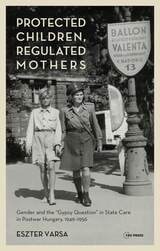
Protected Children, Regulated Mothers examines child protection in Stalinist Hungary as a part of twentieth-century East Central, Eastern, and Southeastern European history. Across the communist bloc, the prewar foster care system was increasingly replaced after 1945 by institutionalization in residential homes. This shift was often interpreted as a further attempt to establish totalitarian control. However, this study—based on hundreds of children's case files and interviews with institution leaders, teachers, and people formerly in state care—provides a new perspective. Rather than being merely a tool of political repression, state care in postwar Hungary was often shaped by the efforts of policy actors and educators to address the myriad of problems engendered by the social and economic transformations that emerged after World War II. This response built on, rather than broke with, earlier models of reform and reformatory education. Yet child protection went beyond safeguarding and educating children; it also focused on parents, particularly lone mothers, regulating not only their entrance to paid work but also their sexuality. In so doing, children's homes both reinforced and changed existing cultural and social patterns, whether about gendered division of work or the assimilation of minorities. Indeed, a major finding of the book is that state socialist child protection continued a centuries-long national project of seeking a “solution to the Gypsy question,” rooted in efforts to eliminate the perceived “workshyness” of Roma.

Protected cruiser Gelderland
Jantinus Mulder
Amsterdam University Press, 2023
Protest and Propaganda
W. E. B. Du Bois, the CRISIS, and American HistoryEdited by Amy Helene Kirschke and Phillip Luke Sinitiere
University of Missouri Press, 2013
In looking back on his editorship of Crisis magazine, W. E. B. Du Bois said, “We condensed more news about Negroes and their problems in a month than most colored papers before this had published in a year.” Since its founding by Du Bois in 1910, Crisis has been the primary published voice of the NAACP. Born in an age of Jim Crow racism, often strapped for funds, the magazine struggled and endured, all the while providing a forum for people of color to document their inherent dignity and proclaim their definitive worth as human beings.
As the magazine’s editor from 1910 until 1934, Du Bois guided the content and the aim of Crisis with a decisive hand. He ensured that each issue argued for civil rights, economic justice, and social equality, always framing America’s intractable color line in an international perspective. Du Bois benefited from a deep pool of black literary and artistic genius, whether by commissioning the visual creativity of Harlem Renaissance artists for Crisis covers or by publishing poems and short stories from New Negro writers. From North to South, from East to West, and even reaching across the globe, Crisis circulated its ideas and marshaled its impact far and wide.
Building on the solid foundation Du Bois laid, subsequent editors and contributors covered issues vital to communities of color, such as access to resources during the New Deal era, educational opportunities related to the historic Brown decision, the realization of basic civil rights at midcentury, American aid to Africa and Caribbean nations, and the persistent economic inequalities of today’s global era.
Despite its importance, little has been written about the historical and cultural significance of this seminal magazine. By exploring how Crisis responded to critical issues, the essays in Protest and Propaganda provide the first well-rounded, in-depth look at the magazine's role and influence. The authors show how the essays, columns, and visuals published in Crisis changed conversations, perceptions, and even laws in the United States, thereby calling a fractured nation to more fully live up to its democratic creed. They explain how the magazine survived tremendous odds, document how the voices of justice rose above the clamor of injustice, and demonstrate how relevant such literary, journalistic, and artistic postures remain in a twenty-first-century world still in crisis.

Protestantism and Politics in Eastern Europe and Russia
The Communist and Post-Communist ErasSabrina P. Ramet, ed.
Duke University Press, 1993
Based on extensive field research, including interviews with notable figures in the Protestant churches in the region, the essays in this volume address broad topics such as the church's involvment in environmentalism, pacifism, and other dissident movements, as well as issues particular to Russia, Poland, Czechoslovakia, East Germany, (1949–1989), Hungary, Yugoslavia (1945-1991), Bulgaria, and Romania. The final volume in the three-volume work "Christianity Under Stress," Protestantism and Politics in Eastern Europe and Russia will prove invaluable to anyone hoping to understand not only the workings of religion under Communism, but the historical and contemporary interactions of church and state in general.
Contributors. Paul Bock, Lawrence Klippenstein, Paul Mojzes, Earl A. Pope, Joseph Pungur, Sabrina Petra Ramet, Walter Sawatsky, N. Gerald Shenk, Gerd Stricker, Sape A. Zylstra
Protestantism in Guatemala
Living in the New JerusalemBy Virginia Garrard-Burnett
University of Texas Press, 1998
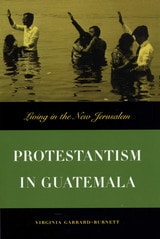
Guatemala has undergone an unprecedented conversion to Protestantism since the 1970s, so that thirty percent of its people now belong to Protestant churches, more than in any other Latin American nation. To illuminate some of the causes of this phenomenon, Virginia Garrard-Burnett here offers the first history of Protestantism in a Latin American country, focusing specifically on the rise of Protestantism within the ethnic and political history of Guatemala.
Garrard-Burnett finds that while Protestant missionaries were early valued for their medical clinics, schools, translation projects, and especially for the counterbalance they provided against Roman Catholicism, Protestantism itself attracted few converts in Guatemala until the 1960s. Since then, however, the militarization of the state, increasing public violence, and the "globalization" of Guatemalan national politics have undermined the traditional ties of kinship, custom, and belief that gave Guatemalans a sense of identity, and many are turning to Protestantism to recreate a sense of order, identity, and belonging.
Proust, Mann, Joyce in the Modernist Context, Second Edition
Gerald Gillespie
Catholic University of America Press, 2010
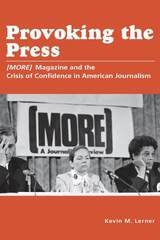
Provoking the Press
(MORE) Magazine and the Crisis of Confidence in American JournalismKevin M. Lerner
University of Missouri Press, 2023
Two of these new journalists, a Pulitzer Prize—winning, Harvard-educated New York Times reporter named J. Anthony Lukas, and a former Newsweek media writer named Richard Pollak, founded a journalism review called (MORE) in 1971, with its pilot issue appearing the same month that the Times began publishing the Pentagon Papers. (MORE) covered the press with a critical attitude that blended seriousness and satire—part New York Review of Books, part underground press. In the eight years that it published, (MORE) brought together nearly every important American journalist of the 1970s, either as a writer, a subject of its critical eye, or as a participant in its series of raucous "A.J. Liebling Counter-Conventions"—meetings named after the outspoken press critic—the first of which convened in 1974. In issue after issue the magazine considered and questioned the mainstream press's coverage of explosive stories of the decade, including the Watergate scandal; the "seven dirty words" obscenity trial; the debate over a reporter's constitutional privilege; the rise of public broadcasting; the struggle for women and minorities to find a voice in mainstream newsrooms; and the U.S. debut of press baron Rupert Murdoch.
In telling the story of (MORE) and its legacy, Kevin Lerner explores the power of criticism to reform and guide the institutions of the press and, in turn, influence public discourse.
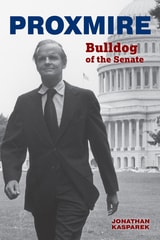
Proxmire
Bulldog of the SenateJonathan Kasparek
Wisconsin Historical Society Press, 2019

Psycho Paths
Tracking the Serial Killer Through Contemporary American Film and FictionPhilip L. Simpson
Southern Illinois University Press, 2000
Philip L. Simpson provides an original and broad overview of the evolving serial killer genre in the two media most responsible for its popularity: literature and cinema of the 1980s and 1990s.
The fictional serial killer, with a motiveless, highly individualized modus operandi, is the latest manifestation of the multiple murderers and homicidal maniacs that haunt American literature and, particularly, visual media such as cinema and television. Simpson theorizes that the serial killer genre results from a combination of earlier genre depictions of multiple murderers, inherited Gothic storytelling conventions, and threatening folkloric figures reworked over the years into a contemporary mythology of violence. Updated and repackaged for mass consumption, the Gothic villains, the monsters, the vampires, and the werewolves of the past have evolved into the fictional serial killer, who clearly reflects American cultural anxieties at the start of the twenty-first century.
Citing numerous sources, Simpson argues that serial killers’ recent popularity as genre monsters owes much to their pliability to any number of authorial ideological agendas from both the left and the right ends of the political spectrum. Serial killers in fiction are a kind of debased and traumatized visionary, whose murders privately and publicly re-empower them with a pseudo-divine aura in the contemporary political moment. The current fascination with serial killer narratives can thus be explained as the latest manifestation of the ongoing human fascination with tales of gruesome murders and mythic villains finding a receptive audience in a nation galvanized by the increasingly apocalyptic tension between the extremist philosophies of both the New Right and the anti-New Right.
Faced with a blizzard of works of varying quality dealing with the serial killer, Simpson has ruled out the catalog approach in this study in favor of in-depth an analysis of the best American work in the genre. He has chosen novels and films that have at least some degree of public name-recognition or notoriety, including Red Dragon and The Silence of the Lambs by Thomas Harris, Manhunter directed by Michael Mann, Henry: Portrait of a Serial Killer directed by John McNaughton, Seven directed by David Fincher, Natural Born Killers directed by Oliver Stone, Zombie by Joyce Carol Oates, and American Psycho by Bret Easton Ellis.

Public Affairs
Politics in the Age of Sex ScandalsPaul Apostolidis and Juliet A. Williams, eds.
Duke University Press, 2004
The essays in Public Affairs reflect on a number of sex scandals while emphasizing the Clinton/Lewinsky affair, certainly the most avidly followed and momentous sex scandal in American political history. Leading scholars situate contemporary public affairs in the context not only of earlier sex scandals in American politics (such as Thomas Jefferson’s and Sally Hemings’s affair), but also of more purely political scandals (including Teapot Dome and Watergate) and sex scandals centered around public figures other than politicians (such as the actor Hugh Grant and the minister Jimmy Swaggart). Some essays consider the Clinton affair in light of feminist and anti-racist politics, while others discuss the dynamics of scandals as major media events. By charting a critical path through the muck of scandal rather than around it, Public Affairs illuminates why sex scandals have become such a prominent feature of American public life.
Contributors. Paul Apostolidis, Jodi Dean, Joshua Gamson, Theodore J. Lowi, Joshua D. Rothman, George Shulman, Anna Marie Smith, Jeremy Varon, Juliet A. Williams
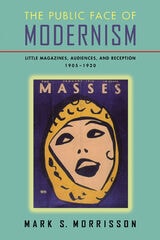
Public Face Of Modernism
Little Magazines, Audiences, And Reception, 1905-1920Mark S. Morrisson
University of Wisconsin Press, 2000
The phenomenal successes of new advertising agencies and mass market publishers did elicit what Morrisson calls a "crisis of publicity" for some modernists and for many concerned citizens in both countries. But, as Morrisson demonstrates, the vast influence of these industries on consumers also had a profound and largely overlooked effect upon many modernist authors, artists, and others. By exploring the publicity and audience reception of several of the most important modernist magazines of the period, The Public Face of Modernism shows how modernists, far from lamenting the destruction of meaningful art and public culture by the new mass market, actually displayed optimism about the power of mass-market technologies and strategies to transform and rejuvenate contemporary culture—and, above all, to restore a public function to art.
This reconstruction of the "public face of modernism" offers surprising new perceptions about the class, gender, racial, and even generational tensions within the public culture of the early part of the century, and provides a rare insight into the actual audiences for modernist magazines of the period. Moreover, in new readings of works by James Joyce, George Bernard Shaw, Wyndham Lewis, Ford Madox Ford, T. S. Eliot, William Carlos Williams, and many others, Morrisson shows that these contexts also had an impact on the techniques and concerns of the literature itself.

Public Libraries in Nazi Germany
Margaret F. Stieg
University of Alabama Press, 1992
"Margaret F. Stieg's thoroughly researched study, the first comprehensive examination of public libraries in Nazi Germany, reveals that library policy in the Third Reich was far more complex than we might assume, with the positive and the negative hopelessly entangled. . . . A solid and welcome contribution."
—American Historical Review
Public Negotiations
Gender and Journalism in Contemporary US Latina/o LiteratureAriana E. Vigil
The Ohio State University Press, 2019
Vigil also reveals how these conversations inevitably engage with gender concerns, showing how the role of gender in this relationship is neither static nor consistent over time. Examining how these works represent such things as gendered Latina/o counter publics, how Central American–American communities are gendered in relation to other US Latina/o communities, how and why gendered expressions of Latinidad are produced and marketed, and how print media provides an important space for dissemination of diverse ideas, Public Negotiations considers the way in which gender functions in terms of both the construction and reception of a Latina/o public in a transnational space. Through thorough examination and with deep insight, Vigil shows how literature can invaluably reflect current and historical issues surrounding media and the public sphere and help us imagine new, hopefully better, possibilities.
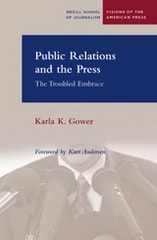
Public Relations and the Press
The Troubled EmbraceKarla Gower
Northwestern University Press, 2007
A democracy works when individuals have access to reliable information upon which to base decisions—information that in our day comes from the mass media. But what if journalists do not have the wherewithal to question their sources and evaluate the information they provide? This, Karla K. Gower explains, is precisely what happens when economic and competitive pressures shift power from the journalist to the source—and the source, not the journalist, controls the flow of information to the public. Gowers describes a situation in which people, “informed” by practitioners of public relations, do not have sufficient information to make valid decisions. At stake is the core credibility of the press itself, and therefore the essential claim of journalism to a privileged role in a democratic social order.
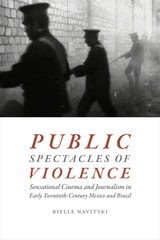
Public Spectacles of Violence
Sensational Cinema and Journalism in Early Twentieth-Century Mexico and BrazilRielle Navitski
Duke University Press, 2017
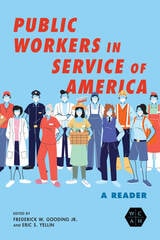
Public Workers in Service of America
A ReaderEdited by Frederick W. Gooding Jr. and Eric S. Yellin
University of Illinois Press, 2023
From white-collar executives to mail carriers, public workers meet the needs of the entire nation. Frederick W. Gooding Jr. and Eric S. Yellin edit a collection of new research on this understudied workforce. Part One begins in the late nineteenth- and early twentieth century to explore how questions of race, class, and gender shaped public workers, their workplaces, and their place in American democracy. In Part Two, essayists examine race and gender discrimination while revealing the subtle contemporary forms of marginalization that keep Black men and Black and white women underpaid and overlooked for promotion. The historic labor actions detailed in Part Three illuminate how city employees organized not only for better pay and working conditions but to seek recognition from city officials, the public, and the national labor movement. Part Four focuses on nurses and teachers to address the thorny question of whether certain groups deserve premium pay for their irreplaceable work and sacrifices or if serving the greater good is a reward unto itself.
Contributors: Eileen Boris, Cathleen D. Cahill, Frederick W. Gooding Jr., William P. Jones, Francis Ryan, Jon Shelton, Joseph E. Slater, Katherine Turk, Eric S. Yellin, and Amy Zanoni
Publishing Latinidad
Latinx Literary and Intellectual Production, 1880–1960Jose O. Fernandez
University of Arizona Press, 2025
Publishing Latinidad brings to light the overlooked contributions of early Latinx writers and intellectuals, offering a fresh perspective on their roles in shaping American literary and cultural landscapes.
Jose O. Fernandez meticulously examines the works of notable figures like José Martí, Arturo Schomburg, Jesús Colón, José de la Luz Sáenz, Adela Sloss-Vento, and Américo Paredes, illuminating their innovative approaches to circumventing exclusionary practices in the publishing world. He demonstrates how these writers and intellectuals entered literary, cultural, and intellectual discourses through alternative modes of literary production: crónicas, translations, paratexts, bibliographies, archival practices, sketches, diaries, biographies, unpublished fiction, and scholarly monographs. Through these examples, Fernandez situates Latinx literary production in this time period within the broader context of racial and ethnic solidarity movements in the United States.
Publishing Latinidad is essential reading for anyone interested in the social and cultural underpinnings of Latinx literature and intellectual thought. It challenges traditional narratives and enriches our appreciation of the diverse voices that have long been instrumental in the fight for justice.
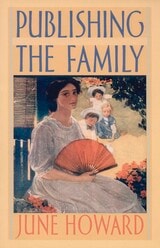
Publishing the Family
June Howard
Duke University Press, 2001
Publishing the Family describes the sources and controversial outcome of a fascinating literary experiment. Howard embeds the story of The Whole Family in the story of Harper & Brothers’ powerful and pervasive presence in American cultural life, treating the publisher, in effect, as an author.
Each chapter of Publishing the Family casts light on some aspect of life in the United States at a moment that arguably marked the beginning of our own era. Howard revises common views of the turn-of-the-century literary marketplace and discusses the perceived crisis in the family as well as the popular and expert discourses that emerged to remedy it. She also demonstrates how creative women like Bazar editor Elizabeth Jordan blended their own ideas about the “New Woman” with traditional values. Howard places these analyses in the framework of far-reaching historical changes, such as the transformation of the public meaning of emotion and “sentimentality.” Taken together, the chapters in Publishing the Family show how profoundly the modern mapping of social life relies on boundaries between family and business, culture and commerce, which The Whole Family and Publishing the Family constantly unsettle.
Publishing the Family will interest students and scholars of American history, literature, and culture, as well as those studying gender, sexuality, and the family.
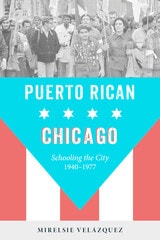
Puerto Rican Chicago
Schooling the City, 1940-1977Mirelsie Velázquez
University of Illinois Press, 2022
Winner of the Critics’ Choice Book awards of the American Educational Studies Association (AESA-CCBA)
The postwar migration of Puerto Rican men and women to Chicago brought thousands of their children into city schools. These children's classroom experience continued the colonial project begun in their homeland, where American ideologies had dominated Puerto Rican education since the island became a US territory. Mirelsie Velázquez tells how Chicago's Puerto Ricans pursued their educational needs in a society that constantly reminded them of their status as second-class citizens. Communities organized a media culture that addressed their concerns while creating and affirming Puerto Rican identities. Education also offered women the only venue to exercise power, and they parlayed their positions to take lead roles in activist and political circles. In time, a politicized Puerto Rican community gave voice to a previously silenced group--and highlighted that colonialism does not end when immigrants live among their colonizers.
A perceptive look at big-city community building, Puerto Rican Chicago reveals the links between justice in education and a people's claim to space in their new home.
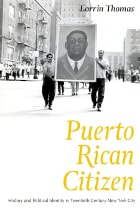
Puerto Rican Citizen
History and Political Identity in Twentieth-Century New York CityLorrin Thomas
University of Chicago Press, 2010
Building its incisive narrative from a wide range of archival sources, interviews, and first-person accounts of Puerto Rican life in New York, this book illuminates the rich history of a group that is still largely invisible to many scholars. At the center of Puerto Rican Citizen are Puerto Ricans’ own formulations about political identity, the responses of activists and ordinary migrants to the failed promises of American citizenship, and their expectations of how the American state should address those failures. Complicating our understanding of the discontents of modern liberalism, of race relations beyond black and white, and of the diverse conceptions of rights and identity in American life, Thomas’s book transforms the way we understand this community’s integral role in shaping our sense of citizenship in twentieth-century America.
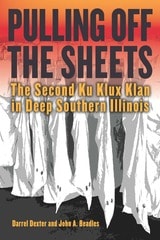
Pulling off the Sheets
The Second Ku Klux Klan in Deep Southern IllinoisDarrel Dexter and John A. Beadles
Southern Illinois University Press, 2024
WINNER, Certificate of Excellence in “Scholarly Publications” from the Illinois State Historical Society’s 2025 Best of Illinois History Awards!
Unmasking old-time racism in southern Illinois
Pulling off the Sheets tells the previously obscured history of the Second Ku Klux Klan which formed in deep southern Illinois in the early 1920s. Through meticulous research into both public and private records, Darrel Dexter and John A. Beadles recount the Klan’s mythical origins, reemergence, and swift disappearance. This important historical account sets out to expose the lasting impact of the Klan on race relations today.
The ideation of the Klan as a savior of the white race and protector of white womanhood was perpetuated by books, plays, and local news sources of the time. The very real but misplaced fear of Black violence on whites created an environment in which the Second Klan thrived, and recruitment ran rampant in communities such as the Protestant church. Events like the murder of Daisy Wilson intensified the climate of racial segregation and white supremacy in the region, and despite attempts at bringing justice to the perpetrators, most failed. The Second Klan’s presence may have been short-lived, but the violence and fear it inflicted continues to linger.
This disturbing historical account challenges readers to “pull back the sheet” and confront the darkest corners of their past. Dexter and Beadles emphasize the importance of acknowledging the damage that white supremacy and racism cause and how we can move toward healing.
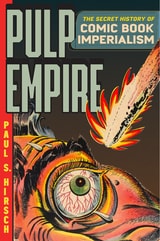
Pulp Empire
The Secret History of Comic Book ImperialismPaul S. Hirsch
University of Chicago Press, 2021
In the 1940s and ’50s, comic books were some of the most popular—and most unfiltered—entertainment in the United States. Publishers sold hundreds of millions of copies a year of violent, racist, and luridly sexual comics to Americans of all ages until a 1954 Senate investigation led to a censorship code that nearly destroyed the industry. But this was far from the first time the US government actively involved itself with comics—it was simply the most dramatic manifestation of a long, strange relationship between high-level policy makers and a medium that even artists and writers often dismissed as a creative sewer. In Pulp Empire, Paul S. Hirsch uncovers the gripping untold story of how the US government both attacked and appropriated comic books to help wage World War II and the Cold War, promote official—and clandestine—foreign policy and deflect global critiques of American racism.
As Hirsch details, during World War II—and the concurrent golden age of comic books—government agencies worked directly with comic book publishers to stoke hatred for the Axis powers while simultaneously attempting to dispel racial tensions at home. Later, as the Cold War defense industry ballooned—and as comic book sales reached historic heights—the government again turned to the medium, this time trying to win hearts and minds in the decolonizing world through cartoon propaganda.
Hirsch’s groundbreaking research weaves together a wealth of previously classified material, including secret wartime records, official legislative documents, and caches of personal papers. His book explores the uneasy contradiction of how comics were both vital expressions of American freedom and unsettling glimpses into the national id—scourged and repressed on the one hand and deployed as official propaganda on the other. Pulp Empire is a riveting illumination of underexplored chapters in the histories of comic books, foreign policy, and race.
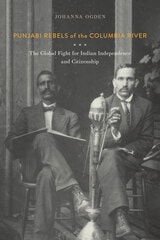
Punjabi Rebels of the Columbia River
The Global Fight for Indian Independence and CitizenshipJohanna Ogden
Oregon State University Press, 2024
Oregon is commonly perceived to have little, let alone notable, South Asian history. Yet in the early 1900s Oregon was at the center of two entwined quests for Indian independence and civic belonging that rocked the world.
Punjabi Rebels of the Columbia River traces the stories of the radical Indian independence organization known as Ghadar and Bhagat Singh Thind’s era-defining US Supreme Court citizenship case. Ghadar sought the overthrow of India’s British colonizers while Thind utilized sanctioned legal channels to do so. Despite widely differing strategies, both the movement and the man were targeted, often in coordination, by the highest levels of the US and British governments. The empires’ united message: India would not be an independent country and Indians could not be citizens. In the decades that followed, it was a verdict Indians refused to abide.
Johanna Ogden’s detailed history of migrants’ experience expands the time frame, geographic boundaries, and knowledge of the conditions and contributions of Indians in North America. It is the story of a people’s awakening amid a rich community of international workers in an age of nationalist uprisings. To understand why one of the smallest western Indian settlements became a resistance center, Punjabi Rebels mines the colonial underpinnings of labor, race, and place-making and their regional and global connections, rendering a history of whiteness and labor as much as of Indian-ness and migration. The first work to rejoin the lived experience of Thind and Ghadar activists, Punjabi Rebels complicates our understanding not just of the global fight for Indian political rights but of multi-racial democracy.
Punk and Revolution
Seven More Interpretations of Peruvian RealityShane Greene
Duke University Press, 2016
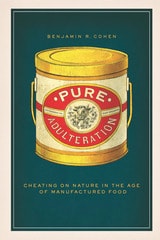
Pure Adulteration
Cheating on Nature in the Age of Manufactured FoodBenjamin R. Cohen
University of Chicago Press, 2019
In the latter nineteenth century, extraordinary changes in food and agriculture gave rise to new tensions in the ways people understood, obtained, trusted, and ate their food. This was the Era of Adulteration, and its concerns have carried forward to today: How could you tell the food you bought was the food you thought you bought? Could something manufactured still be pure? Is it okay to manipulate nature far enough to produce new foods but not so far that you question its safety and health? How do you know where the line is? And who decides?
In Pure Adulteration, Benjamin R. Cohen uses the pure food crusades to provide a captivating window onto the origins of manufactured foods and the perceived problems they wrought. Cohen follows farmers, manufacturers, grocers, hucksters, housewives, politicians, and scientific analysts as they struggled to demarcate and patrol the ever-contingent, always contested border between purity and adulteration, and as, at the end of the nineteenth century, the very notion of a pure food changed.
In the end, there is (and was) no natural, prehuman distinction between pure and adulterated to uncover and enforce; we have to decide. Today’s world is different from that of our nineteenth-century forebears in many ways, but the challenge of policing the difference between acceptable and unacceptable practices remains central to daily decisions about the foods we eat, how we produce them, and what choices we make when buying them.
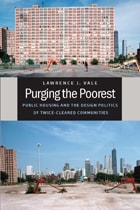
Purging the Poorest
Public Housing and the Design Politics of Twice-Cleared CommunitiesLawrence J. Vale
University of Chicago Press, 2013

Purity Is a Myth
The Materiality of Concrete Art from Argentina, Brazil, and UruguayZanna Gilbert
J. Paul Getty Trust, The, 2021
Purity Is a Myth presents new scholarship on Concrete art in Argentina, Brazil, and Uruguay from the 1940s to the 1960s. Originally coined by the Dutch artist Theo van Doesburg in 1930, the term concrete denotes abstract painting with no reference to external reality. Van Doesburg argued that there was nothing more real than a line, color, or plane. Artists such as Willys de Castro, Lygia Clark, Waldemar Cordeiro, Hermelindo Fiaminghi, Judith Lauand, Raúl Lozza, Tomás Maldonado, Hélio Oiticica, and Rhod Rothfuss would reinvent this concept in postwar Latin America.
Drawing on research conducted by Getty and international partners, the essays in this volume address a variety of topics, including the general history, emergence, and reception of Concrete art; processes and color; scientific analysis of works; illustrated chronologies of the paint industry in Brazil and Argentina; and Concrete design on paper. An innovative technical study of the Concrete art movement in Latin America, this volume will be indispensable to scholars, practitioners, and students of Latin American art.
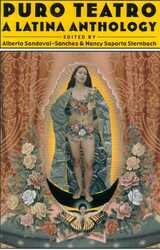
Puro Teatro, A Latina Anthology
Edited by Alberto Sandoval-Sánchez and Nancy Sandoval Sternbach
University of Arizona Press, 2000
Puro Teatro, A Latina Anthology includes a variety of theatrical genres: plays, performance pieces, puppet shows, innovative collaborations, and testimonials. It features previously unpublished plays from a broad range of experiences within the Latino/a community, including families and home, friends and community building, coming of age and empowerment, and sexual and ethnic identities. The editors' introduction provides a comprehensive survey of contemporary Latina theater, placing it in its theatrical context and examining its divergent roots. Puro Teatro, A Latina Anthology is the first book of its kind to reflect in print a diversified body of writing that turns the spotlight on some of America's most talented and prolific artists. A subsequent volume will complement this anthology with a theoretical, critical reading of Latina theater and performance.
CONTENTS
Botánica by Dolores Prida
Heart of the Earth: A Popul Vuh Story by Cherríe Moraga
The Fat-Free Chicana and the Snow Cap Queen by Elaine Romero
One-act Plays
Las nuevas tamaleras by Alicia Mena
And Where Was Pancho Villa When You Really Needed Him? by Silviana Wood
Fuschia by Janis Astor del Valle
Performance Pieces
Nostalgia Maldita: 1-900-MEXICO : A StairMaster Piece by Yareli Arizmendi
Good Grief, Lolita by Wilma Bonet
A Roomful of Men by Amparo García Crow
Describe Your Work by Monica Palacios
Testimonials
"Battle Worn," by Laura Esparza
"Dancing with the Voice of Truth," by María Mar
"Searching for Sanctuaries: Cruising through Town in a Red Convertible," by Diane Rodríguez
"Home, Desire, Memory: There Are No Borders Here," by Caridad Svich
"Tales of a South-of-the-Border/North-of-the-Stereotype Theatre Director, by Susana Tubert
"Catching the Next Play: The Joys and Perils of Playwriting," by Edit Villarreal
Full-Length Plays, Collaborative Works
Frida: The Story of Frida Kahlo by Migdalia Cruz and Hilary Blecher
Memorias de la revolución by Carmelita Tropicana and Uzi Parnes
Purple Passages
Pound, Eliot, Zukofsky, Olson, Creeley, and the Ends of Patriarchal PoetryRachel Blau DuPlessis
University of Iowa Press, 2012
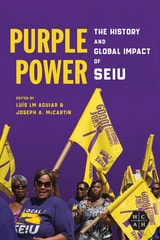
Purple Power
The History and Global Impact of SEIUEdited by Luís LM Aguiar and Joseph A. McCartin
University of Illinois Press, 2023
Luís LM Aguiar and Joseph A. McCartin edit essays on one of contemporary labor’s bedrock organizations. The contributors explore key episodes, themes, and features in the union’s recent history and evaluate SEIU as a union with global aspirations and impact. The first section traces the SEIU’s growth in the last and current centuries. The second section offers in-depth studies of key campaigns in the United States, including the Justice for Janitors and Fight for $15 movements. The third section focuses on the SEIU’s work representing low-wage workers in Canada, Australia, Europe, and Brazil. An interview with Justice for Janitors architect Stephen Lerner rounds out the volume.
Contributors: Luís LM Aguiar, Adrienne E. Eaton, Janice Fine, Euan Gibb, Laurence Hamel-Roy, Tashlin Lakhani, Joseph A. McCartin, Yanick Noiseux, Benjamin L. Peterson, Allison Porter, Alyssa May Kuchinski, Maite Tapia, Veronica Terriquez, and Kyoung-Hee Yu
Pushing Cool
Big Tobacco, Racial Marketing, and the Untold Story of the Menthol CigaretteKeith Wailoo
University of Chicago Press, 2021
Police put Eric Garner in a fatal chokehold for selling cigarettes on a New York City street corner. George Floyd was killed by police outside a store in Minneapolis known as “the best place to buy menthols.” Black smokers overwhelmingly prefer menthol brands such as Kool, Salem, and Newport. All of this is no coincidence. The disproportionate Black deaths and cries of “I can’t breathe” that ring out in our era—because of police violence, COVID-19, or menthol smoking—are intimately connected to a post-1960s history of race and exploitation.
In Pushing Cool, Keith Wailoo tells the intricate and poignant story of menthol cigarettes for the first time. He pulls back the curtain to reveal the hidden persuaders who shaped menthol buying habits and racial markets across America: the world of tobacco marketers, consultants, psychologists, and social scientists, as well as Black lawmakers and civic groups including the NAACP. Today most Black smokers buy menthols, and calls to prohibit their circulation hinge on a history of the industry’s targeted racial marketing. In 2009, when Congress banned flavored cigarettes as criminal enticements to encourage youth smoking, menthol cigarettes were also slated to be banned. Through a detailed study of internal tobacco industry documents, Wailoo exposes why they weren’t and how they remain so popular with Black smokers.
Putting Their Hands on Race
Irish Immigrant and Southern Black Domestic WorkersDanielle T. Phillips-Cunningham
Rutgers University Press, 2020
Putting Their Hands on Race offers an important labor history of 19th and early 20th century Irish immigrant and US southern Black migrant domestic workers. Drawing on a range of archival sources, this intersectional study explores how these women were significant to the racial labor and citizenship politics of their time. Their migrations to northeastern cities challenged racial hierarchies and formations. Southern Black migrant women resisted the gendered racism of domestic service, and Irish immigrant women strove to expand whiteness to position themselves as deserving of labor rights. On the racially fractious terrain of labor, Black women and Irish immigrant women, including Victoria Earle Matthews, the “Irish Rambler”, Leonora Barry, and Anna Julia Cooper, gathered data, wrote letters and speeches, marched, protested, engaged in private acts of resistance in the workplace, and created women’s institutions and organizations to assert domestic workers’ right to living wages and protection.