1048 books match the query 'African American & Black' and 4 start with q
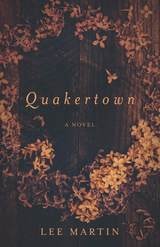
cover of Quakertown

Quakertown

Lee Martin

The Ohio State University Press, 2017

In Quakertown, Lee Martin travels back in time to 1920s Texas to tell the story of a flourishing black community that was segregated from its white brethren—and of the remarkable gardener who was asked to do the unimaginable.
 
Based on the true story of a shameful episode in north Texas history, Quakertown draws on the rich texture of the South—the Pecan Creek running along the edges of Quakertown, the remarkable and rare white lilac, and the rising tensions marking each nod and greeting. With strength and a deep wisdom of heart, Martin carves out the delicate story of two families—one white and one black—and the child whose birth brought a gift of forgiveness.
 
 
Suffused with Martin’s deep compassion and profound humanity, Quakertown is an unforgettable novel from a master of American prose.
 
[more]
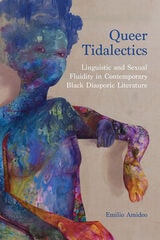
cover of Queer Tidalectics: Linguistic and Sexual Fluidity in Contemporary Black Diasporic Literature

Queer Tidalectics

Linguistic and Sexual Fluidity in Contemporary Black Diasporic Literature

Emilio Amideo

Northwestern University Press, 2021

In Queer Tidalectics, Emilio Amideo investigates how Anglophone writers James Baldwin, Jackie Kay, Thomas Glave, and Shani Mootoo employ the trope of fluidity to articulate a Black queer diasporic aesthetics. Water recurs as a figurative and material site to express the Black queer experience within the diaspora, a means to explore malleability and overflowing sexual, gender, and racial boundaries. Amideo triangulates language, the aquatic, and affect to delineate a Black queer aesthetics, one that uses an idiom of fluidity, slipperiness, and opacity to undermine and circumvent gender normativity and the racialized heteropatriarchy embedded in English. The result is an outline of an ever-expanding affective archive of experiential knowledge.
 
Amideo engages and extends the work of Black queer studies, Oceanic studies, ecocriticism, phenomenology, and new materialism through the theorizations of Sara Ahmed, Omise’eke Natasha Tinsley, M. Jacqui Alexander, Édouard Glissant, José Esteban Muñoz, and Edward Kamau Brathwaite, among others. Ambitious in scope and captivating to read, Queer Tidalectics brings Caribbean writers like Glissant and Brathwaite into queer literary analysis—a major scholarly contribution.


[more]
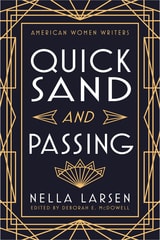
cover of Quicksand and Passing

Quicksand and Passing

Larsen, Nella

Rutgers University Press, 1986

"Quicksand and Passing are novels I will never forget. They open up a whole world of experience and struggle that seemed to me, when I first read them years  ago, absolutely absorbing, fascinating, and indispensable." —Alice Walker

"A tantalizing mix of moral fable and sensuous colorful narrative, exploring female sexuality and racial solidarity."—Women's Studies International Forum

Rutgers' all-time bestselling book, Nella Larsen's novels Quicksand (1928) and Passing (1929) document the historical realities of Harlem in the 1920s and shed a bright light on the social world of the black bourgeoisie. The novels' greatest appeal and achievement, however, is not sociological, but psychological. As noted in the editor's comprehensive introduction, Larsen takes the theme of psychic dualism, so popular in Harlem Renaissance fiction, to a higher and more complex level, displaying a sophisticated understanding and penetrating analysis of black female psychology.

Passing is now a major motion picture written, produced, and directed by Rebecca Hall. It premiered at Sundance in 2021 and is available on Netflix.
[more]
cover of Quince Duncan: Writing Afro-Costa Rican and Caribbean Identity

Quince Duncan

Writing Afro-Costa Rican and Caribbean Identity

Dorothy E. Mosby

University of Alabama Press, 2013

Quince Duncan is a comprehensive study of the published short stories and novels of Costa Rica’s first novelist of African descent and one of the nation’s most esteemed contemporary writers.
 
The grandson of Jamaican and Barbadian immigrants to Limón, Quince Duncan (b. 1940) incorporates personal memories into stories about first generation Afro–West Indian immigrants and their descendants in Costa Rica. Duncan’s novels, short stories, recompilations of oral literature, and essays intimately convey the challenges of Afro–West Indian contract laborers and the struggles of their descendants to be recognized as citizens of the nation they helped bring into modernity.
 
Through his storytelling, Duncan has become an important literary and cultural presence in a country that forged its national identity around the leyenda blanca (white legend) of a rural democracy established by a homogeneous group of white, Catholic, and Spanish peasants. By presenting legends and stories of Limón Province as well as discussing the complex issues of identity, citizenship, belonging, and cultural exile, Duncan has written the story of West Indian migration into the official literary discourse of Costa Rica. His novels Hombres curtidos (1970) and Los cuatro espejos (1973) in particular portray the Afro–West Indian community in Limón and the cultural intolerance encountered by those of African-Caribbean descent who migrated to San José. Because his work follows the historical trajectory from the first West Indian laborers to the contemporary concerns of Afro–Costa Rican people, Duncan is as much a cultural critic and sociologist as he is a novelist.
 
In Quince Duncan, Dorothy E. Mosby combines biographical information on Duncan with geographic and cultural context for the analysis of his works, along with plot summaries and thematic discussions particularly helpful to readers new to Duncan.
[more]