Results by title
425 books match the query 'Ethics' and 2 start with q
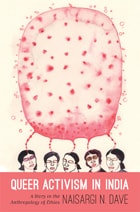
Queer Activism in India
A Story in the Anthropology of EthicsNaisargi Dave
Duke University Press, 2012
In Queer Activism in India, Naisargi Dave examines the formation of lesbian communities in India from the 1980s to the early 2000s. Based on ethnographic fieldwork conducted with activist organizations in Delhi, a body of letters written by lesbian women, and research with lesbian communities and queer activist groups across the country, Dave studies the everyday practices that constitute queer activism in India.
Dave argues that activism is an ethical practice comprised of critique, invention, and relational practice. Her analysis investigates the relationship between the ethics of activism and the existing social norms and conditions from which activism emerges. Through her study of different networks and institutions, Dave documents how activism oscillates between the potential for new social arrangements and the questions that arise once the activists' goals have been accomplished. Dave's book addresses a relevant and timely phenomenon and makes an important contribution to the anthropology of queer communities, social movements, affect, and ethics.
Dave argues that activism is an ethical practice comprised of critique, invention, and relational practice. Her analysis investigates the relationship between the ethics of activism and the existing social norms and conditions from which activism emerges. Through her study of different networks and institutions, Dave documents how activism oscillates between the potential for new social arrangements and the questions that arise once the activists' goals have been accomplished. Dave's book addresses a relevant and timely phenomenon and makes an important contribution to the anthropology of queer communities, social movements, affect, and ethics.
[more]
Queering Cold War Poetry
Ethics of Vulnerability in Cuba and the United StatesEric Keenaghan
The Ohio State University Press, 2009
Many feel that individualism, and the security it demands, define democracy and freedom. This belief is characteristic of the attitude that thinkers from John Dewey to Michel Foucault have criticized as "liberalist." In actuality, we share intimate associations with one another through contacts established by our bodies and even by language.
In Queering Cold War Poetry, Eric Keenaghan offers queer theory, queer studies, and literary theory a new political and conceptual language for reevaluating past and present high valuations of individualism and security. He examines four Cold War poets from Cuba and the United States—Wallace Stevens, José Lezama Lima, Robert Duncan, and Severo Sarduy. These writers, who lived in an era when homosexuals were regarded as outsiders or even security threats, offer critiques of nationalism and liberalism. In their struggles against state and cultural mandates that foreclosed positive estimations of vulnerability, Stevens, Lezama, Duncan, and Sarduy radically revised ethics and identity in their day. Their work exemplifies how much modernist poetry disseminates experiences of differences that challenge prevailing attitudes about individuals' relationships to one another and to their nations. Through studies of Cuban and U.S. lyric and poetics, Queering Cold War Poetry clears the way for imagining what it means to belong to a passionate and compassionate citizenry which celebrates vulnerability, searches for difference in itself and each of its constituent individuals, and identifies less with a nation than with a global community.
[more]