Results by title
183 books match the query 'Feminist' and 2 start with q
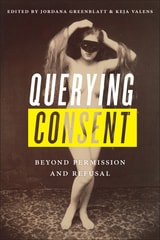
Querying Consent
Beyond Permission and RefusalJordana Greenblatt, Keja Valens
Rutgers University Press, 2018
Querying Consent examines the ways in which the concept of consent is used to map and regulate sexual desire, gender relationships, global positions, technological interfaces, relationships of production and consumption, and literary and artistic interactions. From philosophy to literature, psychoanalysis to the art world, the contributors to Querying Consent address the most uncomfortable questions about consent today. Grounded in theoretical explorations of the entanglement of consent and subjectivity across a range of textual, visual, multi- and digital media, Querying Consent considers the relationships between consent and agency before moving on to trace the concept’s outcomes through a range of investigations of the mutual implication of personhood and self-ownership.
[more]
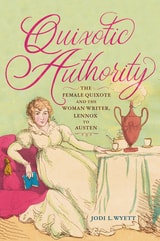
Quixotic Authority
The Female Quixote and the Woman Writer, Lennox to AustenJodi L. Wyett
University of Delaware Press, 2026
Quixotic Authority reveals how deeply absorbed reading was inextricable from and essential to British women's professional writing and cultural commentary from the mid-eighteenth to the mid-nineteenth century. The trope of quixotism, what we might today call "fangirling," had distinctly gendered implications, as the female quixote was almost exclusively associated with uncritical, overly absorptive novel reading, and often portrayed as a self-centered, deluded, ill-educated home-wrecker who must be reformed or punished. But what do we make of the fact that women wrote most of the depictions of female quixotes in novels of this period? Jodi Wyett shows that authors such as Charlotte Lennox and Jane Austen wrote quixote narratives to assert their own professional cachet as well as validate the passion and intelligence of women novel readers. Harnessing the power of the genre, they debunked proscriptive contemporary discourse denigrating both women and the novel. This book redefines the female quixote as a fierce fangirl both modeled in fiction and embodied by her creators.
[more]