Results by title
8812 books match the query 'Political Science' and 16 start with q
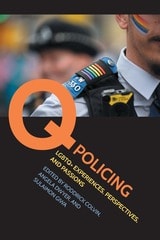
Q Policing
LGBTQ+ Experiences, Perspectives, and PassionsEdited by Roddrick Colvin, Angela Dwyer, and Sulaimon Giwa
Southern Illinois University Press, 2024
Global perspectives on policing within LGBTQ+ communities
Relationships between law enforcement and lesbian, gay, bisexual, transgender, and queer (LGBTQ+) communities have always been varied and complex. On one hand, history is filled with incidents of police harassment: raids that sparked famous uprisings and rebellions; shoddy police investigations into the murders of LGBTQ+ community members; a corrosive organizational culture marked by heteronormativity and misogyny. Yet positive changes are being made, such as the creation of LGBTQ+ police associations, participation by police officers in Pride Parades around the world, and formal apologies for past actions. To some LGBTQ+ community members, police are the physical manifestations of state-sanctioned oppression and abuse. To others, they are guardians who have become partners in public safety.
Q Policing features eighteen contributors from around the world who explore the nature of the relationship between LGBTQ+ communities and the police. Part 1 of the book offers insights on policing and racial and ethnic constructions, including efforts to build collaborative models of community-building within groups and with law enforcement. Part 2 highlights the experiences of individuals who may be marginalized due to various social constructions such as transgender, unhoused, southern, or kink-involved. Finally, Part 3 shares perspectives of queer folks inside policing.
The contributors—scholars, social workers, police officers, and other community leaders—cover diverse topics, including queer experiences of policing in southern India, clinical implications for mental health professionals working with Latinx LGBTQ+ people, transgender and nonbinary peoples’ presentation management during encounters with law enforcement, discriminatory policies in place in the southern United States, the pathologization of kink, and more. Essays analyze interviews with the “Pride Defenders” in Hamilton, Canada, as well as British and American police officers transitioning while in uniform. They explore the experiences of gay, lesbian, and genderqueer police officers, map principal findings and central concerns that structure extant scholarship on gay police officers in the UK, use queer theory to explore the effectiveness of LGBTQ+ liaisons, and more.
The volume editors adopt an inclusive global perspective to account for contextually located experiences of queer people within and outside of the United States. The book incorporates a variety of voices, data sources, and methodologies, but contributors share an intentional focus on race, age, sex, gender, and other identities that helps explain and contextualize queer people’s experiences around and in policing. The diverse, international group of contributors—whose voices are not often heard in traditional outlets and mainstream media—demonstrates that despite discrimination, harassment, and violence, LGBTQ+ communities continue to thrive.

Qtopia
A Memoir of Love, Land, and LiberationJuda Bennett
University of Wisconsin Press, 2026
In the 1970s, while communes bloomed like wildflowers across the land, most had no room for queer members. The so-called counterculture still clung to heterosexual norms, even as it preached freedom from traditional gender roles and the nuclear family. Juda Bennett’s engrossing memoir follows his escape from suburbia into the back-to-the-land movement—and chronicles the efforts it took for him to “drop back in” to mainstream society and the ways in which he and his compatriots continued to honor their communal vision.
After enduring the hollow promises of “progressive” communes, Bennett finally found what he didn’t know he was looking for at Lavender Hill, a rural queer commune of visionaries carving out a life beyond heteronormativity, beyond capitalism, beyond shame. They didn’t just survive; they built something messy, luminous, and defiantly alive. And when the commune began to unravel, they didn’t vanish. They evolved. Qtopia is a story of chosen family and radical transformation. It is a reminder that queer utopia isn’t behind us—it’s still out there on the horizon, singing its song of joy, defiance, and fabulousness.
Quaker Brotherhood
Interracial Activism and the American Friends Service Committee, 1917-1950Allan W. Austin
University of Illinois Press, 2012

Quantifying the Impact of Technical Barriers to Trade
Can It Be Done?Keith E. Maskus and John S. Wilson, Editors
University of Michigan Press, 2001

Quebec and the Heritage of Franco-America
Edited by Iwan Morgan and Philip D. Davies
University of London Press, 2010
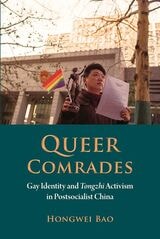
Queer Comrades
Gay Identity and Tongzhi Activism in Postcolonial ChinaHongwei Bao
National University of Singapore Press, 2018

Queer Encounters with Communist Power
Non-Heterosexual Lives and the State in Czechoslovakia, 1948-1989Vera Sokolová
Karolinum Press, 2019
Contrary to expectations, the book reveals that despite the Czechoslovak Communist regime’s brutality in many areas of life, the state did not carry out a hateful or seditious campaign against homosexual and non-heterosexual people. Rather, the official state sexology offices functioned from the late 1970s onward as essentially the first gay clubs in socialist Czechoslovakia. Interweaving the memories of non-heterosexual Czech women born between 1929 and 1952, Věra Sokolová’s study both enriches and challenges existing scholarship on lesbian and gay history during this era, promising to radically change the way we view gender, sexuality, and everyday life during East European socialism.

Queer Migration Politics
Activist Rhetoric and Coalitional PossibilitiesKarma Chavez
University of Illinois Press, 2013

Queer Traffic
Sex, Panic, Free TradeJennifer Tyburczy
Duke University Press, 2025
Queering Colonial Natal
Indigeneity and the Violence of Belonging in Southern AfricaT. J. Tallie
University of Minnesota Press, 2019
How were indigenous social practices deemed queer and aberrant by colonial forces?
In Queering Colonial Natal, T.J. Tallie travels to colonial Natalestablished by the British in 1843, today South Africa’s KwaZulu-Natal provinceto show how settler regimes “queered” indigenous practices. Defining them as threats to the normative order they sought to impose, they did so by delimiting Zulu polygamy; restricting alcohol access, clothing, and even friendship; and assigning only Europeans to government schools.
Using queer and critical indigenous theory, this book critically assesses Natal (where settlers were to remain a minority) in the context of the global settler colonial project in the nineteenth century to yield a new and engaging synthesis. Tallie explores the settler colonial history of Natal’s white settlers and how they sought to establish laws and rules for both whites and Africans based on European mores of sexuality and gender. At the same time, colonial archives reveal that many African and Indian people challenged such civilizational claims.
Ultimately Tallie argues that the violent collisions between Africans, Indians, and Europeans in Natal shaped the conceptions of race and gender that bolstered each group’s claim to authority.

Queering Marriage
Challenging Family Formation in the United StatesKimport, Katrina
Rutgers University Press, 2013
Co-Winner of the 2015 Charles Tilly Award for Best Book of the Collective Behavior and Social Movements section from the American Sociological Association
Over four thousand gay and lesbian couples married in the city of San Francisco in 2004. The first large-scale occurrence of legal same-sex marriage, these unions galvanized a movement and reignited the debate about whether same-sex marriage, as some hope, challenges heterosexual privilege or, as others fear, preserves that privilege by assimilating queer couples.
In Queering Marriage, Katrina Kimport uses in-depth interviews with participants in the San Francisco weddings to argue that same-sex marriage cannot be understood as simply entrenching or contesting heterosexual privilege. Instead, she contends, these new legally sanctioned relationships can both reinforce as well as disrupt the association of marriage and heterosexuality.
During her deeply personal conversations with same-sex spouses, Kimport learned that the majority of respondents did characterize their marriages as an opportunity to contest heterosexual privilege. Yet, in a seeming contradiction, nearly as many also cited their desire for access to the normative benefits of matrimony, including social recognition and legal rights. Kimport’s research revealed that the pattern of ascribing meaning to marriage varied by parenthood status and, in turn, by gender. Lesbian parents were more likely to embrace normative meanings for their unions; those who are not parents were more likely to define their relationships as attempts to contest dominant understandings of marriage.
By posing the question—can queers “queer” marriage?—Kimport provides a nuanced, accessible, and theoretically grounded framework for understanding the powerful effect of heterosexual expectations on both sexual and social categories.
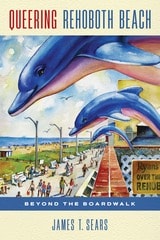
Queering Rehoboth Beach
Beyond the BoardwalkJames T. Sears
Temple University Press, 2024
Sears draws upon extensive oral history accounts, archival material, and personal narratives to chronicle “the Battle for Rehoboth,” which unfolded in the late 20th century, as conservative town leaders and homeowners opposed progressive entrepreneurs and gay activists. He recounts not just the emergence of the gay and lesbian bars, dance clubs, and organizations that drew the queer community to the region, but also the efforts of local politicians and homeowners, among other groups who fought to develop and protect the traditional identity of this beach town. Moreover, issues of race, class, and gender and sexuality informed opinions as residents and visitors struggled with the AIDS crisis and the legacy of Jim Crow.
Queering Rehoboth Beach is more than just an inspiring story about a community’s resilience and determination to establish a safe space for itself in the wake of the era of Don’t Ask, Don’t Tell. It is also a terrific beach read.
Quest for a Suitable Past
Myth and Memory in Central and Eastern EuropeLucian Boia
Central European University Press, 2017

Questioning Secularism
Islam, Sovereignty, and the Rule of Law in Modern EgyptHussein Ali Agrama
University of Chicago Press, 2012
Quiet Revolution
Struggle for the Democratic Party and the Shaping of Post-Reform PoliticsByron E. Shafer
Russell Sage Foundation, 1983
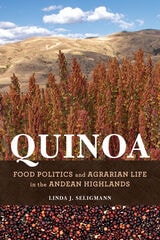
Quinoa
Food Politics and Agrarian Life in the Andean HighlandsLinda J. Seligmann
University of Illinois Press, 2023
The untold story behind the popular health food, Quinoa illuminates how Indigenous communities have engaged with the politics and policies surrounding their production of a traditional and minor crop that became a global foodstuff.