Results by title
546 books match the query 'Semiotics & Theory' and 2 start with q

Queer/Early/Modern
Carla Freccero
Duke University Press, 2006
Combining feminist theory, queer theory, psychoanalysis, deconstruction, and literary criticism, Freccero takes up a series of theoretical and historical issues related to debates in queer theory, feminist theory, the history of sexuality, and early modern studies. She juxtaposes readings of early and late modern texts, discussing the lyric poetry of Petrarch, Louise Labé, and Melissa Ethridge; David Halperin’s take on Michel Foucault via Apuleius’s The Golden Ass and Boccaccio’s Decameron; and France’s domestic partner legislation in connection with Marguerite de Navarre’s Heptameron. Turning to French cleric Jean de Léry’s account, published in 1578, of having witnessed cannibalism and religious rituals in Brazil some twenty years earlier and to the twentieth-century Brandon Teena case, Freccero draws on Jacques Derrida’s concept of spectrality to propose both an ethics and a mode of interpretation that acknowledges and is inspired by the haunting of the present by the past.
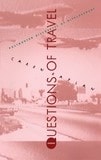
Questions of Travel
Postmodern Discourses of DisplacementCaren Kaplan
Duke University Press, 1996
Addressing a wide range of writers, including Paul Fussell, Edward Said, James Clifford, Gilles Deleuze, Jean Baudrillard, Gayatri Spivak, Edward Soja, Doreen Massey, Chandra Mohanty, and Adrienne Rich, Kaplan demonstrates that symbols and metaphors of travel are used in ways that obscure key differences of power between nationalities, classes, races, and genders. Neither rejecting nor dismissing the powerful testimony of individual experiences of modern exile or displacement, Kaplan asks how mystified metaphors of travel might be avoided. With a focus on theory’s colonial discourses, she reveals how these metaphors continue to operate in the seemingly liberatory critical zones of poststructuralism and feminist theory. The book concludes with a critique of the politics of location as a form of essentialist identity politics and calls for new feminist geographies of place and displacement.