Results by title
3027 books match the query 'Sociology' and 6 start with q

Queer Encounters with Communist Power
Non-Heterosexual Lives and the State in Czechoslovakia, 1948-1989Vera Sokolová
Karolinum Press, 2019
Contrary to expectations, the book reveals that despite the Czechoslovak Communist regime’s brutality in many areas of life, the state did not carry out a hateful or seditious campaign against homosexual and non-heterosexual people. Rather, the official state sexology offices functioned from the late 1970s onward as essentially the first gay clubs in socialist Czechoslovakia. Interweaving the memories of non-heterosexual Czech women born between 1929 and 1952, Věra Sokolová’s study both enriches and challenges existing scholarship on lesbian and gay history during this era, promising to radically change the way we view gender, sexuality, and everyday life during East European socialism.
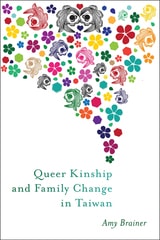
Queer Kinship and Family Change in Taiwan
Brainer, Amy
Rutgers University Press, 2019
Interweaving the narratives of multiple family members, including parents and siblings of her queer and trans informants, Amy Brainer analyzes the strategies that families use to navigate their internal differences. In Queer Kinship and Family Change in Taiwan, Brainer looks across generational cohorts for clues about how larger social, cultural, and political shifts have materialized in people’s everyday lives. Her findings bring light to new parenting and family discourses and enduring inequalities that shape the experiences of queer and heterosexual kin alike.
Brainer’s research takes her from political marches and support group meetings to family dinner tables in cities and small towns across Taiwan. She speaks with parents and siblings who vary in whether and to what extent they have made peace with having a queer or transgender family member, and queer and trans people who vary in what they hope for and expect from their families of origin. Across these diverse life stories, Brainer uses a feminist materialist framework to illuminate struggles for personal and sexual autonomy in the intimate context of family and home.
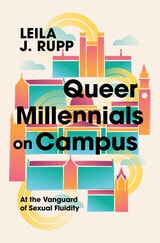
Queer Millennials on Campus
At the Vanguard of Sexual FluidityLeila J. Rupp
University of Chicago Press, 2027
An intimate portrayal of the college experiences of queer and non-binary millennials and what they tell us about the shifting shape of desires and identities in the twenty-first century.
College has long been considered a distinct place for self-discovery. This is particularly true when it comes to gender and sexual identities. In Queer Millennials on Campus, Leila J. Rupp draws on a host of remarkably open and honest interviews with queer women and nonbinary assigned-female-at-birth students at the University of California, Santa Barbara. The accessible narrative wends its way through their lives, from their first experiences of queer desires, through their intimacies and relationships, negotiating their identities, and coming out (or not) to friends and family members. Rupp sheds new light on the Millennial generation, who played a pivotal role in popularizing and embracing the concept of sexual fluidity, helping to challenge older notions of stable sexual and gender identities.
Ultimately, the voices in the book argue that self-awareness about one’s desires, intimate relationships, and identities should be acknowledged and celebrated. Written with deep empathy and understanding, Queer Millennials on Campus honors queer sexual awareness and joy.
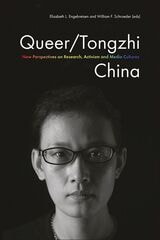
Queer/Tongzhi China
New Perspectives on Research, Activism and Media CulturesEdited by Elisabeth L. Engebretsen and William F. Schroeder
National University of Singapore Press, 2015
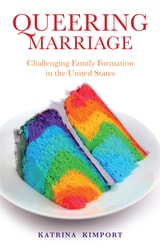
Queering Marriage
Challenging Family Formation in the United StatesKimport, Katrina
Rutgers University Press, 2013
Co-Winner of the 2015 Charles Tilly Award for Best Book of the Collective Behavior and Social Movements section from the American Sociological Association
Over four thousand gay and lesbian couples married in the city of San Francisco in 2004. The first large-scale occurrence of legal same-sex marriage, these unions galvanized a movement and reignited the debate about whether same-sex marriage, as some hope, challenges heterosexual privilege or, as others fear, preserves that privilege by assimilating queer couples.
In Queering Marriage, Katrina Kimport uses in-depth interviews with participants in the San Francisco weddings to argue that same-sex marriage cannot be understood as simply entrenching or contesting heterosexual privilege. Instead, she contends, these new legally sanctioned relationships can both reinforce as well as disrupt the association of marriage and heterosexuality.
During her deeply personal conversations with same-sex spouses, Kimport learned that the majority of respondents did characterize their marriages as an opportunity to contest heterosexual privilege. Yet, in a seeming contradiction, nearly as many also cited their desire for access to the normative benefits of matrimony, including social recognition and legal rights. Kimport’s research revealed that the pattern of ascribing meaning to marriage varied by parenthood status and, in turn, by gender. Lesbian parents were more likely to embrace normative meanings for their unions; those who are not parents were more likely to define their relationships as attempts to contest dominant understandings of marriage.
By posing the question—can queers “queer” marriage?—Kimport provides a nuanced, accessible, and theoretically grounded framework for understanding the powerful effect of heterosexual expectations on both sexual and social categories.

Questioning the Super-Rich
Jennifer Smith Maguire and Paula Serafini, special issue editors
Duke University Press, 0
Contributors. Jonathan Beaverstock, Roger Burrows, Aeron Davis, Sarah Hall, Caroline Knowles, Jo Littler, Joanne Roberts, Elisabeth Schimpföss, Paula Serafini, Jennifer Smith Maguire