Results by title
4155 books match the query 'State & Local' and 8 start with q
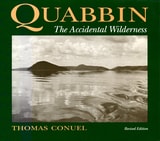
Quabbin
The Accidental WildernessThomas Conuel
University of Massachusetts Press, 1990
When one looks out on the quiet waters and forested hills of Quabbin Reservoir in west central Massachusetts, it is hard to imagine that the area was once dotted with buildings and farmlands or that it echoed with the activity of several villages and towns. Today, the daytime silence may be broken only by the cry of a hawk overhead or the slap of a plunging fish, and the evening calm, by the lonesome howl of a coyote. But in the nineteenth century, things were quite different.
In 1895, engineers for the Metropolitan Water Board began to search the state of Massachusetts for a site on which to construct a reservoir to supply water for the growing city of Boston. Sixty-five miles west of the city, in a region of high hills and running streams known as the Swift River Valley, they found what they were looking for. When Quabbin Reservoir was finally completed and filled in 1946, the engineers had created the third largest body of fresh water in New England and hand accomplished one of the larger public works projects of its time. They had also uprooted and displaced the valley's inhabitants, leveled and flooded four towns and six villages—and formed a magnificent wilderness on some 85,000 acres.
The valley that was once known for its picturesque villages and mill ponds is now, over forty years later, home to a wide array of wildlife. Coyote, bobcat, and deer flourish, and Quabbin's eagle restoration project, begun in 1982, produced the first nesting pair of bald eagles in Massachusetts in almost a century. Today, the bald eagle population at Quabbin is estimated at forty-one birds.
But this accidental wilderness is being increasingly threatened. As early as the 1950s, the sounds of power boats occasionally intruded on the peaceful silence of the waters. In more recent years, acid rain, ozone and other pollutants, the ravages of a herd of hungry deer, and demands for increased recreational use are all jeopardizing Quabbin's waters and forests.
This book tells the story of Quabbin, tracing Quabbin's history, describing its natural resources, and discussing the environmental challenges it currently faces. The original edition, issued by the Massachusetts Audubon Society in 1981, has now been expanded and updated.
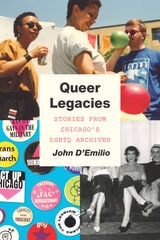
Queer Legacies
Stories from Chicago’s LGBTQ ArchivesJohn D'Emilio
University of Chicago Press, 2020
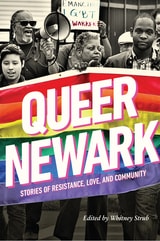
Queer Newark
Stories of Resistance, Love, and CommunityWhitney Strub
Rutgers University Press, 2024
Histories of gay and lesbian urban life typically focus on major metropolitan areas like San Francisco and New York, opportunity-filled destinations for LGBTQ migrants from across the country. Yet there are many other queer communities in economically depressed cities with majority Black and Hispanic populations that receive far less attention. Though just a few miles from New York, Newark is one of these cities, and its queer histories have been neglected—until now.
Queer Newark charts a history in which working-class people of color are the central actors and in which violence, poverty, and homophobia could never suppress joy, resistance, love, and desire. Drawing from rare archives that range from oral histories to vice squad reports, this collection’s authors uncover the sites and people of Newark’s queer past in bars, discos, ballrooms, and churches. Exploring the intersections of class, race, gender, and sexuality, they offer fresh perspectives on the HIV/AIDS epidemic, community relations with police, Latinx immigration, and gentrification, while considering how to best tell the rich and complex stories of queer urban life. Queer Newark reveals a new side of New Jersey’s largest city while rewriting the history of LGBTQ life in America.
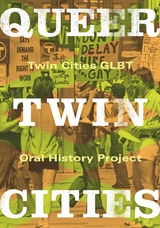
Queer Twin Cities
University of Minnesota Press, 2010
A pioneering look at the queer history, politics, and spaces of the Twin Cities
The Twin Cities is home to one of the largest and most vital GLBT populations in the nation—and one of the highest percentages of gay residents in the country. Drawn from the pioneering work of the Twin Cities GLBT Oral History Project—a collective organization of students, scholars, and activists devoted to documenting and interpreting the lives of GLBT people in Minneapolis and St. Paul—Queer Twin Cities is a uniquely critical collection of essays on Minnesota’s vibrant queer communities, past and present.
A rich blend of oral history, archival research, and ethnography, Queer Twin Cities uses sexuality to chart connections between people’s lives in Minnesota. Topics range from turn-of-the-century Minneapolis amid moral reform—including the highly publicized William Williams murder trial and efforts to police Bridge Square, aka ‘skid row’—to northern Minnesota and the importance of male companionship among lumber workers, and to postwar life, when the increased visibility of queer life went hand in hand with increased regulation, repression, and violence. Other essays present a portrait of early queer spaces in the Twin Cities, such as Kirmser’s Bar, the Viking Room, and the Persian Palms, and the proliferation of establishments like the Dugout and the 19 Bar. Exploring the activism of GLBT Two-Spirit indigenous people, the antipornography movements of the 1980s, and the role of gay men in the gentrification of Minneapolis neighborhoods, this volume brings the history of queer life and politics in the Twin Cities into fascinating focus.Engaging and revelatory, Queer Twin Cities offers a critical analysis of local history and community and fills a glaring omission in the culture and history of Minnesota, looking not only to a remarkable past but to our collective future.
Queering Rehoboth Beach
Beyond the BoardwalkJames T. Sears
Temple University Press, 2024
Sears draws upon extensive oral history accounts, archival material, and personal narratives to chronicle “the Battle for Rehoboth,” which unfolded in the late 20th century, as conservative town leaders and homeowners opposed progressive entrepreneurs and gay activists. He recounts not just the emergence of the gay and lesbian bars, dance clubs, and organizations that drew the queer community to the region, but also the efforts of local politicians and homeowners, among other groups who fought to develop and protect the traditional identity of this beach town. Moreover, issues of race, class, and gender and sexuality informed opinions as residents and visitors struggled with the AIDS crisis and the legacy of Jim Crow.
Queering Rehoboth Beach is more than just an inspiring story about a community’s resilience and determination to establish a safe space for itself in the wake of the era of Don’t Ask, Don’t Tell. It is also a terrific beach read.
Quicksand and Cactus
Juanita Brooks
Utah State University Press, 1992
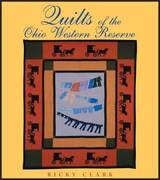
Quilts of the Ohio Western Reserve
Ricky Clark
Ohio University Press, 2005
Quilts of the Ohio Western Reserve includes early quilts brought from Connecticut to the Western Reserve in northeastern Ohio and contemporary quilts, including one by a conservative Amish woman and another inspired by Cleveland’s Rock and Roll Hall of Fame.
Ricky Clark, one of Ohio’s foremost quilt historians, has assembled exquisite examples of calamanco, “T” quilts, and borderless pieced quilts to show the influence of Connecticut aesthetics and history on the making of early quilts in this region. Rich in color, detail, and inventiveness, and often beautifully designed, the quilts of this region commemorate community history, from town fundraisers of the 1890s to a quilt designed by a Lake Erie shipbuilder. Sections of the book include quilts made during the Civil War and for postwar veterans’ organizations as well as military and presidential quilts that relate to the history of the Western Reserve.
Quilt design in Ohio has been celebrated in biennial exhibits, round-robin quilts, and most recently proudly painted on barns in rural Ohio. Quilts of the Ohio Western Reserve, lavishly illustrated with forty color photos of quilts, launches the Ohio Quilt Series. A welcome addition to Ohio’s cultural legacy, this book will interest the wider world of quilt and textile enthusiasts and historians.
Quixote's Soldiers
A Local History of the Chicano Movement, 1966–1981By David Montejano
University of Texas Press, 2010