Results by title
1214 books match the query 'Subjects & Themes' and 6 start with q
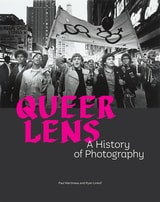
Queer Lens
A History of PhotographyPaul Martineau
J. Paul Getty Trust, The, 2025
Copiously illustrated, Queer Lens explores the transformative role of photography in LGBTQ+ communities from the nineteenth century to the present day.
Winner of the 2026 Lambda Literary Award for LGBTQ+ Anthology
“An outstanding addition to the growing body of scholarship around queer imagery.”
—Jim Van Buskirk, The Bay Area Reporter
“A tour de force. . . . A profound collective story of creativity, joy and resistance.”
—Emma Jacob, Aesthetica Magazine
“Potent and inspiring. . . . An empowering photography retrospective that reflects American queer communities.”
—Aleena Ortiz, Foreword Reviews
“A deeply significant and beautifully produced volume."
—All About Photo.com
“Eye-catching."
—Matthew Wexler, Queerty.com
Photography’s power to capture a subject—representing reality, or a close approximation—has inherently been linked with the construction and practice of identity. Since the camera’s invention in 1839, and despite periods of severe homophobia, the photographic art form has been used by and for individuals belonging to dynamic LGBTQ+ communities, helping shape and affirm queer culture and identity across its many intersections.
Queer Lens explores this transformative force of photography, which has played a pivotal role in increasing queer visibility. Lively essays by scholars and artists explore myriad manifestations of queer culture, both celebrating complex interpretations of people and relationships and resisting rigid definitions. Featuring a rich selection of images—including portraits of queer individuals, visual records of queer kinship, and documentary photographs of early queer groups and protests—this volume investigates the medium’s profound role in illuminating the vibrant tapestry of LGBTQ+ communities.
This volume is published to accompany an exhibition on view at the J. Paul Getty Museum at the Getty Center from June 17 to September 28, 2025.

Queer Tidalectics
Linguistic and Sexual Fluidity in Contemporary Black Diasporic LiteratureEmilio Amideo
Northwestern University Press, 2021
Amideo engages and extends the work of Black queer studies, Oceanic studies, ecocriticism, phenomenology, and new materialism through the theorizations of Sara Ahmed, Omise’eke Natasha Tinsley, M. Jacqui Alexander, Édouard Glissant, José Esteban Muñoz, and Edward Kamau Brathwaite, among others. Ambitious in scope and captivating to read, Queer Tidalectics brings Caribbean writers like Glissant and Brathwaite into queer literary analysis—a major scholarly contribution.

Quiet Armor
PoemsStevie Edwards
Northwestern University Press, 2023
Quiet Armor, the third full-length collection from poet Stevie Edwards, examines how capitalism and patriarchy impact romantic relationships and, more broadly, intimacy. Edwards considers the ways in which confessional performances of vulnerability can be coercive, whether popular culture encourages men to seek validation through sexual excess and aggression, and how we encourage women to be complicit in figurative and literal violence against other women.
Drawing on historical and mythological figures—including Medusa, Persephone, Shakespeare’s Lavinia, Saint Agatha, and Saint Christina—Edwards builds a fierce investigation into how rape culture has shaped the literary canon, academia, and the world at large. She brings readers into the quiet and intimate spaces we create despite trauma—or perhaps even because of it. Ultimately, Quiet Armor seeks to reclaim positive intimacy, showing us not only the desperate battles but also the healing embraces. All the while, these poems ask us: What does the end of rape culture look like? How do we get there?
Quiet Orient Riot
Nathalie Khankan
Omnidawn, 2020
Most significantly, Quiet Orient Riot asks of itself, without release or relief: can a text seek linguistic disorientation and reorientation both? Can a text walk the tightrope from detail to detail to envision a kind of awareness that is kin to worship? Quiet Orient Riot does not shy away from a word like “worship.” Nor does it shy away from how such worship might manifest in the words of a poem, bowing to a “chirpy printed sound” in Palestine and a forest of “little justices.”
She is the winner of the 2019 Omnidawn 1st/2nd Poetry Book Contest, chosen by Dawn Lundy Martin.
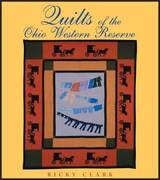
Quilts of the Ohio Western Reserve
Ricky Clark
Ohio University Press, 2005
Quilts of the Ohio Western Reserve includes early quilts brought from Connecticut to the Western Reserve in northeastern Ohio and contemporary quilts, including one by a conservative Amish woman and another inspired by Cleveland’s Rock and Roll Hall of Fame.
Ricky Clark, one of Ohio’s foremost quilt historians, has assembled exquisite examples of calamanco, “T” quilts, and borderless pieced quilts to show the influence of Connecticut aesthetics and history on the making of early quilts in this region. Rich in color, detail, and inventiveness, and often beautifully designed, the quilts of this region commemorate community history, from town fundraisers of the 1890s to a quilt designed by a Lake Erie shipbuilder. Sections of the book include quilts made during the Civil War and for postwar veterans’ organizations as well as military and presidential quilts that relate to the history of the Western Reserve.
Quilt design in Ohio has been celebrated in biennial exhibits, round-robin quilts, and most recently proudly painted on barns in rural Ohio. Quilts of the Ohio Western Reserve, lavishly illustrated with forty color photos of quilts, launches the Ohio Quilt Series. A welcome addition to Ohio’s cultural legacy, this book will interest the wider world of quilt and textile enthusiasts and historians.
Quixotic Authority
The Female Quixote and the Woman Writer, Lennox to AustenJodi L. Wyett
University of Delaware Press, 2026