Results by title
342 books match the query '16th Century' and 20 start with r
REWRITING CHAUCER
CULTURE, AUTHORITY, AND THE IDEA OF THE AUTHENTIC TEXT, 1400–1602THOMAS A. PRENDERGAST
The Ohio State University Press, 1999
This collection of original essays examines how the idea of an authentic Chaucerian text was reimagined and reproduced by medieval and early modern scribes and editors to satisfy and shape the cultural expectations of their audiences. These “reproductions” of Chaucer’s works epitomize the tension between developing notions of what makes a text “authentic” and the cultural pressures that led scribes and editors to construct their own versions of Chaucer and his works.
The book begins by exploring medieval and early modern notions of origins and how they at once illuminate and problematize the recovery of Chaucerian texts. Essays in the second section examine how individual scribes and reading communities reshaped Chaucer’s texts. Finally, we see how the printing press—bringing with it a renewed concern about the idea of authenticity—led both to an increase in the number of works attributed to Chaucer and to increasing anxiety about their authenticity.
The focus on the ways in which Chaucer was rewritten in different cultural and aesthetic contexts will enable medieval and early modern critics to situate Chaucer more fully within his cultural milieu, while illuminating the ways in which his reputation as both a “laureate poet” and a “lewed compilator” affected rewritings of his works. Rewriting Chaucer, then, will appeal both to scholars interested in the critical juncture between manuscript and print culture and to those interested in how culture affects the reproduction of authoritative texts.
Race and Affect in Early Modern English Literature
Carole Mejia LaPerle
Arizona Center for Medieval and Renaissance Studies, 2021
Race and Affect in Early Modern English Literature puts the fields of critical race studies and affect theory into dialogue. Doing so opens a new set of questions: What are the emotional experiences of racial formation and racist ideologies? How do feelings—through the physical senses, emotional passions, or sexual encounters—come to signify race? What is the affective register of anti-blackness that pervades canonical literature? How can these visceral forms of racism be resisted in discourse and in practice? By investigating how race feels, this book offers new ways of reading and interpreting literary traditions, religious differences, gendered experiences, class hierarchies, sexuality, and social identities. So far scholars have shaped the discussion of race in the early modern period by focusing on topics such as genealogy, language, economics, religion, skin color, and ethnicity. This book, however, offers something new: it considers racializing processes as visceral, affective experiences.
Race and Romance
Coloring the PastMargo Hendricks
Arizona Center for Medieval and Renaissance Studies, 2021
Race and Romance: Coloring the Past explores the literary and cultural genealogy of colorism, white passing, and white presenting in the romance genre. The scope of the study ranges from Heliodorus’ Aithiopika to the short novels of Aphra Behn, to the modern romance novel Forbidden by Beverly Jenkins. This analysis engages with the troublesome racecraft of “passing” and the instability of racial identity and its formation from the premodern to the present. The study also looks at the significance of white settler colonialism to early modern romance narratives. A bridge between studies of early modern romance and scholarship on twenty-first-century romance novels, this book is well-suited for those interested in the romance genre.

Radical Tragedy
Religion, Ideology and Power in the Drama of Shakespeare and His ContemporariesJonathan Dollimore
Duke University Press, 2004
Ramsey
The Lives of an English Fenland Town, 1200–1600Anne Reiber DeWindt
Catholic University of America Press, 2006
Rape and Writing in the Heptameron of Marguerite de Navarre
Patricia Francis Cholakian
Southern Illinois University Press, 1991
Marguerite de Navarre (1492–1549), the sister of the French king François I, composed the Heptaméron as a complex collection of seventy-two novellas, creating one of the first examples of realistic, psychological fiction in French literature. These novellas, framed by debates among ten storytellers, all noble lords and ladies, reveal the author’s desire to depart from the purely masculine voice of the age.
Cholakian contends that this Renaissance text is characterized by feminine writing. She reads the text as the product of the author’s personal experience. Beginning her study with the rape narrative in the autobiographical novella 4, she examines how the Heptaméron interacts with male literary traditions and narrative conventions about gender relations. She analyzes such words as rape, and honor, noting how they are defined differently by men and women and how these differences in perception affect the development of both plot and character.
Reading Holinshed's Chronicles
Annabel Patterson
University of Chicago Press, 1994
Although we know it by the name of Raphael Holinshed, editor and major compiler of the 1577 edition, the Chronicles was the work of a group, a collaboration between antiquarians, clergymen, members of parliament, poets, publishers, and booksellers. Through a detailed reading, Patterson argues that the Chronicles convey rich insights into the way the Elizabethan middle class understood their society. Responding to the crisis of disunity which resulted from the Reformation, the authors of the Chronicles embodied and encouraged an ideal of justice, what we would now call liberalism, that extended beyond the writing of history into the realms of politics, law, economics, citizenship, class, and gender. Also, since the second edition of 1587 was called in by the Privy Council and revised under supervision, the work constitutes an important test case for the history of early modern censorship.
An essential book for all students of Tudor history and literature, Reading Holinshed's Chronicles brings into full view a long misunderstood masterpiece of sixteenth-century English culture.
Reading Practice
The Pursuit of Natural Knowledge from Manuscript to PrintMelissa Reynolds
University of Chicago Press, 2024
Reading Practice tells the story of how ordinary people grew comfortable learning from commonplace manuscripts and printed books, such as almanacs, medical recipe collections, and herbals. From the turn of the fifteenth century to the close of the sixteenth century, these were the books English people read when they wanted to attend to their health or understand their place in the universe. Before then, these works had largely been the purview of those who could read Latin. Around 1400, however, medical and scientific texts became available in Middle English while manuscripts became less expensive. These vernacular manuscripts invited their readers into a very old and learned conversation: Hippocrates and Galen weren’t distant authorities whose word was law, they were trusted guides, whose advice could be excerpted, rearranged, recombined, and even altered to suit a manuscript compiler’s needs. This conversation continued even after the printing press arrived in England in 1476. Printers mined manuscripts for medical and scientific texts that they would publish throughout the sixteenth century, though the pressures of a commercial printing market encouraged printers to package these old texts in new ways. Without the weight of authority conditioning their reactions and responses to very old knowledge, and with so many editions of practical books to choose from, English readers grew into confident critics and purveyors of natural knowledge in their own right.
Melissa Reynolds reconstructs shifting attitudes toward medicine and science over two centuries of seismic change within English culture, attending especially to the effects of the Reformation on attitudes toward nature and the human body. Her study shows how readers learned to be discerning and selective consumers of knowledge gradually, through everyday interactions with utilitarian books.
Reassessing Reform
Christopher M. Bellitto
Catholic University of America Press, 2012
Redreaming the Renaissance
Essays on History and Literature in Honor of Guido RuggieroMary Lindemann
University of Delaware Press, 2024
Renaissance Beasts
Of Animals, Humans, and Other Wonderful CreaturesEdited by Erica Fudge
University of Illinois Press, 2004
Taking as its starting point the popularity of speaking animals in sixteenth-century literature and ending with the decline of the imperial Ménagerie during the French Revolution, Renaissance Beasts uses the lens of human-animal relationships to view issues as diverse as human status and power, diet, civilization and the political life, religion and anthropocentrism, spectacle and entertainment, language, science and skepticism, and domestic and courtly cultures.
Within these pages scholars from a variety of disciplines discuss numerous kinds of texts--literary, dramatic, philosophical, religious, political--by writers including Calvin, Montaigne, Sidney, Shakespeare, Descartes, Boyle, and Locke. Through analysis of these and other writers, Renaissance Beasts uncovers new and arresting interpretations of Renaissance culture and the broader social assumptions glimpsed through views on matters such as pet ownership and meat consumption.
Renaissance Beasts is certainly about animals, but of the many species discussed, it is ultimately humankind that comes under the greatest scrutiny.
Renaissance Drama 38
William N. West
Northwestern University Press, 2010
Renaissance Drama, an annual interdisciplinary publication, is devoted to drama and performance as a central feature of Renaissance culture. The essays in each volume explore the traditional canon of drama, the significance of performance, broadly construed, to early modern culture, and the impact of new forms of interpretation on the study of Renaissance plays, theater, and performance.
Volume 38 includes essays that explore topics in early modern drama ranging from Shakespeare’s Jewish questions in The Merchant of Venice and the gender of rhetoric in Shakespeare’s sonnets and Jonson’s plays to improvisation in the commedia dell’arte and the rebirth of tragedy in 1940 Germany.
Repertory of Shakespeare's Company, 1594–1613
Roslyn Lander Knutson
University of Arkansas Press, 1991
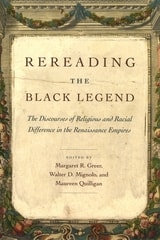
Rereading the Black Legend
The Discourses of Religious and Racial Difference in the Renaissance EmpiresEdited by Margaret R. Greer, Walter D. Mignolo, and Maureen Quilligan
University of Chicago Press, 2008
A distinguished group of contributors here examine early modern imperialisms including the Ottomans in Eastern Europe, the Portuguese in East India, and the cases of Mughal India and China, to historicize the charge of unique Spanish brutality in encounters with indigenous peoples during the Age of Exploration. The geographic reach and linguistic breadth of this ambitious collection will make it a valuable resource for any discussion of race, national identity, and religious belief in the European Renaissance.
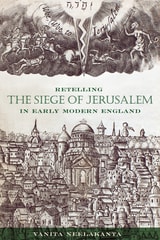
Retelling the Siege of Jerusalem in Early Modern England
Vanita Neelakanta
University of Delaware Press, 2019
Published by University of Delaware Press. Distributed worldwide by Rutgers University Press.
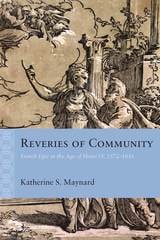
Reveries of Community
French Epic in the Age of Henri IV, 1572–1616Katherine S. Maynard
Northwestern University Press, 2018
Traditionally united by une foi, une loi, un roi (one faith, one law, one king), France under Henri IV was cleaved into warring factions of Catholics and Huguenots. The country suffered episodes of bloodshed such as the St. Bartholomew’s Day Massacre, even as attempts were made to attenuate the violence through frequent edicts, including those of St. Germain (1570) and Nantes (1598). Maynard examines the rich and often dismissed body work written during these bloody decades: Pierre de Ronsard’s Franciade, Guillaume Salluste Du Bartas’s La Judit and La Sepmaine, Sébastian Garnier’s La Henriade, Agrippa d’Aubigné’s Les Tragiques, and others. She traces how French poets, taking classics such as Virgil’s Aeneid and Homer’s Iliad as their models, reimagined possibilities for French reconciliation and unity.
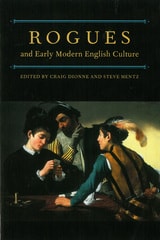
Rogues and Early Modern English Culture
Craig Dionne and Steve Mentz, Editors
University of Michigan Press, 2004
-Jonathan Dollimore, York University
"Rogues and Early Modern English Culture is an up-to-date and suggestive collection on a subject that all scholars of the early modern period have encountered but few have studied in the range and depth represented here."
-Lawrence Manley, Yale University
"A model of cross-disciplinary exchange, Rogues and Early Modern English Culture foregrounds the figure of the rogue in a nexus of early modern cultural inscriptions that reveals the provocation a seemingly marginal figure offers to authorities and various forms of authoritative understanding, then and now. The new and recent work gathered here is an exciting contribution to early modern studies, for both scholars and students."
-Alexandra W. Halasz, Dartmouth College
Rogues and Early Modern English Culture is a definitive collection of critical essays on the literary and cultural impact of the early modern rogue. Under various names-rogues, vagrants, molls, doxies, vagabonds, cony-catchers, masterless men, caterpillars of the commonwealth-this group of marginal figures, poor men and women with no clear social place or identity, exploded onto the scene in sixteenth-century English history and culture. Early modern representations of the rogue or moll in pamphlets, plays, poems, ballads, historical records, and the infamous Tudor Poor Laws treated these characters as harbingers of emerging social, economic, and cultural changes.
Images of the early modern rogue reflected historical developments but also created cultural icons for mobility, change, and social adaptation. The underclass rogue in many ways inverts the familiar image of the self-fashioned gentleman, traditionally seen as the literary focus and exemplar of the age, but the two characters have more in common than courtiers or humanists would have admitted. Both relied on linguistic prowess and social dexterity to manage their careers, whether exploiting the politics of privilege at court or surviving by their wits on urban streets.
Deftly edited by Craig Dionne and Steve Mentz, this anthology features essays from prominent and emerging critics in the field of Renaissance studies and promises to attract considerable attention from a broad range of readers and scholars in literary studies and social history.
Romans in a New World
Classical Models in Sixteenth-Century Spanish AmericaDavid A. Lupher
University of Michigan Press, 2006
In the course of this debate, many Spaniards were inspired to think more deeply on their own ethnic ancestry and identity, as Spanish treatment of the New World natives awakened the slumbering memory of Roman treatment of the Iberian tribes whom modern Spaniards were now embracing as their truest ancestors. At the same time, growing awareness of the cultural practices--especially the religious rituals--of the American natives framed a new perspective on both the pre-Christian ancestors of modern Europeans and even on the survival of "pagan" customs among modern Europeans themselves. In this incisive study, David A. Lupher addresses the increasingly debated question of the impact the discovery of the New World had upon Europeans' perceptions of their identity and place in history.
Romans in a New World holds much to interest both classicists and students of the history and culture of early modern Europe--especially, though not exclusively, historians of Spain. David A. Lupher's concern with the ideology of imperialism and colonization and with cross-cultural negotiations will be useful to students of cultural studies, as well.
David A. Lupher is Professor of Classics, University of Puget Sound.
Rude and Barbarous Kingdom
Russia in the Accounts of Sixteenth-Century English VoyagersEdited by Lloyd E. Berry and Robert O. Crummey
University of Wisconsin Press, 1972
Lloyd E. Berry and Robert O. Crummey offer edited accounts of six English voyagers and their experiences in Muscovy Russia between 1553 and 1600. With modernized spelling and presentation, these accounts are accompanied by a glossary of Russian terms, introductions of their authors, and annotations that help put the travelers’ narratives into perspective.
Ruling Peacefully
Cardinal Ercole Gonzaga and Patrician Reform in Sixteenth-Century ItalyPaul V. Murphy
Catholic University of America Press, 2007