Results by title
60 books match the query '1918-1945' and 4 start with r

Radical Visions and American Dreams
Culture and Social Thought in the Depression YearsRichard H. Pells
University of Illinois Press, 1998
Pells's classic work of American intellectual history includes a new preface.
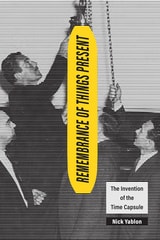
Remembrance of Things Present
The Invention of the Time CapsuleNick Yablon
University of Chicago Press, 2019
By offering a direct line to posterity, time capsules stimulated various hopes for the future. Remembrance of Things Present delves into these treasure chests to unearth those forgotten futures.

Resistance against the Third Reich
1933-1990Edited by Michael Geyer and John W. Boyer
University of Chicago Press, 1994
Contributors include Geoffrey Cocks, Werner G. Jeanrond, Tony Judt, Claudia Koonz, Hans Mommsen, and Frank Trommler.
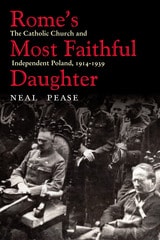
Rome’s Most Faithful Daughter
The Catholic Church and Independent Poland, 1914–1939Neal Pease
Ohio University Press, 2009
When an independent Poland reappeared on the map of Europe after World War I, it was widely regarded as the most Catholic country on the continent, as “Rome’s Most Faithful Daughter.” All the same, the relations of the Second Polish Republic with the Church—both its representatives inside the country and the Holy See itself—proved far more difficult than expected.
Based on original research in the libraries and depositories of four countries, including recently opened collections in the Vatican Secret Archives, Rome’s Most Faithful Daughter: The Catholic Church and Independent Poland, 1914–1939 presents the first scholarly history of the close but complex political relationship of Poland with the Catholic Church during the interwar period. Neal Pease addresses, for example, the centrality of Poland in the Vatican’s plans to convert the Soviet Union to Catholicism and the curious reluctance of each successive Polish government to play the role assigned to it. He also reveals the complicated story of the relations of Polish Catholicism with Jews, Freemasons, and other minorities within the country and what the response of Pope Pius XII to the Nazi German invasion of Poland in 1939 can tell us about his controversial policies during World War II.
Both authoritative and lively, Rome’s Most Faithful Daughter shows that the tensions generated by the interplay of church and state in Polish public life exerted great influence not only on the history of Poland but also on the wider Catholic world in the era between the wars.