Results by title
193 books match the query '1945-' and 10 start with r

Rainbow at Midnight
LABOR AND CULTURE IN THE 1940SGeorge Lipsitz
University of Illinois Press, 1994
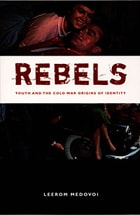
Rebels
Youth and the Cold War Origins of IdentityLeerom Medovoi
Duke University Press, 2005
Alongside the young rebel, the contemporary concept of identity emerged in the 1950s. It was in that decade that “identity” was first used to define collective selves in the politicized manner that is recognizable today: in terms such as “national identity” and “racial identity.” Medovoi traces the rapid absorption of identity themes across many facets of postwar American culture, including beat literature, the young adult novel, the Hollywood teen film, early rock ‘n’ roll, black drama, and “bad girl” narratives. He demonstrates that youth culture especially began to exhibit telltale motifs of teen, racial, sexual, gender, and generational revolt that would burst into political prominence during the ensuing decades, bequeathing to the progressive wing of contemporary American political culture a potent but ambiguous legacy of identity politics.
Recasting America
Culture and Politics in the Age of Cold WarEdited by Lary May
University of Chicago Press, 1989
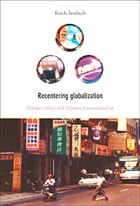
Recentering Globalization
Popular Culture and Japanese TransnationalismKoichi Iwabuchi
Duke University Press, 2002
Iwabuchi has conducted extensive interviews with producers, promoters, and consumers of popular culture in Japan and East Asia. Drawing upon this research, he analyzes Japan’s "localizing" strategy of repackaging Western pop culture for Asian consumption and the ways Japanese popular culture arouses regional cultural resonances. He considers how transnational cultural flows are experienced differently in various geographic areas by looking at bilateral cultural flows in East Asia. He shows how Japanese popular music and television dramas are promoted and understood in Taiwan, Hong Kong, and Singapore, and how "Asian" popular culture (especially Hong Kong’s) is received in Japan.
Rich in empirical detail and theoretical insight, Recentering Globalization is a significant contribution to thinking about cultural globalization and transnationalism, particularly in the context of East Asian cultural studies.
Reforming the Welfare State
Recovery and Beyond in SwedenEdited by Richard B. Freeman, Birgitta Swedenborg, and Robert H. Topel
University of Chicago Press, 2010
Revisioning Italy
National Identity and Global CultureBeverly Allen
University of Minnesota Press, 1997
Explores Italian national identity.
More than any other nation, Italy—from its imperial past to its subordinate present, from its colonial forays to its splendid isolation—embodies the myriad and contradictory historical forms of nationhood. This volume covers a range of subjects drawn from Italy and abroad to study the historical and contemporary formations of Italian national identity. In doing so, the work illuminates Italy past and present as well as the local and global dimensions of national identity in general.
Whether considering opera or Ninja Turtles, these essays reveal how cultural identity is constructed and manipulated-an issue made urgent by the influx of African, Indochinese, and Eastern European immigrants into Italy today. Exile, nationalism, and imagined communities are the topics of several essays, including Antonio Negri’s reflection on his own experience of political militancy and exile. Others focus on Italy’s colonial “unconscious,” Mussolini’s adventures in North Africa, and racism from the late nineteenth century to the present. By analyzing Italy’s European and Mediterranean identities, its highly regional character, its north-south economic imbalance, and its ethnic complexity, this truly interdisciplinary volume resists the hierarchizing and monumentalizing of traditional Italian studies in the United States. It will inform and redirect our understanding of what constitutes “Italy.”Contributors: Mohamed Aden; John Agnew, Syracuse U; Ayele Bekerie, Cornell U; Elaine K. Chang, Rutgers U; Antonio Marazzi, U of Padua, Italy; Francesca Miller, U of California, Davis; Antonio Negri, U of Paris VIII, France; Graziella Parati, Dartmouth College; Karen Pinkus, Northwestern U; Paul Robinson, Stanford U; Pasquale Verdicchio, U of California, San Diego; Marguerite R. Waller, U of California, Riverside; and David Ward, Wellesley College.
Revolution and Subjectivity in Postwar Japan
J. Victor Koschmann
University of Chicago Press, 1996
In a major contribution to modern Japanese intellectual history, J. Victor Koschmann analyzes the debate over subjectivity. He traces the arguments of intellectuals from various disciplines and political viewpoints, and finds that despite their stress on individual autonomy, they all came to define subjectivity in terms of deterministic historical structures, thus ultimately deferring the possibility of radical change in Japan.
Establishing a basis for historical dialogue about democratic revolution, this book will interest anyone concerned with issues of nationalism, postcolonialism, and the formation of identities.
Revolutionary Feminists
The Women's Liberation Movement in SeattleBarbara Winslow
Duke University Press, 2023
Road-Book America
Contemporary Culture and the New PicaresqueRowland A. Sherrill
University of Illinois Press, 2000
Road-Book America discloses how the old picaresque tradition, embodied in such novels as Henry Fielding's Tom Jones and Daniel Defoe's Moll Flanders, opens to include a number of new American texts, both fiction and nonfiction, that decisively share the characterizing form. Sherrill's discussion encompasses hundreds of American narratives published in the past four decades, including such examples of the genre as William Least Heat-Moon's Blue Highways, John Steinbeck's Travels with Charley, James Leo Herlihy's Midnight Cowboy, Bill Moyers's Listening to America, and E. L. Doctorow's Billy Bathgate.
Sketching the socially marginal, ingenuous, traveling characters common to both old and new versions, Sherrill shows how the "new American picaresque" transforms the satirical aims of the original into an effort to map and catalog the immensity and variety of America.
Open, resilient, perennially hopeful, and endowed with a protean adaptability, the protagonist of the new American picaresque follows a therapeutic path for the alienated modern self. Mining the relevance of the reformulated picaresque for American life, Road-Book America shows how this old form, adaptable as the picaro himself, lays the groundwork for spiritual renewal and a restoration of cultural confidence in some old ways of being American.
Rolling on the River
The Best of Steve NealSteve Neal. Foreword by Paul Simon
Southern Illinois University Press, 1999
The longtime political columnist for the Chicago Sun-Times, Neal covered Jane M. Byrne's election in 1979 as the city's first woman mayor and Harold Washington's 1983 triumph as Chicago's first African American mayor. Even people who are not interested in politics are drawn to Neal's column because of his hard-hitting style and lucid insights. Rolling on the River is the first published collection of his work.
In these pages, you'll meet the state legislator who never met a special interest he did not like, an alderman groveling to a mob boss, and the prosecutor who gained notoriety as a publicity hound. Of a junketing congressman, Neal writes: "Instead of sending out a congressional newsletter, [he] ought to be sending his constituents 'Wish you were here' postcards of sandy beaches."
Neal's beat is politics, but his interests are rich and varied. He also writes about sports, music, literature, and film with a point of view that is fresh and original. Neal shows how Muhammad Ali became the heavyweight champion who transcended sports and how Sid Luckman changed football. He writes of Kenny Washington's importance in breaking professional football's color barrier and Steve Prefontaine's courage in taking on the little gray men of the sports establishment. Neal chronicles Paul Robeson's struggles: "His name became a great whisper. . . . The injustices against Paul Robeson have not been righted."
Nobel laureate Saul Bellow tells Neal that comedy is the bright hope of American fiction because it is too difficult for writers in this country to grasp the worst of the human condition. Neal tells why Frank Sinatra called Chicago his kind of town and also shows how the city inspires the poetry of Gwendolyn Brooks.
Neal, a former White House correspondent, shares his perspective as one of the few reporters to have interviewed Ronald Reagan in four different decades. He recalls spending an evening with Richard M. Nixon, defends Harry Truman's most controversial decision, and writes from Ireland of John F. Kennedy's enduring legacy in the nation of his ancestors. Neal portrays William Jefferson Clinton as the "world's oldest teenager."
With vivid imagery, Neal makes his subjects come alive. Mayor Richard M. Daley is likened to Forrest Gump, and the legendary boxing announcer Ben Bentley is hailed as the last of the Damon Runyon characters.
Tough but fair. Illuminating. Compassionate. That's the best of Steve Neal.