Results by title
60 books match the query '1947-' and 2 start with r
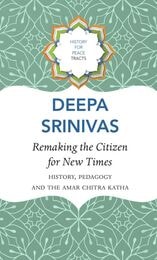
Remaking the Citizen for New Times
History, Pedagogy and the Amar Chitra KathaDeepa Sreenivas
Seagull Books, 2024
How does orthodoxy maintain its power over culture? In Remaking the Citizen for New Times, Deepa Sreenivas explores how the Amar Chitra Katha, a widely read comic series started in 1967 in India, influenced the historical and national consciousness of young readers in a conservative direction. Tacitly blaming Nehruvian welfarism of the time for the moral decline of the nation, the Amar Chitra Katha emerged as a literary articulation of the Indian right’s Hindu-nationalist ideology in a modern, bourgeois guise. To renew Hindutva hegemony, the comic series gave orthodox ideas a new sheen, both in its form and content, merging Western comic styles with Indian visual storytelling traditions on the one hand, and combining mythological characters with political figureheads into harmonious narratives on the other—making it difficult to sift history from myths and legends. Sreenivas deftly argues that these mythological-political tales emphasized the instructive rather than the informative potential of history, encouraging neoliberal values such as merit and hard work while ignoring caste or class as systemic issues.
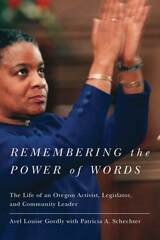
Remembering the Power of Words
The Life of an Oregon Activist, Legislator, and Community LeaderAvel Louise Gordly
Oregon State University Press, 2011
Remembering the Power of Words recounts the personal and professional journey of Avel Gordly, the first African-American woman elected to the Oregon State Senate.
The book is a brave and honest telling of Gordly’s life. She shares the challenges and struggles she faced growing up black in Portland in the 1950s and 1960s, as well as her determination to attend college, the dedication to activism that took her from Portland to Africa, and her eventual decision to run for a seat in the state legislature.
That words have power is a constant undercurrent in Gordly’s account and a truth she learned early in life. “Growing up, finding my own voice,” she writes, “was tied up with denying my voice or having it forcefully rejected and in all of that the memory of my father is very strong. To this day—and I am today a very experienced public speaker—preparation to speak takes a great deal of energy.” That this memoir has its origins as an oral history is fitting since Gordly has used her voice, out loud, to teach and inspire others for so many years.
Important as a biographical account of one significant Oregonian’s story, the book also contributes “broader narratives touching on Black history (and Oregon’s place within it), and most particularly the politics associated with being an African American woman,” according to series editor Melody Rose.