Results by title
210 books match the query 'African Studies' and 9 start with r
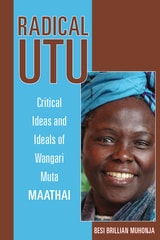
Radical Utu
Critical Ideas and Ideals of Wangari Muta MaathaiBesi Brillian Muhonja
Ohio University Press, 2020
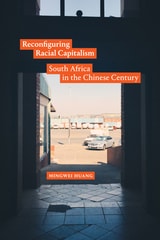
Reconfiguring Racial Capitalism
South Africa in the Chinese CenturyMingwei Huang
Duke University Press, 2024
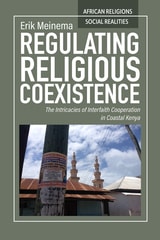
Regulating Religious Coexistence
The Intricacies of Interfaith Cooperation in Coastal KenyaErik Meinema
Ohio University Press, 0
Regulating Religious Coexistence offers a compelling ethnographic analysis of how Muslims, Christians, and practitioners of indigenous African religions negotiate coexistence in Kenya’s coastal region. The book conceptualizes religious diversity as a dynamic field shaped by multiple partly intersecting and partly conflicting models of interaction. These include the political secularism promoted by the Kenyan state and civil society organizations focused on interfaith harmony, forms of competition between religious groups, and pluralistic practices in which individuals draw on multiple traditions to meet spiritual needs.
Through a close examination of civil society initiatives funded by Western donors to foster peacebuilding and to counter violent extremism, the book investigates how these models for coexistence are negotiated and contested and how they intersect with historical and contemporary patterns. It demonstrates that modes of religious coexistence in coastal Kenya have been shaped by colonial and postcolonial governance, transregional connections, and interactions between Christians, Muslims, and Traditionalists across time.
As one of the few monographs on political secularism in an African context, Regulating Religious Coexistence makes a significant contribution to scholarship on religious diversity and coexistence. It situates Christianity, Islam, and indigenous African traditions within a single conceptual framework, broadening earlier studies that mostly treated them in isolation. This book is essential reading for scholars of religion, anthropology, African studies, and political theory, offering fresh insights into the complex realities of religious diversity in Africa and beyond.
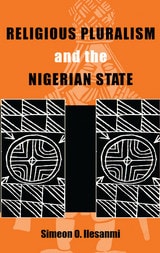
Religious Pluralism and the Nigerian State
Mis Af#66Simeon O. Ilesanmi
Ohio University Press, 1996
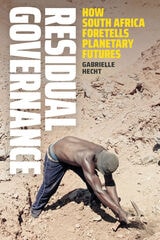
Residual Governance
How South Africa Foretells Planetary FuturesGabrielle Hecht
Duke University Press, 2023
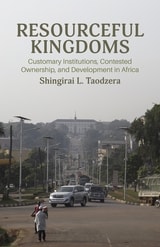
Resourceful Kingdoms
Customary Institutions, Contested Ownership, and Community Development in AfricaShingirai Taodzera
Ohio University Press, 0
Resourceful Kingdoms investigates the struggle for control over Uganda’s emerging oil sector, centering on the Bunyoro Kingdom’s unsuccessful effort to secure ownership of resources discovered on its ancestral lands. Drawing on extensive fieldwork, the book shows how the military-backed National Resistance Movement government consolidated authority over an estimated two billion barrels of oil, while Bunyoro communities experienced displacement, land loss, political tension, and significant environmental harm even before production began. The Bunyoro case reflects a wider pattern in which rural, resource-rich populations across Africa are marginalized as governments and multinational corporations convert natural resources into state-centered revenues.
The book further explores how indigenous kingdoms might come to own resources and channel revenues toward sustainable, culturally grounded development. Through comparative case studies of Uganda’s powerful Buganda Kingdom and South Africa’s Bafokeng Kingdom—widely recognized for community-based mineral ownership and effective wealth management—Resourceful Kingdoms illustrates how traditional institutions can pair with corporate structures, private land ownership, and diversified investment strategies to strengthen community prosperity.
From this analysis emerges strategic coexistence, a new framework that outlines how kingdoms can secure resource rights independent of shifting state policies or corporate social-responsibility initiatives. Presented as both a philosophy and a set of practical steps, strategic coexistence urges kingdoms to formalize land ownership, build strong indigenous governance systems, create community-owned corporations, reinvest resource revenues in long-term development, and transition away from dependence on extractive industries. Resourceful Kingdoms ultimately repositions African kingdoms as dynamic, contemporary governance institutions with significant potential to influence natural resource administration and advance community well-being.
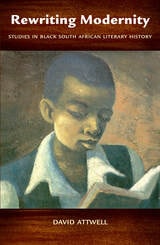
Rewriting Modernity
Studies in Black South African Literary HistoryDavid Attwell
Ohio University Press, 2006
Rewriting Modernity: Studies in Black South African Literary History connects the black literary archive in South Africa—from the nineteenth-century writing of Tiyo Soga to Zakes Mda in the twenty-first century—to international postcolonial studies via the theory of transculturation, a position adapted from the Cuban anthropologist Fernando Ortiz.
David Attwell provides a welcome complication of the linear black literary history—literature as a reflection of the process of political emancipation—that is so often presented. He focuses on cultural transactions in a series of key moments and argues that black writers in South Africa have used print culture to map themselves onto modernity as contemporary subjects, to negotiate, counteract, reinvent, and recast their positioning within colonialism, apartheid, and the context of democracy.
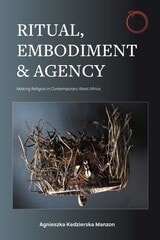
Ritual, Embodiment, and Agency
Making Religion in Contemporary West AfricaAgnieszka Kedzierska Manzon
HAU, 2026
Ritual, Embodiment, and Agency shows through rich ethnographic analysis how Mande people in West Africa resort to multiple ritual practices to address an “episteme of doubt.” In the context of armed conflicts and terrorist attacks, climate disruptions, financial crises, and illness, members of “hunter societies," experts who handle certain agentive artifacts, and adepts in a spiritual possession cult deal with a complex past and uncertain future through creative embodied engagement. Formed within and partially against a predominantly Islamic context and the spread of charismatic Christianities, such embodied ways of acting enable these religious specialists to become “virtuous subjects” to change their relations to the world and to themselves. This is an English translation of Corps rituels. La fabrique du religieux en pays mandingue (Mali, Guinée, Côte d'Ivoire).
Rwanda's Genocide Heritage
Between Justice and SovereigntyDelia Duong Ba Wendel
Duke University Press, 2025