Results by title
653 books match the query 'Animals' and 22 start with r
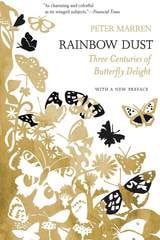
Rainbow Dust
Three Centuries of Butterfly DelightPeter Marren
University of Chicago Press, 2016
At the age of five, Marren had his “Nabokov Moment,” catching his first butterfly and feeling the dust of its colored scales between his fingers. It was a moment that would launch a lifetime’s fascination rivaling that of the famed novelist—a fascination that put both in good company. From the butterfly collecting and rearing craze that consumed North America and Europe for more than two hundred years (a hobby that in some cases bordered on madness), to the potent allure of butterfly iconography in contemporary advertisements and their use in spearheading calls to conserve and restore habitats (even though butterflies are essentially economically worthless), Marren unveils the many ways in which butterflies inspire us as objects of beauty and as symbols both transient and transcendent.
Floating around the globe and through the whole gamut of human thought, from art and literature to religion and science, Rainbow Dust is a cultural history rather than merely a natural one, a tribute to butterflies’ power to surprise, entertain, and obsess us. With a sway that far surpasses their fragile anatomy and gentle beat, butterfly wings draw us into the prismatic wonders of the natural world—and, in the words of Marren, these wonders take flight.
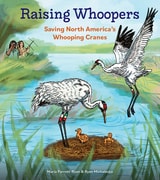
Raising Whoopers
Saving North America’s Whooping CranesMaria Parrott-Ryan
Wisconsin Historical Society Press, 2027
The inspiring story of ingenuity and dedication that saved a remarkable bird from the brink of extinction.
The distinctive whoop-whoop call of the whooping crane could once be heard across North America. By the middle of the twentieth century, however, habitat loss and hunting pushed these towering birds—the tallest on the continent—to the brink of extinction, with only fifteen individuals left in the wild. In the 1970s, two young visionaries founded the International Crane Foundation in Baraboo, Wisconsin, launching innovative efforts that would help change the species’ future and bring “whoopers” back into our wetlands.
Rich with fascinating natural history, larger-than-life personalities, and unforgettable adventures, Raising Whoopers tells the remarkable true story of one of North America’s most ambitious wildlife conservation efforts. Young readers will meet unforgettable cranes with names like Gee Whiz and Whoopsie, along with conservation heroes who hatched chicks by hand, performed crane courtship dances, and piloted ultralight aircraft across hundreds of miles to teach young birds how and where to migrate. Through triumphs, setbacks, and decades of perseverance, these wildlife conservationists demonstrated how creativity, science, and dedication can make a difference for endangered wildlife.
Geared toward ages 10–14, this engaging and accessible book, written in conjunction with the International Crane Foundation, introduces young readers to the captivating world of whooping cranes—and the scientists and ordinary citizens who worked together to ensure these birds had a future. The book concludes by showing that conservation is not just the work of experts—it’s something anyone can be part of. By connecting the story of whooping cranes to wildlife and habitats in our own communities, Raising Whoopers inspires the next generation to look more closely at the natural world and consider the role they can play in protecting it.
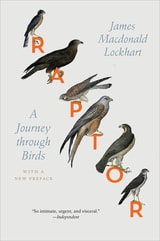
Raptor
A Journey through BirdsJames Macdonald Lockhart
University of Chicago Press, 2017
Taking as his guide the nineteenth-century Scottish naturalist and artist William MacGillivray, Lockhart loosely follows the historical trail forged by MacGillivray as he ventured from Aberdeen to London filling his pockets with plants and writing and illustrating the canonical A History of British Birds. Linking his journey to that of his muse, Lockhart shares his own encounters with raptors ranging from the scarce osprey to the successfully reintroduced red kite, a species once protected by medieval royal statute, revealing with poetic immediacy the extraordinary behaviors of these birds and the extreme environments they call home.
Creatures both worshipped and reviled, raptors have a talon-hold on the human heart and imagination. With his book, Lockhart unravels these complicated ties in a work by turns reverent and euphoric—an interweaving of history, travel, and nature writing at its best. A hymn to wanderers, to the land and to the sky, and especially to the birds, Raptor soars.
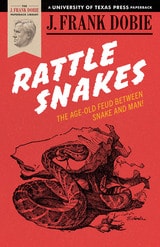
Rattlesnakes
By J. Frank Dobie
University of Texas Press, 1982
Here are observations and speculations, legends and yarns, even gossip about the habits and dispositions of these extraordinary creatures—rattlesnakes—their reported size, deadliness, and power to charm their natural enemies. Here are descriptions of actual fights to the death between rattlesnakes and other animals and accounts of the strange experiences human beings have had with them, as well as tips on where to find them and how to act when you see one.
Dobie began systematically collecting lore about the rattlesnake world many years ago, using some of it in such regional publications as Southwest Review and incorporating much of it into essays—with the intention of eventually putting together a book about rattlesnakes. Now, in this collection of twenty-two articles, his wish is posthumously fulfilled.
Only Frank Dobie could tell of this fascinating and frightening creature with such wisdom and humor, thereby tempering "the age-old feud between the snake and man." And the rattlesnake—who once aroused fear among even the boldest men in the Old West—can at last be regarded with tolerance, respect, and even affection.
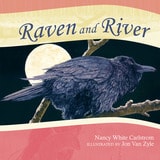
Raven and River
Nancy White Carlstrom
University of Alaska Press, 2011
Raven and River leads young readers on a fantastical journey with a raven across the icy Alaska landscape on the verge of spring. Along the way, the raven’s sonorous cry wakes a cast of sleeping woodland creatures, including a bear, a beaver, a hare, and a squirrel—all of whom join him in imploring the still-frozen river to melt and thereby initiate the change of seasons. Packed with information and featuring vibrant full-color illustrations by Jon Van Zyle, Raven and River brings to life these two important harbingers of Alaska’s spring.
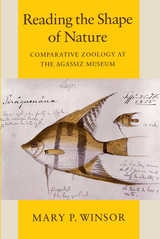
Reading the Shape of Nature
Comparative Zoology at the Agassiz MuseumMary P. Winsor
University of Chicago Press, 1991
In 1859, Louis Agassiz established the Museum of Comparative Zoology to house research on the ideal types that he believed were embodied in all living forms. Agassiz's vision arose from his insistence that the order inherent in the diversity of life reflected divine creation, not organic evolution. But the mortar of the new museum had scarcely dried when Darwin's Origin was published. By Louis Agassiz's death in 1873, even his former students, including his son Alexander, had defected to the evolutionist camp. Alexander, a self-made millionaire, succeeded his father as director and introduced a significantly different agenda for the museum.
To trace Louis and Alexander's arguments and the style of science they established at the museum, Winsor uses many fascinating examples that even zoologists may find unfamiliar. The locus of all this activity, the museum building itself, tells its own story through a wonderful series of archival photographs.
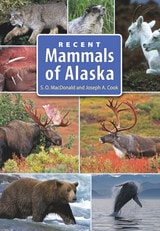
Recent Mammals of Alaska
Stephen O. MacDonald and Joseph A. Cook
University of Alaska Press, 2009
From the polar bear and the gray wolf to the walrus and river otter, there are 115 species of mammals in Alaska that have never been fully catalogued until now. Biologists Joseph A. Cook and Stephen O. MacDonald have compiled here the first comprehensive guide to all of Alaska’s mammals, big and small, endearing and ferocious.
Through extensive fieldwork and research the authors have produced a unique and authoritative reference. Detailed entries for each species include distribution and taxonomic information, status, habitat, and fossil history. Appendices include quick reference listings of mammal distribution by region, specimen locations, conservation status, and the incidence of Pleistocene mammals. The guide is generously illustrated with line drawings by Alaskan artist W. D. Berry and includes several maps indicating populations and locations of species.
Mammals of Alaska will be an accessible, easy to use source for scholars and hobbyists alike.
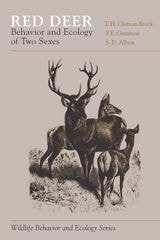
Red Deer
Behavior and Ecology of Two SexesT. H. Clutton-Brock, F. E. Guinness, and S. D. Albon
University of Chicago Press, 1982
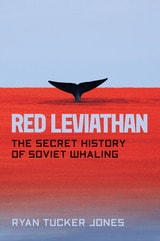
Red Leviathan
The Secret History of Soviet WhalingRyan Tucker Jones
University of Chicago Press, 2022
The Soviet Union killed over six hundred thousand whales in the twentieth century, many of them illegally and secretly. That catch helped bring many whale species to near extinction by the 1970s, and the impacts of this loss of life still ripple through today’s oceans. In this new account, based on formerly secret Soviet archives and interviews with ex-whalers, environmental historian Ryan Tucker Jones offers a complete history of the role the Soviet Union played in the whales’ destruction. As other countries—especially the United States, Great Britain, Japan, and Norway—expanded their pursuit of whales to all corners of the globe, Stalin determined that the Soviet Union needed to join the hunt. What followed was a spectacularly prodigious, and often wasteful, destruction of humpback, fin, sei, right, and sperm whales in the Antarctic and the North Pacific, done in knowing violation of the International Whaling Commission’s rules. Cold War intrigue encouraged this destruction, but, as Jones shows, there is a more complex history behind this tragic Soviet experiment. Jones compellingly describes the ultimate scientific irony: today’s cetacean studies benefited from Soviet whaling, as Russian scientists on whaling vessels made key breakthroughs in understanding whale natural history and behavior. And in a final twist, Red Leviathan reveals how the Soviet public began turning against their own country’s whaling industry, working in parallel with Western environmental organizations like Greenpeace to help end industrial whaling—not long before the world’s whales might have disappeared altogether.
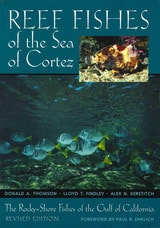
Reef Fishes of the Sea of Cortez
The Rocky-Shore Fishes of the Gulf of California, Revised EditionBy Donald A. Thomson, Lloyd T. Findley, and Alex N. Kerstitch
University of Texas Press, 2000
First published in 1979, this guide has become the standard resource for scientists, divers, and spearfishers interested in the fishes of the tropical Pacific Coast. The authors have revised and updated this edition to include the most current taxonomic information, additional species descriptions, and new illustrations.
Regarding Animals
Arnold Arluke and Clinton R. Sanders
Temple University Press, 1996
What is it about Western society, ask the authors, that makes it possible for people to express great affection for animals as sentient creatures and simultaneously turn a blind eye to the most callous behavior toward them? Animals are sold as expensive commodities, used as food and clothing, killed as vermin, and hunted for sport. But they also are treated as members of the family, used as the cause célèbre of social movements, and made the subject of art, film, and poetry. Such contradictions motivate these unique ethnographers to venture into social worlds most people know about only in passing, such as veterinary clinics where companion animals are cared for, animal shelters where dogs and cats are "mercifully" euthanized, and primate labs where monkeys are kept for animal experimentation.
Arluke and Sanders are not distanced ethnographers. They worked in the clinics, shelters, and laboratories, cleaning cages, assisting in surgery, and participating in "sacrificing" animals for science or helping to provide them with an "easy death." In this book, the people who work with these animals and live through them talk to the authors about the strategies they adopt to cope with the stress of the job.
This fascinating book combines sociological analysis with ethnographic description to give us insight into the history and practice of how we as human beings construct animals, and by extrapolation, how we construct ourselves and others in relation to them.
In the series Animals, Culture, and Society, edited by Arnold Arluke and Clinton R. Sanders.
Regarding Animals
Arnold Arluke, Clinton R. Sanders, and Leslie Irvine
Temple University Press, 2022
Winner of the Charles Horton Cooley Award, Society for the Study of Symbolic Interaction, 1997
The first edition of Regarding Animals provided insight into the history and practice of how human beings construct animals, and how we construct ourselves and others in relation to them. Considerable progress in how society regards animals has occurred since that time. However, shelters continue to euthanize companion animals, extinction rates climb, and wildlife “management” pits human interests against those of animals.
This revised and updated edition of Regarding Animals includes four new chapters, examining how relationships with pets help homeless people to construct positive personal identities; how adolescents who engage in or witness animal abuse understand their acts; how veterinary technicians experience both satisfaction and contamination in their jobs; and how animals are represented in mass media—both traditional editorial media and social media platforms.
The authors illustrate how modern society makes it possible for people to shower animals with affection and yet also to abuse or kill them. Although no culture or subculture provides solutions for resolving all moral contradictions, Regarding Animals illuminates how people find ways to live with inconsistent behavior.
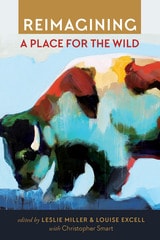
Reimagining a Place for the Wild
Leslie Miller, Louise Excell, and Christopher Smart
University of Utah Press, 2018
Reimagining a Place for the Wild contains a diverse collection of personal stories that describe encounters with the remaining wild creatures of the American West and critical essays that reveal wildlife’s essential place in western landscapes. Gleaned from historians, journalists, biologists, ranchers, artists, philosophers, teachers, and conservationists, these narratives expose the complex challenges faced by wild animals and those devoted to understanding them. Whether discussing keystone species like grizzly bears and gray wolves or microfauna swimming the thermal depths of geysers, these accounts reflect the authors’ expertise as well as their wonder and respect for wild nature. The writers do more than inform our sensibilities; their narratives examine both humanity’s conduct and its capacity for empathy toward other life. A selection of photos and paintings punctuates the volume.
This collection sprang from the Reimagine Western Landscapes Symposium held at the University of Utah’s Taft-Nicholson Environmental Humanities Education Center in Centennial Valley, Montana. These testaments join a chorus of voices seeking improved relations with the western wild in the twenty-first century.
Religious Affects
Animality, Evolution, and PowerDonovan O. Schaefer
Duke University Press, 2015
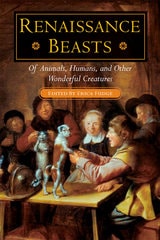
Renaissance Beasts
Of Animals, Humans, and Other Wonderful CreaturesEdited by Erica Fudge
University of Illinois Press, 2004
Taking as its starting point the popularity of speaking animals in sixteenth-century literature and ending with the decline of the imperial Ménagerie during the French Revolution, Renaissance Beasts uses the lens of human-animal relationships to view issues as diverse as human status and power, diet, civilization and the political life, religion and anthropocentrism, spectacle and entertainment, language, science and skepticism, and domestic and courtly cultures.
Within these pages scholars from a variety of disciplines discuss numerous kinds of texts--literary, dramatic, philosophical, religious, political--by writers including Calvin, Montaigne, Sidney, Shakespeare, Descartes, Boyle, and Locke. Through analysis of these and other writers, Renaissance Beasts uncovers new and arresting interpretations of Renaissance culture and the broader social assumptions glimpsed through views on matters such as pet ownership and meat consumption.
Renaissance Beasts is certainly about animals, but of the many species discussed, it is ultimately humankind that comes under the greatest scrutiny.
Reptiles and Amphibians of Minnesota
W.J. Breckenridge
University of Minnesota Press, 1944
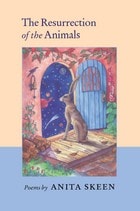
Resurrection of the Animals
Anita Skeen
Michigan State University Press, 2002
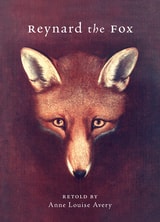
Reynard the Fox
Retold by Anne Louise Avery
Bodleian Library Publishing, 2020
Reynard—a subversive, dashing, anarchic, aristocratic, witty fox from the watery lowlands of medieval East Flanders—is in trouble. He has been summoned to the court of King Noble the Lion, charged with all manner of crimes and misdemeanors. How will he pit his wits against his accusers—greedy Bruin the Bear, pretentious Courtoys the Hound, and dark and dangerous Isengrim the Wolf—to escape the gallows?
Reynard was once the most popular and beloved character in European folklore, as familiar as Robin Hood, King Arthur, or Cinderella. His character spoke eloquently for the voiceless and disenfranchised, but also amused and delighted the elite, capturing hearts and minds across borders and societal classes for centuries. Based on William Caxton’s bestselling 1481 English translation of the Middle Dutch, this edition is an imaginative retelling of the Reynard story, expanded with new interpretations and innovative language and characterizations. With its themes of protest, resistance, and duplicity led by a personable, anti-heroic Fox, this gripping tale is as relevant and controversial today as it was in the fifteenth century.
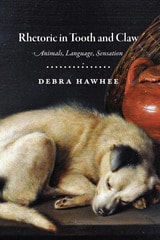
Rhetoric in Tooth and Claw
Animals, Language, SensationDebra Hawhee
University of Chicago Press, 2017
Yet when you look at ancient and early modern treatises on rhetoric, what you find is surprising: they’re crawling with animals. With Rhetoric in Tooth and Claw, Debra Hawhee explores this unexpected aspect of early thinking about rhetoric, going on from there to examine the enduring presence of nonhuman animals in rhetorical theory and education. In doing so, she not only offers a counter-history of rhetoric but also brings rhetorical studies into dialogue with animal studies, one of the most vibrant areas of interest in humanities today. By removing humanity and human reason from the center of our study of argument, Hawhee frees up space to study and emphasize other crucial components of communication, like energy, bodies, and sensation.
Drawing on thinkers from Aristotle to Erasmus, Rhetoric in Tooth and Claw tells a new story of the discipline’s history and development, one animated by the energy, force, liveliness, and diversity of our relationships with our “partners in feeling,” other animals.
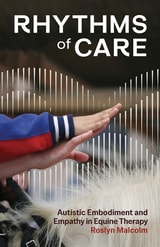
Rhythms of Care
Autistic Embodiment and Empathy in Equine TherapyRoslyn Malcolm
University of Minnesota Press, 2027
A thoughtful exploration of autism, offering a new understanding of social relations through a sensory-perceptual approach
Sensitive and flighty, horses require carefully designed environments to help them feel calm and soothed—precisely the sort of places that are understood to help some autistic youth to flourish. In Rhythms of Care, Roslyn Malcolm changes the conversation around autism, detailing shifting understandings of the condition from neurological misfiring to a whole-body condition of sensory-perceptual difference.
Malcolm chronicles the experiences of several autistic youth and their families at two UK equestrian riding centers, developing new language to elaborate on an advancing sense of autistic embodiment and sociality emerging through equine-assisted therapy. Her inquiry turns away from a focus on autistic brains and toward cultivating ecologies where autistic people's ways of being and embodiments can be accepted and supported.
Tracing the role of sensory and endocrinological knowledge in our formulations of bodies, empathy, and personhood, Rhythms of Care explores more-than-human sociality, multispecies distributions of care, and the anthropology of the body. In our chronically stressful and overstimulating era of late capitalism and inequality, Malcolm envisions a sensory environment for all beings.
Retail e-book files for this title are screen-reader friendly with images accompanied by short alt text and/or extended descriptions.
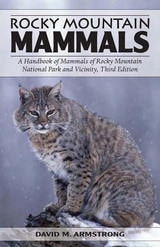
Rocky Mountain Mammals
A Handbook of Mammals of Rocky Mountain National Park and Vicinity, Third EditionDavid M. Armstrong
University Press of Colorado, 2008
Designed for quick reference and enjoyable reading, Rocky Mountain Mammals offers what most field guides don't - a wealth of fascinating information about each species. In seventy-two species accounts, David M. Armstrong describes each animal and its signs, habits, habitat, and natural history, noting times when seasonal events such as elk sparring occur.
Introductory materials and appendices offer rich context and wildlife-watching support, including a checklist with page numbers for quick field reference, an identification key, a glossary, derivations of scientific names, and advice on how, when, and where to watch mammals. Armstrong introduces mammalian evolution, anatomy, and distribution and offers perspective on how the local fauna fits into its geographical setting and into past and potential future faunas of the region.
This lavishly illustrated new edition will delight those who live in and visit the high country and foothills of the Southern Rockies and want to identify mammals and learn about their lives. Published in association with the Rocky Mountain Nature Association.
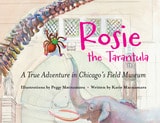
Rosie the Tarantula
A True Adventure in Chicago’s Field MuseumIllustations by Peggy Macnamara; Written by Katie Macnamara
Northwestern University Press, 2017
Several years ago, Rosie went on an expedition to the wonders of the Field’s soaring halls, such as Sue the Tyrannosaurus rex, as well as the secret specimens of animal fossils and human artifacts hidden away in drawers, cabinets, and bins. Renowned Field Museum artist-in-residence Peggy Macnamara brings the marvels of the museum to vivid life in a set of gorgeous and meticulously accurate watercolors. Peggy’s daughter Katie narrates the story of this restless arachnid in rhyme ideal for reading aloud to children.
A keepsake quality book that will delight budding young scientists and their families, Rosie the Tarantula provides a colorful, interactive experience with one of Chicago’s foremost cultural institutions. This one-of-a-kind book is rounded out by fascinating notes for adult readers, and other fun features for further reading.