Results by title
54 books match the query 'Anthropologists' and 4 start with r
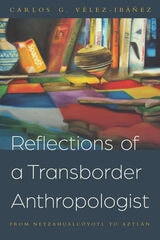
Reflections of a Transborder Anthropologist
From Netzahualcóyotl to AztlánCarlos G. Vélez-Ibáñez
University of Arizona Press, 2020
In each chapter, Vélez-Ibáñez revisits a critical piece of his written work, providing a new introduction and discussion of ideas, sources, and influences for the piece. These are followed by the work, chosen because it accentuates key aspects of his development and formation as an anthropologist. By returning to these previously published works, Vélez-Ibáñez offers insight not only into the evolution of his own thinking and conceptualization but also into changes in the fields in which he has been so influential. Throughout his career, Vélez-Ibáñez has addressed why he does the work that he does, and in this volume he continues to address the personal and intellectual drives that have brought him from Netzahualcóyotl to Aztlán.
Reflections of a Transborder Anthropologist shows how both Vélez-Ibáñez and anthropology have changed and formed over a fifty-year period. Throughout, he has worked to understand how people survive and thrive against all odds. Vélez-Ibáñez has been guided by the burning desire to understand inequality, exploitation, and legitimacy, and, most importantly, to provide platforms for the voiceless to narrate their own histories.
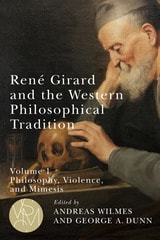
René Girard and the Western Philosophical Tradition, volume 1
Philosophy, Violence, and MimesisAndreas Wilmes
Michigan State University Press, 2024
This is the first collective scholarly effort at situating René Girard in relation to the Western philosophical tradition. Volume 1 features chapters on Plato, Augustine of Hippo, Niccolò Machiavelli, Thomas Hobbes, Blaise Pascal, Baruch Spinoza, Jean-Jacques Rousseau, Adam Smith, Immanuel Kant, Georg Wilhelm Friedrich Hegel, Friedrich Wilhelm Joseph Schelling, Alexis de Tocqueville, Søren Kierkegaard, and René Girard.
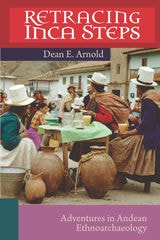
Retracing Inca Steps
Adventures in Andean EthnoarchaeologyDean E. Arnold
University of Utah Press, 2021
This first-person narrative reveals the challenges of living and working in another culture and the many obstacles one can encounter while doing field research. Arnold shares how his feelings of frustration and perceived failure led him to refocus his project, a shift that ultimately led to an entirely new perspective on pottery production in the Andes. Masterfully weaving details about Peru’s geography, ecology, history, prehistory, and culture into his story, he chronicles his change from small-town Midwesterner to a person of much broader vision, newly aware of his North American views and values.
Retracing Inca Steps is an excellent read for the lay person wishing to learn about the environment, prehistory, history, and culture of Peru as well as for students wanting to know more about the joys and rigors of fieldwork.

Ruth Benedict
Stranger in This LandBy Margaret M. Caffrey
University of Texas Press, 1989
Poet, anthropologist, feminist—Ruth Fulton Benedict was all of these and much more. Born into the last years of the Victorian era, she came of age during the Progressive years and participated in inaugurating the modern era of American life. Ruth Benedict: Stranger in This Land provides an intellectual and cultural history of the first half of the twentieth century through the life of an important and remarkable woman.
As a Lyricist poet, Ruth Benedict helped define Modernism. As an anthropologist, she wrote the classic Patterns of Culture and at one point was considered the foremost anthropologist in the United States—the first woman ever to attain such status. She was an intellectual and an artist living in a time when women were not encouraged to be either. In this fascinating study, Margaret Caffrey attempts to place Benedict in the cultural matrix of her time and successfully shows the way in which Benedict was a product of and reacted to the era in which she lived.
Caffrey goes far beyond providing simple biographical material in this well-written interdisciplinary study. Based on exhaustive research, including access for the first time to the papers of Margaret Mead, Benedict's student and friend, Caffrey is able to put Benedict's life clearly in perspective. By identifying the family and educational influences that so sharply influenced Benedict's psychological makeup, the author also closely analyzes the currents of thought that were strong when Victorianism paralleled the Modernism that figured in Benedict's life work. The result is a richly detailed study of a gifted woman.
This important work will be of interest to students of Modernism, poetry, and women's studies, as well as to anthropologists.