Results by title
50 books match the query 'Athens (Greece)' and 2 start with r
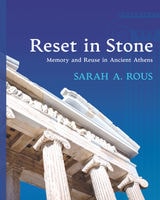
Reset in Stone
Memory and Reuse in Ancient AthensSarah A. Rous
University of Wisconsin Press, 2019
Sarah Rous develops the concept of upcycling to refer to this meaningful reclamation, the intentionality of reemploying each particular object for its specific new context. The upcycling approach drives innovative reinterpretations of diverse cases, including column drums built into fortification walls, recut inscriptions, monument renovations, and the wholesale relocation of buildings. Using archaeological, literary, and epigraphic evidence from more than eight centuries of Athenian history, Rous's investigation connects seemingly disparate instances of the reuse of building materials. She focuses on agency, offering an alternative to the traditional discourse on spolia. Reset in Stone illuminates a vital practice through which Athenians shaped social memory in the physical realm, literally building their past into their city.
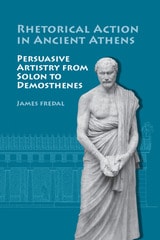
Rhetorical Action in Ancient Athens
Persuasive Artistry from Solon DemosthenesJames Fredal
Southern Illinois University Press, 2006
James Fredal’s wide-ranging survey examines the spatial and performative features of rhetorical artistry in ancient Athens from Solon to Demosthenes, demonstrating how persuasive skill depended not on written treatises, but on the reproduction of spaces and modes for masculine self-formation and displays of contests of character.
Studies of the history of rhetoric generally begin with Homer and Greek orality, then move on to fifth-century Sicily and the innovations of Corax, Tisias, and the older Sophists. While thorough and useful, these narratives privilege texts as the sole locus of proper rhetorical knowledge. Rhetorical Action in Ancient Greece:Persuasive Artistry from Solon to Demosthenes describes rhetoric as largely unwritten and rhetorical skill as closely associated with the ideologies and practices of gender formation and expression. In expanding the notion of rhetorical innovation to include mass movements, large social genres, and cultural practices—rather than the formulations of of individual thinkers and writers—Fredal offers a view of classical rhetoric as local and contingent, bound to the physical spaces, local histories, and cultural traditions of place.
Fredal argues that Greek rhetorical skill remained a function of local spaces like the Pnyx, social practices such as symposia or local meetings, cultural ideologies like those surrounding masculine friendship, and genres of performance such as how to act like a man, herald, sage, tyrant, or democrat. Citizen participation, he explains, was motivated by the desire to display masculine excellence in contests of character by overcoming fear and exerting symbolic and bodily control over self, situation, and audience. He shows how ancient Greek rhetoric employed patterns of “action” such as public oratory and performance to establish, reinforce, or challenge hierarchies and claims to political power.
Instead of examining speeches, handbooks, and theory, Rhetorical Action in Ancient Greece examines the origins of rhetoric in terms of performance. The result is a presentation of rhetorical knowledge as embodied in places and practices with spatial and practical logics that are rarely articulated in written discourse. The volume calls on archaeological, literary, and anthropological evidence about the rhetorical actions of Athens’s leading political agents—including Solon, Peisistratus, Cleisthenes, Demosthenes, and the anonymous “herm-choppers” of the Peloponnesian war—to demonstrate how each generation of political leaders adopted and transformed existing performance genres and spaces to address their own political exigency.