Results by title
478 books match the query 'Bible' and 29 start with r
Race and Biblical Studies
Antiracism Pedagogy for the ClassroomTat-siong Benny Liew
SBL Press, 2022
Classrooms as communities are temporary, but the racial effects can be long term.
The biblical studies classroom can be a site of personal and social transformation. To make it a space for positive change, the contributors to this volume question and reevaluate traditional teaching practices and assessment tools that foreground white, Western scholarship in order to offer practical guidance for an antiracist pedagogy. The introduction and fifteen essays provide tools for engaging issues of social context and scriptural authority, nationalism and religious identities, critical race theory, and how race, gender, and class can be addressed empathetically. Contributors Sonja Anderson, Randall C. Bailey, Eric D. Barreto, Denise Kimber Buell, Greg Carey, Haley Gabrielle, Wilda C. Gafney, Julián Andrés González Holguín, Sharon Jacob, Tat-siong Benny Liew, Francisco Lozada Jr., Shelly Matthews, Roger S. Nam, Wongi Park, Jean-Pierre Ruiz, Abraham Smith, and Kay Higuera Smith share their experience creating classrooms that are spaces that enable the production of new knowledge without reproducing a white subject of the geopolitical West.
Reading 1-2 Peter and Jude
A Resource for StudentsEric F. Mason
SBL Press, 2014
An essential textbook on 1–2 Peter and Jude for readers of all levels
Scholars engage the best contemporary work on 1–2 Peter and Jude in this student-oriented book. The first four chapters in this collection—on authorship and pseudonymity, literary relationships among the three books, epistolary rhetoric, and apocalyptic elements—consider important, foundational issues related to all three epistles. These essays lay the groundwork for more focused chapters that examine theology and theory in 1 Peter as well a stylistic, theological, and thematic overlap in Jude and 2 Peter.
Features:
- A range of theological, literary, and theoretical approaches
- Definitions for specialized terminology
- Historical and cultural background information
- Explanations of methodologies
Reading Biblical Texts Together
Pursuing Minoritized Biblical CriticismTat-Siong Benny Liew
SBL Press, 2022
A solid and suggestive foundation for the future of ethnic-racial minority biblical criticism
This volume, edited by Tat-siong Benny Liew and Fernando F. Segovia, expands the work begun in They Were All Together in One Place? Toward Minority Biblical Criticism (2009) by focusing on specific texts for scholarly engagement and exchange. Essays by scholars of racial/ethnic minoritized criticism of the Bible highlight the various factors and dynamics at play in the formation of power relations within and through four biblical texts: two from the Hebrew Bible (Genesis 21 and 1 Kings 12) and two from the New Testament (John 4 and Revelation 18). Contributors include Ahida Calderón Pilarski, Ronald Charles, Stephanie Buckhanon Crowder, Lynne St. Clair Darden, Steed Vernyl Davidson, Mary F. Foskett, Jione Havea, Tat-siong Benny Liew, Roberto Mata, Henry W. Morisada Rietz, Raj Nadella, Miranda N. Pillay, David Arthur Sánchez, Timothy J. Sandoval, Fernando F. Segovia, Mitzi J. Smith, Angeline M. G. Song, Linzie M. Treadway, Nasili Vaka’uta, Demetrius K. Williams, and Gale A. Yee. Each essay expands our understandings of minoritization from a global perspective.
Reading Ezra 9-10 Tu'a-wise
Rethinking Biblical Interpretation in OceaniaNasili Vaka'uta
SBL Press, 2011
An alternative approach to biblical interpretation from a Tongan standpoint
In Reading Ezra 9–10 Tu'a-wise, Nasili Vaka'uta establishes a theoretical framework for reading that is informed by Tongan cultural perspectives—in this case the “eye-/I-s” of a Tongan commoner (tu’a). She applies a methodology for analysis of biblical texts based on the established theoretical framework and tests the methodology on Ezra 9–10. The book emphasizes contextualizing the task of biblical interpretation (using contextual or specifically indigenous categories of analysis) rather than contextualizing the Bible (applying the insights from one’s reading to one’s situation).Features
- Oceanic way of reading the Biblical texts
- Critical engagement with contextual biblical interpretation
- Practice-based interpretation
Reading Gender in Judges
An Intertextual ApproachShelley L. Birdsong
SBL Press, 2023
Much of the content of Judges can be understood only when read together with other parts of the Hebrew Bible. Narratives in Judges comment, criticize, and reinterpret other texts from across what became the canon, often by troubling gender, disrupting stereotypical binaries, and creating a kind of gender chaos. This volume brings together gender criticism and intertextuality, methods that logically align with intersectional lenses, to draw attention to how race, ethnicity, class, religion, ability, sex, and sexuality all play a role in how one is gendered in the book of Judges. Contributors Elizabeth H. P. Backfish, Shelley L. Birdsong, Zev Farber, Serge Frolov, Susanne Gillmayr-Bucher, Susan E. Haddox, Hyun Chul Paul Kim, Richard D. Nelson, Pamela J. W. Nourse, Tammi J. Schneider, Joy A. Schroeder, Soo Kim Sweeney, Rannfrid I. Lasine Thelle, J. Cornelis de Vos, Jennifer J. Williams, and Gregory T. K. Wong provide substantial new and significant contributions to the study of gender, the book of Judges, and biblical hermeneutics in general. This volume illustrates why biblical scholars and students need to take the intersectional identities of characters and their intertextual environments seriously.
Reading Job with St. Thomas Aquinas
Matthew Levering
Catholic University of America Press, 2020
Reading John with St. Thomas Aquinas
Theological Exegesis and Speculative TheologyMichael Dauphinais
Catholic University of America Press, 2005
Reading Paul's Letter to the Romans
Jerry L. Sumney
SBL Press, 2012
Reading Romans with St. Thomas Aquinas
Matthew Levering
Catholic University of America Press, 2012

Reading Ruth in Asia
Jione Havea
SBL Press, 2015
Reading Women in the New Testament Letters
Korinna Zamfir
SBL Press, 2024
Reading in These Times
Purposes and Practices of Minoritized Biblical CriticismTat-siong Benny Liew
SBL Press, 2024
Reading the Bible in Ancient Traditions and Modern Editions
Studies in Memory of Peter W. FlintAndrew B. Perrin
SBL Press, 2017
A collection of essays commemorating the career contributions of Peter W. Flint
An international group of scholars specializing in various disciplines of biblical studies—Dead Sea Scrolls, Septuagint, Hebrew Bible/Old Testament, Second Temple Judaism, and Christian origins—present twenty-seven new contributions that commemorate the career of Peter W. Flint (1951–2016). Each essay interacts with and gives fresh insight into a field shaped by Professor Flint’s life work. Part 1 explores the interplay between text-critical methods, the growth and formation of the Hebrew Scriptures, and the making of modern critical editions. Part 2 maps dynamics of scriptural interpretation and reception in ancient Jewish and Christian literatures of the Second Temple period.
Features
- Essays that assess the state of the field and reflect on the methods, aims, and best practices for textual criticism and the making of modern critical text editions
- Demonstrations of how the processes of scriptural composition, transmission, and reception converge and may be studied together for mutual benefit
- Clarification of the state/forms of scripture in antiquity and how scripture was extended, rewritten, and recontextualized by ancient Jewish and Christian scribes and communities
Reading the Book of Revelation
A Resource for StudentsDavid L. Barr
SBL Press, 2003
Reading the Epistle of James
A Resource for StudentsEric F. Mason
SBL Press, 2019
Foundational essays for students of New Testament epistles
This accessible introduction to contemporary scholarship on the Epistle of James begins with chapters that consider possible sources and backgrounds used by the author of James, the genre and literary structure of the book, and its major theological themes. Building on this foundation, subsequent chapters examine James through social-scientific readings, perspectives of Latin American immigrants and the marginalized, and major recent developments in textual criticism. The final chapters in the volume address the relationship between the epistle and the historical James, reception of the epistle in the early church, and major Catholic and Protestant interpretations of the book in the Reformation era. The contributions in this volume distill a range of important issues for readers undertaking a serious study of this letter for the first time.
Features
- An introduction to contemporary scholarship on this important but often-overlooked text
- Clear explanations of all technical terms and themes
- In-depth discussions of the importance of Jewish Scripture and interpretative traditions, Greco-Roman philosophy and Jewish wisdom motifs, and biblical perspectives on justice, wealth, and poverty
Reading the Epistle to the Hebrews
Eric F. Mason
SBL Press, 2011
Reading the Song of Songs with St. Thomas Aquinas
Serge-Thomas Bonino
Catholic University of America Press, 2022
Reading with Feeling
Affect Theory and the BibleFiona C. Black
SBL Press, 2019
Essays with a methodological and metacritical focus
The psychological approach known as affect theory focuses on bodily feelings—depression, happiness, disgust, love—and can illuminate both texts and their interpretations. In this collection of essays scholars break new ground in biblical interpretation by deploying a range of affect-theoretical approaches in their interpretations of texts. Contributors direct their attention to the political, social, and cultural formation of emotion and other precognitive forces as a corrective to more traditional historical-critical methods and postmodern approaches. The inclusion of response essays results in a rich transdisciplinary dialog, with, for example, history, classics, and philosophy. Fiona C. Black, Amy C. Cottrill, Rhiannon Graybill, Jennifer L. Koosed, Joseph Marchal, Robert Seesengood, Ken Stone, and Jay Twomey engage a range of texts from biblical, to prayers, to graphic novels. Erin Runions and Stephen D. Moore’s responses push the conversation in new fruitful directions.
Features
Receiving the Bible in faith
historical and theological exegesisDavid M. Williams
Catholic University of America Press, 2004
Recovering Nineteenth-Century Women Interpreters of the Bible
Christiana de Groot
SBL Press, 2007
Women have been thoughtful readers and interpreters of scripture throughout the ages, yet the usual history of biblical interpretation includes few women’s voices. To introduce readers to this untapped source for the history of biblical interpretation, this volume presents forgotten works from the nineteenth century written by women—including Grace Aguilar, Florence Nightingale, and Harriet Beecher Stowe, among others—from various faith backgrounds, countries, and social classes engaging contemporary biblical scholarship. Due to their exclusion from the academy, women’s interpretive writings addressed primarily a nonscholarly audience and were written in a variety of genres: novels and poetry, catechisms, manuals for Bible study, and commentaries on the books of the Bible. To recover these nineteenth-century women interpreters of the Bible, each essay in this volume locates a female author in her historical, ecclesiastical, and interpretive context, focusing on particular biblical passages to clarify an author’s contributions as well as to explore how her reading of the text was shaped by her experience as a woman.
Redescribing the Gospel of Mark
Barry S. Crawford
SBL Press, 2017
A collaborative project with a variety of critical essays
This final volume of studies by members of the Society of Biblical Literature’s consultation, and later seminar, on Ancient Myths and Modern Theories of Christian Origins focuses on Mark. As with previous volumes, the provocative proposals on Christian origins offered by Burton L. Mack are tested by applying Jonathan Z. Smith's distinctive social theorizing and comparative method. Essays examine Mark as an author’s writing in a book culture, a writing that responded to situations arising out of the first Roman-Judean war after the destruction of the Jerusalem temple in 70 CE. Contributors William E. Arnal, Barry S. Crawford, Burton L. Mack, Christopher R. Matthews, Merrill P. Miller, Jonathan Z. Smith, and Robyn Faith Walsh explore the southern Levant as a plausible provenance of the Gospel of Mark and provide a detailed analysis of the construction of Mark as a narrative composed without access to prior narrative sources about Jesus. A concluding retrospective follows the work of the seminar, its developing discourse and debates, and the continuing work of successor groups in the field.Features
- A thorough examination of the relation between structure and event in social and anthropological theory that provides conceptual tools for representing the project of the author of Mark
- An exploration of the southern Levant as a plausible provenance of the Gospel, a permanent site of successive imperial regimes and culturally related peoples
- A detailed analysis of the construction of Mark as a narrative composed without access to prior narrative sources about Jesus
Reimagining Apocalypticism
Apocalyptic Literature in the Dead Sea Scrolls and Related WritingsLorenzo DiTommaso
SBL Press, 2023
Remapping Biblical Studies
CUREMP at ThirtyStephanie Buckhanon Crowder
SBL Press, 2023

Remembering and Repeating
On Milton's Theology and PoeticsRegina M. Schwartz
University of Chicago Press, 1993
"A brilliant study that quietly but powerfully recharacterizes many of the contexts of discussion in Milton criticism. Particularly noteworthy is Schwartz's ability to introduce advanced theoretical perspectives without ever taking the focus of attention away from the dynamics and problematics of Milton's poem."—Stanley Fish
Resurrection in Paul
Cognition, Metaphor, and TransformationFrederick S. Tappenden
SBL Press, 2016
Explore the embodied foundations of Paul's resurrection ideals
It is commonly recognized that Paul's resurrection ideals are bodily ideals, though this dictum is usually configured along literal and metaphorical lines. The realism of future resurrected bodies is disconnected from the metaphoricity of bodily transformation in the present. Drawing on cognitive linguistics, this fresh and innovative study addresses this problem. By eschewing the opposition of metaphor and realism, Tappenden explores the concepts and metaphors Paul uses to fashion notions of resurrection, and the uses to which those notions are put. Rather than asserting resurrection as a disembodied, cognicentric proposition, this book illuminates the body's central role in shaping and grounding the apostle's thought and writings.
Features:
- Close examination of Paul's letters within multiple, interlocking cultural contexts
- Provides a novel and fresh approach to assessing (in)coherence across the undisputed letters
- Addresses the materialist nature of early Christian and Judean resurrection ideals without compromising the metaphoricity of those ideals
Rethinking Paul's Rhetorical Education
Comparative Rhetoric and 2 CorinthiansRyan S. Schellenberg
SBL Press, 2013
Did Paul have formal training in Greco-Roman rhetoric, or did he learn what he knew of persuasion informally, as social practice? Pauline scholars recognize the importance of this question both for determining Paul’s social status and for conceptualizing the nature of his letters, but they have been unable to reach a consensus. Using 2 Corinthians 10–13 as a test case, Ryan Schellenberg undertakes a set of comparisons with non-Western speakers—most compellingly, the Seneca orator Red Jacket—to demonstrate that the rhetorical strategies Paul employs in this text are also attested in speakers known to have had no formal training in Greco-Roman rhetoric. Since there are no specific indicators of formal training in the way Paul uses these strategies, their appearance in his letters does not constitute evidence that Paul received formal rhetorical education.
Rhetoric and Scripture
Collected Essays of Thomas H. OlbrichtThomas H. Olbricht
SBL Press, 2021
Risen Indeed? Resurrection and Doubt in the Gospel of Mark
Austin Busch
SBL Press, 2022
Risen Indeed? Resurrection and Doubt in the Gospel of Mark traces the literary dynamics and explores the theological dimensions of the Gospel of Mark’s thematization of skepticism regarding resurrection. In every place where it seems to depict resurrection—Jesus's and others'—Mark evades the issue of whether resurrection actually occurs. Austin Busch argues that, despite Mark's abbreviated and ambiguous conclusion, this gospel does not downplay resurrection but rather foregrounds it, imagining Jesus’s death and restoration to life as a divine plot to overcome Satan through cunning deception. Risen Indeed? constitutes a careful literary reading of Mark's Gospel, as well as an assessment of Mark's impact on the traditions of Christian literature and theology that emerged in its wake.
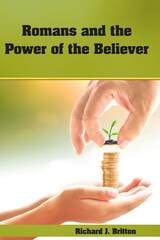
Romans and the Power of the Believer
Richard J. Britton
SBL Press, 2022