Results by title
5159 books match the query 'Biography' and 217 start with r
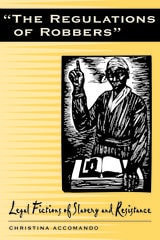
REGULATIONS OF ROBBERS
LEGAL FICTIONS OF SLAVERY AND RESISTANCEChristina Accomando
The Ohio State University Press, 2001
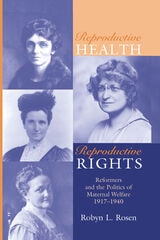
REPRODUCTIVE HEALTH, REPRODUCTIVE RIGHTS
REFORMERS & THE POLITICS OF MATERNAL WELFARE, 1917–1940Robyn L. Rosen
The Ohio State University Press, 2003
In the early twentieth century, shifting attitudes and new public health standards brought an unprecedented interest in and effort to regulate issues affecting reproduction and maternity. Maternal and infant health, nutrition, and medical care came under scrutiny, as did the issue of birth control. While the prior gained public support, the latter remained controversial. Though some reformers saw birth control as an important part of maternal welfare, others sought to separate it from more popular reforms. The careers of the four prominent but usually neglected reformers (Elizabeth Lowell Putnam, Ethel Sturges Dummer, Mary Ware Dennett, and Blanche Ames) examined in this book embody the struggle to define and resolve these tensions.
The study of these reformers offers a new perspective on more recognized leaders in the arena of reproductive health and rights, especially the U.S. Children's Bureau and Margaret Sanger. Putnam's elitism contextualizes the class politics of the Bureau, underscoring its sensitivity to the vulnerable and its innovative approach to public health. Dummer reminds us of roads not taken by policy makers in the Bureau, accentuating the differences between a child-centered and a woman-centered agenda. Dennett highlights the obstacles to women reformers in the formal political sphere, while Ames's penchant toward maternalism and compromise also led to difficulties. Together, they illustrate the complexities of formulating an effective approach to securing reproductive rights and health.
Rabbi Esriel Hildesheimer and the Creation of a Modern Jewish Orthodoxy
David Ellenson
University of Alabama Press, 1990
Tradition, Modernity, and the Making of Modern Orthodoxy.
For many histories of Modern Orthodox Judaism, Rabbi Samson Raphael Hirsch stands as the primary architect of the movement's encounter with modernity. In Rabbi Esriel Hildesheimer and the Creation of a Modern Jewish Orthodoxy, distinguished scholar David Ellenson expands that narrative by recovering the life, thought, and enduring influence of one of Hirsch's most important contemporaries. Through a careful examination of Rabbi Esriel Hildesheimer's writings, leadership, educational initiatives, and responses to the social and intellectual challenges of nineteenth-century Europe, Ellenson demonstrates how Hildesheimer helped forge a model of Orthodoxy that remained firmly committed to Jewish tradition while engaging constructively with the modern world.
Set against a period of profound cultural, political, and religious transformation, this volume explores the tensions confronting European Jewry as modernization, secular education, religious pluralism, and changing political realities reshaped Jewish communal life. Ellenson shows how Hildesheimer addressed these challenges not through rigid isolation but through a pragmatic and intellectually sophisticated approach that balanced fidelity to halakhah with openness to selected aspects of modern culture and scholarship. His vision helped establish a framework for Modern Orthodoxy that continues to influence contemporary Jewish thought and practice.
Beyond its biographical focus, the study provides broader insights into the emergence of Modern Orthodoxy as a religious and intellectual movement. By illuminating Hildesheimer's efforts to integrate traditional scholarship with contemporary realities, Ellenson offers readers a deeper understanding of how Judaism has negotiated the relationship between heritage and change. The result is both a compelling portrait of an influential rabbinic figure and an important examination of the forces that shaped modern Jewish religious identity.
Rabbi Esriel Hildesheimer and the Creation of a Modern Jewish Orthodoxy is essential reading for scholars and students of Jewish studies, religious studies, theology, European history, intellectual history, and modern Judaism. It will also appeal to rabbis, educators, and general readers seeking to understand the historical roots of contemporary Orthodox Jewish life and the ongoing dialogue between tradition and modernity.
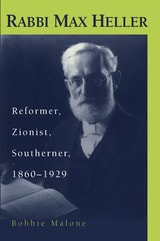
Rabbi Max Heller
Reformer, Zionist, Southerner, 1860-1929Barbara S. Malone
University of Alabama Press, 1997
Max Heller was a man of both passionate conviction and inner contradiction. He sought to be at the center of current affairs, not as a spokesperson of centrist opinion, but as an agitator or mediator, constantly struggling to find an acceptable path as he confronted the major issues of the day--racism and Jewish emancipation in eastern Europe, nationalism and nativism, immigration and assimilation. Heller's life experience provides a distinct vantage point from which to view the complexity of race relations in New Orleans and the South and the confluence of cultures that molded his development as a leader. A Bohemian immigrant and one of the first U.S.-trained rabbis, Max Heller served for 40 years as spiritual leader of a Reform Jewish congregation in New Orleans--at that time the largest city in the South. Far more than a congregational rabbi, Heller assumed an activist role in local affairs, Reform Judaism, and the Zionist movement, maintaining positions often unpopular with his neighbors, congregants, and colleagues. His deep concern for social justice led him to question two basic assumptions that characterized his larger social milieu--segregation and Jewish assimilation.
Heller, a consummate Progressive with clear vision and ideas substantially ahead of their time, led his congregation, his community, Reform Jewish colleagues, and Zionist sympathizers in a difficult era.
Rabbi Shneur Zalman of Liady
The Origins of Chabad HasidismImmanuel Etkes
Brandeis University Press, 2014

Race And Excellence
Dialogue With Chester PierceEzra E.H. Griffith
University of Iowa Press, 1998
Chester Pierce was born in 1927; by 1952 he was a graduate of the Harvard Medical School. He went on to become president of the American Board of Psychiatry and Neurology and president of the American Orthopsychiatric Association. He was elected to the Institute of Medicine at the National Academy of Sciences and had an annual research seminar named after him by the National Medical Association.
Founding chair of the Black Psychiatrists of America, Pierce has profoundly affected American psychiatry and the thinking of African American psychiatrists during the last two decades. While recognized for his substantive scholarship on coping with extreme environments such as the South Pole, he is probably best known for his theories regarding how blacks cope with racism in the United States.
In Race and Excellence, Ezra Griffith, also an African American professor of psychiatry, engages Pierce in a dialogue with the goal of clarifying the inter-connection between the personal and the professional in the lives of both black scholars. The text melds the story of Pierce's life and his achievements, with particular attention to his theories about the predictable nature of racist behavior and the responses of oppressed groups. Having earned his doctorate a generation after Pierce, Griffith approaches his conversation with Pierce as a face-to-face meeting between mentor and student. Retelling Pierce's life story ultimately becomes for Griffith an exercise in conceptualizing his own experience. As he writes, “I never just wanted to tell Chet's story; I wanted to work his story out, to measure it, to try it on, to figure out which parts are good for me and other blacks so earnestly seeking heroes.”
Race, Revolution, and the Struggle for Human Rights in Zanzibar
The Memoirs of Ali Sultan Issa and Seif Sharif HamadG. Thomas Burgess
Ohio University Press, 2009
Zanzibar has had the most turbulent postcolonial history of any part of the United Republic of Tanzania, yet few sources explain the reasons why. The current political impasse in the islands is a contest over the question of whether to revere and sustain the Zanzibari Revolution of 1964, in which thousands of islanders, mostly Arab, lost their lives. It is also about whether Zanzibar’s union with the Tanzanian mainland—cemented only a few months after the revolution—should be strengthened, reformed, or dissolved. Defenders of the revolution claim it was necessary to right a century of wrongs. They speak the language of African nationalism and aspire to unify the majority of Zanzibaris through the politics of race. Their opponents instead deplore the violence of the revolution, espouse the language of human rights, and claim the revolution reversed a century of social and economic development. They reject the politics of race, regarding Islam as a more worthy basis for cultural and political unity.
From a series of personal interviews conducted over several years, Thomas Burgess has produced two highly readable first-person narratives in which two nationalists in Africa describe their conflicts, achievements, failures, and tragedies. Their life stories represent two opposing arguments, for and against the revolution. Ali Sultan Issa traveled widely in the 1950s and helped introduce socialism into the islands. As a minister in the first revolutionary government he became one of Zanzibar’s most controversial figures, responsible for some of the government’s most radical policies. After years of imprisonment, he reemerged in the 1990s as one of Zanzibar’s most successful hotel entrepreneurs. Seif Sharif Hamad came of age during the revolution and became disenchanted with its broken promises and excesses. In the 1980s he emerged as a reformist minister, seeking to roll back socialism and authoritarian rule. After his imprisonment he has ever since served as a leading figure in what has become Tanzania’s largest opposition party
As Burgess demonstrates in his introduction, both memoirs trace Zanzibar’s postindependence trajectory and reveal how Zanzibaris continue to dispute their revolutionary heritage and remain divided over issues of memory, identity, and whether to remain a part of Tanzania. The memoirs explain how conflicts in the islands have become issues of national importance in Tanzania, testing that state’s commitment to democratic pluralism. They engage our most basic assumptions about social justice and human rights and shed light on a host of themes key to understanding Zanzibari history that are also of universal relevance, including the legacies of slavery and colonialism and the origins of racial violence, poverty, and underdevelopment. They also show how a cosmopolitan island society negotiates cultural influences from Africa, the Middle East, Asia, and Europe.
Races of Mankind
The Sculptures of Malvina HoffmanMarianne Kinkel
University of Illinois Press, 2011
A fascinating cultural history, Races of Mankind examines how we continually re-negotiate the veracity of race through collaborative processes involved in the production, display, and circulation of visual representations.
Rachel Carson and Her Sisters
Extraordinary Women Who Have Shaped America's EnvironmentRobert K. Musil
Rutgers University Press, 2015
On the fiftieth anniversary of her death, this book helps underscore Carson’s enduring environmental legacy and brings to life the achievements of women writers and advocates, such as Ellen Swallow Richards, Dr. Alice Hamilton, Terry Tempest Williams, Sandra Steingraber, Devra Davis, and Theo Colborn, all of whom overcame obstacles to build and lead the modern American environmental movement.
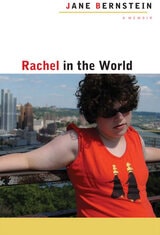
Rachel in the World
A MemoirJane Bernstein
University of Illinois Press, 2010
What happens when love is no longer enough? Jane Bernstein thought that learning to accept her daughter’s disabilities meant her struggles were over. But as Rachel grew up and needed more than a parent’s devotion, both mother and daughter were confronted with formidable obstacles. Rachel in the World, which begins in Rachel’s fifth year and ends when she turns twenty-two, tells of their barriers and successes with the same honesty and humor that made Loving Rachel, Bernstein’s first memoir, a classic in its field. The linked accounts in part 1 center on family issues, social services, experiences with caregivers, and Rachel herself--difficult, charming, hard to fathom, eager for her own independence. The second part of the book chronicles Bernstein’s attempt to find Rachel housing at a time when over 200,000 Americans with mental retardation were on waiting lists for residential services. As Rachel prepares to leave her mother’s constant protection, Bernstein invites the reader to share the frustrations and unexpected pleasures of finding a place for her daughter, first in her family, and then in the world.
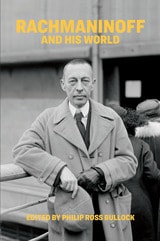
Rachmaninoff and His World
Edited by Philip Ross Bullock
University of Chicago Press, 2022
One of the most popular classical composers of all time, Sergei Rachmaninoff (1873–1943) has often been dismissed by critics as a conservative, nostalgic holdover of the nineteenth century and a composer fundamentally hostile to musical modernism. The original essays collected here show how he was more responsive to aspects of contemporary musical life than is often thought, and how his deeply felt sense of Russianness coexisted with an appreciation of American and European culture. In particular, the essays document his involvement with intellectual and artistic circles in prerevolutionary Moscow and how the form of modernity they promoted shaped his early output. This volume represents one of the first serious explorations of Rachmaninoff’s successful career as a composer, pianist, and conductor, first in late Imperial Russia, and then after emigration in both the United States and interwar Europe. Shedding light on some unfamiliar works, especially his three operas and his many songs, the book also includes a substantial number of new documents illustrating Rachmaninoff’s celebrity status in America.
Racing Uphill
Confronting a Life with EpilepsyStacia Kalinoski
University of Minnesota Press, 2025
The candid, inspiring story of a woman’s experience with a chronic, unpredictable neurological condition
When twenty-nine-year-old reporter Stacia Kalinoski regained consciousness on a couch at the TV station where she worked, she assumed that she’d had another seizure. But the electrical storm that had just torn through her brain was more destructive than she could have imagined, and the broadcast journalism career she loved swiftly came to an end. Forced to confront the reality of her medical condition, Kalinoski made the risky decision to undergo brain surgery, targeting the epilepsy that was ravaging her life.
In Racing Uphill, Kalinoski describes the seizures that occurred while she was running, which led to her pursuit of an uncertain cure. Rallying the grit she developed as an athlete and engaging the research and reporting skills she acquired as a journalist, she gives us a rare inside look at the ways epilepsy can change a life. Moving beyond her own personal experience, Kalinoski interviews prominent epileptologists to understand how seizures can spread, steal memories, and create strange behaviors and mood disorders. She seamlessly joins what she learned from her research with her own story, offering valuable insight into the experience of grappling with a relentless neurological disease.
The vivid auras that preceded seizures and the damage that followed; the toll of her epilepsy on her family and loved ones; the extraordinary determination her reckoning required—these are all part of Kalinoski’s story of adversity, denial, acceptance, and resilience. In sharing the remarkable opportunity that epilepsy presented for her courage and growth, Stacia Kalinoski speaks to anyone facing an uphill battle and offers inspiration for taking control of one’s own health.
Racing to a Cure
A Cancer Victim Refuses Chemotherapy and Finds Tomorrow's Cures in Today's Scientific LaboratoriesNeil Ruzic
University of Illinois Press, 2003
Although chemotherapy harms the immune system and is increasingly demonstrated to be an ineffective long-term cure for the vast majority of cancers, it remains the standard treatment for most cancer patients. Ruzic, a former scientific magazine publisher and originator of a science center, refused to accept this status quo, and instead plunged into the world of cutting-edge treatments, exploring the frontiers of cancer science with revolutionary results.
Ruzic went on the offensive: visiting scores of laboratories, gathering information, talking to researchers, and effectively becoming his own patient-care advocate. This book presents his findings. A scathing critique of the chemotherapy culture as well as unscientific "alternative" therapies, the book endorses state-of-the-art molecularly based technologies, making it an illuminating and necessary read for anyone interested in cancer research, especially patients and their families and physicians.
Neil Ruzic was expected to die within two years of his initial diagnosis. Five years later he has been declared cancer-free and considers himself cured.
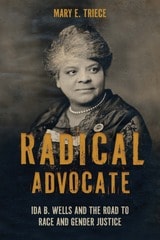
Radical Advocate
Ida B. Wells and the Road to Race and Gender JusticeMary E. Triece
University of Alabama Press, 2025
Pinpoints the persuasive strategies that typified Wells’s efforts to shape broader cultural conversations concerning the causes of racial, social, and gender inequity
Born into the brutal reality of slavery, Ida B. Wells rose to become an audacious journalist, teacher, and activist for racial and gender justice. In Radical Advocate, Mary E. Triece examines the rhetorical strategies employed by Wells to challenge deeply rooted systems of oppression, strategies that remain powerful and relevant today.
Triece introduces the concept of “radical embodied advocacy” to give an account of Wells’s unique position as a Black woman whose personal encounters with white violence were palpable, experienced physically and mentally. White men lynched Wells’s friends and threatened her own life, forcing her into exile after destroying the very press on which she wrote and edited. From this perspective, Wells understood lynching as linked to white economic and political control. Through a close analysis of Wells’s speeches, writings, and journalism, Triece reveals how Wells pioneered a form of “intersectional journalism” that centered the voices of those marginalized by race, gender, and class.
By examining Wells’s work through the lens of philosophy, rhetoric, and Black feminism, Triece underscores the epistemic challenges faced by marginalized advocates and the importance of their perspectives in shaping social change. Radical Advocate ultimately positions Wells as a prophetic figure whose insights into the systemic nature of racism remain profoundly relevant in today’s world.
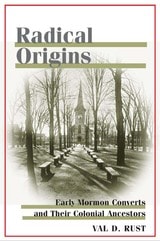
Radical Origins
Early Mormon Converts and Their Colonial AncestorsVal D. Rust
University of Illinois Press, 2004
Utilizing a unique set of meticulously compiled genealogical data, Rust uncovers the ancestors of early church members throughout what we understand as the radical segment of the Protestant Reformation. Coming from backgrounds in the Antinomians, Seekers, Anabaptists, Quakers, and the Family of Love, many colonial ancestors of the church(s early members had been ostracized from their communities. Expelled from the Massachusetts Bay Colony, some were whipped, mutilated, or even hanged for their beliefs.
Rust shows how family traditions can be passed down through the generations, and can ultimately shape the outlook of future generations. This, he argues, extends the historical role of Mormons by giving their early story significant implications for understanding the larger context of American colonial history. Featuring a provocative thesis and stunning original research, Radical Origins is a remarkable contribution to our understanding of religion in the development of American culture and the field of Mormon history.
Radical Sociologists
Martin Oppenheimer
Temple University Press, 1991
Radicalism and Reputation
The Career of Bronterre O'BrienMichael J. Turner
Michigan State University Press, 2017
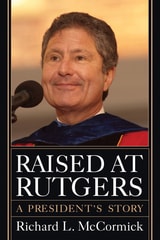
Raised at Rutgers
A President's StoryMcCormick, Richard L
Rutgers University Press, 2014
With understandable pride, McCormick recalls and relates Rutgers’s academic achievements during his presidency, including a renewed focus on undergraduate education and a significant increase in funding for research. Most dramatically, he chronicles the University’s protracted efforts to reclaim Robert Wood Johnson Medical School (and ultimately to acquire most of UMDNJ), a goal that was finally realized with crucial help from Governor Chris Christie and former governor Tom Kean.
Among the most honest accounts ever written of a college presidency, Raised at Rutgers takes the reader inside one of the best, and liveliest, public universities in America and highlights many of the most critical issues facing higher education today.
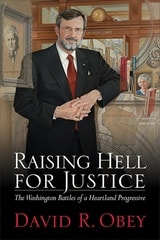
Raising Hell for Justice
The Washington Battles of a Heartland ProgressiveDavid R. Obey
University of Wisconsin Press, 2007
Here, in his autobiography, Obey looks back on his journey in politics beginning with his early years in the Wisconsin Legislature, when Wisconsin moved through eras of shifting balance between Republicans and Democrats. On a national level Obey traces, as few others have done, the dramatic changes in the workings of the U.S. Congress since his first election to the House in 1969. He discusses his own central role in the evolution of Congress and ethics reforms and his view of the recent Bush presidency—crucial chapters in our democracy, of interest to all who observe politics and modern U.S. history.
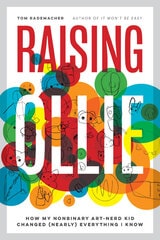
Raising Ollie
How My Nonbinary Art-Nerd Kid Changed (Nearly) Everything I KnowTom Rademacher
University of Minnesota Press, 2021
The account of one radically new school year for a Teacher of the Year and for his nonbinary, art-obsessed, brilliant child
Seven-year-old Ollie was researching local advanced school programs—because every second grader does that, right? Ollie, who used to hate weekends because they meant no school, was crying on the way to school almost every day. Sure, there were the slings and arrows of bullies and bad teachers, but, maybe worse, Ollie, a funny, anxious, smart kid with a thing for choir and an eye for graphic art, was gravely underchallenged and also struggling with identity and how to live totally as themselves. Ollie begged to switch to a new school with “kids like me,” where they wouldn’t feel so alone, or so bored, and so they made the change.
Raising Ollie is dad Tom Rademacher’s story (really, many stories) of that eventful and sometimes painful school year, parenting Ollie and relearning every day what it means to be a father and teacher. As Ollie—who is nonbinary and uses they/them pronouns, and prefers art to athletics, vegetables to cake, and animals to most humans—flourishes in their new school, Rademacher is making an eye-opening adjustment to a new school of his own, one that’s whiter and more suburban than anywhere he has previously taught, with a history of racial tension that he tries to address and navigate.
While Ollie is learning to code, 3D model, animate, speak Japanese, and finally feel comfortable at school, Rademacher increasingly sees how his own educational struggles, anxieties, and childhood upbringing are reflected in his teaching, writing, and parenting, as well as in Ollie’s experience. And with this story of one anything-but-academic year of inquiry and wonder, doubt and revelation, he shows us how raising a kid changes everything—and how much raising a kid like Ollie can teach us about who we are and what we’re doing in the world.
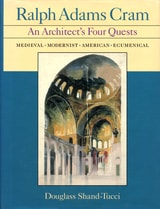
Ralph Adams Cram
An Architect's Four QuestsDouglass Shand-Tucci
University of Massachusetts Press, 2005
With his partner Bertram Goodhue, Cram won a number of important commissions, beginning with the West Point competition in 1903. Although an increasingly bitter rivalry with Goodhue would lead to the dissolution of their partnership in 1912, Cram had already begun to strike out on his own. Supervising architect at Princeton, consulting architect at Wellesley, and head of the MIT School of Architecture, he would also design most of New York's Cathedral of St. John the Divine and the campus of Rice University, as well as important church and collegiate structures throughout the country. By the 1920s Cram had become a household name, even appearing on the cover of Time magazine.
A complex man, Cram was a leading figure in what Shand-Tucci calls "a full-fledged homosexual monastery" in England, while at the same time married to Elizabeth Read. Their relationship was a complicated one, the effect of which on his children and his career is explored fully in this book. So too is his work as a religious leader and social theorist.
Shand-Tucci traces the influence on Cram of such disparate figures as Franklin Delano Roosevelt, Phillips Brooks, Henry Adams, and Ayn Rand. He divides Cram's career into four lifelong "quests": medieval, modernist, American, and ecumenical. Some quests may have failed, but in each he left a considerable legacy, ultimately transforming the visual image of American Christianity in the twentieth century.
Handsomely illustrated with over 130 photographs and drawings and eight pages of color plates, Ralph Adams Cram can be read on its own or in conjunction with Boston Bohemia, 1881–1900. Together, the two volumes complete what the Christian Century has described as a "superbly researched and captivating biography."
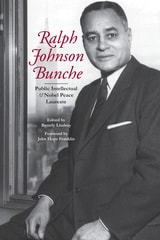
Ralph Johnson Bunche
Public Intellectual and Nobel Peace LaureateEdited by Beverly Lindsay; Foreword by John Hope Franklin
University of Illinois Press, 2007
Nobel Peace Prize winner Ralph Johnson Bunche (1904-71) was one of the twentieth century’s foremost diplomats and intellectuals. In the wake of centennial celebrations of his birth, leading scholars and diplomats assess Bunche’s historical importance and enduring impact on higher education, public policy, and international politics. Their essays reveal not only the breadth of Bunche’s influence, such as his United Nations work to broker peace during times of civil war in Africa, the Middle East, and Asia, but also the depth of his intellectual perspectives on race, civil rights, higher education, and international law. Probing his publications, speeches, and public policy initiatives, the volume offers telling insights into the critical roles of universities, public intellectuals, and diplomats in working together to find solutions to domestic and international problems through public and scholarly engagement. In this way, the volume highlights the very connections that Bunche exhibited as an academic, intellectual, and diplomat.
Contributors include Lorenzo DuBois Baber, John Hope Franklin, Jonathan Scott Holloway, Charles P. Henry, Ben Keppel, Beverly Lindsay, Princeton Lyman, Edwin Smith, and Hanes Walton Jr.
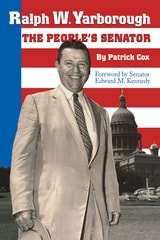
Ralph W. Yarborough, the People's Senator
By Patrick L. Cox
University of Texas Press, 2002
Semifinalist, 22nd Annual Robert F. Kennedy Book Award, 2002
Finalist, Spur Award in western nonfiction biography, Western Writers of America, 2002
Revered by many Texans and other Americans as "the People's Senator," Ralph Webster Yarborough (1903-1996) fought for "the little people" in a political career that places him in the ranks of the most influential leaders in Texas history. The only U. S. Senator representing a former Confederate state to vote for every significant piece of modern civil rights legislation, Yarborough became a cornerstone of Lyndon Johnson's Great Society programs in the areas of education, environmental preservation, and health care. In doing so, he played a major role in the social and economic modernization of Texas and the American South. He often defied conventional political wisdom with his stands against powerful political interests and with his vocal opposition to the Vietnam War. Yet to this day, his admirers speak of Yarborough as an inspiration for public service and a model of political independence and integrity.
This biography offers the first in-depth look at the life and career of Ralph Yarborough. Patrick L. Cox draws on Yarborough's personal and professional papers, as well as on extensive interviews with the Senator and his associates, to follow Yarborough from his formative years in East Texas through his legal and judicial career in the 1930s, decorated military service in World War II, unsuccessful campaigns for Texas governor in the 1950s, distinguished tenure in the United States Senate from 1957 to 1970, and return to legal practice through the 1980s.
Although Yarborough's liberal politics set him at odds with most of the Texas power brokers of his time, including Lyndon Johnson, his accomplishments have become part of the national fabric. Medicare recipients, beneficiaries of the Cold War G. I. Bill, and even beachcombers on Padre Island National Seashore all share in the lasting legacy of Senator Ralph Yarborough.

Ramblin' Rose
The Life and Career of Rose MaddoxJonny Whiteside
Vanderbilt University Press, 1997
A groundbreaking study of one of the pioneering women of country music, whose biography sheds new light on both the role of women in postwar America and the growth of the music business in California.
It's a Depression-era saga right out of Steinbeck. The strongwilled matriarch of a rural Alabama family uproots her husband and six children and drives them westward on foot and by boxcar, through sheer willpower, on a journey of two thousand miles to California where a new life begins. Four years later, at age eleven, youngest daughter Rose Maddox steps to the microphone for the first time to sing on radio with the family band. Within a week, the Maddox Brothers & Rose receive a thousand letters, launching the group on a country music career that ultimately ranges from the rodeo shows of the West to the bright lights of Nashville's Grand Ole Opry.
In this meticulously researched biography, veteran music journalist Jonny Whiteside recounts the colorful story of this pioneering woman who literally grew up in the male-dominated enclaves of country music and struggled to make a place for herself there. In Rose Maddox, Whiteside has found an exceptional protagonist for his story: a fiery, strongwilled entertainer whose music has had an influence far beyond her handful of hits on the record charts, and who in many ways, Whiteside convincingly argues, prefigured the coming of rock and roll. In the process, Whiteside introduces us to a host of memorable characters--stars like Hank Williams and Roy Acuff; behind-the-scenes movers and shakers like record men Cliffie Stone and Bill McCall; and, at the heart of the story, the irrepressible Maddox family themselves, whose freewheeling music so faithfully reflected the hurlyburly world of California's displaced migrant workers.
Ramblin' Rose is a long-overdue work of research and synthesis that documents not only the life of an unsung musical trailblazer but also the vibrant, roughhewn West Coast country music scene that once rivaled Nashville and left an indelible imprint on the popular music of today.
Co-published with the Country Music Foundation Press
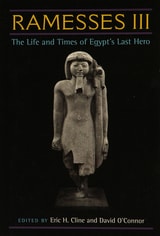
Ramesses III
The Life and Times of Egypt's Last HeroEdited by Eric H. Cline and David O'Connor
University of Michigan Press, 2012
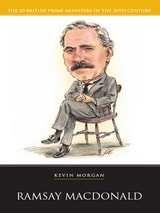
Ramsay Macdonald
Kevin Morgan
Haus Publishing, 2006
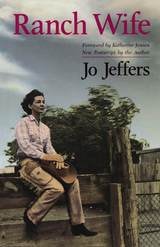
Ranch Wife
Jo Jeffers; Foreword by Katherine Jensen
University of Arizona Press, 1993
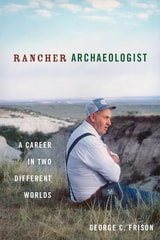
Rancher Archaeologist
A Career in Two Different WorldsGeorge Frison
University of Utah Press, 2014
In this memoir, Frison shares his life’s work and his atypical journey from rancher to professor and archaeologist. Herding cattle, chopping watering holes in sub-zero weather, and guiding hunters in the fall were very different than teaching classes, performing laboratory work, and attending faculty and committee meetings in air-conditioned buildings. But his practical and observational experience around both domestic and wild animals proved a valuable asset to his research. His knowledge of specific animal behaviors gave insight to his studies of the Paleoindians of the northern plains as he sought to understand how their stone tools were used most effectively for hunting and how bison jumps, mammoth kills, and sheep traps actually worked. Frison’s careful research and strong involvement in the scholarly and organizational aspects of archaeology made him influential not only as an authority on the prehistory of the northern plains but also as a leader in Wyoming archaeology and Northern American archaeology at large.
This book will appeal to both the professional and the lay reader with interests in archaeology, anthropology, paleontology, plains history, animal science, hunting, or game management. Frison’s shift from ranching into the academic world of archaeology serves as a reminder that you are never too old to change your life.
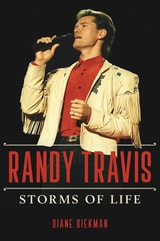
Randy Travis
Storms of LifeDiane Diekman
University of Illinois Press, 2025
Randy Travis’s 1986 breakthrough put him at the forefront of Nashville’s new traditionalist sound and, in the words of Garth Brooks, saved country music. The singer’s warm baritone and all-time classic songs like “Forever and Ever, Amen” landed him atop the charts sixteen times. His cross-genre appeal brought a level of multiplatinum success that no country artist before him had ever achieved.
Diane Diekman’s biography follows the life and career of one of country music’s most beloved figures. Steered from a troubled path as a teen, Travis served a long apprenticeship under manager and future wife Lib Hatcher before being rejected by the Nashville music industry as “too country.” The single “On the Other Hand” and his smash debut album did away with the doubters and began a dominant four-year run that stretched into ongoing success as a recording artist, trailblazing live performer, and actor in film and television. Diekman uses dozens of interviews and in-depth research to fill in the details of Travis’s pre-fame life and his enormous impact on country, popular, and gospel music. From there, she pivots to telling the story of the singer’s difficult divorce from Hatcher, subsequent problems with alcohol and run-ins with the law, and the challenges he overcame in the aftermath of a devastating 2013 stroke.
Informed by a wealth of new research and interviews, Randy Travis is the first in-depth biography of the country music legend.
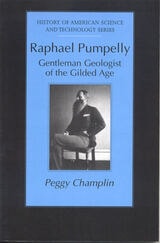
Raphael Pumpelly
Gentleman Geologist of the Gilded AgePeggy Champlin
University of Alabama Press, 1994
A definitive biography illuminating the scientific, industrial, and exploratory contributions of America’s pioneering economic geologist.
Raphael Pumpelly: Gentleman Geologist of the Gilded Age provides an excellent opportunity to look at the development of the profession of geology during the years spanned by his career, from 1860 to the early twentieth century. In this period, the practical applications of geology to resource development were of major importance, but geologists were also investigating new subjects, such as petrology, geomorphology, glaciology, and structural geology. These investigations resulted in an explosion of knowledge in these areas and in the growth of subdisciplines. Pumpelly did research in these fields but like others of his generation did not limit himself to any one of them; he remained a generalist in a time of increasing specialization, a transitional figure in a period of rapid change.
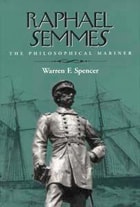
Raphael Semmes
The Philosophical MarinerWarren F. Spencer
University of Alabama Press, 1997
Naval hero for all the South, Raphael Semmes (1809-1877) sailed two famous Confederate raiders. He outfitted CSS Sumter in 1861 and captured 18 Union merchant ships in six months before the raider was blockaded at Gibraltar. Next he took command of CSS Alabama, an English-built raider, and terrorized U.S. merchant vessels on the high seas from August 1862 until the raider was sunk in battle off Cherbourg in June 1864. During that two-year period, he captured more enemy merchant ships than any other cruiser captain in maritime history. He is considered one of the greatest ship's commanders that America has produced.
In this first, full-scale biography that relies on Semmes's private papers, unpublished diaries, and correspondence, Spencer has produced a well-balanced and comprehensive account of the man, as well as the naval officer. The biographer paints a vivid portrait of Semmes—the intellectual, the family man, lawyer, romanticist, nationalist—providing a greater understanding of the man behind the heroic deeds.
Semmes was born in Maryland to a slave-holding family and entered the United States Navy in 1826. In 1849, he moved his family to Mobile, Alabama, to be near the navy base at Pensacola, Florida, and to practice law during leaves. Semmes was an astute student, not only of international and maritime law but also of weather patterns; astronomy; flora and fauna; naval, social, and cultural history; and the classics. His study of constitutional law led him to side with his adopted state in 1861, a move that set the stage for his place in history.

Rare Integrity
A Portrait of L. W. Payne, Jr.Hansen Alexander
University of North Texas Press, 1986
Rascuache Lawyer
Toward a Theory of Ordinary LitigationAlfredo Mirandé
University of Arizona Press, 2011
Every chapter presents an actual case from Mirandé’s experience (only the names and places have been changed). His clients have been charged with everything from carrying a concealed weapon, indecent exposure, and trespassing to attempted murder, domestic violence, and child abuse. Among them are recent Mexican immigrants, drug addicts, gang members, and the homeless. All of them are destitute, and many are victims of racial profiling. Some “pay” Mirandé with bartered services such as painting, home repairs, or mechanical work on his car. And Mirandé doesn’t always win their cases. But, as he recounts, he certainly works tirelessly to pursue all legal remedies.
Each case is presented as a letter to a fascinating (fictional) “Super Chicana” named Fermina Gabriel, who we are told is an accomplished lawyer, author, and singer. This narrative device allows the author to present his cases as if he were recounting them to a friend, drawing in the reader as a friend as well.
Bookending the individual cases, Mirandé’s introductions and conclusions offer a compelling vision of progressive legal practice grounded in rascuache lawyering.
Raw Edges
A MemoirPhyllis Barber
University of Nevada Press, 2012
When Phyllis Barber’s thirty-three-year marriage ended, she had to redefine herself as a woman, a mother, and an artist. Raw Edges is her moving account of the “lean years” that followed her divorce. It is interwoven with a narrative of the marriage of two gifted people that begins with “sealing” in a Mormon temple, endures through the birth of four sons and the development of two careers, and founders when the couple’s personal needs no longer match their aspirations or the rigid strictures of Mormon life. Raw Edges reflects the predicament that many women experience as their marriages disintegrate and they fail to achieve their own expectations as well as those set by their society and their faith. It is also a story of hope, of how a woman overcome by grief and confusion eventually finds a new approach to life.
Raw Material
Working Wool in the WestStephany Wilkes
Oregon State University Press, 2018
What begins as a search for local yarn becomes a dirty, unlikely, and irresistible side job. Wilkes leaves her high tech job for a way of life considered long dead in the American West. Along the way, she meets ornery sheep that weigh more than she does, carbon-sequestering ranchers, landless grazing operators, rare breed stewards, and small-batch yarn makers struggling with drought, unfair trade agreements, and faceless bureaucracies as they work to bring eco-friendly fleece to market.
Raw Material demonstrates that the back must break to clothe the body, and that excellence often comes by way of exhaustion. With humor and humility, Wilkes follows wool from the farm to the factory, through the hands of hardworking Americans trying to change the culture of clothing. Her story will appeal to anyone interested in the fiber arts or the textile industry, and especially to environmentally conscious consumers, as it extends the concerns of the sustainable food movement to fleece, fiber, and fashion.
Rawhide Ranger, Ira Aten
Enforcing Law on the Texas FrontierBob Alexander
University of North Texas Press, 2011
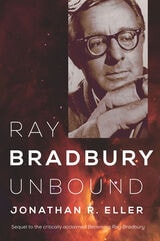
Ray Bradbury Unbound
Jonathan R. Eller
University of Illinois Press, 2020
At the height of his powers as a poetic prose stylist, Bradbury shifted his creative attention to film and television, where new successes gave him an enduring platform as a compelling cultural commentator. His passionate advocacy validated the U.S. space program's mission, extending his pivotal role as a chronicler of human values in an age of technological wonders.
Informed by many years of interviews with Bradbury as well as an unprecedented access to personal papers and private collections, Ray Bradbury Unbound provides the definitive portrait of how a legendary American author helped shape his times.
Raymond Carver
An Oral BiographySam Halpert
University of Iowa Press, 1995
Raymond Carver has become a literary icon for our time. When he died in 1988 at the age of fifty, he was acclaimed as the greatest influence on the American short story since Hemingway. Carver's friends were the stuff of legend as well. In this rich collection—greatly expanded from the earlier When We Talk about Raymond Carver—of interviews with close companions, acquaintances, and family, Sam Halpert has chronologically arranged the reminiscences of Carver's adult life, recalling his difficult “Bad Raymond” days through his second life as a recovering alcoholic and triumphantly successful writer. The result is a spirited Irish wake—toasts, anecdotes, lies, songs, confessions, laments—all beautifully orchestrated by Halpert into a very readable and moving narrative.
These funny, poignant, intensely remembered interviews juxtapose personal anecdotes and enlightening criticism. Memory mixes with analysis, and a lively picture of Carver emerges as we hear different stories about him—of the same story told from different viewpoints. He is here presented as hero, victim, and even villain—Carver's readers will recognize the woof and warp of his stories in these affectionate narratives.
Reading African American Autobiography
Twenty-First-Century Contexts and CriticismEdited by Eric D. Lamore
University of Wisconsin Press, 2016
The life narratives studied range from an eighteenth-century criminal narrative, a 1918 autobiography, and the works of Richard Wright to new media, graphic novels, and a celebrity memoir from Pam Grier.
Reading Arab Women's Autobiographies
Shahrazad Tells Her StoryBy Nawar Al-Hassan Golley
University of Texas Press, 2003
Authors of autobiographies are always engaged in creating a "self" to present to their readers. This process of self-creation raises a number of intriguing questions: why and how does anyone choose to present herself or himself in an autobiography? Do women and men represent themselves in different ways and, if so, why? How do differences in culture affect the writing of autobiography in various parts of the world?
This book tackles these questions through a close examination of Arab women's autobiographical writings. Nawar Al-Hassan Golley applies a variety of western critical theories, including Marxism, colonial discourse, feminism, and narrative theory, to the autobiographies of Huda Shaarawi, Fadwa Tuqan, Nawal el-Saadawi, and others to demonstrate what these critical methodologies can reveal about Arab women's writing. At the same time, she also interrogates these theories against the chosen texts to see how adequate or appropriate these models are for analyzing texts from other cultures. This two-fold investigation sheds important new light on how the writers or editors of Arab women's autobiographies have written, documented, presented, and organized their texts.
Reading Southern History
Essays on Interpreters and InterpretationsGlenn Feldman
University of Alabama Press, 2001
This collection of essays examines the contributions of some of the most notable interpreters of southern history and culture, furthering our understanding of the best historical work produced on the region.
Historian Glenn Feldman gathers together a group of essays that examine the efforts of important scholars to discuss and define the South's distinctiveness. The volume includes 18 chapters on such notable historians as John Hope Franklin, Anne Firor Scott, Frank L. Owsley, W. J. Cash, and C. Vann Woodward, written by 19 different researchers, both senior historians and emerging scholars, including Jacquelyn Dowd Hall, John Shelton Reed, Bruce Clayton, and Ted Ownby. The essays examine the major work or works of each scholar under consideration as well as that scholar's overall contribution to the study of southern history.
Reading Southern History will enlighten readers on the more compelling themes currently and traditionally explored by southern historians. It will appeal greatly to professors and students as a valuable multidisciplinary introduction to the study of southern history, since several of the essays are on scholars who are working outside the discipline of history proper, in the fields of political science, sociology, journalism, and economics. Feldman's collection, therefore, sheds light on a broad spectrum of themes important in southern history, including the plight of poor whites, race, debates over race and class, the "reconstruction syndrome," continuity versus discontinuity in relation to blacks and whites, and regional culture and distinctiveness.
Reading Southern History will be valuable to students and scholars of women's studies, African American history, working-class history, and ethnic studies, as well as traditional southern history. Most important, the publication makes a significant contribution to the development and ongoing study of the historiography of the South.

Reading the Room
A Bookseller's TalePaul Yamazaki
Prickly Paradigm Press, 2024
Over twenty-four hours, Paul Yamazaki leads us through the stacks of storied City Lights Booksellers in San Francisco; the care and prowess of his approach to book buying; his upbringing in a Japanese American family in Southern California and moving to San Francisco at the height of revolutionary foment; working with legendary figures in the book publishing industry like Lawrence Ferlinghetti, Sonny Mehta, and others; and his vision for the future of bookselling. Navigating building trust with readers and nurturing relationships across the literary industry, Yamazaki testifies to the value of generosity, sharing knowledge, and dialogue in a life devoted to books.
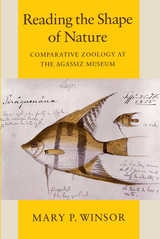
Reading the Shape of Nature
Comparative Zoology at the Agassiz MuseumMary P. Winsor
University of Chicago Press, 1991
In 1859, Louis Agassiz established the Museum of Comparative Zoology to house research on the ideal types that he believed were embodied in all living forms. Agassiz's vision arose from his insistence that the order inherent in the diversity of life reflected divine creation, not organic evolution. But the mortar of the new museum had scarcely dried when Darwin's Origin was published. By Louis Agassiz's death in 1873, even his former students, including his son Alexander, had defected to the evolutionist camp. Alexander, a self-made millionaire, succeeded his father as director and introduced a significantly different agenda for the museum.
To trace Louis and Alexander's arguments and the style of science they established at the museum, Winsor uses many fascinating examples that even zoologists may find unfamiliar. The locus of all this activity, the museum building itself, tells its own story through a wonderful series of archival photographs.
Ready for Air
A Journey through Premature MotherhoodKate Hopper
University of Minnesota Press, 2013
For Kate Hopper, pregnancy is downright unpleasant. She is tired and heavy and worried, and she wants her wine and caffeine back. But then, at a routine checkup, her doctor frowns at her chart and says, “I’m worried about a couple of things”—and unpleasant suddenly seems like paradise. What follows is a harrowing, poignant, and occasionally hysterical journey through premature motherhood, from the starting point of “leaking a little protein” to the early delivery of her tiny daughter because of severe preeclampsia and the beginning of a new chapter of frightful, lifelong love.
Half a million babies are born prematurely in the United States every year—almost one every minute—each with a unique story, and Hopper eloquently gives a voice to what their parents share: the shock, the scares, the lonely nights in the neonatal intensive care unit, the fierce attention to detail that makes for sanity and craziness, the light of faith, the warmth of family, and the terrifying attachment. Through it all runs the power of words to connect us to one another, as Hopper draws on her gifts as a writer first to help her navigate this uncertain territory and then to tell her story. With candor, grace, and a healthy dose of humor, she takes us into the final weeks of her pregnancy, the this-was-not-part-of-the-plan first weeks of little Stella’s life, and the isolated world she and her husband inhabited when they took their daughter home at the onset of a cold Minnesota winter. Finally, frankly, Hopper ventures into the complicated question of whether to have another child. Down-to-earth and honest about the hard realities of having a baby, as well as the true joys, Ready for Air is a testament to the strength of motherhood—and stories—to transform lives.

Real Love, No Drama
The Music of Mary J. BligeBy Danny Alexander
University of Texas Press, 2016
Mary J. Blige is an icon who represents the political consciousness of hip hop and the historical promise of soul. She is an everywoman, celebrated by Oprah Winfrey and beloved by pop music fans of all ages and races. Blige has sold over fifty million albums, won numerous Grammys, and even played at multiple White House events, as well as the 2013 Nobel Peace Prize ceremony. Displaying astonishing range and versatility, she has recorded everything from Broadway standards to Led Zeppelin anthems and worked with some of popular music’s greatest artists—Aretha Franklin, Eric Clapton, Elton John, Whitney Houston, Sting, U2, and Beyoncé, among them.
Real Love, No Drama: The Music of Mary J. Blige tells the story of one of the most important artists in pop music history. Danny Alexander follows the whole arc of Blige’s career, from her first album, which heralded the birth of “hip hop soul,” to her critically praised 2014 album, The London Sessions. He highlights the fact that Blige was part of the historically unprecedented movement of black women onto pop radio and explores how she and other women took control of their careers and used their music to give voice to women’s (and men’s) everyday struggles and dreams. This book adds immensely to the story of both black women artists and artists rooted in hip hop and pays tribute to a musician who, by expanding her reach and asking tough questions about how music can and should evolve, has proven herself an artistic visionary.
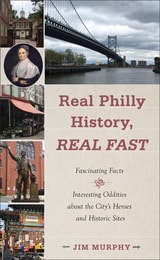
Real Philly History, Real Fast
Fascinating Facts and Interesting Oddities about the City's Heroes and Historic SitesJim Murphy
Temple University Press, 2021
Philadelphia is known as the home of vibrant colonial history: the Liberty Bell, the Betsy Ross House, and Independence Hall. But the City of Brotherly Love is also home to—and less well known for—its quirky history. The country’s first quarantine station was located here. One of Philly’s clocks has a face larger than Big Ben’s in London. And a unique skill of Black abolitionist James Forten saved him from a life of West Indian servitude (and “Forten” was not even his real name).
In Real Philly History, Real Fast, Jim Murphy provides an original tour of the city. He highlights artistic gems including the Dream Garden Tiffany mosaic and Isaiah Zagar’s glittering Magic Gardens. He profiles intriguing historical figures from military leader Commodore Barry to civil rights heroes like Lucretia Mott. Murphy also explores neighborhoods from Chinatown to the Italian Market and the unique architectural details of Carpenters’ Hall and the PSFS building.
Each chapter provides a pithy story about a historical person or site, along with bullet points featuring interesting oddities, and nearby attractions along with fun facts such as: Why there are so many churches? What is the Philadelphia Eagles’ connection to the U.S. Custom House? Which famous artist may have been Philadelphia’s first nude model? And where was the Liberty Bell secretly damaged? (We didn’t do it!)
This is Philly history in bites that are as digestible as a soft pretzel with mustard.
Real Role Models
Successful African Americans Beyond Pop CultureBy Joah Spearman and Louis Harrison, Jr.
University of Texas Press, 2010
All young people need good role models, and black youth especially need positive and real examples beyond the famous and wealthy people they see on SportsCenter highlights and MTV Cribs. While success as a celebrity athlete or entertainer may seem like an achievable dream, the reality is that young African Americans have a much greater chance of succeeding in the professions through education and hard work—and a mentor to show them the path. Real Role Models introduces high school and college-age African Americans to twenty-three black professionals who have achieved a high level of success in their chosen fields and who tell their stories to inspire young people to pursue a professional career and do the work necessary to achieve their dreams.
Some of the individuals profiled by Joah Spearman and Louis Harrison, Jr., include Leonard Pitts, Pulitzer Prize–winning columnist for the Miami Herald; Melody Barnes, Director of the White House Domestic Policy Council; Danyel Smith, editor-in-chief of Vibe; and Dr. Tim George, Chief of Pediatric Neuroscience at Dell Children's Medical Center of Central Texas. They and other interviewees describe their backgrounds, career paths, and desire to give back by helping others reach their goals. Representing a wide range of occupations, these real role models prove to African American youths that a whole world of successful, rewarding careers awaits them.
The Real Role Models
- Rufus Cormier, JD, Partner at the Baker Botts Law Firm, Houston, Texas
- Melody Barnes, Director of the White House Domestic Policy Council, Washington, D.C.
- Eric Motley, PhD, Managing Director of the Aspen Institute's Henry Crown Fellowship Program, Aspen, Colorado
- James McIntyre, Spokesman for the Federal Emergency Management Agency, Washington, D.C.
- Tracie Hall, Assistant Dean and Librarian at Dominican University, River Forest, Illinois
- Kimberlydawn Wisdom, MD, Surgeon General of the State of Michigan, Lansing, Michigan
- Timothy George, MD, Chief of Pediatric Neuroscience at Dell Children's Medical Center, Austin, Texas
- Victoria Holloway Barbosa, MD, Ethnic Dermatologist and Former Executive for L'Oreal, Chicago, Illinois
- Bill Douglas, White House Correspondent for McClatchy Newspapers, Washington, D.C.
- Leonard Pitts, Jr., Columnist for the Miami Herald, Miami, Florida
- Danyel Smith, Editor of Vibe Magazine, New York, New York
- Ed Stewart, Managing Director of External Communications for Delta Airlines, Atlanta, Georgia
- Lynn Tyson, Vice President of Investor Relations for Dell, Austin, Texas
- Willie Miles, Jr., Founder and CEO of Miles Wealth Management, Houston, Texas
- Horace Allen, Founder and CEO of TeamPact, Atlanta, Georgia
- Deavra Daughtry, President and CEO of Excellent Care Management, Houston, Texas
- Je'Caryous Johnson, Founder and CEO of I'm Ready Productions, Houston, Texas
- Steve Jones, Cofounder of a graphic design company, Oakland, California
- Isiah Warner, PhD, Chemistry Professor at Louisiana State University, Baton Rouge, Louisiana
- Gloria Ladson-Billings, PhD, Professor of Education at the University of Wisconsin, Madison, Wisconsin
- Bernard Muir, Athletic Director at Georgetown University, Washington, D.C.
- Craig Littlepage, Athletic Director at the University of Virginia, Charlottesville, Virginia
- Beverly Kearney, Women's Track Coach at the University of Texas at Austin, Austin, Texas
Realism, Utopia, and the Mushroom Cloud
Four Activist Intellectuals and their Strategies for Peace, 1945-1989--Louise Weiss (France), Leo Szilard (USA), E. P. Thompson (England), Danilo Dolci (Italy)Michael Bess
University of Chicago Press, 1993
Nagasaki, and continued preparations for nuclear war illustrate the modern
world's propensity for mass destruction. . . . Yet there have been
important signs of resistance to this trend. These have included not only
the emergence of mass-based peace and disarmament movements but activist
intellectuals grappling with the growing problem posed by mass violence
among nation-states. . . . Bess examines the lives and ideas of four of
these intellectuals: Leo Szilard of Hungary and (later) the United States,
E. P. Thompson of England, Danilo Dolci of Italy, and Louise Weiss of
France. . . . Realism, Utopia, and the Mushroom Cloud is a powerful,
important scholarly work, casting new light upon some of the great issues
of modern times. Readers will learn much from it."—Lawrence S.
Wittner, Peace and Change
"Bess seeks to understand the way in which the creation of the atomic bomb
has changed the social and political situation of humankind. Are we to be
held hostage by military forces or can we transform our situation? He
describes the lives of four very different activists, each with different
views on what causes conflict and how best to address conflict. . . .
Overall, this book offers an interesting perspective on life after the
atomic bomb. . . . In asking ourselves what the possibilities of our future
are, we can turn to these lives for some guidance. . . . This book is
informative, provocative, and encourages one to consider carefully how s/he
chooses to live."—Erin McKenna, Utopian Studies
"These four lives, researched and skillfully presented by historian Michael
Bess, make fascinating stories in themselves. They also serve as useful
vehicles for examining major cross-currents of Cold War resistance. . . .
From Weiss the cynical pragmatist to Szilard the high-level fixer to
hompson the social reformer to Dolce the spiritual street organizer,
Michael Bess has woven an illuminating tapestry of human efforts to cope
with life under the mushroom cloud."—Samuel H. Day Jr., The
Progressive
Realizing Metaphors
Alexander Pushkin and the Life of the PoetDavid M. Bethea
University of Wisconsin Press, 1998
Readers often have regarded with curiosity the creative life of the poet. In this passionate and authoritative new study, David Bethea illustrates the relation between the art and life of nineteenth-century poet Alexander Pushkin, the central figure in Russian thought and culture. Bethea shows how Pushkin, on the eve of his two-hundredth birthday, still speaks to our time. He indicates how we as modern readers might "realize"— that is, not only grasp cognitively, but feel, experience—the promethean metaphors central to the poet's intensely "sculpted" life. The Pushkin who emerges from Bethea's portrait is one who, long unknown to English-language readers, closely resembles the original both psychologically and artistically.
Bethea begins by addressing the influential thinkers Freud, Bloom, Jakobson, and Lotman to show that their premises do not, by themselves, adequately account for Pushkin's psychology of creation or his version of the "life of the poet." He then proposes his own versatile model of reading, and goes on to sketches the tangled connections between Pushkin and his great compatriot, the eighteenth-century poet Gavrila Derzhavin. Pushkin simultaneously advanced toward and retreated from the shadow of his predecessor as he created notions of poet-in-history and inspiration new for his time and absolutely determinative for the tradition thereafter.
Rebecca Harding Davis
A Life Among WritersSharon M. Harris
West Virginia University Press, 2019
2018 Choice Outstanding Academic Title
This accessible treatment of Davis’s life, based on deep research in archival sources, provides new perspective on topics ranging from sectional tensions in the border South to the gendered world of nineteenth-century publishing. It promises to be the authoritative treatment of an important figure in the literary history of West Virginia and the wider world.