112 books match the query 'Body' and 4 start with r
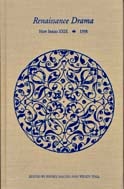
cover of Renaissance Drama 29: New Series XIX 1998 Dramas of Hybridity: Performance and the Body

Renaissance Drama 29

New Series XIX 1998 Dramas of Hybridity: Performance and the Body

Jeffrey Masten and Wendy Wall

Northwestern University Press, 2000

Renaissance Drama, an annual and interdisciplinary publication, is devoted to drama and performance as a central feature of Renaissance culture. The essays in each volume explore traditional canons of drama, the significance of performance (broadly construed) to early modern culture, and the impact of new forms of interpretation on the study of Renaissance plays, theater, and performance.

Volume 29, "Dramas of Hybridity: Performance and the Body," includes essays that focus on historically specific early modern bodies, analyzing staged representations of bodies as they spectacularly unfold, determine, negotiate, and erode various social categories. Topics include pathologies of value and transnationality in Troilus and Cressida, masculinity on the early modern stage, citizen comedy, Italian actresses and female performance, and race and romance in The Merchant of Venice.
[more]
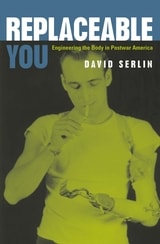
cover of Replaceable You: Engineering the Body in Postwar America

Replaceable You

Engineering the Body in Postwar America

David Serlin

University of Chicago Press, 2004
After World War II, the United States underwent a massive cultural transformation that was vividly realized in the development and widespread use of new medical technologies. Plastic surgery, wonder drugs, artificial organs, and prosthetics inspired Americans to believe in a new age of modern medical miracles. The nationalistic pride that flourished in postwar society, meanwhile, encouraged many Americans to put tremendous faith in the power of medicine to rehabilitate and otherwise transform the lives and bodies of the disabled and those considered abnormal. Replaceable You revisits this heady era in American history to consider how these medical technologies and procedures were used to advance the politics of conformity during the 1950s.
[more]
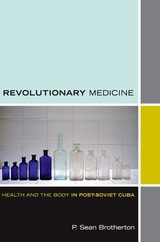
cover of Revolutionary Medicine: Health and the Body in Post-Soviet Cuba

Revolutionary Medicine

Health and the Body in Post-Soviet Cuba

P. Sean Brotherton

Duke University Press, 2012
Revolutionary Medicine is a richly textured examination of the ways that Cuba's public health care system has changed during the past two decades and of the meaning of those changes for ordinary Cubans. Until the Soviet bloc collapsed in 1989, socialist Cuba encouraged citizens to view access to health care as a human right and the state's responsibility to provide it as a moral imperative. Since the loss of Soviet subsidies and the tightening of the U.S. economic embargo, Cuba's government has found it hard to provide the high-quality universal medical care that was so central to the revolutionary socialist project. In Revolutionary Medicine, P. Sean Brotherton deftly integrates theory and history with ethnographic research in Havana, including interviews with family physicians, public health officials, research scientists, and citizens seeking medical care. He describes how the deterioration of health and social welfare programs has led Cubans to seek health care through informal arrangements, as well as state-sponsored programs. Their creative, resourceful pursuit of health and well-being provides insight into how they navigate, adapt to, and pragmatically cope with the rapid social, economic, and political changes in post-Soviet Cuba.
[more]
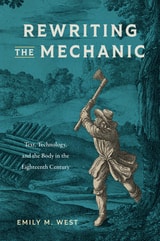
cover of Rewriting the Mechanic: Text, Technology, and the Body in the Eighteenth Century

Rewriting the Mechanic

Text, Technology, and the Body in the Eighteenth Century

Emily M. West

Bucknell University Press, 2027

In the eighteenth century, “technology” didn’t name a particular device or a process. It referred instead to written accounts of the mechanical arts, a now-obsolete category encompassing the wide range of work done by hand, from baking bread to building ships. Rewriting the Mechanic examines how these written descriptions, circulating across genres in eighteenth-century Britain, transformed certain mechanical arts by imagining them as newly innovative, authoritative, and able to make speculative possibilities real—as what we now call technological. Reversing the familiar story in which literature simply reflects technological change, West draws on the work of Robert Hooke, Aphra Behn, Daniel Defoe, Maria Edgeworth, and Jane Austen to demonstrate the influence of literary techniques on ideas about masculinity, power, and the body, and how these texts helped to bring the very idea of technological modernity into being.

Published by Bucknell University Press. Distributed worldwide by Rutgers University Press.

[more]