Results by title
96 books match the query 'Buddhism' and 5 start with r
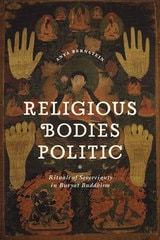
Religious Bodies Politic
Rituals of Sovereignty in Buryat BuddhismAnya Bernstein
University of Chicago Press, 2013
Religious Bodies Politic examines the complex relationship between transnational religion and politics through the lens of one cosmopolitan community in Siberia: Buryats, who live in a semiautonomous republic within Russia with a large Buddhist population. Looking at religious transformation among Buryats across changing political economies, Anya Bernstein argues that under conditions of rapid social change—such as those that accompanied the Russian Revolution, the Cold War, and the fall of the Soviet Union—Buryats have used Buddhist “body politics” to articulate their relationship not only with the Russian state, but also with the larger Buddhist world.
During these periods, Bernstein shows, certain people and their bodies became key sites through which Buryats conformed to and challenged Russian political rule. She presents particular cases of these emblematic bodies—dead bodies of famous monks, temporary bodies of reincarnated lamas, ascetic and celibate bodies of Buddhist monastics, and dismembered bodies of lay disciples given as imaginary gifts to spirits—to investigate the specific ways in which religion and politics have intersected. Contributing to the growing literature on postsocialism and studies of sovereignty that focus on the body, Religious Bodies Politic is a fascinating illustration of how this community employed Buddhism to adapt to key moments of political change.
[more]
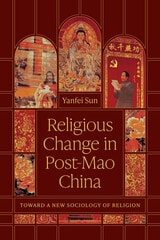
Religious Change in Post-Mao China
Toward a New Sociology of ReligionYanfei Sun
University of Chicago Press, 2026
A sweeping examination of how the religious landscape has changed in post-Mao China.
In Religious Change in Post-Mao China, sociologist Yanfei Sun examines the transformation of major religions and the broader religious ecology in China in the wake of the death of Mao Zedong. Drawing on two decades of research that integrates ethnographic, historical, and comparative methods, this book explores the remarkable rise of Protestantism, the challenges faced by Catholicism, the revival of Chinese popular religion, the complex dynamics of Chinese Buddhism, and the unrealized potential of new religious movements. Why do some religions thrive and others struggle in post-Mao China? Sun describes both the internal institutional factors that allow some religions to flourish and the wider sociopolitical context that supports or discourages religious expansion. She thereby introduces an ambitious theoretical framework—one whose applicability extends beyond China, offering a template for analyzing religious dynamics in other parts of the world.
A must-read for scholars of religious studies, sociology, and China studies, Religious Change in Post-Mao China not only provides critical insights into China’s evolving religious landscape but also offers a powerful lens for examining the forces behind religious change, both past and present.
[more]
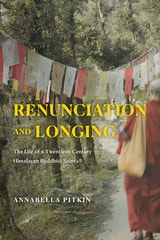
Renunciation and Longing
The Life of a Twentieth-Century Himalayan Buddhist SaintAnnabella Pitkin
University of Chicago Press, 2022
Through the eventful life of a Himalayan Buddhist teacher, Khunu Lama, this study reimagines cultural continuity beyond the binary of traditional and modern.
In the early twentieth century, Khunu Lama journeyed across Tibet and India, meeting Buddhist masters while sometimes living, so his students say, on cold porridge and water. Yet this elusive wandering renunciant became a revered teacher of the Fourteenth Dalai Lama. At Khunu Lama’s death in 1977, he was mourned by Himalayan nuns, Tibetan lamas, and American meditators alike. The many surviving stories about him reveal significant dimensions of Tibetan Buddhism, shedding new light on questions of religious affect and memory that reimagines cultural continuity beyond the binary of traditional and modern.
In Renunciation and Longing, Annabella Pitkin explores devotion, renunciation, and the teacher-student lineage relationship as resources for understanding Tibetan Buddhist approaches to modernity. By examining narrative accounts of the life of a remarkable twentieth-century Himalayan Buddhist and focusing on his remembered identity as a renunciant bodhisattva, Pitkin illuminates Tibetan and Himalayan practices of memory, affective connection, and mourning. Refuting long-standing caricatures of Tibetan Buddhist communities as unable to be modern because of their religious commitments, Pitkin shows instead how twentieth- and twenty-first-century Tibetan and Himalayan Buddhist narrators have used themes of renunciation, devotion, and lineage as touchstones for negotiating loss and vitalizing continuity.
[more]
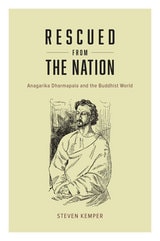
Rescued from the Nation
Anagarika Dharmapala and the Buddhist WorldSteven Kemper
University of Chicago Press, 2014
Anagarika Dharmapala is one of the most galvanizing figures in Sri Lanka’s recent turbulent history. He is widely regarded as the nationalist hero who saved the Sinhala people from cultural collapse and whose “protestant” reformation of Buddhism drove monks toward increased political involvement and ethnic confrontation. Yet as tied to Sri Lankan nationalism as Dharmapala is in popular memory, he spent the vast majority of his life abroad, engaging other concerns. In Rescued from the Nation, Steven Kemper reevaluates this important figure in the light of an unprecedented number of his writings, ones that paint a picture not of a nationalist zealot but of a spiritual seeker earnest in his pursuit of salvation.
Drawing on huge stores of source materials—nearly one hundred diaries and notebooks—Kemper reconfigures Dharmapala as a world-renouncer first and a political activist second. Following Dharmapala on his travels between East Asia, South Asia, Europe, and the United States, he traces his lifelong project of creating a unified Buddhist world, recovering the place of the Buddha’s Enlightenment, and imitating the Buddha’s life course. The result is a needed corrective to Dharmapala’s embattled legacy, one that resituates Sri Lanka’s political awakening within the religious one that was Dharmapala’s life project.
Drawing on huge stores of source materials—nearly one hundred diaries and notebooks—Kemper reconfigures Dharmapala as a world-renouncer first and a political activist second. Following Dharmapala on his travels between East Asia, South Asia, Europe, and the United States, he traces his lifelong project of creating a unified Buddhist world, recovering the place of the Buddha’s Enlightenment, and imitating the Buddha’s life course. The result is a needed corrective to Dharmapala’s embattled legacy, one that resituates Sri Lanka’s political awakening within the religious one that was Dharmapala’s life project.
[more]
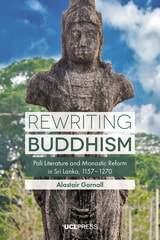
Rewriting Buddhism
Pali Literature and Monastic Reform in Sri Lanka, 1157–1270Alastair Gornall
University College London, 2020
Rewriting Buddhism is the first intellectual history of premodern Sri Lanka’s most culturally productive period. This era of reform shaped the nature of Theravada Buddhism both in Sri Lanka and Southeast Asia, and even today continues to define monastic intellectual life in the region. Alastair Gornall argues that the long century’s literary productivity was not born of political stability, as is often thought, but rather of the social, economic and political chaos brought about by invasions and civil wars.
[more]