Results by title
135 books match the query 'Business' and 3 start with r

Ratings
A.C. Nielsen Company and the Birth of the Data EconomyChris Wisniewski
University of Wisconsin Press, 2027
Before clicks, likes, and algorithms, there was Nielsen. In the 1930s, Arthur C. Nielsen Sr. began measuring what Americans bought in stores, helping manufacturers understand their “market share” and what drove sales. He then turned to what Americans heard and watched. Nielsen’s radio and television ratings became a household name—and a powerful force shaping advertising, corporate fortunes, and which programs stayed on the air.
Drawing on family and corporate archives, Chris Wisniewski tells the story of the company that helped make measuring consumers central to American business. From the first televised presidential debate and the Apollo 11 moon landing to the finale of M*A*S*H and the rise of cable television, Nielsen’s numbers chronicled shared experiences and increasingly fragmented audiences. This history of family ambition and entrepreneurial invention also explores questions that have only grown more urgent: What do the numbers reveal? What power do they hold? And who decides what counts? Ratings tells the story of the company that helped turn everyday choices into a powerful business asset—and laid the foundations of today’s data economy.
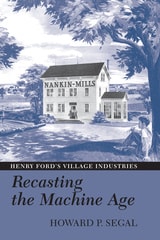
Recasting the Machine Age
Henry Ford's Village IndustriesHoward P. Segal
University of Massachusetts Press, 2005
Recasting the Machine Age recounts the history of Henry Ford's efforts to shift the production of Ford cars and trucks from the large-scale factories he had pioneered in the Detroit area to nineteen decentralized, small-scale plants within sixty miles of Ford headquarters in Dearborn. The visionary who had become famous in the early twentieth century for his huge and technologically advanced Highland Park and River Rouge complexes gradually changed his focus beginning in the teens and continuing until his death in 1947.
Ford may well have been motivated to spend great sums on the village industries in part to prevent the unionization of his company. But these industrial experiments represented much more than “union busting.” They were significant examples of profound social, cultural, and ideological shifts in America between the World Wars as reflected in the thought and practice of one notable industrialist.
Howard P. Segal recounts the development of the plants, their fate after Ford's death, their recent revival as part of Michigan's renewed appreciation of its industrial heritage, and their connections to contemporary efforts to decentralize high-tech working and living arrangements.
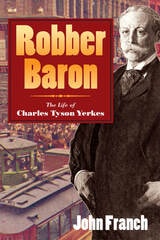
Robber Baron
The Life of Charles Tyson YerkesJohn Franch
University of Illinois Press, 2006