475 books match the query 'Catholic' and 18 start with r
cover of Reading Aristotle with Thomas Aquinas: His Commentaries on Aristotle's Major Works

Reading Aristotle with Thomas Aquinas

His Commentaries on Aristotle's Major Works

Leo J. Elders

Catholic University of America Press, 2022
Reading Aristotle with Thomas Aquinas: His Commentaries on Aristotle’s Major Works offers an original and decisive work for the understanding of the thought of Thomas Aquinas. For decades his commentaries on the major works of Aristotle have been the subject of lively discussions. Are his commentaries faithful and reliable expositions of the Stagirite's thought or do they contain Thomas’s own philosophy and are they read through the lens of Thomas’s own Christian faith and in doing so possibly distorting Aristotle? In order to be able to provide clarity and offer a nuanced response to this question a careful study of all the relevant texts is needed. This is precisely what the author sets out do to in this work. Each chapter is devoted to one of the twelve commentaries Thomas wrote on major works of Aristotle including both his massive and influential commentaries on the Metaphysics, Physics and Nicomachean Ethics as well as lesser known commentaries. Elders places Thomas’s commentary in its historical context, reviews the Greek, Arabic and Latin translation and reception of Aristotle’s text as well as contemporary interpretations thereof and presents the reader with a thorough presentation and analysis of the content of the commentary, drawing attention to all the places where Thomas intervenes and makes special observations. In this way the reader can study Aristotle’s treatises with Thomas as guide. The conclusion reached is that Thomas’s commentaries are a masterful and faithful presentation of Aristotle’s thought and of that of Thomas himself. Thomas’s Christian faith does not falsify Aristotle’s text, but gives occasionally an outlook at what lies behind philosophical thought.
[more]
cover of Reading the Song of Songs with St. Thomas Aquinas

Reading the Song of Songs with St. Thomas Aquinas

Serge-Thomas Bonino

Catholic University of America Press, 2022
St. Thomas Aquinas never commented on the Song of Songs. The purpose of this book is to demonstrate, however, that he meditated on it and absorbed it, so that the words of the Song are for him a familiar repertoire and a theological source. His work contains numerous citations of the Song, not counting his borrowings of vocabulary and images from it. In total, there are 312 citations of the Song in Aquinas’s corpus, along with citations of the Song that are found in citations that Aquinas makes of other authors (as for example in the Catena aurea). Understanding the purpose and placement of these citations significantly enriches our understanding of Aquinas as a theologian, biblical exegete, and spiritual master. The book contains an Appendix listing and contextualizing each citation. The study of the citations of the Song especially illuminates Aquinas’s spiritual doctrine. By citing the Song, Aquinas emphasizes the spiritual life’s path of dynamic ascent, through an ever increasing participation in the mystery of the nuptial union of Christ and the Church through love. The Song also highlights the eschatological tension or yearning present in the spiritual life, which is ordered to the fullness of beatific vision. Although Aquinas’s theology is highly “intellectual,” by citing the Song he brings out the affective character of the spiritual life and conveys the centrality of love in the soul’s journey toward Christ. He also draws together contemplation and preaching through his use of the Song.
[more]
cover of Rebuilding Trust: Clergy Morale in the Wake of the Abuse Crisis

Rebuilding Trust

Clergy Morale in the Wake of the Abuse Crisis

Brandon Vaidyanathan

Catholic University of America Press, 2025
While much attention has rightly been given to abuse survivors and institu­tional accountability, less has been said about how the sexual abuse crisis has shaped the experience of clergy themselves. Drawing on findings from the National Study of Catholic Priests (NSCP)—the most comprehensive survey of American priests in over 50 years—Rebuilding Trust explores how the abuse crisis and the Church’s institutional response have affected priestly well-be­ing and morale, perceptions of episcopal leadership, and the culture of the presbyterate more broadly. The study reveals a striking breakdown in trust between priests and their bishops, exacerbated by concerns over due process in the wake of an abuse allegation, inconsistent application of abuse preven­tion policies, and a widening ideological divide between younger and older clergy. The book combines sociological analysis with theological, psycholog­ical, historical, canonical, and pastoral perspectives to contextualize these findings. Contributors from various fields examine shifts in the priesthood over the past few decades, assess the implementation of the 2002 Charter for the Protection of Children and Young People (the “Dallas Charter”) and explore practical strategies for strengthening clergy formation, fostering fra­ternity, and improving bishop-priest relationships. By integrating empirical research with theological reflection, this volume offers a timely and neces­sary addition to the discussion of how the Church can rebuild trust, support priests, and cultivate a healthier presbyterate. It will be essential reading for Church leaders, seminary formators, scholars of Catholicism, and anyone concerned with the future of the priesthood in the United States.
[more]
cover of Recovering the Eucharistic Ecclesiology of the Early Church: An Introduction to Nicolas Afanasiev

Recovering the Eucharistic Ecclesiology of the Early Church

An Introduction to Nicolas Afanasiev

Anastacia Wooden

Catholic University of America Press, 2025
The first theologian who spoke of eucharistic ecclesiology was the Russian Orthodox church historian and canonist Nicholas Afanasiev (1893-1966). He claimed to have re-discovered and systematized the original ecclesiology of the early church, which he called “eucharistic.” Since then, the eucharistic ecclesiology crossed confessional borders and shaped the theological discussion on the nature of the church. Many authors of different Christian confessions developed Afanasiev’s basic intuition while proposing a variety of their own understandings of the “eucharistic nature” of the church: from Orthodox theologians like John Zizioulas and John Romanides to Catholic theologians like J.-M. Tillard and Joseph Ratzinger. Ironically, the details of Afanasiev’s own ecclesiological system remain largely unknown. The aim of this book is to formulate a comprehensive view of Afanasiev’s ecclesiological vision and of its significance for contemporary ecclesial life in two parts. It is Anastacia Wooden’s conviction that the prevailing “stereotypical” view of Afanasiev’s ecclesiology is suffering from misapprehension of his thought. Therefore, Part one addresses the issues that historically complicated understanding of Afanasiev’s ecclesiology. It will provide historical, theological, and biographical context of Afanasiev’s scholarship by presenting keys to understanding of his eucharistic ecclesiology. In the second part the book provides a synthesis of Afanasiev’s total ecclesiological vision as well as systematic presentation of six specific ecclesiological issues. It demonstrates how Afanasiev’s methodological assumption that ecclesiology can serve as a tool to make sense of the historical data on the life of the church led to his realization that the early church had an operative ecclesiology which placed the exercise of royal priesthood in the Eucharist as the starting point of the ecclesial structure. In each chapter of the second part, this book provides reflections on the contemporary relevance of Afanasiev’s work. In the current crises of leadership in the Catholic Church (as well as other Christian churches) it may prevent the adoption of arbitrary forms of lay participation in the church governance by reminding church leaders that a theologically meaningful increase of lay participation should always be framed in terms of the increased participation of local churches.
[more]
cover of Reject Aeneas, Accept Pius: Selected Letters of Aeneas Sylvius Piccolomini (Pope Pius II)

Reject Aeneas, Accept Pius

Selected Letters of Aeneas Sylvius Piccolomini (Pope Pius II)

Thomas M. Pius II

Catholic University of America Press, 2006
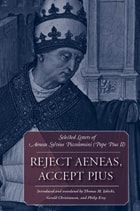
Aeneas Sylvius Piccolomini (1405-1464, elected Pope Pius II in 1458) was an important and enigmatic figure of the Renaissance as well as one of the most prolific writers and gifted stylists ever to occupy the papacy
[more]
cover of Religion and Social Justice For Immigrants

Religion and Social Justice For Immigrants

Hondagneu-Sotelo, Pierrette

Rutgers University Press, 2006

Religion has jumped into the sphere of global and domestic politics in ways that few would have imagined a century ago. Some expected that religion would die as modernity flourished.  Instead, it now stares at us almost daily from the front pages of newspapers and television broadcasts. Although it is usually stories about the Christian Right or conservative Islam that grab headlines, there are many religious activists of other political persuasions that are working quietly for social justice. This book examines how religious immigrants and religious activists are working for equitable treatment for immigrants in the United States.

The essays in this book analyze the different ways in which organized religion provides immigrants with an arena for mobilization, civic participation, and solidarity. Contributors explore topics including how non-Western religious groups such as the Vietnamese Caodai are striving for community recognition and addressing problems such as racism, economic issues, and the politics of diaspora; how interfaith groups organize religious people into immigrant civil rights activists at the U.S.–Mexican border; and how Catholic groups advocate governmental legislation and policies on behalf of refugees.
[more]
cover of Religious Freedom after the Sexual Revolution: A Catholic Guide

Religious Freedom after the Sexual Revolution

A Catholic Guide

Helen Alvare

Catholic University of America Press, 2022
Laws mandating cooperation with the state’s new sexual orthodoxy are among the leading contemporary threats to the religious freedom of Catholic institutions in the United States. These demand that Catholic schools, health-care providers, or social services cooperate with contraception, cohabitation, abortion, same-sex marriage, or transgender identity and surgeries. But Catholic institutions’ responses seem thin and uninspiring to many. They are criticized as legalistic, authoritarian, bureaucratic, retrograde and hurtful to women and to persons who identify as LGBTQ. They are even called “un-Christian.” They invite disrespect both for Catholic sexual responsibility norms and for religious freedom generally, not only among lawmakers and judges, but also in the court of public opinion, which includes skeptical Catholics. The U.S. Constitution protects Catholic institutions’ “autonomy” – their authority over faith and doctrine, internal operations, and the personnel involved in personifying and transmitting the faith. Other constitutional and statutory provisions also safeguard religious freedom, if not always perfectly. Catholic institutions could take far better advantage of all of these existing protections if they communicated, first, how they differ from secular institutions: how their missions emerge from their faith in Jesus Christ, and their efforts both to make his presence felt in the world today, and to display the inbreaking of the Kingdom of God. Second, they need to draw out the link between their teachings on sexual responsibility and love of God and neighbor. Drawing upon Scripture, tradition, history, theology and empirical evidence, Helen Alvaré frames a more complete, inspiring and appealing response to current laws’ attempts to impose a new sexual orthodoxy upon Catholic institutions. It clarifies the “ecclesial” nature of Catholic schools, hospitals and social services. It summarizes the empirical evidence supporting the link between personnel decisions and mission, and between Catholic sexual responsibility norms and human flourishing. It grounds Catholic sexual responsibility teachings in the same love of God and neighbor that animate the existence, operations, and services of Catholic institutions.
[more]
cover of Remapping the History of Catholicism in the United States

Remapping the History of Catholicism in the United States

David J. Endres

Catholic University of America Press, 2017

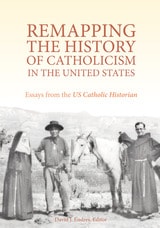
For more than thirty years, the U.S. Catholic Historian has mapped the diverse terrain of American Catholicism. This collection of recent essays tells the story of Catholics previously underappreciated by historians: women, African Americans, Latinos, Asian Americans, and those on the frontier and borderlands.

Timothy Matovina’s opening essay sets the theme for the volume, encouraging a remapping of U.S. Catholic history to more widely encompass its various localities and peoples, especially the significance of non-European ethnic groups and the role of Catholics in the American Southwest. Jeanne Petit explores Catholic womanhood’s strength and organizational zeal in the post-World War I era, noting the obstacles and successes of women’s attempts to be recognized fully as American citizens and members of the Church. Anne Klejment weaves together the lives of Dorothy Day and Cesar Chavez to illustrate their use of nonviolence and “weapons of the spirit” to respond to societal injustice. Amanda Bresie provides a window into the life of Mother Katharine Drexel, noting the generosity of the millionaire heiress, but also her meticulous record keeping and close supervision of her funding of educational and evangelization e­orts among Native and African Americans. Kristine Ashton Gunnell analyzes the ways in which the Daughters of Charity crossed cultural boundaries to off­er charitable assistance to Mexican and Japanese communities in Los Angeles. Matthew Cressler explores the intersection of Black Power and distinctive African American-inspired liturgies, arguing that the liturgy became a site of struggle as black self-determination and nationalism impacted worship and black Catholic identity. Finally, Joseph Chinnici off­ers an important essay on re-envisioning post-conciliar U.S. Catholicism in its global context, off­ering a new approach to how we consider the American Catholic narrative and write its history.

Together these path-breaking studies serve as a model for historians seeking to engage in the cartographic task of remapping the U.S. Catholic experience.
[more]
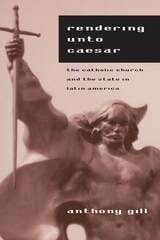
cover of Rendering unto Caesar: The Catholic Church and the State in Latin America

Rendering unto Caesar

The Catholic Church and the State in Latin America

Anthony Gill

University of Chicago Press, 1997
Nowhere has the relationship between state and church been more volatile in recent decades than in Latin America. Anthony Gill's controversial book not only explains why Catholic leaders in some countries came to oppose dictatorial rule but, equally important, why many did not. Using historical and statistical evidence from twelve countries, Gill for the first time uncovers the causal connection between religious competition and the rise of progressive Catholicism. In places where evangelical Protestantism and "spiritist" sects made inroads among poor Catholics, Church leaders championed the rights of the poor and turned against authoritarian regimes to retain parishioners. Where competition was minimal, bishops maintained good relations with military rulers. Applying economic reasoning to an entirely new setting, Rendering unto Caesar offers a new theory of religious competition that dramatically revises our understanding of church-state relations.
[more]
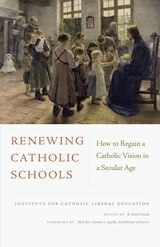
cover of Renewing Catholic Schools: How to Regain a Catholic Vision for a Secular Age

Renewing Catholic Schools

How to Regain a Catholic Vision for a Secular Age

R. Jared Staudt

Catholic University of America Press, 2020
Catholic education remains one of the most compelling expressions of the Church’s mission to form disciples. Despite decades of decline in the number of schools and students, many Catholic schools have been experiencing renewal by returning to the great legacy of the Catholic tradition. Renewing Catholic Schools offers an overview of the reasons behind this renewal and practical suggestions for administrators, clergy, teachers, and parents on how to begin the process of reinvigoration. The book begins by situating Catholic education within the Church’s mission. Fidelity to Catholic mission and identity, including a commitment to the fulness of truth, provides the fundamental mark for the true success of Catholic education. The Catholic intellectual tradition, in particular, established by figures such as Augustine, Boethius, and Aquinas, can continue to direct Catholic schools, providing a depth of vision to overcome today’s educational crisis. To transcend the now dominate secular model of education, Catholic schools can align their curriculum more closely to the Catholic tradition. One touchpoint comes from Archbishop Michael Miller’s The Holy See’s Teaching on Catholic Schools, which the book explores as a source for practical guidance. It also offers a Catholic vision for curriculum, examining the full range of subjects from gymnasium, the fine arts, the liberal arts, literature, history, and catechesis, all of which lead to a well-formed graduate, inspired by beauty, attune to truth, and ordered toward the good. Finally, the book provides a practical vision for renewing the school through the formation of teachers, creation of a school community, and by offering suggestions for implementation of a stronger Catholic mission and philosophy of education. The teacher, ultimately, should strive to teach like Jesus, while the community should joyfully embody the school’s mission, making it a lived reality. The book concludes with examples of Catholic schools that have successfully undergone renewal.
[more]
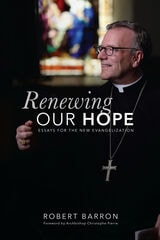
cover of Renewing Our Hope: Essays for the New Evangelization

Renewing Our Hope

Essays for the New Evangelization

Robert Barron

Catholic University of America Press, 2020
In a time of discouragement, how can the Church renew itself and its outreach to all people? Bishop Robert Barron, Auxiliary Bishop of the Archdiocese of Los Angeles, insists that a "dumbed down" Catholicism cannot succeed in today's highly educated society--instead, the Church needs to draw upon its great theological heritage in order to renew its hope in Christ. With Renewing Our Hope: Essays for the New Evangelization, Bishop Barron traces this renewal through four stages. "Renewing Our Mission" lays out the challenges that call for Catholics to become more aware of their own intellectual resources in encountering the "Nones." "Renewing Our Minds" showcases the importance of theological reflection as a font of wisdom and sanity in the Church, touching on Thomas Aquinas, Hans Urs von Balthasar, the recently canonized John Henry Newman, and Pope Francis. In "Renewing the Church," he proceeds to look at how Scripture, the family, the seminary, and Catholic college graduates can each contribute to this renewal. Finally, in "Renewing Our Culture," he returns to the judgments Catholics must make in assessing contemporary culture, specifically, family life, liberalism, relativism, and (surprisingly) the beauty of cinema. Bishop Barron, known as the host of the Catholicism PBS video series, was previously rector and professor of systematic theology at Mundelein Seminary outside Chicago, Illinois. He demonstrates again in Renewing Our Hope his ability to make the fruits of his wide reading accessible to a broad audience, while still giving his academic colleagues much to consider.
[more]
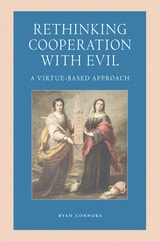
cover of Rethinking Cooperation with Evil: A Virtue-Based Approach

Rethinking Cooperation with Evil

A Virtue-Based Approach

Ryan Connors

Catholic University of America Press, 2023

Rethinking Cooperation with Evil: A Virtue-Based Approach applies Thomistic virtue theory to today’s most challenging questions of cooperation with evil. For centuries, moralists have struggled to determine the conditions necessary to justify moral cooperation with evil. The English Jesuit Henry Davis even observed: “[T]here is no more difficult question than this in the whole range of Moral Theology.” This important book addresses this challenge by applying the virtue-based method of moral reasoning of St. Thomas Aquinas to issues of cooperation with evil. Those who pastor souls report frequently receiving questions from attentive believers about whether a particular human action inadvertently contributes to some moral evil. Examples of potentially immoral cooperation with evil include whether one may shop at a particular franchise known for its support of abortion, whether Catholics may attend civil marriages outside the Church, or whether an organization may submit to government mandates that health insurance include payment for immoral practices. Although recent moralists have tackled specific topics related to cooperation with evil, agreement on an overall common paradigm has not yet been reached. Rethinking Cooperation with Evil proposes a method for Christian believers and others to approach these questions from the foundation of the thought of St. Thomas Aquinas and the magisterial teaching of the Catholic Church. This text provides both an overall method for how to understand the issue of cooperation, as well as practical counsel for specific cases. Rethinking Cooperation with Evil advances the theological conversation on this topic from both speculative and practical vantage points. To facilitate his argument, Connors utilizes historical analyses that contrast Aquinas’s method of moral reasoning with that of the casuist treatment of cooperation. Consequently, the book includes numerous case studies that will be of interest both to moral theologians and readers new to the topic.
[more]
cover of Revelation Occurs via Signs: God's Self-Communication to Humanity in Its Semiotic Constitution

Revelation Occurs via Signs

God's Self-Communication to Humanity in Its Semiotic Constitution

Vincent Birch

Catholic University of America Press, 2027
Revelation Occurs via Signs is a constructive theological project aimed at achieving a synthesis in an area of theology beset with fracture. Theology of revelation emerged as a distinct area of theological inquiry in response to the Enlightenment, and it has consequently been framed in the Enlightenment’s terms, namely, the subjective-objective dichotomy. Further dichotomies have multiplied in the field (e.g., data versus experience, revelation as propositional versus personal, as informational versus formational), and an adequate synthesis has yet to emerge. This book’s proposed solution is an analysis of divine revelation that proceeds not from the subjective-objective dichotomy but rather from the nature of signs as triadic relations. Drawing primarily on figures in the Augustinian semiotic tradition, including Thomas Aquinas, John of St. Thomas, Charles Sanders Peirce, John Deely, and Umberto Eco, the work undertakes a careful examination of why and how divine revelation—from revelation itself as culminating in Christ to the mediation of revelation in history through Scripture and tradition—occurs via signs. Moreover, because a semiotic analysis is befitting of the mystery of divine revelation, further theological fruits concerning grace and the theological imagination, the invisible missions of the Son and the Holy Spirit, the transformation of socio-cultural contexts through personal holiness, and other theological matters issue from this approach This study’s proposal develops through dialogue with a range of theologians from throughout the tradition, engages with both medieval and modern semiotics, and is, broadly speaking, Thomistic. It is a project at once new and old.
[more]
cover of Revelations of Humanity: Anthropological Dimensions of Theological Controversies

Revelations of Humanity

Anthropological Dimensions of Theological Controversies

Richard Schenk, OP

Catholic University of America Press, 2022
Revelations of Humanity brings together essays into the history and actuality of how our searches for God and for our own humanity are interwoven. They argue that the revelation of God is possible only when accompanied by a revelation of what it means to be a human being. Revelation implies that the truth is not fully evident in either case. This quest is aided in many of the essays by a recollection of the thought of Thomas Aquinas. As opposed to simple memory, recollection implies that memory has been lost or become clouded, here by the misrepresentation of Thomas’ view of humanity’s relation to God as harmonistic, at best semi-Pelagian, often even naturalistic. This difficult recovery is made possible by historical research that alone can escape the easy systematic alienation that supporters and critics of Thomas have often brought to their interpretation of his works. Thomas’s sense of a real but finite capacity of human beings for God, his grace and revelation, anticipates in more ways than is commonly known much of contemporary suspicion about human capacities, but in ways that are open to God. That programmatic insight into the historical Thomas, keenly aware of human entanglements, limits and hopes, offers on many contemporary issues a ressourcement of systematic thought. Revelations of Humanity revolves around three clusters of issues. The first asks about the reality and limits of the human capacity for truth: in metaphysical, moral and political matters and in relation to the disputed issues of analogous reason and faith. The second cluster is structured around the four involvements that the Second Vatican Council identified as the human face of genuine Christian existence: participation in the legitimate joys, hopes, sorrows and fears of the contemporary world. These are refracted in the broken light of the human proprium of risibility, the abiding uncertainty addressed by hope, the disputed question of a suffering God and the recollection of Christ’s anxiety in the face of death. The final cluster brings together anthropological dimensions of current ecumenical and interreligious disputes: the need to complement affirmation with admonition in ecumenical conversation, exemplified by the ambivalence towards sacrifice in a genuinely Catholic theology and the need to avoid the excesses of univocity, equivocity or an all too facile analogy in the determination of interreligious relationalities.
[more]
cover of Revolutions in Mexican Catholicism: Reform and Revelation in Oaxaca, 1887–1934

Revolutions in Mexican Catholicism

Reform and Revelation in Oaxaca, 1887–1934

Edward Wright-Rios

Duke University Press, 2009

In Revolutions in Mexican Catholicism, Edward Wright-Rios investigates how Catholicism was lived and experienced in the Archdiocese of Oaxaca, a region known for its distinct indigenous cultures and vibrant religious life, during the turbulent period of modernization in Mexico that extended from the late nineteenth century through the early twentieth. Wright-Rios centers his analysis on three “visions” of Catholicism: an enterprising archbishop’s ambitious religious reform project, an elderly indigenous woman’s remarkable career as a seer and faith healer, and an apparition movement that coalesced around a visionary Indian girl. Deftly integrating documentary evidence with oral histories, Wright-Rios provides a rich, textured portrait of Catholicism during the decades leading up to the Mexican Revolution of 1910 and throughout the tempestuous 1920s.

Wright-Rios demonstrates that pastors, peasants, and laywomen sought to enliven and shape popular religion in Oaxaca. The clergy tried to adapt the Vatican’s blueprint for Catholic revival to Oaxaca through institutional reforms and attempts to alter the nature and feel of lay religious practice in what amounted to a religious modernization program. Yet some devout women had their own plans. They proclaimed their personal experiences of miraculous revelation, pressured priests to recognize those experiences, marshaled their supporters, and even created new local institutions to advance their causes and sustain the new practices they created. By describing female-led visionary movements and the ideas, traditions, and startling innovations that emerged from Oaxaca’s indigenous laity, Wright-Rios adds a rarely documented perspective to Mexican cultural history. He reveals a remarkable dynamic of interaction and negotiation in which priests and parishioners as well as prelates and local seers sometimes clashed and sometimes cooperated but remained engaged with one another in the process of making their faith meaningful in tumultuous times.
[more]
cover of Rewriting the Word "God": In the Arc of Converging Lines between Innovative Theory, Theology, and Poetry

Rewriting the Word "God"

In the Arc of Converging Lines between Innovative Theory, Theology, and Poetry

Romana Huk

University of Alabama Press, 2025

Innovative poetry, philosophy, theology and new sciences converge in the project of rewriting the word “God”

In Rewriting the Word “God,” Romana Huk examines the substantive connections between innovative poetry of the last century and contemporary theology and philosophy. Along the way, we encounter ten poets who have, without abandoning their inherited or chosen faith traditions, radically rethought conceptualizations of divinity, human ontology, and the real.

From the startlingly proto-phenomenological encounters with nature by Gerard Manley Hopkins to the post-deconstructive pursuit of “oracular” speech in Fanny Howe, these poets have found inspiration in a wide range of sources, from ancient religious texts to modern philosophical movements. But what unites them is their willingness to continually change, experiment and challenge the status quo, both in their religious beliefs and their poetic practice.

Huk shows how these poets have used their work to explore ultimate questions of life and death, meaning and purpose, and the relationship between humans and materiality, humans and other humans, which for these poets sheds light on humanity’s relationship with the divine. She also highlights the ways in which they have engaged with social and political issues in their poetry to speak out against injustice and oppression.

Rewriting the Word “God” is a thought-provoking and inspiring work that will challenge current perceptions of both religion and poetry from new positions at the intersection of faith, art, philosophy, science, literary theory, and culture.
[more]
cover of Richer of Saint-Remi

Richer of Saint-Remi

Justin Lake

Catholic University of America Press, 2013
Building upon, but also moving beyond, previous scholarship that has focused on Richer's political allegiances and his views of kingship, this study by Justin Lake provides the most comprehensive synthesis of the History, examining Richer's use and abuse of his sources, his relationship to Gerbert, and the motives that led him to write.
[more]
cover of Rome’s Most Faithful Daughter: The Catholic Church and Independent Poland, 1914–1939

Rome’s Most Faithful Daughter

The Catholic Church and Independent Poland, 1914–1939

Neal Pease

Ohio University Press, 2009

When an independent Poland reappeared on the map of Europe after World War I, it was widely regarded as the most Catholic country on the continent, as “Rome’s Most Faithful Daughter.” All the same, the relations of the Second Polish Republic with the Church—both its representatives inside the country and the Holy See itself—proved far more difficult than expected.

Based on original research in the libraries and depositories of four countries, including recently opened collections in the Vatican Secret Archives, Rome’s Most Faithful Daughter: The Catholic Church and Independent Poland, 1914–1939 presents the first scholarly history of the close but complex political relationship of Poland with the Catholic Church during the interwar period. Neal Pease addresses, for example, the centrality of Poland in the Vatican’s plans to convert the Soviet Union to Catholicism and the curious reluctance of each successive Polish government to play the role assigned to it. He also reveals the complicated story of the relations of Polish Catholicism with Jews, Freemasons, and other minorities within the country and what the response of Pope Pius XII to the Nazi German invasion of Poland in 1939 can tell us about his controversial policies during World War II.

Both authoritative and lively, Rome’s Most Faithful Daughter shows that the tensions generated by the interplay of church and state in Polish public life exerted great influence not only on the history of Poland but also on the wider Catholic world in the era between the wars.

[more]