Results by title
99 books match the query 'Censorship' and 3 start with r
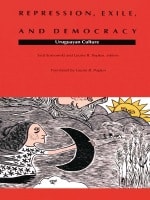
Repression, Exile, and Democracy
Uruguayan CultureSaul Sosnowski and Louise B. Popkin, eds.
Duke University Press, 1992
Repression, Exile, and Democracy, translated from the Spanish, is the first work to examine the impact of dictatorship on Uruguyan culture. Some of Uruguay's best-known poets, writers of fiction, playwrights, literary critics and social scientists participate in this multidisciplinary study, analyzing how varying cultural expressions have been affected by conditions of censorship, exile and "insilio" (internal exile), torture, and death.
The first section provides a context for the volume, with its analyses of the historical, political, and social aspects of the Uruguayan experience. The following chapters explore various aspects of cultural production, including personal experiences of exile and imprisonment, popular music, censorship, literary criticism, return from exile, and the role that culture plays in redemocratization.
This book's appeal extends well beyond the study of Uruguay to scholars and students of the history and culture of other Latin American nations, as well as to fields of comparative literature and politics in general.
Contributors. Hugo Achugar, Alvarro Barros-Lémez, Lisa Block de Behar, Amanda Berenguer, Hiber Conteris, José Pedro Díaz, Eduardo Galeano, Edy Kaufman, Leo Masliah, Carina Perelli, Teresa Porzecanski, Juan Rial, Mauricio Rosencof, Jorge Ruffinelli, Saúl Sosonowski, Martin Weinstein, Ruben Yáñez
[more]
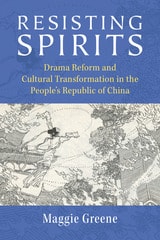
Resisting Spirits
Drama Reform and Cultural Transformation in the People's Republic of ChinaMaggie Greene
University of Michigan Press, 2019
Resisting Spirits is a reconsideration of the significance and periodization of literary production in the high socialist era, roughly 1953 through 1966, specifically focused on Mao-era culture workers’ experiments with ghosts and ghost plays. Maggie Greene combines rare manuscript materials—such as theatre troupes’ annotated practice scripts—with archival documents, memoirs, newspapers, and films to track key debates over the direction of socialist aesthetics. Through arguments over the role of ghosts in literature, Greene illuminates the ways in which culture workers were able to make space for aesthetic innovation and contestation both despite and because of the constantly shifting political demands of the Mao era. Ghosts were caught up in the broader discourse of superstition, modernization, and China’s social and cultural future. Yet, as Greene demonstrates, the ramifications of those concerns as manifested in the actual craft of writing and performing plays led to further debates in the realm of literature itself: If we remove the ghost from a ghost play, does it remain a ghost play? Does it lose its artistic value, its didactic value, or both? At the heart of Greene’s intervention is “just reading”: the book regards literature first as literature, rather than searching immediately for its political subtext, and the voices of dramatists themselves finally upstage those of Mao’s inner circle. Ironically, this surface reading reveals layers of history that scholars of the Mao era have often ignored, including the ways in which social relations and artistic commitments continued to inform the world of art. Resisting Spirits thus illuminates the origins of more famous literary inquisitions, showing how the arguments surrounding ghost plays and the fates of their authors place the origins of the Cultural Revolution several years earlier, with a radical new shift in the discourse of theatre.
[more]
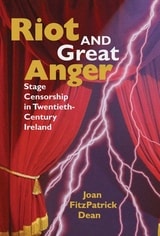
Riot and Great Anger
Stage Censorship in Twentieth-Century IrelandJoan Fitzpatrick Dean
University of Wisconsin Press, 2010
Under the strict rule of twentieth century Irish censorship, creators of novels, films, and most periodicals found no option but to submit and conform to standards. Stage productions, however, escaped official censorship. The theater became a "public space"—a place to air cultural confrontations between Church and State, individual and community, and "freedom of the theatre" versus the audience’s right to disagree.
Joan FitzPatrick Dean’s Riot and Great Anger suggests that while there was no state censorship in early-twentieth-century Ireland, the theater often evoked heated responses from theatergoers, sometimes resulting in riots and the public denunciation of playwrights and artists. Dean examines the plays that provoked these controversies, the degree to which they were "censored" by the audience or actors, and the range of responses from both the press and the courts. She addresses familiar pieces such as those of William Butler Yeats, John Millington Synge, and Sean O’Casey, as well as the works of less known playwrights such as George Birmingham. Dean’s original research meticulously analyzes Ireland’s great theatrical tradition, both on the stage and off, concluding that the public responses to these controversial productions reveal a country that, at century’s end as at its beginning, was pluralistic, heterogeneous, and complex.
Joan FitzPatrick Dean’s Riot and Great Anger suggests that while there was no state censorship in early-twentieth-century Ireland, the theater often evoked heated responses from theatergoers, sometimes resulting in riots and the public denunciation of playwrights and artists. Dean examines the plays that provoked these controversies, the degree to which they were "censored" by the audience or actors, and the range of responses from both the press and the courts. She addresses familiar pieces such as those of William Butler Yeats, John Millington Synge, and Sean O’Casey, as well as the works of less known playwrights such as George Birmingham. Dean’s original research meticulously analyzes Ireland’s great theatrical tradition, both on the stage and off, concluding that the public responses to these controversial productions reveal a country that, at century’s end as at its beginning, was pluralistic, heterogeneous, and complex.
[more]