77 books match the query 'Characters' and 4 start with r
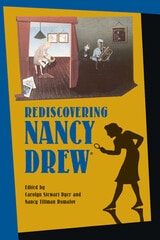
cover of Rediscovering Nancy Drew

Rediscovering Nancy Drew

Carolyn Stewart Dyer

University of Iowa Press, 1995

"Rediscovering Nancy Drew is a rich collection of literary memories and insightful cultural comments."--Journal of Children's Literature "Nancy, especially the Nancy of the original story, is our bright heroine, chasing down the shadows, conquering our worst fears, giving us a glimpse of our brave and better selves, proving to everybody exactly how admirable and wonderful a thing it is to be a girl. Thank you, Nancy Drew."--Nancy Pickard "Nancy Drew belongs to a moment in feminist history; it is a moment, I suggest, that we celebrate, allowing ourselves the satisfaction of praising her for what she dared and forgiving her for what she failed to undertake or understand."--Carolyn G. Heilbrun "Rediscovering Nancy Drew lights up the territory. It informs, delights, and acknowledges through love and scholarship a debt long overdue."--Dale H. Ross In 1991, women staff and faculty at the University of Iowa discovered that the pseudonymous author of the original Nancy Drew books, Carolyn Keene, was none other than Mildred Wirt Benson, the first person to earn a master's degree in journalism at Iowa. The excitement caused by their discovery led to the 1993 Nancy Drew Conference, which explored the remarkable passion for Nancy Drew that spans a wide spectrum of American society. The result: a lively collaboration of essays by and interviews with mystery writers, collectors, publishers, librarians, scholars, journalists, and fans which presents a spirited, informative, totally enjoyable tribute to the driver of that blue roadster so many readers have coveted.
[more]
cover of Richard III's Bodies from Medieval England to Modernity: Shakespeare and Disability History

Richard III's Bodies from Medieval England to Modernity

Shakespeare and Disability History

Jeffrey R. Wilson

Temple University Press, 2022

Richard III will always be central to English disability history as both man and myth—a disabled medieval king made into a monster by his nation’s most important artist.

In Richard III’s Bodies from Medieval England to Modernity, Jeffrey Wilson tracks disability over 500 years, from Richard’s own manuscripts, early Tudor propaganda, and x-rays of sixteenth-century paintings through Shakespeare’s soliloquies, into Samuel Johnson’s editorial notes, the first play produced by an African American Theater company, Freudian psychoanalysis, and the rise of disability theater. For Wilson, the changing meanings of disability created through shifting perspectives in Shakespeare’s plays prefigure a series of modern attempts to understand Richard’s body in different disciplinary contexts—from history and philosophy to sociology and medicine.

While theorizing a role for Shakespeare in the field of disability history, Wilson reveals how Richard III has become an index for some of modernity’s central concerns—the tension between appearance and reality, the conflict between individual will and external forces of nature and culture, the possibility of upward social mobility, and social interaction between self and other, including questions of discrimination, prejudice, hatred, oppression, power, and justice.
[more]
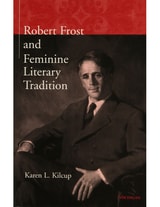
cover of Robert Frost and Feminine Literary Tradition

Robert Frost and Feminine Literary Tradition

Karen L. Kilcup

University of Michigan Press, 1998
In spite of Robert Frost's continuing popularity with the public, the poet remains an outsider in the academy, where more "difficult" and "innovative" poets like T. S. Eliot and Ezra Pound are presented as the great American modernists. Robert Frost and Feminine Literary Tradition considers the reason for this disparity, exploring the relationship between notions of popularity, masculinity, and greatness. Karen Kilcup reveals Frost's subtle links with earlier "feminine" traditions like "sentimental" poetry and New England regionalist fiction, traditions fostered by such well-known women precursors and contemporaries as Lydia Sigourney, Sarah Orne Jewett, and Mary E. Wilkins Freeman. She argues that Frost altered and finally obscured these "feminine" voices and values that informed his earlier published work, and that to appreciate his achievement fully, we need to recover and acknowledge the power of his affective, emotional voice in counterpoint and collaboration with his more familiar ironic and humorous tones.Robert Frost and Feminine Literary Tradition also explores the links between cultural femininity and homoeroticism in Frost's work, and investigates the conjunctions and disjunctions between Frost and such modernist women poets as Amy Lowell and Edna St. Vincent Millay. The book contributes to ongoing debates about sentimentalism, regionalism, modernism, and the cultural construction of gender in American literature of the nineteenth and early twentieth centuries. With its interest in popular magazines, folktales, gossip, and children's literature, the book also engages elements of cultural studies and popular culture. "Kilcup demonstrates a remarkably thorough understanding of issues raised by feminist critics over the past few decades. . . . Fascinating and convincing." --Jay Parini, Middlebury College
[more]
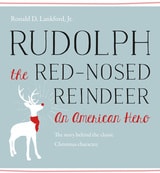
cover of Rudolph the Red-Nosed Reindeer: An American Hero

Rudolph the Red-Nosed Reindeer

An American Hero

Ronald D. Lankford

University Press of New England, 2016

Ronald D. Lankford has written the definitive history of this iconic and much-loved Christmas character. Rudolph the Red-Nosed Reindeer was the creation of Robert May, a staff copywriter who wrote the original poem as a Montgomery Ward Christmas giveaway in 1939. More than 2.4 million copies were printed and given away that holiday season. Thus the legend began. Johnny Marks adapted the poem into what would become the Gene Autry hit “Rudolph the Red-Nosed Reindeer,” which instantly became—and still remains—one of the most popular Christmas songs of all time. The legend of Rudolph soared even higher with the Rankin/Bass stop-motion television special in 1964, which has gone on to inspire a cottage industry of toys and decorative items. In this festive and informed look at the most famous reindeer of all, Lankford discusses all of Rudolph’s iterations, including comic books, sequels, advertising tie-ins, movies, and much more. Lankford has produced the first complete history of Rudolph that both celebrates and explains the undying popularity of Rudolph and his friends. The result is both a glowing tribute and a rigorously researched biography that will appeal to fans and lovers of classic American holiday culture.
[more]