Results by title
267 books match the query 'Children' and 9 start with r
RSF
The Russell Sage Foundation Journal of the Social Sciences: Disparate Effects of Disruptive Events on ChildrenJennie E. Brand
Russell Sage Foundation, 2023
Drawing on accumulated insights of empirical work from several social science disciplines, including sociology, psychology, and economics, the editors provide a nuanced consideration of theoretical approaches and methodological challenges in identifying unequal impacts. They argue that variation in the effects of disruptive events depends on different, and sometimes offsetting, mechanisms. For example, Martha Bailey and colleagues find that more disadvantaged male youth were less negatively impacted by the macroeconomic shock of the Great Depression than more advantaged youth. Black youth, however, were more negatively impacted. Anna Baranowska-Rataj and colleagues find little evidence that parental job loss leads to worse birth outcomes or that effects vary across regions with different unemployment levels in Sweden, a nation with a relatively generous safety net and universal health care. Regarding the household disruption of parental incarceration, Kristin Turney and colleagues find that some children seamlessly step into new responsibilities, while others, especially older children who had witnessed their fathers’ frequent entanglements with the criminal legal system, consciously step away from these responsibilities. Stefanie DeLuca and colleagues argue that as youth grow accustomed to disruptive events, these exposures become less remarkable and impactful on their life outcomes. Looking at the disruption to education caused by the COVID-19 pandemic, Douglas Harris and colleagues find that \high school graduation has remained remarkably steady since the onset of the pandemic, but entry into two-year colleges was hard hit, especially for colleges serving more people of color and those from low-income families. Finally, considering environmental disruptions, Nazar Khalid and colleagues show that severe floods in India have a stronger impact on the educational outcomes of children from marginalized communities.
Through its systematic examination of the variation in the consequences of disruption, especially in early life, this volume of RSF provides an insightful and practical resource for both researchers and policymakers.
Radical Play
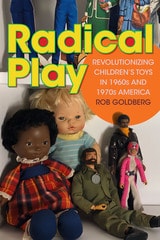
Revolutionizing Children’s Toys in 1960s and 1970s AmericaRob Goldberg
Duke University Press, 2023

Reid's Read-Alouds 2
Modern-Day Classics from C.S. Lewis to Lemony SnicketRob Reid
American Library Association, 2010
Reid's Read-Alouds
Selections for Children and TeensRob Reid
American Library Association, 2009
Rescuing the Children
A Holocaust MemoirVivette Samuel; Translated and with an introduction by Charles B. Paul; With a foreword by Elie Wiesel
University of Wisconsin Press, 2002
Restavec
From Haitian Slave Child to Middle-Class AmericanAn Autobiography by Jean-Robert Cadet
University of Texas Press, 1998
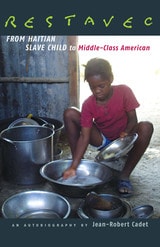
African slaves in Haiti emancipated themselves from French rule in 1804 and created the first independent black republic in the Western Hemisphere. But they reinstituted slavery for the most vulnerable members of Haitian society—the children of the poor—by using them as unpaid servants to the wealthy. These children were—and still are—restavecs, a French term whose literal meaning of "staying with" disguises the unremitting labor, abuse, and denial of education that characterizes the children's lives.
In this memoir, Jean-Robert Cadet recounts the harrowing story of his youth as a restavec, as well as his inspiring climb to middle-class American life. He vividly describes what it was like to be an unwanted illegitimate child "staying with" a well-to-do family whose physical and emotional abuse was sanctioned by Haitian society. He also details his subsequent life in the United States, where, despite American racism, he put himself through college and found success in the Army, in business, and finally in teaching.
Rethinking Childhood
Pufall, Peter B.
Rutgers University Press, 2003
Being a child in American society can be problematic. Twenty percent of American children live in poverty, parents are divorcing at high rates, and educational institutions are not always fulfilling their goals. Against this backdrop, children are often patronized or idealized by adults. Rarely do we look for the strengths within children that can serve as the foundation for growth and development. In Rethinking Childhood, twenty contributors, coming from the disciplines of anthropology, government, law, psychology, education, religion, philosophy, and sociology, provide a multidisciplinary view of childhood by listening and understanding the ways children shape their own futures. Topics include education, poverty, family life, divorce, neighborhood life, sports, the internet, and legal status. In all these areas, children have both voice and agency. They construct their own social networks and social reality, sort out their own values, and assess and cope with the perplexing world around them. The contributors present ideas that lead not only to new analyses but also to innovative policy applications.
Taken together, these essays develop a new paradigm for understanding childhood as children experience these years. This paradigm challenges readers to develop fresh ways of listening to children’s voices that enable both children and adults to cross the barriers of age, experience, and stereotyping that make communication difficult.
A volume in the Rutgers Series in Childhood Studies, edited by Myra Bluebond-Langner.
Revolutions at Home
The Origin of Modern Childhood and the German Middle ClassEmily C. Bruce
University of Massachusetts Press, 2021
Revolutions at Home analyzes a rich set of documents created for and by young Germans to show that children were central to reinventing their own education between 1770 and 1850. Through their reading and writing, they helped construct the modern child subject. The active child who emerged at this time was not simply a consequence of expanding literacy but, in fact, a key participant in defining modern life.
Rituals and Patterns in Children's Lives
Edited by Kathy Merlock Jackson
University of Wisconsin Press, 2005
Trick-or-treating. Flower girls. Bedtime stories. Bar and bat mitvah. In a nation of increasing ethnic, familial, and technological complexity, the patterns of children's lives both persist and evolve. This book considers how such events shape identity and transmit cultural norms, asking such questions as:
* How do immigrant families negotiate between old traditions and new?
* What does it mean when children engage in ritual insults and sick jokes?
* How does playing with dolls reflect and construct feelings of racial identity?
* Whatever happened to the practice of going to the Saturday matinee to see a Western?
* What does it mean for a child to be (in the words of one bride) "flower-girl material"? How does that role
cement a girl's bond to her family and initiate her into society?
* What is the function of masks and costumes, and why do children yearn for these accoutrements of disguise?
Rituals and Patterns in Children's Lives suggests the manifold ways in which America's children come to know their society and themselves.