496 books match the query 'Christian Theology' and 19 start with r
cover of Reading Job with St. Thomas Aquinas

Reading Job with St. Thomas Aquinas

Matthew Levering

Catholic University of America Press, 2020
Reading Job with St. Thomas Aquinas is a scholarly contribution to Thomistic studies, specifically to the study of Aquinas’s biblical exegesis in relation to his philosophy and theology. Each of the thirteen chapters has a different focus, within the shared concentration of the book on Aquinas’s Literal Exposition on Job. The essays are arranged in three Parts: “Job and Sacra Doctrina”; “Providence and Suffering”; and “Job and the Moral Life”. Boyle’s opening essay argues that Aquinas’s commentary seeks to show what is required in the “Magister” (namely, Job and God) for the effective communication of wisdom. Mansini’s essay argues that by speaking, God reveals the virtue of Job and its value in God’s providence; without the personal revelation or speech of God, Job could not have known the value of his suffering. Vijgen’s essay explores the commentary’s use of Aristotle for reflecting upon divine providence, sorrow and anger, resurrection, and the new heavens and new earth. Levering’s essay explores the commentary’s citations of the Gospel of John and argues that these pertain especially to divine speech and to light/darkness. Bonino’s essay explains why divine incomprehensibility does not mean that Job is wrong to seek to understand God’s ways. Te Velde’s essay explores how Aquinas’s commentary draws upon the reasoning of his Summa contra gentiles with regard to the good order of the universe. Goris’s essay reflects upon how, according to Aquinas’s commentary, sin is and is not related to suffering. Knasas’s essay argues that Aquinas does not hold that the resurrection of the body is a necessary philosophical corollary of the human desire for happiness. Wawrykow’s essay explores merit, in relation to the connection between sin and punishment/affliction as well as to the connection between good actions and flourishing. Spezzano’s essay shows that Job’s hope and filial fear transform his suffering, making him an exemplar of the consolation they provide to the just. Mullady’s essay reflects upon the moral problems and opportunities posed by the passions, along with the ordering of the virtues to the reward of human happiness. Flood’s essay shows how Aquinas defends Job’s possession of the qualities needed for true friendship (including friendship with God), such as patience, delight in the presence of the friend, and compassion. Lastly, Kromholtz’s essay argues that although Aquinas’s Literal Exposition on Job never extensively engages eschatology, Aquinas depends throughout upon the reasonableness of hoping for the resurrection of the body and the final judgment.
[more]
cover of Reading Patristic Texts on Social Ethics: Issues and Challenges for the Twenty-First Century

Reading Patristic Texts on Social Ethics

Issues and Challenges for the Twenty-First Century

Johan Leemans

Catholic University of America Press, 2011
Can writings of the church fathers related to the field of social ethics be of value to contemporary discussions on the topic? In addressing this question, the authors of this book discuss the exciting challenges that scholars of both early Christianity and contemporary Catholic social thought face regarding the interaction of historical sources and present issues.
[more]
cover of Reading the Song of Songs with St. Thomas Aquinas

Reading the Song of Songs with St. Thomas Aquinas

Serge-Thomas Bonino

Catholic University of America Press, 2022
St. Thomas Aquinas never commented on the Song of Songs. The purpose of this book is to demonstrate, however, that he meditated on it and absorbed it, so that the words of the Song are for him a familiar repertoire and a theological source. His work contains numerous citations of the Song, not counting his borrowings of vocabulary and images from it. In total, there are 312 citations of the Song in Aquinas’s corpus, along with citations of the Song that are found in citations that Aquinas makes of other authors (as for example in the Catena aurea). Understanding the purpose and placement of these citations significantly enriches our understanding of Aquinas as a theologian, biblical exegete, and spiritual master. The book contains an Appendix listing and contextualizing each citation. The study of the citations of the Song especially illuminates Aquinas’s spiritual doctrine. By citing the Song, Aquinas emphasizes the spiritual life’s path of dynamic ascent, through an ever increasing participation in the mystery of the nuptial union of Christ and the Church through love. The Song also highlights the eschatological tension or yearning present in the spiritual life, which is ordered to the fullness of beatific vision. Although Aquinas’s theology is highly “intellectual,” by citing the Song he brings out the affective character of the spiritual life and conveys the centrality of love in the soul’s journey toward Christ. He also draws together contemplation and preaching through his use of the Song.
[more]
cover of Reason, Revelation, and Metaphysics

Reason, Revelation, and Metaphysics

Montague Brown

Catholic University of America Press, 2021
Any realist metaphysics must include an integrated account of the transcendentals and the analogy of being, for an adequate metaphysics must be about everything, and all things share in some key metaphysical characteristic—being, unity, truth, goodness, and beauty. However, they do not share in them in exactly the same way. Therefore, there is need to explain the transcendental characteristics in an analogical way. By using the phrase “transcendental analogies,” Reason, Revelation and Metaphysics claims that there are analogies of unity, truth, goodness, and beauty, which are related to, but irreducible to, the analogy of being. As this book is a systematic study of the topic, theoretical reason has primacy in the project and metaphysics is given pride of place. But reason is practical and aesthetic as well; that is, our consciences urge us to seek what is good, and we are delighted by what is beautiful. Although goodness and beauty are not reducible to truth, they must be included in any adequate metaphysical account, for metaphysics looks to explain everything. Although metaphysics is traditionally thought to be a philosophical project involving ontology and natural theology, Montague Brown argues that an adequate metaphysics must ultimately be theological, including within its scope the truths of revelation. Philosophical reason’s examination of the transcendental analogies raises questions that it cannot answer. We experience a world of many beings, truths, goods, and beauties. Recognizing that these many instances have something in common, we affirm a transcendent instance of each (traditionally called God). However, although we know that a transcendent instance exists, we do not know its nature: therefore, we cannot say how it is related to the other instances. If we try to apply this transcendent instance as the prime analogate to shed light on the other analogates, we must fail, for the abstractness and universality of the transcendent instance can add nothing to our understanding of the particular instances. Wanting to know how the many exist and are related, philosophical reason finds no way forward and recognizes its need for help. It is the thesis of this book that reason finds this help only in the revelation of the God’s covenantal relation with the world. The first principle of all things—most perfectly revealed in Jesus Christ, perfect God and perfect man—is really and freely related to us. Only by accepting this revealed prime analogate can the transcendental analogies bear fruit in our ongoing quest for understanding.
[more]
cover of Reassessing Reform

Reassessing Reform

Christopher M. Bellitto

Catholic University of America Press, 2012
Now, in celebration of the fiftieth anniversaries of the publication of The Idea of Reform and the Second Vatican Council, Reassessing Reform explores and critiques the enduring significance of Ladner's study, surveying new avenues and insights of more recent reform scholarship, especially concerning the long Middle Ages.
[more]
cover of Receiving the Gifts of Every Member: A Practical Ecclesiological Case Study on Inclusion and the Church

Receiving the Gifts of Every Member

A Practical Ecclesiological Case Study on Inclusion and the Church

Koos Tamminga

Central European University Press, 2026
In Receiving the Gifts of Every Member, Koos Tamminga sheds light on the current debates around ecclesiology and inclusion, by zooming in on the ecclesial practices of one congregation in Amersfoort, the Netherlands. Inclusion can mean many things, and using this term does not actually safeguard the interest of the people involved, in this case people with disabilities. Rather than critiquing the terminology of inclusion from an abstract philosophical or theological framework, this study strives to trace the developments of one faith community that formulated an inclusive vision to see how this vision is practiced and developed in real life. This practical-ecclesiological case study is presented against the backdrop of a literature review of the current state of the conversation between theologians and proponents of inclusion. In the final chapter, lessons are drawn with both practical implications for the inclusive practices of church and society, and challenges for further academic research on the topic. If you would like to order the book for delivery outside of the Netherlands, please email orders@aup.nl
[more]
cover of Recovering the Eucharistic Ecclesiology of the Early Church: An Introduction to Nicolas Afanasiev

Recovering the Eucharistic Ecclesiology of the Early Church

An Introduction to Nicolas Afanasiev

Anastacia Wooden

Catholic University of America Press, 2025
The first theologian who spoke of eucharistic ecclesiology was the Russian Orthodox church historian and canonist Nicholas Afanasiev (1893-1966). He claimed to have re-discovered and systematized the original ecclesiology of the early church, which he called “eucharistic.” Since then, the eucharistic ecclesiology crossed confessional borders and shaped the theological discussion on the nature of the church. Many authors of different Christian confessions developed Afanasiev’s basic intuition while proposing a variety of their own understandings of the “eucharistic nature” of the church: from Orthodox theologians like John Zizioulas and John Romanides to Catholic theologians like J.-M. Tillard and Joseph Ratzinger. Ironically, the details of Afanasiev’s own ecclesiological system remain largely unknown. The aim of this book is to formulate a comprehensive view of Afanasiev’s ecclesiological vision and of its significance for contemporary ecclesial life in two parts. It is Anastacia Wooden’s conviction that the prevailing “stereotypical” view of Afanasiev’s ecclesiology is suffering from misapprehension of his thought. Therefore, Part one addresses the issues that historically complicated understanding of Afanasiev’s ecclesiology. It will provide historical, theological, and biographical context of Afanasiev’s scholarship by presenting keys to understanding of his eucharistic ecclesiology. In the second part the book provides a synthesis of Afanasiev’s total ecclesiological vision as well as systematic presentation of six specific ecclesiological issues. It demonstrates how Afanasiev’s methodological assumption that ecclesiology can serve as a tool to make sense of the historical data on the life of the church led to his realization that the early church had an operative ecclesiology which placed the exercise of royal priesthood in the Eucharist as the starting point of the ecclesial structure. In each chapter of the second part, this book provides reflections on the contemporary relevance of Afanasiev’s work. In the current crises of leadership in the Catholic Church (as well as other Christian churches) it may prevent the adoption of arbitrary forms of lay participation in the church governance by reminding church leaders that a theologically meaningful increase of lay participation should always be framed in terms of the increased participation of local churches.
[more]
cover of Religion and Poverty: Pan-African Perspectives

Religion and Poverty

Pan-African Perspectives

Peter J. Paris, ed.

Duke University Press, 2009

A Ghanaian scholar of religion argues that poverty is a particularly complex subject in traditional African cultures, where holistic worldviews unite life’s material and spiritual dimensions. A South African ethicist examines informal economies in Ghana, Jamaica, Kenya, and South Africa, looking at their ideological roots, social organization, and vulnerability to global capital. African American theologians offer ethnographic accounts of empowering religious rituals performed in churches in the United States, Jamaica, and South Africa. This important collection brings together these and other Pan-African perspectives on religion and poverty in Africa and the African diaspora.

Contributors from Africa and North America explore poverty’s roots and effects, the ways that experiences and understandings of deprivation are shaped by religion, and the capacity and limitations of religion as a means of alleviating poverty. As part of a collaborative project, the contributors visited Ghana, Kenya, and South Africa, as well as Jamaica and the United States. In each location, they met with clergy, scholars, government representatives, and NGO workers, and they examined how religious groups and community organizations address poverty. Their essays complement one another. Some focus on poverty, some on religion, others on their intersection, and still others on social change. A Jamaican scholar of gender studies decries the feminization of poverty, while a Nigerian ethicist and lawyer argues that the protection of human rights must factor into efforts to overcome poverty. A church historian from Togo examines the idea of poverty as a moral virtue and its repercussions in Africa, and a Tanzanian theologian and priest analyzes ujamaa, an African philosophy of community and social change. Taken together, the volume’s essays create a discourse of mutual understanding across linguistic, religious, ethnic, and national boundaries.

Contributors. Elizabeth Amoah, Kossi A. Ayedze, Barbara Bailey, Katie G. Cannon, Noel Erskine, Dwight N. Hopkins, Simeon O. Ilesanmi, Laurenti Magesa, Madipoane Masenya, Takatso A. Mofokeng, Esther M. Mombo, Nyambura J. Njoroge, Jacob Olupona, Peter J. Paris, Anthony B. Pinn, Linda E. Thomas, Lewin L. Williams
[more]
cover of Religious Affects: Animality, Evolution, and Power

Religious Affects

Animality, Evolution, and Power

Donovan O. Schaefer

Duke University Press, 2015
In Religious Affects Donovan O. Schaefer challenges the notion that religion is inextricably linked to language and belief, proposing instead that it is primarily driven by affects. Drawing on affect theory, evolutionary biology, and poststructuralist theory, Schaefer builds on the recent materialist shift in religious studies to relocate religious practices in the affective realm—an insight that helps us better understand how religion is lived in conjunction with systems of power. To demonstrate religion's animality and how it works affectively, Schaefer turns to a series of case studies, including the documentary Jesus Camp and contemporary American Islamophobia. Placing affect theory in conversation with post-Darwinian evolutionary theory, Schaefer explores the extent to which nonhuman animals have the capacity to practice religion, linking human forms of religion and power through a new analysis of the chimpanzee waterfall dance as observed by Jane Goodall. In this compelling case for the use of affect theory in religious studies, Schaefer provides a new model for mapping relations between religion, politics, species, globalization, secularism, race, and ethics.
 
[more]
cover of Religious Experience in the Work of Richard Wagner

Religious Experience in the Work of Richard Wagner

Marcel Hebert

Catholic University of America Press, 2015
Philosopher Marcel Hébert developed his Religious Experience in the Work of Richard Wagner (1895) from this background of sustained popular interest in Wagner, an interest that had intensified with the return of his operas to the Paris stage. Newspaper debates about the impact of Wagner's ideas on French society often stressed the links between Wagner and religion. These debates inspired works like Hébert's, intended to explain the complex myth and allegory in Wagner's work and to elucidate it for a new generation of French spectators.
[more]
cover of Remembering Nicaea: The Ecclesiastical History of Anonymous Cyzicenus

Remembering Nicaea

The Ecclesiastical History of Anonymous Cyzicenus

Martin Shedd

SBL Press, 2024

Remembering Nicaea presents the first complete English translation of Anonymous Cyzicenus’s Ecclesiastical History, the fullest surviving account of the Council of Nicaea (325 CE). The introduction features new arguments for the dating of the text, a discussion of Anonymous Cyzicenus’s sources and their modification, and an evaluation of the larger purpose of the Ecclesiastical History as a unique and instructive source for the christological controversies of the fifth century CE. Appendixes include the text of the Byzantine epistolary supplement found in all manuscripts, the Pinakes, testimony about the work from the ninth-century patriarch of Constantinople, Photius, and the prefatory letter to the 1599 critical edition. This unique combination of history and legend preserves otherwise-lost sources for students and scholars of church history.
[more]
cover of Respectably Catholic and Scientific: Evolution and Birth Control Between the World Wars

Respectably Catholic and Scientific

Evolution and Birth Control Between the World Wars

Alexander Pavuk

Catholic University of America Press, 2021
Respectfully Catholic and Scientific traces the unexpected manner in which several influential liberal-progressive Catholics tried to shape how evolution and birth control were framed and debated in the public square in the era between the World Wars-- and the unintended consequences of their efforts. A small but influential cadre of Catholic priests professionally trained in social sciences, Frs. John Montgomery Cooper, John A. Ryan, and John A. O’Brien, gained a hearing from mainline public intellectuals largely by engaging in dialogue on these topics using the lingua franca of the age, science, to the near exclusion of religious argumentation. The Catholics’ approach was more than just tactical. It also derived from the subtle influence of Catholic theological Modernism, with its strong enthusiasm for science, and from an inclination toward scientism inherited from the Progressive Era’s social science milieu. All three shared a fervent desire to translate the Catholic ethos, as they understood it, into the vocabulary of the modern age while circumventing anti-Catholic attitudes in the process. However, their method resulted in a series of unintended consequences whereby their arguments were not infrequently co-opted and used against both them and the institutional church they served. Alexander Pavuk considers the complex role of both liberal religious figures and scientific elites in evolution and birth control discourse, and how each contributed in unexpected ways to the reconstruction of those topics in public culture. The reconstruction saw the topics themselves shift from matters considered largely within moral frameworks into bodies of kno
[more]
cover of Ressourcement Thomism: Sacred Doctrine, the Sacraments, and the Moral Life

Ressourcement Thomism

Sacred Doctrine, the Sacraments, and the Moral Life

Reinhard Hütter

Catholic University of America Press, 2010
The essays in this volume explore three areas in which St. Thomas Aquinas's voice has never fallen silent: sacred doctrine, the relationship of sacraments and metaphysics, and the central role of virtue in moral theology.
[more]
cover of Resurrection in Paul: Cognition, Metaphor, and Transformation

Resurrection in Paul

Cognition, Metaphor, and Transformation

Frederick S. Tappenden

SBL Press, 2016

Explore the embodied foundations of Paul's resurrection ideals

It is commonly recognized that Paul's resurrection ideals are bodily ideals, though this dictum is usually configured along literal and metaphorical lines. The realism of future resurrected bodies is disconnected from the metaphoricity of bodily transformation in the present. Drawing on cognitive linguistics, this fresh and innovative study addresses this problem. By eschewing the opposition of metaphor and realism, Tappenden explores the concepts and metaphors Paul uses to fashion notions of resurrection, and the uses to which those notions are put. Rather than asserting resurrection as a disembodied, cognicentric proposition, this book illuminates the body's central role in shaping and grounding the apostle's thought and writings.

Features:

  • Close examination of Paul's letters within multiple, interlocking cultural contexts
  • Provides a novel and fresh approach to assessing (in)coherence across the undisputed letters
  • Addresses the materialist nature of early Christian and Judean resurrection ideals without compromising the metaphoricity of those ideals
[more]
cover of Retelling the Siege of Jerusalem in Early Modern England

Retelling the Siege of Jerusalem in Early Modern England

Vanita Neelakanta

University of Delaware Press, 2019

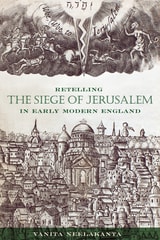
This compelling book explores sixteenth- and seventeenth-century English retellings of the Roman siege of Jerusalem and the way they informed and were informed by religious and political developments. The siege featured prominently in many early modern English sermons, ballads, plays, histories, and pamphlets, functioning as a touchstone for writers who sought to locate their own national drama of civil and religious tumult within a larger biblical and post-biblical context. Reformed England identified with besieged Jerusalem, establishing an equivalency between the Protestant church and the ancient Jewish nation but exposing fears that a displeased God could destroy his beloved nation. As print culture grew, secular interpretations of the siege ran alongside once-dominant providentialist narratives and spoke to the political anxieties in England as it was beginning to fashion a conception of itself as a nation.

Published by University of Delaware Press. Distributed worldwide by Rutgers University Press.
 
[more]
cover of Rethinking Cooperation with Evil: A Virtue-Based Approach

Rethinking Cooperation with Evil

A Virtue-Based Approach

Ryan Connors

Catholic University of America Press, 2023

Rethinking Cooperation with Evil: A Virtue-Based Approach applies Thomistic virtue theory to today’s most challenging questions of cooperation with evil. For centuries, moralists have struggled to determine the conditions necessary to justify moral cooperation with evil. The English Jesuit Henry Davis even observed: “[T]here is no more difficult question than this in the whole range of Moral Theology.” This important book addresses this challenge by applying the virtue-based method of moral reasoning of St. Thomas Aquinas to issues of cooperation with evil. Those who pastor souls report frequently receiving questions from attentive believers about whether a particular human action inadvertently contributes to some moral evil. Examples of potentially immoral cooperation with evil include whether one may shop at a particular franchise known for its support of abortion, whether Catholics may attend civil marriages outside the Church, or whether an organization may submit to government mandates that health insurance include payment for immoral practices. Although recent moralists have tackled specific topics related to cooperation with evil, agreement on an overall common paradigm has not yet been reached. Rethinking Cooperation with Evil proposes a method for Christian believers and others to approach these questions from the foundation of the thought of St. Thomas Aquinas and the magisterial teaching of the Catholic Church. This text provides both an overall method for how to understand the issue of cooperation, as well as practical counsel for specific cases. Rethinking Cooperation with Evil advances the theological conversation on this topic from both speculative and practical vantage points. To facilitate his argument, Connors utilizes historical analyses that contrast Aquinas’s method of moral reasoning with that of the casuist treatment of cooperation. Consequently, the book includes numerous case studies that will be of interest both to moral theologians and readers new to the topic.
[more]
cover of Revelation Occurs via Signs: God's Self-Communication to Humanity in Its Semiotic Constitution

Revelation Occurs via Signs

God's Self-Communication to Humanity in Its Semiotic Constitution

Vincent Birch

Catholic University of America Press, 2027
Revelation Occurs via Signs is a constructive theological project aimed at achieving a synthesis in an area of theology beset with fracture. Theology of revelation emerged as a distinct area of theological inquiry in response to the Enlightenment, and it has consequently been framed in the Enlightenment’s terms, namely, the subjective-objective dichotomy. Further dichotomies have multiplied in the field (e.g., data versus experience, revelation as propositional versus personal, as informational versus formational), and an adequate synthesis has yet to emerge. This book’s proposed solution is an analysis of divine revelation that proceeds not from the subjective-objective dichotomy but rather from the nature of signs as triadic relations. Drawing primarily on figures in the Augustinian semiotic tradition, including Thomas Aquinas, John of St. Thomas, Charles Sanders Peirce, John Deely, and Umberto Eco, the work undertakes a careful examination of why and how divine revelation—from revelation itself as culminating in Christ to the mediation of revelation in history through Scripture and tradition—occurs via signs. Moreover, because a semiotic analysis is befitting of the mystery of divine revelation, further theological fruits concerning grace and the theological imagination, the invisible missions of the Son and the Holy Spirit, the transformation of socio-cultural contexts through personal holiness, and other theological matters issue from this approach This study’s proposal develops through dialogue with a range of theologians from throughout the tradition, engages with both medieval and modern semiotics, and is, broadly speaking, Thomistic. It is a project at once new and old.
[more]
cover of Revelations of Humanity: Anthropological Dimensions of Theological Controversies

Revelations of Humanity

Anthropological Dimensions of Theological Controversies

Richard Schenk, OP

Catholic University of America Press, 2022
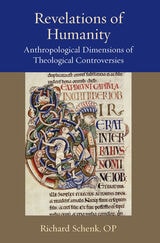
Revelations of Humanity brings together essays into the history and actuality of how our searches for God and for our own humanity are interwoven. They argue that the revelation of God is possible only when accompanied by a revelation of what it means to be a human being. Revelation implies that the truth is not fully evident in either case. This quest is aided in many of the essays by a recollection of the thought of Thomas Aquinas. As opposed to simple memory, recollection implies that memory has been lost or become clouded, here by the misrepresentation of Thomas’ view of humanity’s relation to God as harmonistic, at best semi-Pelagian, often even naturalistic. This difficult recovery is made possible by historical research that alone can escape the easy systematic alienation that supporters and critics of Thomas have often brought to their interpretation of his works. Thomas’s sense of a real but finite capacity of human beings for God, his grace and revelation, anticipates in more ways than is commonly known much of contemporary suspicion about human capacities, but in ways that are open to God. That programmatic insight into the historical Thomas, keenly aware of human entanglements, limits and hopes, offers on many contemporary issues a ressourcement of systematic thought. Revelations of Humanity revolves around three clusters of issues. The first asks about the reality and limits of the human capacity for truth: in metaphysical, moral and political matters and in relation to the disputed issues of analogous reason and faith. The second cluster is structured around the four involvements that the Second Vatican Council identified as the human face of genuine Christian existence: participation in the legitimate joys, hopes, sorrows and fears of the contemporary world. These are refracted in the broken light of the human proprium of risibility, the abiding uncertainty addressed by hope, the disputed question of a suffering God and the recollection of Christ’s anxiety in the face of death. The final cluster brings together anthropological dimensions of current ecumenical and interreligious disputes: the need to complement affirmation with admonition in ecumenical conversation, exemplified by the ambivalence towards sacrifice in a genuinely Catholic theology and the need to avoid the excesses of univocity, equivocity or an all too facile analogy in the determination of interreligious relationalities.
[more]
cover of Reviving Jonathan Edwards: Perry Miller’s Mid-Century Mission

Reviving Jonathan Edwards

Perry Miller’s Mid-Century Mission

Stephen D. Crocco

University of Massachusetts Press, 2026

The untold story of how an unlikely Harvard atheist helped resurrect one of America’s greatest Puritans 

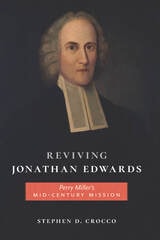
Jonathan Edwards is widely regarded as one of America’s most important and original thinkers. Prior to the mid-twentieth century, however, he was largely unknown to the learned community, except, perhaps, as a preacher of terror due to his well-known sermon, “Sinners in the Hands of an Angry God.” In 1948 and 1949, Harvard professor of English Perry Miller published four pieces on him, including the acclaimed biography, Jonathan Edwards, and only a few years later he became the general editor of Edwards’s collected works. Miller’s efforts helped to resurrect Edwards as America’s greatest Puritan and to solidify him as central to the American experience, and their names have been closely intertwined ever since. 

Miller, an iconoclastic scholar widely considered to be the founder of American studies, was known for his brilliant scholarship, devoted teaching, and hard living. Dying prematurely in 1963, he remains an enigmatic and controversial figure, with no biography available. In Reviving Jonathan Edwards, Stephen D. Crocco explores why this Harvard atheist, with an eerie sense that his time was short, delayed work on his planned magnum opus—a sweeping intellectual history of early America—to edit the works of the greatest of all American Puritans. 

In a riveting history that combines biographical insight with a detailed look into mid-century academia, Crocco draws on a large body of unpublished correspondence to offer an intricate detective tale of a decades-long publishing endeavor. He provides fresh portraits of Miller and the editorial committee he assembled, which included Sydney Ahlstrom, Roland Bainton, H. Richard Niebuhr, Norman Holmes Pearson, Paul Ramsey, and John E. Smith, and follows the story long after Miller’s death, tracing the repeated, sometimes seemingly intractable challenges that publishing the many volumes on Edwards’s work faced. He concludes by tracing Edwards studies up to 2003, the 300th anniversary of his birth, when the quiet revival of this colonial minister had evolved into a full scholarly renaissance. 

[more]