Results by title
173 books match the query 'Collective Memory' and 20 start with r
Reckoning with Pinochet
The Memory Question in Democratic Chile, 1989–2006Steve J. Stern
Duke University Press, 2010
Stern’s analysis integrates policymaking by elites, grassroots efforts by human rights victims and activists, and inside accounts of the truth commissions and courts where top-down and bottom-up initiatives met. Interpreting solemn presidential speeches, raucous street protests, interviews, journalism, humor, cinema, and other sources, he describes the slow, imperfect, but surprisingly forceful advance of efforts to revive democratic values through public memory struggles, despite the power still wielded by the military and a conservative social base including the investor class. Over time, resourceful civil-society activists and select state actors won hard-fought, if limited, gains. As a result, Chileans were able to face the unwelcome past more honestly, launch the world’s first truth commission to examine torture, ensnare high-level perpetrators in the web of criminal justice, and build a public culture of human rights. Stern provides an important conceptualization of collective memory in the wake of national trauma in this magisterial work of history.
Recovered Roots
Collective Memory and the Making of Israeli National TraditionYael Zerubavel
University of Chicago Press, 1995
In the years leading to the birth of Israel, Zerubavel shows, Zionist settlers in Palestine consciously sought to rewrite Jewish history by reshaping Jewish memory. Zerubavel focuses on the nationalist reinterpretation of the defense of Masada against the Romans in 73 C.E. and the Bar Kokhba revolt of 133-135; and on the transformation of the 1920 defense of a new Jewish settlement in Tel Hai into a national myth. Zerubavel demonstrates how, in each case, Israeli memory transforms events that ended in death and defeat into heroic myths and symbols of national revival.
Drawing on a broad range of official and popular sources and original interviews, Zerubavel shows that the construction of a new national tradition is not necessarily the product of government policy but a creative collaboration between politicans, writers, and educators. Her discussion of the politics of commemoration demonstrates how rival groups can turn the past into an arena of conflict as they posit competing interpretations of history and opposing moral claims on the use of the past. Zerubavel analyzes the emergence of counter-memories within the reality of Israel's frequent wars, the ensuing debates about the future of the occupied territories, and the embattled relations with Palestinians.
A fascinating examination of the interplay between history and memory, this book will appeal to historians, sociologists, anthropologists, political scientists, and folklorists, as well as to scholars of cultural studies, literature, and communication.
Reencounters
On the Korean War and Diasporic Memory CritiqueCrystal Mun-hye Baik
Temple University Press, 2020
In Reencounters,Crystal Mun-hye Baik examines what it means to live with and remember an ongoing war when its manifestations—hypervisible and deeply sensed—become everyday formations delinked from militarization. Contemplating beyond notions of inherited trauma and post memory, Baik offers the concept of reencounters to better track the Korean War’s illegible entanglements through an interdisciplinary archive of diasporic memory works that includes oral history projects, performances, and video installations rarely examined by Asian American studies scholars.
Baik shows how Korean refugee migrations are repackaged into celebrated immigration narratives, how transnational adoptees are reclaimed by the South Korean state as welcomed “returnees,” and how militarized colonial outposts such as Jeju Island are recalibrated into desirable tourist destinations. Baik argues that as the works by Korean and Korean/American artists depict this Cold War historiography, they also offer opportunities to remember otherwise the continuing war.
Ultimately, Reencounters wrestles with questions of the nature of war, racial and sexual violence, and neoliberal surveillance in the twenty-first century.
Reimagining National Belonging
Post-Civil War El Salvador in a Global ContextRobin Maria DeLugan
University of Arizona Press, 2012
Examining events that unfolded between 1992 and 2011, DeLugan both illustrates the idiosyncrasies of state and society in El Salvador and opens a larger portal into conditions of constructing a state in the present day around the globe—particularly the process of democratization in an age of neoliberalism. She demonstrates how academics, culture experts, popular media, and the United Nations and other international agencies have all helped shape ideas about national belonging in El Salvador. She also reveals the efforts that have been made to include populations that might have been overlooked, including indigenous people and faraway citizens not living inside the country’s borders. And she describes how history and memory projects have begun to recall the nation’s violent past with the goal of creating a more just and equitable nation.
This illuminating case study fills a gap in the scholarship about culture and society in contemporary El Salvador, while offering an “ethnography of the state” that situates El Salvador in a global context.
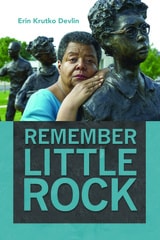
Remember Little Rock
Erin Krutko Devlin
University of Massachusetts Press, 2017
In Remember Little Rock Erin Krutko Devlin explores public memories surrounding the iconic Arkansas school desegregation crisis of 1957 and shows how these memories were vigorously contested and sometimes deployed against the cause. Delving into a wide variety of sources, from memoirs to televised docudramas, commemoration ceremonies, and the creation of Little Rock High museums, Devlin reveals how many white moderates proclaimed Little Rock a victory for civil rights and educational equality even as segregation persisted. At the same time, African American activists, students, and their families asserted their own stories in the ongoing fight for racial justice.
Devlin also demonstrates that public memory directly bears on law and policy. She argues that the triumphal narrative of civil rights has been used to stall school desegregation, support tokenism, and to roll back federal court oversight of school desegregation, voter registration, and efforts to promote diversity in public institutions. Remember Little Rock examines the chasm between the rhetoric of the “post–civil rights” era and the reality of enduring racial inequality.
Remembering 1989
Future Archives of Public ProtestAnke Pinkert
University of Chicago Press, 2024
For many, 1989 is an iconic date, one we associate with the fall of the Berlin Wall and the end of the Cold War. The year prompts some to rue the defeat of socialism in the East, while others celebrate a victory for democracy and capitalism in the reunified Germany. Remembering 1989 focuses on a largely forgotten interregnum: the months between the outbreak of protests in the German Democratic Republic in 1989 and its absorption by the West in 1990. Anke Pinkert, who herself participated in those protests, recalls these months as a volatile but joyous “laboratory of radical democracy,” and tells the story of how and why this “time out of joint” has been erased from Germany’s national memory.
Remembering 1989 argues that in order to truly understand Germany’s historic transformation, we must revisit protesters’ actions across a wide range of minor, vernacular, and often transient sources. Drawing on rich archives including videotapes of untelevised protests, illegally printed petitions by Church leaders, audio recordings of dissident meetings, and interview footage with military troops, Pinkert opens the discarded history of East European social uprisings to new interpretations and imagines alternatives to Germany’s neoliberal status quo. The result is a vivid, unexpected contribution to memory studies and European history.
Remembering Communism
Private and Public Recollections of Lived Experience in Southeast EuropeContributors: Simina Bădica, Iskra Baeva, Tanya Boneva, Corina Cimpoieru, Liliana Deyanova, Albena Hranova, Nataliya Hristova, Petya Kabakchieva, Evgenia Kalinova, Anny Kirilova, Thomas Lindenberger, Tamás Lőnhárt, Izabella Main, Tsvetana Manova, Iliiana Marcheva, Vasil Markov, Andi Mihalache, Cătălina Mihalache, Milla Mineva, Cristina Petrescu, Dragoş Petrescu, Vania Stoyanova, Virgiliu Ţârău, Nikolai Vukov, Smaranda Vultur
Central European University Press, 2014
Remembering Communism examines the formation and transformation of the memory of communism in the post-communist period. The majority of the articles focus on memory practices in the post-Stalinist era in Bulgaria and Romania, with occasional references to the cases of Poland and the GDR. Based on an interdisciplinary approach, including history, anthropology, cultural studies and sociology, the volume examines the mechanisms and processes that influence, determine and mint the private and public memory of communism in the post-1989 era. The common denominator to all essays is the emphasis on the process of remembering in the present, and the modalities by means of which the present perspective shapes processes of remembering, including practices of commemoration and representation of the past.
The volume deals with eight major thematic blocks revisiting specific practices in communism such as popular culture and everyday life, childhood, labor, the secret police, and the perception of “the system”.
Remembering Pinochet's Chile
On the Eve of London 1998Steve J. Stern
Duke University Press, 2004
“A thoughtful, nuanced study of how Chileans remember the traumatic 1973 coup by Augusto Pinochet against Salvador Allende and the nearly two decades of military government that followed. . . . In light of the recent revelations of American human rights abuses of Iraqi prisoners, [Stern’s] insights into the legacies of torture and abuse in the Chilean prisons of the 1970s certainly have contemporary significance for any society that undergoes a national trauma.”—Publishers Weekly
“This outstanding work of scholarship sets a benchmark in the history of state terror, trauma, and memory in Latin America.”—Thomas Miller Klubock, American Historical Review
“This is a book of uncommon depth and introspection. . . . Steve J. Stern has not only advanced the memory of the horrors of the military dictatorship; he has assured the place of Pinochet’s legacy of atrocity in our collective conscience.”—Peter Kornbluh, author of The Pinochet File: A Declassified Dossier on Atrocity and Accountability
“Steve J. Stern’s book elegantly recounts the conflicted recent history of Chile. He has found a deft solution to the knotty problem of evenhandedness in representing points of view so divergent they defy even the most careful attempts to portray the facts of the Pinochet period. He weaves a tapestry of memory in which narratives of horror and rupture commingle with the sincere perceptions of Chileans who remember Pinochet’s rule as salvation. The facts are there, but more important is the understanding we gain by knowing how ordinary Chileans—Pinochet’s supporters and his victims—work through their unresolved past.”—John Dinges, author of The Condor Years: How Pinochet and His Allies Brought Terrorism to Three Continents
Remembering Suffering and Resistance
Memory Politics and the Serbian Orthodox ChurchKarin Roginer Hofmeister
Central European University Press, 2024
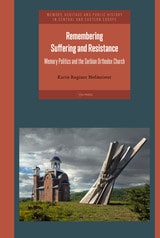
Assessing issues related to the Orthodox Church from an academic, secular point of view is a sensitive matter. However, by tracing and interpreting the engagement of the Serbian Church with the memory of Serbian heroic victimhood in World War II through a kind of “methodological agnosticism,” this volume has managed to tackle the subtle topic in a very delicate and value-neutral way. Arguing that the search for a collective memory is particularly urgent in the face of societal uncertainty and that religious institutions often use their memory potential to reaffirm their public relevance, the book examines the motivations, forms, strategies, and outcomes of a wide range of mnemonic activities the Serbian Orthodox Church engaged in following the upheavals caused by the collapse of Yugoslav socialism, the violent dissolution of the country, and the fall of the Milošević regime. These activities, taking place within the memory fields framed by the post-socialist, post-conflict, and post-secular horizons, took liturgical and non-liturgical forms, often involving a hybrid fusion of the two. As a result of this mnemonic endeavor, the author argues, the Church was successful in reasserting its power and legitimacy in the public sphere of post-2000 Serbia.
Remembering the Cajun Past
Memory, Race, and the Politics of Public History in LouisianaMarc David
University of Massachusetts Press, 2025
Exploring how public history creates collective memory of this white ethnic group through memorials
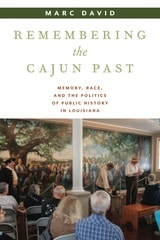
Cajuns arrived in southern Louisiana in the 18th century after the British exiled them from eastern Canada. Also known as Acadians, they retain a unique dialect of French, and their distinctive music, food, and other cultural traits characterized them as an ethnic group. Until the 1960s, authorities viewed them as a serious problem, allegedly blocking the state’s progress as they clung to their antiquated ways. Few Cajun residents in the region remembered the remote past of their ancestors, but by the 1970s, organizations ranging from local non-profits to the National Park Service created sites that commemorated their history, such as the Acadian Memorial in St. Martinville, allowing Cajuns to connect their lives to their past and claim it as their own.
In Remembering the Cajun Past, anthropologist Marc David studies the cultural and political dynamics that reconfigured Cajun memory and identity. Focusing on St. Martinville and the Acadian Memorial, he explores how authorities changed their minds about Cajuns and demonstrates how Cajuns’ historical memories took shape. Part ethnography and part history, David examines the racial aspects of the Memorial’s creation in the wake of the Civil Rights movement and the growth of a new Cajun history, one through which individual Cajuns rejected the label’s connotation of “white trash” and embraced belonging within a storied white ethnic group. Based on decades of fieldwork and deep engagement with public history practices, David explores how historical memory and the historic sites that foster it are intertwined with the politics of civic life.
Remembering the Forgotten War
The Enduring Legacies of the U.S.-Mexican WarMichael Scott Van Wagenen
University of Massachusetts Press, 2012
On February 2, 1848, representatives of the United States and Mexico signed the Treaty of Guadalupe Hidalgo, officially ending hostilities between the two countries and ceding over one-half million square miles of land to the northern victors. In Mexico, this defeat has gradually moved from the periphery of dishonor to the forefront of national consciousness. In the United States, the war has taken an opposite trajectory, falling from its once-celebrated prominence into the shadowy margins of forgetfulness and denial.
Why is the U.S.–Mexican War so clearly etched in the minds of Mexicans and so easily overlooked by Americans? This book investigates that issue through a transnational, comparative analysis of how the tools of collective memory—books, popular culture, historic sites, heritage groups, commemorations, and museums—have shaped the war's multifaceted meaning in the 160 years since it ended. Michael Van Wagenen explores how regional, ethnic, and religious differences influence Americans and Mexicans in their choices of what to remember and what to forget. He further documents what happens when competing memories clash in a quest for dominance and control.
In the end, Remembering the Forgotten War addresses the deeper question of how remembrance of the U.S.–Mexican War has influenced the complex relationship between these former enemies now turned friends. It thus provides a new lens through which to view today's cross-border rivalries, resentments, and diplomatic pitfalls.
Remembrance, History, and Justice
Coming to terms with traumatic pasts in democratic societiesBogdan C. Iacob
Central European University Press, 2015
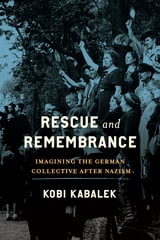
Rescue and Remembrance
Imagining the German Collective after NazismKobi Kabalek
University of Wisconsin Press, 2025
Kabalek argues that such simplistic depictions of the majority versus minority obscure the complex motivations and situations that led people in Nazi Germany to help persecuted Jews. Against the view that the rescuers were “forgotten” after the war, he shows that portrayals and interpretations of helping Jews appeared in various media and social discourses in East, West, and unified Germany and were used to actively debate questions of collective morality. Rescue and Remembrance analyzes the varied and changing depictions of rescue in the distinct German politics from the Nazi period, examining how the very notions of “majority” and “collective” were articulated and reformulated.
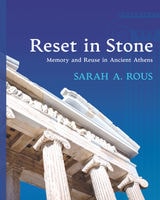
Reset in Stone
Memory and Reuse in Ancient AthensSarah A. Rous
University of Wisconsin Press, 2019
Sarah Rous develops the concept of upcycling to refer to this meaningful reclamation, the intentionality of reemploying each particular object for its specific new context. The upcycling approach drives innovative reinterpretations of diverse cases, including column drums built into fortification walls, recut inscriptions, monument renovations, and the wholesale relocation of buildings. Using archaeological, literary, and epigraphic evidence from more than eight centuries of Athenian history, Rous's investigation connects seemingly disparate instances of the reuse of building materials. She focuses on agency, offering an alternative to the traditional discourse on spolia. Reset in Stone illuminates a vital practice through which Athenians shaped social memory in the physical realm, literally building their past into their city.
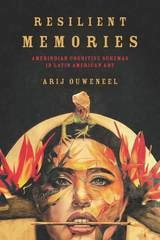
Resilient Memories
Amerindian Cognitive Schemas in Latin American ArtArij Ouweneel
The Ohio State University Press, 2018
Exploring works ranging in popularity, from Alfonso Cuarón’s Y Tu Mamá También to the paintings of Peruvian artists Claudia Coca and Jorge Miyagui, and from Mexican Zapatistas to hip-hop, Ouweneel details the ways in which artists interact with the embodied memory of the community but also assert their own place within it as crucial, furthering their audiences’ understanding of and interaction with existing cultural schemas. In this way, Ouweneel shows that memories must serve the present or they will be forgotten.
Resonant Violence
Affect, Memory, and Activism in Post-Genocide SocietiesKerry Whigham
Rutgers University Press, 2022
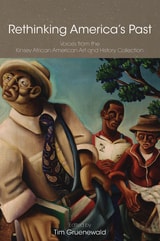
Rethinking America's Past
Voices from the Kinsey African American Art and History CollectionEdited by Tim Gruenewald
University of Minnesota Press, 2019
Among the first scholarly books dedicated to a private African American collection, Rethinking America’s Past: Voices from the Kinsey African American Art and History Collection both chronicles the reach of this important cultural collection and contributes to its project by sharing selected objects and stories with a broader audience. Essays range in subject from iconic African American artists, such as Loïs Mailou Jones and Beauford Delaney, to important historical figures such as Frederick Douglas and Martin Luther King, to individuals whose experiences might be lost to history but for the found objects that preserve their stories. Rethinking America’s Past demonstrates how the African American story, from slavery through the present, is represented and can be actively remembered through the act of collecting.
Rethinking America’s Past will appeal to audiences interested in African American history as well as art history, but its real power is in linking the two, showing how important collections are in constructing and repairing historical narratives, and how in the words of editor Tim Gruenewald, “Collecting overlooked aspects of our past and sharing such collections enables a deeper understanding of the present moment, and facilitates a more inclusive and just future.”
Rites of Place
Public Commemoration in Russia and Eastern EuropeJulie Buckler and Emily D Johnson
Northwestern University Press, 2013
Ranging widely across time and geography, Rites of Place is to date the most comprehensive and diverse example of memory studies in the field of Russian and East European studies. Leading scholars consider how public rituals and the commemoration of historically significant sites facilitate a sense of community, shape cultural identity, and promote political ideologies. The aims of this volume take on unique importance in the context of the tumultuous events that have marked Eastern European history—especially the revolutions of 1905 and 1917, World War II, and the collapse of the Soviet Union. With essays on topics such as the founding of St. Petersburg, the battle of Borodino, the Katyn massacre, and the Lenin cult, this volume offers a rich discussion of the uses and abuses of memory in cultures where national identity has repeatedly undergone dramatic shifts and remains riven by internal contradictions.
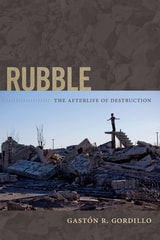
Rubble
The Afterlife of DestructionGastón R. Gordillo
Duke University Press, 2014
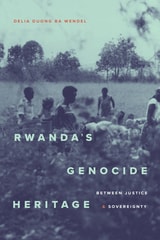
Rwanda's Genocide Heritage
Between Justice and SovereigntyDelia Duong Ba Wendel
Duke University Press, 2025