Results by title
212 books match the query 'Colonial Period (1600-1775)' and 6 start with r
Radical Origins
Early Mormon Converts and Their Colonial AncestorsVal D. Rust
University of Illinois Press, 2004
Utilizing a unique set of meticulously compiled genealogical data, Rust uncovers the ancestors of early church members throughout what we understand as the radical segment of the Protestant Reformation. Coming from backgrounds in the Antinomians, Seekers, Anabaptists, Quakers, and the Family of Love, many colonial ancestors of the church(s early members had been ostracized from their communities. Expelled from the Massachusetts Bay Colony, some were whipped, mutilated, or even hanged for their beliefs.
Rust shows how family traditions can be passed down through the generations, and can ultimately shape the outlook of future generations. This, he argues, extends the historical role of Mormons by giving their early story significant implications for understanding the larger context of American colonial history. Featuring a provocative thesis and stunning original research, Radical Origins is a remarkable contribution to our understanding of religion in the development of American culture and the field of Mormon history.
Resurrecting the First Great American Play
Imperial Politics and Colonial Ambitions in Frontier DetroitSämi Ludwig
University of Wisconsin Press, 2020
Sämi Ludwig contends that Ponteach's literary and artistic merits are worthy of further exploration. He investigates questions of authorship and analyzes the play's content, embracing its many contradictions as enriching windows into the era. In this way, he suggests using Ponteach as a tool to better understand British imperialism in North America and the emerging theatrical forms of the Young Republic.
Revolution Downeast
The War for American Independence in MaineJames S. Leamon
University of Massachusetts Press, 1993
The history of the Revolution in Maine is the story of a people who did not really want a revolution—at least at first.
Since the middle of the seventeenth century, the powerful Massachusetts Bay Colony had exercised an increasing hegemony over the settlements downeast—a hegemony legalized in the Massachusetts royal charter of 1691. From then until 1820, when it became a state, Maine remained an integral part of Massachusetts. Geographically isolated from the Bay Colony by the province of New Hampshire, and dependent on Massachusetts for its very existence, Maine was indeed a colony, in every sense of the word.
The larger Massachusetts context has tended to obscure Maine as a legitimate object of study, nowhere more than in the period of the American Revolution. Even historians in Maine have slighted the period of the American Revolution. Where appropriate, town historians devote a chapter or so to the event, but only in the context of a particular community.
In his book, Leamon aims to meet that deficiency by drawing together town and general histories, specialized studies, and primary sources, both published and unpublished. He examines why and how Maine fought the Revolution and the changes that occurred in Maine during and after the war.
Rice and Slaves
Ethnicity and the Slave Trade in Colonial South CarolinaDaniel C. Littlefield
University of Illinois Press, 1991
Richard Price and the Ethical Foundations of the American Revolution
William Bernard Peach, ed.
Duke University Press, 1979
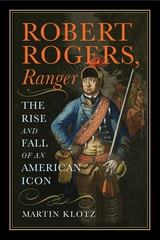
Robert Rogers, Ranger
The Rise and Fall of an American IconMartin Klotz
Westholme Publishing, 2026
Robert Rogers, Ranger: The Rise and Fall of an American Icon by Martin Klotz is a fresh look at the life of this famous, yet highly flawed man. Rogers undeniably had great personal strengths. He was brave nearly to the point of fearlessness. He was physically robust, always the one to cover the retreat, carry the wounded, or go for help when no one else could carry on. He was an intrepid explorer who wrote with eloquence about the splendors of the American frontier. He was bold and unconventional, good at thinking outside the box. He was an outstanding scout and intelligence gatherer who provided invaluable service to a British army inexperienced in woodland warfare. At the same time Rogers had enormous weaknesses that undermined his ability to lead effectively. His boldness was never tempered by judgment, and he was prone to grandiose schemes that came to nothing or, worse, to disaster. His constant self-promotion—including embellishing and lying about his battlefield successes—contributed to his popularity but damaged his reputation with peers and superiors. He succumbed to alcoholism and gambling, was profligate, especially with money—his debts were enormous—and routinely skirted the edges of the law. Rogers never found a comfortable place in America. Instead, his aristocratic patrons in London, who knew him mostly from his own self-description, gave him his most valuable opportunities, including commanding an important military and trading center on the colonial frontier and establishing the Queen’s Rangers to fight alongside Crown forces during the Revolution. But when the British cause failed in America, Rogers became an anathema on both sides of the Atlantic. A fascinating inquiry into an eighteenth-century life, Robert Rogers, Ranger presents this American legend as he lived, crossing the line between fame and misfortune.