Results by title
153 books match the query 'Comics & Graphic Novels' and 6 start with r
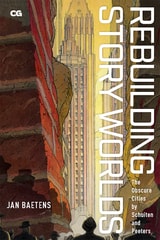
Rebuilding Story Worlds
The Obscure Cities by Schuiten and PeetersJan Baetens
Rutgers University Press, 2020
Rebuilding Story Worlds offers the first full-length study of this seminal series, exploring both the artistic traditions from which it emerges and the innovative ways it plays with genre, gender, and urban space. Comics scholar Jan Baetens examines how Schuiten’s work as an architectural designer informs the series’ concerns with the preservation of historic buildings. He also includes an original interview with Peeters, which reveals how poststructuralist critical theory influenced their construction of a rhizomatic fictional world, one which has made space for fan contributions through the Alta Plana website.
Synthesizing cutting-edge approaches from both literary and visual studies, Rebuilding Story Worlds will give readers a new appreciation for both the aesthetic ingenuity of The Obscure Cities and its nuanced conception of politics.
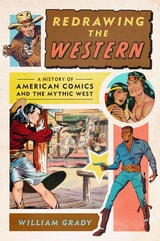
Redrawing the Western
A History of American Comics and the Mythic WestWilliam Grady
University of Texas Press, 2024
2025 Best Single Author Book, Midwest Popular Culture Association
2025 Longlist, Reading the West Book Award in Nonfiction, Mountains & Plains Independent Booksellers Association
A history of American Western genre comics and how they interacted with contemporaneous political and popular culture.
Redrawing the Western charts a history of the Western genre in American comics from the late 1800s through the 1970s and beyond. Encompassing the core years in which the genre was forged and prospered in a range of popular media, Grady engages with several key historical timeframes, from the origins of the Western in the nineteenth-century illustrated press; through fin de siècle anxieties with the closing of the frontier, and the centrality of cowboy adventure across the interwar, postwar, and high Cold War years; to the revisions of the genre in the wake of the Vietnam War and the Western’s continued vitality in contemporary comics storytelling.
In its study of stories about vengeance, conquest, and justice on the contested frontier, Redrawing the Western highlights how the “simplistic” conflicts common in Western adventure comics could disguise highly political undercurrents, providing young readers with new ways to think about the contemporaneous social and political milieu. Besides tracing the history, forms, and politics of American Western comics in and around the twentieth century, William Grady offers an original reassessment of the important role of comics in the development of the Western genre, ranking them alongside popular fiction and film in the process.
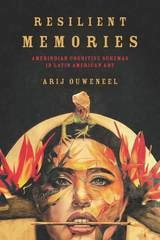
Resilient Memories
Amerindian Cognitive Schemas in Latin American ArtArij Ouweneel
The Ohio State University Press, 2018
Exploring works ranging in popularity, from Alfonso Cuarón’s Y Tu Mamá También to the paintings of Peruvian artists Claudia Coca and Jorge Miyagui, and from Mexican Zapatistas to hip-hop, Ouweneel details the ways in which artists interact with the embodied memory of the community but also assert their own place within it as crucial, furthering their audiences’ understanding of and interaction with existing cultural schemas. In this way, Ouweneel shows that memories must serve the present or they will be forgotten.
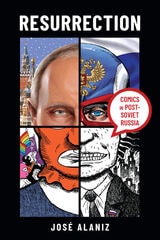
Resurrection
Comics in Post-Soviet RussiaJosé Alaniz
The Ohio State University Press, 2022
Resurrection: Comics in Post-Soviet Russia traces the “kopecks to rubles” journey of Russian comics at the turn of the century. As the follow-up to José Alaniz’s groundbreaking Komiks: Comic Art in Russia (2010), Resurrection authoritatively and exhaustively details the Russian comic landscape of the last three decades: beginning after the 1991 fall of the Soviet Union and encompassing the fourth Putin administration, the COVID-19 crisis, and beyond. Bolstering his analysis with interviews with some of the major figures in Russia’s comics industry, Alaniz particularly focuses on the representation of masculinity, disability, historical trauma, and superheroes, as well as on the recent rise of fandom, alternative micropresses, and nonfiction graphic narrative. Resurrection is a sweeping discussion of the metamorphosis of contemporary Russian comic art from its rebirth to its entry into mainstream culture.
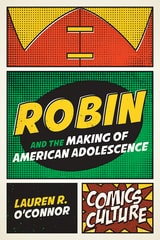
Robin and the Making of American Adolescence
Lauren R. O'Connor
Rutgers University Press, 2021
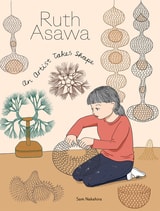
Ruth Asawa
An Artist Takes ShapeSam Nakahira
J. Paul Getty Trust, The, 2024
Renowned for her innovative wire sculptures, Japanese American artist Ruth Asawa (1926–2013) was a teenager in Southern California when Japan bombed Pearl Harbor and the United States entered World War II. Japanese Americans on the West Coast were forcibly removed from their homes. Asawa’s family had to abandon their farm, her father was incarcerated, and she and the rest of her family were sent to a concentration camp. Asawa nurtured her dreams of becoming an artist while imprisoned and eventually made her way to the experimental Black Mountain College in North Carolina.
This graphic biography by Sam Nakahira, developed in consultation with Asawa’s youngest daughter, Addie Lanier, chronicles the genesis of Asawa as an artist—from the horror of Pearl Harbor to her transformative education at Black Mountain College to building a life in San Francisco, where she would further develop and refine her groundbreaking wire sculpture.
Asawa never sought fame, preferring to work on her own terms: for her, art and life were one. Featuring lively illustrations and photographs of Asawa’s work, this retelling of her young adult years demonstrates the power of making art.
Ages thirteen and up