Results by title
126 books match the query 'Communism' and 11 start with r
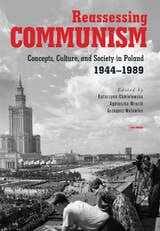
Reassessing Communism
Concepts, Culture, and Society in Poland 1944–1989Instytutem Badan Literackich PAN Chmielewska
Central European University Press, 2021
The thirteen authors of this collective work undertook to articulate matter-of-fact critiques of the dominant narrative about communism in Poland while offering new analyses of the concept, and also examining the manifestations of anticommunism. Approaching communist ideas and practices, programs and their implementations, as an inseparable whole, they examine the issues of emancipation, upward social mobility, and changes in the cultural canon.
The authors refuse to treat communism in Poland in simplistic categories of totalitarianism, absolute evil and Soviet colonization, and similarly refuse to equate communism and fascism. Nor do they adopt the neoliberal view of communism as a project doomed to failure. While wholly exempt from nostalgia, these essays show that beyond oppression and bad governance, communism was also a regime in which people pursued a variety of goals and sincerely attempted to build a better world for themselves.
The book is interdisciplinary and applies the tools of social history, intellectual history, political philosophy, anthropology, literature, cultural studies, and gender studies to provide a nuanced view of the communist regimes in east-central Europe.
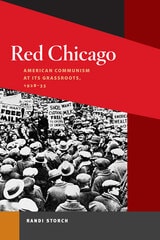
Red Chicago
American Communism at Its Grassroots, 1928-35Randi Storch
University of Illinois Press, 2007
Red Chicago is a social history of American Communism set within the context of Chicago's neighborhoods, industries, and radical traditions. Using local party records, oral histories, union records, party newspapers, and government documents, Randi Storch fills the gap between Leninist principles and the day-to-day activities of Chicago's rank-and-file Communists.
Uncovering rich new evidence from Moscow's former party archive, Storch argues that although the American Communist Party was an international organization strongly influenced by the Soviet Union, at the city level it was a more vibrant and flexible organization responsible to local needs and concerns. Thus, while working for a better welfare system, fairer unions, and racial equality, Chicago's Communists created a movement that at times departed from international party leaders' intentions. By focusing on the experience of Chicago's Communists, who included a large working-class, African American, and ethnic population, this study reexamines party members' actions as an integral part of the communities and industries in which they lived and worked.

Red Diapers
GROWING UP IN THE COMMUNIST LEFTEdited by Judy Kaplan and Linn Shapiro
University of Illinois Press, 1998
Red Diapers is the
first anthology of autobiographical writings by the children of American
communists. These memoirs, short stories, and poems reflect the joys and
perils of growing up in a subculture defined by its opposition to some
of society's most deeply held values. How red diaper babies have come
to terms with their political inheritance is the theme of this compelling
anthology.
Some contributors have fond
memories of family activism; others recall the past with ambivalence or
even pain. The authors range in age from their twenties to their eighties.
Some, such as Watergate reporter Carl Bernstein and sixties activist Bettina
Aptheker, are widely known themselves; some are the children of well-known
American leftists, including Jeff Lawson, son of blacklisted screenwriter
John Howard Lawson, and Robert Meeropol, son of Ethel and Julius Rosenberg.
In disparate voices, the contributors elaborate on how their parents attempted
to pass on to them the torch of radical politics.
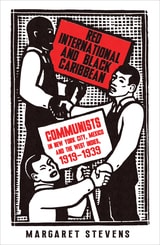
Red International and Black Caribbean
Communists in New York City, Mexico and the West Indies, 1919-1939Margaret Stevens
Pluto Press, 2017
Challenging dominant accounts, Red International and Black Caribbean debunks the “great men” narrative, emphasizes the role of women in their capacity as laborers, and paints the true struggles of black peasants and workers in Communist parties.
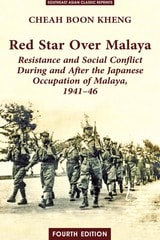
Red Star Over Malaya
Resistance and Social Conflict During and After the Japanese Occupation, 1941-1946Cheah Boon Kheng
National University of Singapore Press, 2012
As Japanese forces withdrew from the countryside, the Chinese guerrillas of the communist-led resistance movement, the Malayan People's Anti-Japanese Army (MPAJA), emerged from the jungle and took control of some 70 per cent of the country's smaller towns and villages, seriously alarming the Malay population. When the British Military Administration sought to regain control of these liberated areas, the ensuing conflict set the tone for future political conflicts and marked a crucial stage in the history of Malaya. Based on extensive archival research, Red Star Over Malaya provides a riveting account of the way the Japanese occupation reshaped colonial Malaya, and of the tension-filled months that followed Japan's surrender. This book is fundamental to an understanding of social and political developments in Malaysia during the second half of the 20th century.
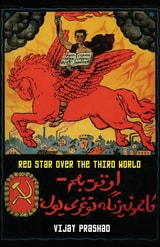
Red Star Over the Third World
Vijay Prashad
Pluto Press, 2019
From Cuba to Vietnam, China to South Africa, the October Revolution of 1917 inspired millions of people beyond the territory of Russia. It proved that the masses could not only overthrow autocratic governments, but that they could also form an opposing government in their own image.
The new idea that the working class and the peasantry could be allied, combined with the clear strength and necessity of a vanguard party, guided multiple revolutions across the globe. Here is much-needed antidote to all the glum histories written on the demise of the Soviet Union. Vijay Prashad throws a spotlight on the way the Russian Revolution was seen and received in the countries colonized by European empires. With Russia as an inspiration and providing support, suddenly workers and peasants, those left out of capitalist prosperity, organized and attempted to create for themselves real socialist revolution. Prashad’s chapters include:
*Eastern Graves
*Red October
*Follow the Path of the Russians
*The Lungs of Russia
*Soviet Asia
*Enemy of Imperialism
*Eastern Marxism
*Colonial Fascism
*Polycentric Communism
*Memories of Communism
The author writes in this Preface, “It has been a quarter-century since the demise of the USSR. And yet, the marks of the October Revolution remain—not just in the territories of the USSR but more so in what used to be known as the Third World. From Cuba to Vietnam, from China to South Africa, the October Revolution remains as an inspiration. After all, that Revolution proved that the working class and the peasantry could not only overthrow an autocratic government but it could form its own government.”
This book explains the power of the October Revolution in the Global South. From Ho Chí Minh to Fidel Castro, reflections on polycentric communism, and collective memories of communism, it shows how, for a brief moment, another world was possible.
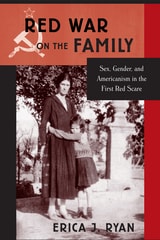
Red War on the Family
Sex, Gender, and Americanism in the First Red ScareErica J Ryan
Temple University Press, 2016
In her probing and engaging book, Red War on the Family, Erica Ryan traces the roots of sexual modernism and the history of antiradicalism and antifeminism. She illuminates how Americans responded to foreign and domestic threats and expressed nationalism by strengthening traditional gender and family roles-especially by imposing them on immigrant groups, workers, women, and young people.
Ryan argues that the environment of political conformity in the 1920s was maintained in part through the quest for cultural and social conformity, exemplified by white, middle-class family life. Red War on the Family charts the ways Americanism both reinforced and was reinforced by these sexual and gender norms in the decades after World War I.
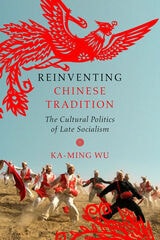
Reinventing Chinese Tradition
The Cultural Politics of Late SocialismKa-ming Wu
University of Illinois Press, 2015
Ka-ming Wu's ethnographic account of contemporary Yan'an documents how people have reworked the revival of three rural practices--paper-cutting, folk storytelling, and spirit cults--within (and beyond) the socialist legacy. Moving beyond dominant views of Yan'an folk culture as a tool of revolution or object of market reform, Wu reveals how cultural traditions become battlegrounds where conflicts among the state, market forces, and intellectuals in search of an authentic China play out. At the same time, she shows these emerging new dynamics in the light of the ways rural residents make sense of rapid social change.
Alive with details, Reinventing Chinese Tradition is an in-depth, eye-opening study of an evolving culture and society within contemporary China.
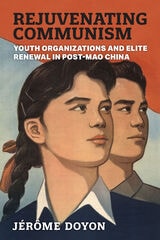
Rejuvenating Communism
Youth Organizations and Elite Renewal in Post-Mao ChinaJérôme Doyon
University of Michigan Press, 2023
Remembering Communism
Private and Public Recollections of Lived Experience in Southeast EuropeContributors: Simina Bădica, Iskra Baeva, Tanya Boneva, Corina Cimpoieru, Liliana Deyanova, Albena Hranova, Nataliya Hristova, Petya Kabakchieva, Evgenia Kalinova, Anny Kirilova, Thomas Lindenberger, Tamás Lőnhárt, Izabella Main, Tsvetana Manova, Iliiana Marcheva, Vasil Markov, Andi Mihalache, Cătălina Mihalache, Milla Mineva, Cristina Petrescu, Dragoş Petrescu, Vania Stoyanova, Virgiliu Ţârău, Nikolai Vukov, Smaranda Vultur
Central European University Press, 2014
Remembering Communism examines the formation and transformation of the memory of communism in the post-communist period. The majority of the articles focus on memory practices in the post-Stalinist era in Bulgaria and Romania, with occasional references to the cases of Poland and the GDR. Based on an interdisciplinary approach, including history, anthropology, cultural studies and sociology, the volume examines the mechanisms and processes that influence, determine and mint the private and public memory of communism in the post-1989 era. The common denominator to all essays is the emphasis on the process of remembering in the present, and the modalities by means of which the present perspective shapes processes of remembering, including practices of commemoration and representation of the past.
The volume deals with eight major thematic blocks revisiting specific practices in communism such as popular culture and everyday life, childhood, labor, the secret police, and the perception of “the system”.
Revolution in Rojava
Democratic Autonomy and Women's Liberation in the Syrian KurdistanMichael Knapp, Ercan Ayboga, and Anja Flach
Pluto Press, 2016
Revolution in Rojava tells the story of Rojava's groundbreaking experiment in what they call democratic confederalism, a communally organized democracy that is fiercely anti-capitalist and committed to female equality, while rejecting reactionary nationalist ideologies.
Rooted in the ideas of imprisoned Kurdish leader Abdullah Ocalan, the system is built on effective gender quotas, bottom-up democratic structures, far-sighted ecological policies, and a powerful militancy that has allowed the region to keep ISIS at bay.
Given the widespread violence and suffering in Syria, it's not unreasonable that outsiders look at the situation as unrelentingly awful. And while the reality of the devastation is undeniable, there is reason for hope in at least one small pocket of the nation: the cantons of Rojava in Syrian Kurdistan, where in the wake of war people are quietly building one of the most progressive societies in the world today. Chapters here include:
*Rojava's Diverse Cultures
*Democratic Confederalism
*The Liberation
*A Women's Revolution
*Democratic Autonomy in Rojava
*Civil Society Associations
*The Theory of the Rose: Defense
*The New Justice System
*Democratization of Education
*Health Care
*The Social Economy
*Ecological Challenges
This first full-length study of democratic developments in Rojava tells an extraordinary and powerfully hopeful story of a little-known battle for true freedom in dark times. With excellent first-hand background information about this important, but little understood struggle, Revolution in Rojava will educate and inspire the reader to learn more about Rojava, Syria, and the fight for change in one of the world’s most dangerous regions.