Results by title
89 books match the query 'Communities' and 6 start with r
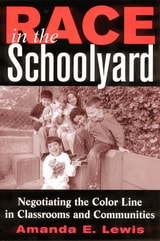
Race in the Schoolyard
Negotiating the Color Line in Classrooms and CommunitiesLewis, Amanda E
Rutgers University Press, 2003
"Race in the Schoolyard is a wonderful book for social scientists studying race, education, and childhood studies. The book showcases the talents of a gifted fieldworker whose theoretically rich work sits on the cutting edge of a growing body of scholarship examining the social worlds of children. School officials, parents, and, most especially, a new generation of teachers will benefit from these lessons on race."-American Journal of Sociology
"Instructors may recommend this book to students to whom the topic is surely vital and engrossing and for whom the text will be lively and engaging."-Contemporary Sociology
"Lewis moves beyond traditional research methods used to examine achievement gaps and differences in test scores to look closely at the realities of schooling. I highly recommend this work for every person involved in teaching and learning."-Multicultural Review
"Through eloquent case studies of three California elementary schools-a white-majority 'good' school, a mostly minority 'tough' school, and an integrated 'alternative' school-[Lewis] demonstrates that schools promote racial inequalities through their daily rituals and practices. Even the notion of a "color-blind" America-an especially popular ideal in the white school-perpetuates racism, Lewis argues, because it denies or dismisses the very real constraints that schools place on minorities. Lewis is nevertheless an optimist, insisting that schools can change ideas of race. . . . Highly recommended. Undergraduate collections and above."-Choice
"In this pioneering ethnography in elementary schools, Lewis shows brilliantly how racism is taught and learned in the small places of everyday life."-Joe Feagin, University of Florida and author of Racist America
"A wonderful and timely book. Ethnographically rich, theoretically sophisticated, and clearly written, this book addresses the ubiquitous issue of race in all its complexity."-Michèle Foster, author of Black Teachers on Teaching
"A compelling ethnography of the racial landscape of contemporary schools."-Barrie Thorne, author of Gender Play: Girls and Boys in School
Could your kids be learning a fourth R at school: reading, writing, 'rithmatic, and race?
Race in the Schoolyard takes us to a place most of us seldom get to see in action¾ our children's classrooms¾ and reveals the lessons about race that are communicated there. Amanda E. Lewis spent a year observing classes at three elementary schools, two multiracial urban and one white suburban. While race of course is not officially taught like multiplication and punctuation, she finds that it nonetheless insinuates itself into everyday life in schools.
Lewis explains how the curriculum, both expressed and hidden, conveys many racial lessons. While teachers and other school community members verbally deny the salience of race, she illustrates how it does influence the way they understand the world, interact with each other, and teach children. This eye-opening text is important reading for educators, parents, and scholars alike.
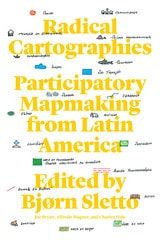
Radical Cartographies
Participatory Mapmaking from Latin AmericaEdited by Bjørn Sletto, Joe Bryan, Alfredo Wagner, and Charles Hale
University of Texas Press, 2020
Cartography has a troubled history as a technology of power. The production and distribution of maps, often understood to be ideological representations that support the interests of their developers, have served as tools of colonization, imperialism, and global development, advancing Western notions of space and place at the expense of Indigenous peoples and other marginalized communities. But over the past two decades, these marginalized populations have increasingly turned to participatory mapping practices to develop new, innovative maps that reassert local concepts of place and space, thus harnessing the power of cartography in their struggles for justice.
In twelve essays written by community leaders, activists, and scholars, Radical Cartographies critically explores the ways in which participatory mapping is being used by Indigenous, Afro-descendant, and other traditional groups in Latin America to preserve their territories and cultural identities. Through this pioneering volume, the authors fundamentally rethink the role of maps, with significant lessons for marginalized communities across the globe, and launch a unique dialogue about the radical edge of a new social cartography.
Realizing Educational Rights
Advancing School Reform through Courts and CommunitiesAnne Newman
University of Chicago Press, 2013
Newman argues that an adequate K–12 education is the right of all citizens, as a matter of equality, and emphasizes that this right must be shielded from the sway of partisan and majoritarian policy making far more than it currently is. She then examines how educational rights are realized in our current democratic structure, offering two case studies of leading types of rights-based activism: school finance litigation on the state level and the mobilization of citizens through community-based organizations. Bringing these case studies together with rich philosophical analysis, Realizing Educational Rights advances understanding of the relationships among moral and legal rights, education reform, and democratic politics.
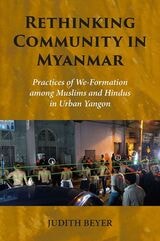
Rethinking Community in Myanmar
Practices of We-Formation among Muslims and Hindus in Urban YangonJudith Beyer
National University of Singapore Press, 2023
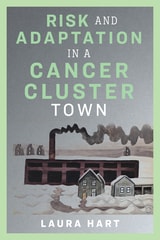
Risk and Adaptation in a Cancer Cluster Town
Laura Hart
Rutgers University Press, 2023
In Risk and Adaptation in a Cancer Cluster Town, Laura Hart examines another understudied dimension of community inaction: the role of emotion and its relationship to community experiences of social belonging and inequality. Using a cancer cluster community in Northwest Ohio as a case study, Hart advances an approach to risk that grapples with the complexities of community belonging, disconnect, and disruption in the wake of suspected industrial pollution. Her research points to a fear driven not only by economic anxiety, but also by a fear of losing security within the community—a sort of pride that is not only about status, but connectedness. Hart reveals the importance of this social form of risk—the desire for belonging and the risk of not belonging—ultimately arguing that this is consequential to how people make judgements and respond to issues. Within this context where the imperative for self-protection is elusive, affected families experience psychosocial and practical conflicts as they adapt to cancer as a way of life. Considering a future where debates about risk and science will inevitably increase, Hart considers possibilities for the democratization of risk management and the need for transformative approaches to environmental justice.
Rooms with a View
The Stages of Community in the Modern TheaterRichard L. Barr
University of Michigan Press, 1998