Results by title
71 books match the query 'Conservation and restoration' and 4 start with r
Rediscovering National Parks in the Spirit of John Muir
Michael Frome
University of Utah Press, 2015
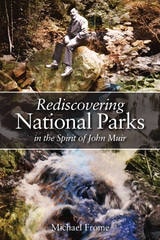
As a journalist, advocate, and professor, Michael Frome has spent decades engaged with conservation topics and has taken particular interest in America’s national parks. He draws on this experience and knowledge to address what remains to be done in order to truly value and preserve these special places. Part memoir, part history, and part broadside against those who would diminish this heritage, Rediscovering National Parks in the Spirit of John Muir, through thoughtful reflections and ruminations, bears witness to the grandeur of our parks and to the need for a renewed sense of appreciation and individual responsibility for their care.
In recollections of his encounters and conversations with key people in national park history, Frome discusses park politics, conflicts between use and preservation, and impacts of commercialization. He proposes a dedicated return to the true spirit in which the parks were established, in the manner of John Muir. He advocates maintaining these lands as wild sanctuaries, places where we can find inspiration, solitude, silence, balance, and simplicity, reminding us why we must preserve our national treasures and why we need to connect with the deeper values they hold.
Rock Art of the Caribbean
Edited by Michele Hayward, Lesley-Gail Atkinson, and Michael A. Cinquino
University of Alabama Press, 2009
Rock Art
The Changing Landscape of Conservation and ManagementNeville Agnew
J. Paul Getty Trust, The, 2026
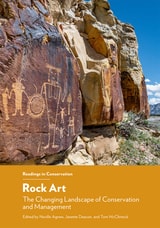
Painted and engraved marks and images on rock surfaces represent the oldest and most widespread form of human expression. Found globally in its original landscapes, with some images dating back fifty thousand years or more, the world’s rock art constitutes the most important body of latent knowledge about our deep past. Today, however, mass tourism, vandalism, theft, land development, and climate change are posing increasingly dire threats to this irreplaceable heritage.
This richly illustrated volume is the first interdisciplinary anthology to focus on the conservation and management of rock art sites. Its 133 readings survey the arc of published writings on the subject, ranging from early academic theories and oral narratives of Traditional peoples to an abundant selection of recent scholarship covering current best practices and advances in portable instrumentation that can be used in the field. Initial sections probe the origins and significance of these often-enigmatic forms, then survey scientific and technological methods of dating, monitoring, and documenting them. Subsequent readings discuss rock art’s physical characteristics and weathering, its importance to Indigenous communities, the decolonization of site management, the role of governments, the value of public outreach, and climate change. The volume closes with a selection of case studies drawn from major sites worldwide.
Roy Lichtenstein
Outdoor Painted SculptureJulie Wolfe
J. Paul Getty Trust, The, 0
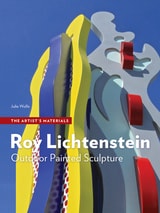
Vibrant color was essential to the paintings of the American pop artist Roy Lichtenstein (1923–1997), and when he began exploring the creation of outdoor sculpture in the late 1970s, vivid hues remained an important part of his artistic vocabulary. Today, preserving these remarkable works after they have endured decades in outdoor environments around the world is an issue of pressing concern.
This abundantly illustrated volume is based on extensive archival research of Lichtenstein’s studio materials, interviews with his assistants, and a thorough technical analysis of the sculpture Three Brushstrokes. The book concludes with a chapter showing various options for the care, conservation, and restoration of his sculptural works, making this an essential resource for conservators, curators, and others interested both in the iconic artist and modern sculpture in general.