82 books match the query 'Conservatism' and 6 start with r
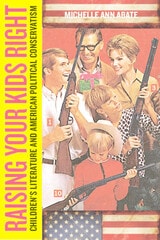
cover of Raising Your Kids Right: Children's Literature and American Political Conservatism

Raising Your Kids Right

Children's Literature and American Political Conservatism

Abate, Michelle Ann

Rutgers University Press, 2011

Dr. Seuss's classic character the Lorax has delighted children for decades while passing along a powerful message about environmental responsibility. The book's young readers, and their parents, would likely be surprised by the emergence of a new character, Truax, a kindly logger created by a longtime employee of the wood products industry, who, not surprisingly, has a far different viewpoint to share. Yet the Truax character, and the book of the same name, is just one example of a growing genre of conservative-themed narratives for young readers spawned by the continuing strength of the American political right.

Highlighting the works of William Bennett, Lynne Cheney, Bill O'Reilly, and others, Michelle Ann Abate brings together such diverse fields as cultural studies, literary criticism, political science, childhood studies, brand marketing, and the cult of celebrity. Raising Your Kids Right dispels lingering societal attitudes that narratives for young readers are unworthy of serious political study by examining a variety of texts that offer information, ideology, and even instructions on how to raise kids right, not just figuratively but politically.
[more]
cover of Rebels All!: Rebels All! A Short History of the Conservative Mind in Postwar America

Rebels All!

Rebels All! A Short History of the Conservative Mind in Postwar America

Mattson, Kevin

Rutgers University Press, 2008

Outstanding Academic Title of 2008

Do you ever wonder why conservative pundits drop the word “faggot” or talk about killing and then Christianizing Muslims abroad?  Do you wonder why the right’s spokespeople seem so confrontational, rude, and over-the-top recently?  Does it seem strange that conservative books have such apocalyptic titles?  Do you marvel at why conservative writers trumpeted the “rebel” qualities of George W. Bush just a few years back? 

There is no doubt that the style of the political right today is tough, brash, and by many accounts, not very conservative sounding. After all, isn’t conservatism supposed to be about maintaining standards, upholding civility, and frowning upon rebellion? Historian Kevin Mattson explains the apparent contradictions of the party in this fresh examination of the postwar conservative mind. Examining a big cast of characters that includes William F. Buckley, Whittaker Chambers, Norman Podhoretz, Irving Kristol, Kevin Phillips, David Brooks, and others, Mattson shows how right-wing intellectuals have always, but in different ways, played to the populist and rowdy tendencies in America’s political culture. He boldly compares the conservative intellectual movement to the radical utopians among the New Left of the 1960s and he explains how conservatism has ingested central features of American culture, including a distrust of sophistication and intellectualism and a love of popular culture, sensation, shock, and celebrity.

Both a work of history and political criticism, Rebels All! shows how the conservative mind made itself appealing, but also points to its endemic problems. Mattson’s conclusion outlines how a recast liberalism should respond to the conservative ascendancy that has marked our politics for the last thirty years.
[more]
cover of Red War on the Family: Sex, Gender, and Americanism in the First Red Scare

Red War on the Family

Sex, Gender, and Americanism in the First Red Scare

Erica J Ryan

Temple University Press, 2016

In the 1920s, cultural and political reactions to the Red Scare in America contributed to a marked shift in the way Americans thought about sexuality, womanhood, manhood, and family life. The Russian Revolution prompted anxious Americans sensing a threat to social order to position heterosexuality, monogamy, and the family as a bulwark against radicalism.
 
In her probing and engaging book, Red War on the Family, Erica Ryan traces the roots of sexual modernism and the history of antiradicalism and antifeminism. She illuminates how Americans responded to foreign and domestic threats and expressed nationalism by strengthening traditional gender and family roles-especially by imposing them on immigrant groups, workers, women, and young people.
 
Ryan argues that the environment of political conformity in the 1920s was maintained in part through the quest for cultural and social conformity, exemplified by white, middle-class family life. Red War on the Family charts the ways Americanism both reinforced and was reinforced by these sexual and gender norms in the decades after World War I. 
[more]
cover of Right-Wing Authoritarianism

Right-Wing Authoritarianism

Bob Altemeyer

University of Manitoba Press, 1981
[more]
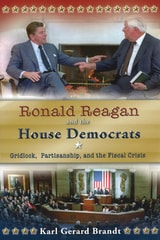
cover of Ronald Reagan and the House Democrats: Gridlock, Partisanship, and the Fiscal Crisis

Ronald Reagan and the House Democrats

Gridlock, Partisanship, and the Fiscal Crisis

Karl Gerard Brandt

University of Missouri Press, 2009
When Democrats in the House of Representatives locked horns with President Ronald Reagan over the latter’s fiscal policies, the ensuing conflict reinforced the seismic shift in the political landscape that the 1980 election had brought. Karl Brandt now tells the story of how the New Deal Democratic coalition was able to sustain itself in the face of an unprecedented Republican assault—in a conflict whose reverberations are still being felt today.
            After a bipartisan conservative House coalition passed Reagan’s budget and tax cuts in 1981, conservative Democrats became worried about the increasingly large deficits produced by Reaganomics and questioned the administration’s spending priorities. In one of the few studies of congressional politics in the 1980s, Brandt describes the House Democratic leadership’s efforts to rebuild party unity while facing challenges from conservative Democrats, the Reagan administration, and the emerging fiscal crisis. He tells how Democrats worked hard to rein in party conservatives, to craft consensus-oriented policies palatable to all Democrats, and over the coming years to force the president and the Senate to compromise over fiscal policy.
            Drawing on primary source materials unavailable in the 1980s—including transcripts from closed-door meetings and internal House documents—Brandt chronicles the events that resulted in the deepening of the fiscal crisis, examines the growth of an intensely partisan political environment, and provides insight into the dynamics of creating a national budget. He cuts through conservative rhetoric to show how Reagan’s fiscal policies deepened federal deficits and reveals how the partisan struggles of the Reagan years redefined the Democrats along more centrist lines.
            When the dust had settled, the Democratic Party had become more unified in the face of budget conflict and had proved that it could practice fiscal conservatism and make tough budget choices when necessary. Carefully argued and thoroughly researched, Brandt’s work brings historical perspective to this important chapter in recent history as it explores conflicting visions of the economy, American society, and the very future of the nation.
[more]
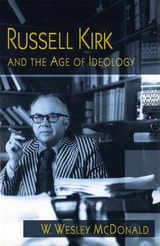
cover of Russell Kirk and the Age of Ideology

Russell Kirk and the Age of Ideology

W. Wesley McDonald

University of Missouri Press, 2004

Russell Kirk, author of The Conservative Mind and A Program for Conservatives, has been regarded as one of the foremost figures of the post–World War II revival in conservative thought. While numerous commentators on contemporary political thought have acknowledged his considerable influence on the substance and direction of American conservatism, no analysis of his social and political writing has dealt extensively with the philosophical foundations of his work.
            In this provocative study, W. Wesley McDonald examines those foundations and demonstrates their impact on the conservative intellectual movement that emerged in the 1950s and 1960s. Kirk played a pivotal role in drawing conservatism away from the laissez-faireprinciplesoflibertarianism and toward those of a traditional community grounded in a renewed appreciation of man’s social and spiritual nature and the moral prerequisites of genuine liberty. In a humane social order, a community of spirit is fostered in which generations are bound together. According to Kirk, this link is achieved through moral and social norms that transcend the particularities of time and place and, because they form the basis of genuine civilized existence, can only be neglected at great peril. These norms, reflected in religious dogmas, traditions, humane letters, social habit and custom, and prescriptive institutions, create the sources of the true community that is the final end of politics.
            Although this study does not challenge Kirk’s debts to a predominantly Catholic and Anglo-Catholic tradition of natural law, its focus is on his appeal to historical experience as the test of sound institutions. This aspect of his thought was essential to Kirk’s understanding of moral, cultural, and aesthetic norms and can be seen in his responses to American humanists Paul Elmer More and Irving Babbitt and to English and American romantic literature.
Russell Kirk and the Age of Ideology is particularly relevant because of the growing interest in Kirk’s legacy and the current debate over the meaning of conservatism. McDonald addresses both of those developments in the context of examining Kirk’s thought, attempting to correct some of the inadequacies contained in earlier studies that assess Kirk as a political thinker. This book will serve as a significant contribution to the commentary on this fascinating figure.
[more]