Results by title
123 books match the query 'Courts' and 2 start with r
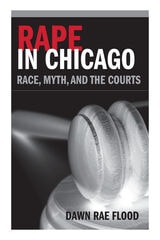
Rape in Chicago
Race, Myth, and the CourtsDawn Rae Flood
University of Illinois Press, 2018
Spanning a period of four tumultuous decades from the mid-1930s through the mid-1970s, this study reassesses the ways in which Chicagoans negotiated the extraordinary challenges of rape, as either victims or accused perpetrators. Drawing on extensive trial testimony, government reports, and media coverage, Dawn Rae Flood examines how individual men and women, particularly African Americans, understood and challenged rape myths and claimed their right to be protected as American citizens--protected by the State against violence, and protected from the State's prejudicial investigations and interrogations. Flood shows how defense strategies, evolving in concert with changes in the broader cultural and legal environment, challenged assumptions about black criminality while continuing to deploy racist and sexist stereotypes against the plaintiffs.
Uniquely combining legal studies, medical history, and personal accounts, Flood pays special attention to how medical evidence was considered in rape cases and how victim-patients were treated by hospital personnel. She also analyzes medical testimony in modern rape trials, tracing the evolution of contemporary "rape kit" procedures as shaped by legal requirements, trial strategies, feminist reform efforts, and women's experiences.
[more]
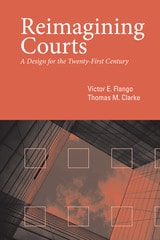
Reimagining Courts
A Design for the Twenty-First CenturyVictor E Flango
Temple University Press, 2017
In their timely and topical book, Reimagining Courts, Victor Flango and Thomas Clarke argue that courts are a victim of their own success. Disputes that once were resolved either informally in the family or within the community are now handled mainly by courts, which strains government agency resources. The authors offer provocative suggestions for a thorough overhaul of American state and local courts, one that better fits the needs of a twenty-first century legal system.
Reimagining Courts recommends a triage process based upon case characteristics, litigant goals, and resolution processes. Courts must fundamentally reorganize their business processes around the concept of the litigant as a customer. Each adjudication process that the authors propose requires a different case management process and different amounts of judicial, staff, and facility resources.
Reimagining Courts should spark much-needed debate. This book will be of significant interest to lawyers, judges, and professionals in the court system as well as to scholars in public administration and political science.
[more]