Results by title
476 books match the query 'Criticism' and 20 start with r
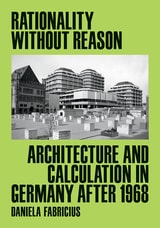
Rationality Without Reason
Architecture and Calculation in Germany After 1968Daniela Fabricius
University of Minnesota Press, 2027
A critical examination of the rational turn in postwar West German architecture
Postwar West German architecture experienced a “rational turn” characterized by a dramatic push toward ideals of optimization, economy, and accuracy based in calculation. Analyzing how architects reckoned with the political and cultural legacy of fascism and were driven by the desire to quantify and manage unpredictability in the human environment, Rationality Without Reason shows how they translated their design and production methods into numbers through protodigital technology and computational processes.
Daniela Fabricius examines architectural practices within the wider context of the shifting intellectual and cultural landscape as rationalism devolved between the student movements of 1968 and the reign of postmodernism in the 1980s. Showing how rationalism’s limitations and contradictions became increasingly apparent, she demonstrates how the intensity of these approaches ultimately led to a form of rationalism devoid of reason. Fabricius explores how the development of increasingly autonomous systems and formalist methods strayed from important economic, social, and ethical concerns and impeded the potential for developing more liberatory forms of architecture.
Using case studies involving the Ulm School for Design and the research-based work of Frei Otto and Oswald Mathias Ungers, Rationality Without Reason traces how debates around scientific thinking evolved throughout the Cold War era and offers a critical look at the utopian promises associated with supposedly rational systems of knowledge. Through an interdisciplinary approach steeped in archival research, Fabricius highlights how the logic of quantification is bound to be unsustainable without serious ethical considerations.
Retail e-book files for this title are screen-reader friendly with images accompanied by short alt text and/or extended descriptions.
Reading African American Autobiography
Twenty-First-Century Contexts and CriticismEdited by Eric D. Lamore
University of Wisconsin Press, 2016
The life narratives studied range from an eighteenth-century criminal narrative, a 1918 autobiography, and the works of Richard Wright to new media, graphic novels, and a celebrity memoir from Pam Grier.

Reading De Man Reading
Lindsey Waters and Wlad Godzich, Editors
University of Minnesota Press, 1989
Reading De Man Reading was first published in 1989. Minnesota Archive Editions uses digital technology to make long-unavailable books once again accessible, and are published unaltered from the original University of Minnesota Press editions.
Paul de Man, from the outset of his career, concerned himself with the act of reading and with discovering what a rigorous mode of reading can produce. The contributors to this volume—conceived not long before de Man's death in 1983—address his theory and practice of reading: the nature of those readings and what they signify for reading in general, not just for literary texts. De Man explored the act of reading because in it he could bring together—in order to cancel—the subjects known as reader and writer, the referent known as reality, and the medium known as language. In the act of reading de Man, the authors of this book ask where his work leaves us, what changes he made in the world of criticism and writing in general, and what we do differently because of him.
The contributors: Geoffrey Hartman, Jacques Derrida, Deborah Esch, Neil Hertz, Carol Jacobs, Kevin Newmark, Peggy Kamuf, J. Hillis Miller, Werner Hamacher, Hans Robert Jauss, Geoffrey Bennington, Bill Readings, Timothy Bahti, and Rodolphe Gasché.
Lindsay Waters is General Editor at Harvard University Press. Wlad Godzich is professor of comparative literature at the Université de Montréal and co-editor of the Theory and History of Literature series.
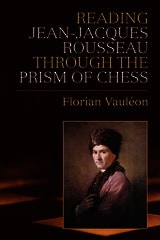
Reading Jean-Jacques Rousseau through the Prism of Chess
Florian Vauléon
University of Michigan Press, 2019
Over a period of forty years, Rousseau combined his devotion to writing with his enthusiasm for chess, and these two passions necessarily intertwined. Rousseau was able to transfer his power of concentration and the strict dialectics of his literary writings to his chess strategy. If Rousseau’s analytical skills influenced his attitude toward the game, then the game of chess inspired his logic and affected his discourse. Interpreted as a form of rationality, as a conceptual paradigm, the rules and strategies of chess accurately describe Rousseau’s ideas for social management, political power, and organization. Reading Jean-Jacques Rousseau through the Prism of Chess shows that Rousseau’s political theory, though allegedly inspired by Nature, found a perfect model in a game created by mankind; chess thus became a reference for his philosophical discourse and practice as well as a method to systematize Nature and organize society.
Reading Novels
George Hughes
Vanderbilt University Press, 2002
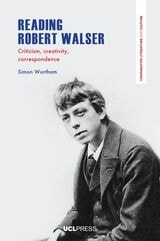
Reading Robert Walser
Criticism, Creativity, CorrespondenceSimon Wortham
University College London, 2025
Robert Walser’s letters to Frieda Mermet, the laundry manager at a Swiss psychiatric hospital, offer an intimate and enigmatic glimpse into the mind of a writer whose literary fortunes waned even as his influence grew in the decades following his death. Covering nearly thirty years, from 1913 to 1942, these letters chart Walser’s transition from a celebrated modernist to a man institutionalized, yet still deeply engaged with language and identity.
In Reading Robert Walser, Simon Wortham studies Walser’s letters within the broader context of modernist literature and deconstruction, and also imaginatively reconstructs Mermet’s possible lost responses, blurring the lines between criticism and creativity. The result is an innovative exploration of authorship and the act of reading itself—one that deepens our understanding of Walser’s life and work while questioning the very nature of literary correspondence.
Records of Reward
Essays on Literature and ValueFrances Ferguson
University of Chicago Press, 2026
A selection of essays revealing the singular brilliance of Ferguson’s critical writing over four decades.
Ranging across literature, philosophy, and social thought, Frances Ferguson asks how forms—whether aesthetic, legal, or bureaucratic—help to assign value and thereby organize our relations as well as our personal identities. Ferguson is a literary critic who takes her lead, unexpectedly, from Jeremy Bentham, showing how modernity tracks and makes perceptible the values of a host of human activities—the knowledge that comes from early learning exercises, the specialized knowledge that funds particular professions, and the exacting if unspecialized knowledge of the social world of courtship or hanging out.
Gathering Ferguson’s most influential and still timely essays, Records of Reward includes, among others, “The Nuclear Sublime,” in which Ferguson turns to Mary Shelley’s Frankenstein to examine how the aesthetic logic of the sublime obscures the claims of domesticity and the beautiful; “Rape and the Rise of the Novel,” which examines the history of rape law to highlight the importance of Samuel Richardson’s foregrounding of consent in Clarissa; “Pornography, the Theory,” where she explores the threshold between speech and action to identify environments—such as schools and workplaces—in which pornographic expression can be harmfully potentiated; and “Jane Austen, Emma, and the Impact of Form,” in which she analyzes Austen’s use of free indirect style to depict both her protagonist and her reader engaged in acts of “over-knowing” others in everyday life. Most unexpectedly, perhaps, the collection also includes an essay analyzing Bitcoin as a small language model that exerts enormous affective pressure on its partisans.
A vivid demonstration of the enduring rewards of theory and close reading alike, Records of Reward will be essential reading across the fields of literary studies, cultural studies, and political thought.
Redrawing the Lines
Analytic Philosophy, Deconstruction, and Literary TheoryReed Way Dasenbrock, Editor
University of Minnesota Press, 1989
Redrawing the Lines was first published in 1989. Minnesota Archive Editions uses digital technology to make long-unavailable books once again accessible, and are published unaltered from the original University of Minnesota Press editions.
Since 1970 literary theory has experienced a period of rich interaction with both Anglo-American analytic and Continental philosophy, particularly deconstruction. Yet these two philosophical schools have regarded each other with hostility, if at all, as in the 1977 exchange between John Searle and Jacques Derrida over the work of J. L. Austin. Since then, the two philosophical traditions have begun to interact as each has influenced literary theory, and some suggest that they are not diametrically opposed.
Redrawing the Lines,the first book to focus on that interaction, brings together ten essays by key figures who have worked to connect literary theory and philosophy and to reassess the relationship between analytic and Continental philosophy. The editor's introduction establishes the debate's historical context, and his annotated bibliography directs the interested reader to virtually everything written on this issue.
The contributors: Reed Way Dasenbrock, Henry Staten, Michael Fischer, Charles Altieri, Richard Shusterman, Samuel C. Wheeler III, Jules David Law, Steven Winspur, Christopher Norris, Richard Rorty, and Anthony J. Cascardi.
Reed Way Dasenbrock is associate professor of English at New Mexico State University. He is the author of The Literary Vorticism of Ezra Pound and Wyndham Lewis: Toward the Condition of Painting.
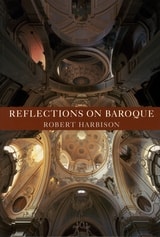
Reflections on Baroque
Robert Harbison
University of Chicago Press, 2001
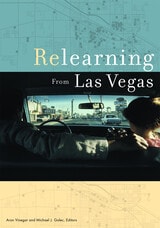
Relearning from Las Vegas
Aron Vinegar
University of Minnesota Press, 2009
Evaluates for the first time one of the foundational works in architecture criticism
Immediately on its publication in 1972, Learning from Las Vegas, by Robert Venturi, Denise Scott Brown, and Steven Izenour, was hailed as a transformative work in the history and theory of architecture, liberating those in architecture who were trying to find a way out of the straitjacket of architectural orthodoxies. Resonating far beyond the professional and institutional boundaries of the field, the book contributed to a thorough rethinking of modernism and was subsequently taken up as an early manifestation and progenitor of postmodernism.
Going beyond analyzing the original text, the essays provide insights into the issues surrounding architecture, culture, and philosophy that have been influenced by Learning from Las Vegas. For the contributors, as for scholars in an array of fields, the pioneering book is as relevant to architectural debates today as it was when it was first published.Contributors: Ritu Bhatt, Karsten Harries, Jean-Claude Lebensztejn, John McMorrough, Katherine Smith, Dell Upton, Nigel Whitely.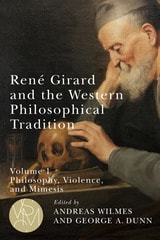
René Girard and the Western Philosophical Tradition, volume 1
Philosophy, Violence, and MimesisAndreas Wilmes
Michigan State University Press, 2024
This is the first collective scholarly effort at situating René Girard in relation to the Western philosophical tradition. Volume 1 features chapters on Plato, Augustine of Hippo, Niccolò Machiavelli, Thomas Hobbes, Blaise Pascal, Baruch Spinoza, Jean-Jacques Rousseau, Adam Smith, Immanuel Kant, Georg Wilhelm Friedrich Hegel, Friedrich Wilhelm Joseph Schelling, Alexis de Tocqueville, Søren Kierkegaard, and René Girard.
Resistance To Theory
Paul De Man
University of Minnesota Press, 1986
Explores reasons why the theoretical enterprise is blind to, or “resists,” the radical nature of reading, in six essays that offer a new level of critical and cultural understanding in reference to the works of Jauss, Riffaterre, Benjamin, and Bakhtin.
In a brilliant collection of essays, de Man explores his views, that, the resistance to theory is inherent in the theoretical enterprise itself, and the real debate is with its own methodological assumptions and possibilities.
“Indispensable. . . . There is resistance to ‘theory’ and also confusion about its status with reference to both philosophy and criticism.” -Frank Kermode, Columbia University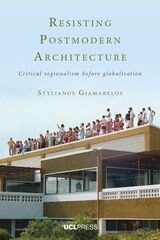
Resisting Postmodern Architecture
Critical Regionalism before GlobalisationStylianos Giamarelos
University College London, 2022
Since its first appearance in 1981, critical regionalism has enjoyed a celebrated worldwide reception as an architectural theory that defends the cultural identity of a place resisting the homogenizing onslaught of globalization. Its principles of acknowledging the climate, history, materials, culture, and topography of a specific place are integrated into architects’ education across the globe. But at the same time, the richer cross-cultural history of critical regionalism has frequently been reduced to schematic juxtapositions of “the global” with “the local.”
This book uses more than fifty interviews and previously unpublished archival material from six countries to resituate critical regionalism within the wider framework of debates around postmodern architecture, the diverse contexts from which it emerged, and the cultural media complex that conditioned its reception. In so doing, it explores the intersection of three areas of growing historical and theoretical interest—postmodernism, critical regionalism, and globalization—and shows how the “periphery” was not just a passive recipient, but also an active generator of architectural theory and practice.
Rethinking Bakhtin
Extensions and ChallengesGary Saul Morson and Caryl Emerson
Northwestern University Press, 1989
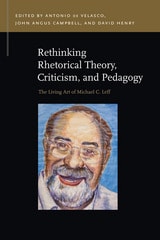
Rethinking Rhetorical Theory, Criticism, and Pedagogy
The Living Art of Michael C. LeffAntonio de Velasco
Michigan State University Press, 2016
Rethinking Rhetorical Theory, Criticism, and Pedagogy: The Living Art of Michael C. Leff offers answers to these questions by introducing the central insights of one of the most innovative and prolific rhetoricians of the twentieth century, Michael C. Leff. This volume charts Leff ’s decades-long development as a scholar, revealing both the variety of topics and the approach that marked his oeuvre, as well as his long-standing critique of the disciplinary assumptions of classical, Hellenistic, renaissance, modern, and postmodern rhetoric.
Rethinking Rhetorical Theory, Criticism, and Pedagogy includes a synoptic introduction to the evolution of Leff ’s thought from his time as a graduate student in the late 1960s to his death in 2010, as well as specific commentary on twenty-four of his most illuminating essays and lectures.
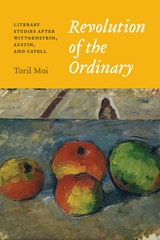
Revolution of the Ordinary
Literary Studies after Wittgenstein, Austin, and CavellToril Moi
University of Chicago Press, 2017
Moi first introduces Wittgenstein’s vision of language and theory, which refuses to reduce language to a matter of naming or representation, considers theory’s desire for generality doomed to failure, and brings out the philosophical power of the particular case. Contrasting ordinary language philosophy with dominant strands of Saussurean and post-Saussurean thought, she highlights the former’s originality, critical power, and potential for creative use. Finally, she challenges the belief that good critics always read below the surface, proposing instead an innovative view of texts as expression and action, and of reading as an act of acknowledgment. Intervening in cutting-edge debates while bringing Wittgenstein, Austin, and Cavell to new readers, Revolution of the Ordinary will appeal beyond literary studies to anyone looking for a philosophically serious account of why words matter.
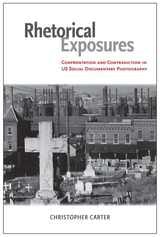
Rhetorical Exposures
Confrontation and Contradiction in US Social Documentary PhotographyChristopher Carter
University of Alabama Press, 2015
Exposing the politics of seeing: how documentary photographs confront inequality and reshape public understanding.
In Rhetorical Exposures, Christopher Carter explores social documentary photography from the nineteenth century to the present in order to illuminate the political dimensions and consequences of photographs taken and selected to highlight social injustice. Documentary photography aims to capture the material reality of life. Carter demonstrates how the creation and display of documentary photographs—often now called “imagetexts”—both invite analysis and raise persistent questions about the political and social causes for the bleak scenes of poverty and distress captured on film.
Carter’s carefully reasoned monograph examines both formal qualities of composition and the historical contexts of the production and display of documentary photographs. In Rhetorical Exposures, Carter explores Jacob Riis’s heartrending photos of Manhattan’s poor in late nineteenth-century New York, Walker Evans’s iconic images of tenant farmers in west Alabama, Ted Streshinsky’s images of 1960s social movements, Camilo José Vergara’s photographic landscapes of urban dereliction in the 1970s, and Chandra McCormick’s portraits of New Orleans’s Ninth Ward scarred by Hurricane Katrina.
While not ascribing specifically political or Marxist intentions to the photographers discussed, Carter frames his arguments in a class-based dialectic that addresses material want as an ineluctable result of social inequality. Carter argues that social documentary photography has the powerful capacity to disrupt complacent habits of viewing and to prompt viewers to confront injustice. Though photography may induce socially disruptive experiences, it remains vulnerable to the same power dynamics it subverts. Therefore, Carter offers a “rhetoric of exposure” that outlines how such social documentary images can be treated as highly tensioned rhetorical objects. His framework enables the analysis of photographs as heterogeneous records of the interaction of social classes and expressions of specific built environments. Rhetorical Exposures also discusses how photographs interact with oral and print media and relate to creations as diverse as public memorials, murals, and graphic novels.
As the creation and dissemination of new media continues to evolve in an environment of increasing anxiety about growing financial inequality, Rhetorical Exposures offers a very apt and timely discussion of the ways social documentary photography is created, employed, and understood.

Rhetorical Questions
Studies of Public DiscourseEdwin Black
University of Chicago Press, 1992
Locating rhetorical studies at the confluence of literature and politics, Black focuses on the ideological component of seemingly literary texts and the use of literary devices to advance political advocacy. The essays collected here range in subject matter from nineteenth-century oratory to New York Times editorials to the rhetoric of Richard Nixon. Unifying the collection are the concerns of secrecy and disclosure, identity, opposition, the scope of argument in public persuasion, and the historical mutability of rhetorical forms.
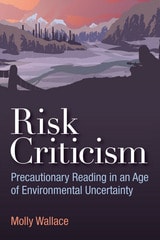
Risk Criticism
Precautionary Reading in an Age of Environmental UncertaintyMolly Wallace
University of Michigan Press, 2016
Taking inspiration from the questions raised by the Bulletin’s synecdochical “nuclear,” Risk Criticism aims to generate a hybrid form of critical practice that brings “nuclear criticism” into conversation with ecocriticism. Through readings of novels, films, theater, poetry, visual art, websites, news reports, and essays, Risk Criticism tracks the diverse ways in which environmental risks are understood and represented today.
Romanticism, Nationalism, and the Revolt against Theory
David Simpson
University of Chicago Press, 1993
Simpson demonstrates the close association between "theory" and "method" and shows that by the mid-eighteenth century, "method" had acquired distinctly subversive associations in England. Attributed increasingly to the French and the Germans, "method" paradoxically evoked images both of inhuman rationality and unbridled sentimentality; in either incarnation, it was seen as a threat to what was claimed to be authentically British. Simpson develops these paradigms in relation to feminism, the gendering of Anglo-American culture, and the emergence of literature and literary criticism as antitheoretical discourses. He then looks at the Romantic poets' response to this confining ideology of the cultural role of literature. Finally, Simpson considers postmodern theory's claims for the radical energy of nonrational or antirationalist positions.
This is an essential book not only for students of the Romantic period and intellectual historians concerned with the idea of "method," but for anyone interested in the historical background of today's debates over the excesses and possibilities of "theory."