Results by title
434 books match the query 'Criticism & Theory' and 17 start with r
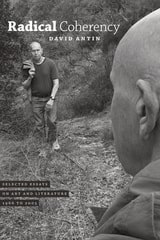
Radical Coherency
Selected Essays on Art and Literature, 1966 to 2005David Antin
University of Chicago Press, 2011
“We got to talking”—so David Antin begins the introduction to Radical Coherency, embarking on the pursuit that has marked much of his breathless, brilliantly conversational work. For the past forty years, whether spoken under the guise of performance artist or poet, cultural explorer or literary critic, Antin’s innovative observations have helped us to better understand everything from Pop to Postmodernism.
Intimately wedded to the worlds of conceptual art and poetics, Radical Coherency collects Antin’s influential critical essays and spontaneous, performed lectures (or “talk pieces”) for the very first time, capturing one of the most distinctive perspectives in contemporary literature. The essays presented here range from the first serious assessment of Andy Warhol published in a major art journal, as well as Antin’s provocative take on Clement Greenberg’s theory of Modernism, to frontline interventions in present debates on poetics and fugitive pieces from the ’60s and ’70s that still sparkle today—and represent a gold mine for art historians of the period. From John Cage to Allan Kaprow, Mark Rothko to Ludwig Wittgenstein, Antin takes the reader on an idiosyncratic, personal journey through twentieth-century culture with his trademark antiformalist panache—one thatwill be welcomed by any fan of this consummate trailblazer.
Radical Desires
French Gay Liberation and Anticolonial CritiqueEdited by Hauke Branding and Julian Volz
Diaphanes, 2025
Despite a historically rich tradition of thinking about the relation between sexuality, desire, and revolution, there is little engagement with desire’s radicality today. This volume attends to the radicality of desire as a starting point for overcoming heteropatriarchal capitalism by turning to the specific radical homosexual critique as it was first formulated in France in the 1970s in the writings of the Mouvement de Libération des Femmes and the Front Homosexuel d’Action Révolutionnaire, as well as in the conceptions of their most important protagonists, Monique Wittig and Guy Hocquenghem.
Radical Desires seeks to emphasize the anti-identitarian character of the French gay liberation movement, as well as its implicit and explicit critique of gender and sexual binaries. At the same time, the volume is also interested in intersectionally expanding this critique by confronting it with anticolonial and queer of color perspectives. As French gay liberation activists’ relations to North African men were often problematic, several contributions engage with the latent orientalist and racist tropes that appear in the movement’s writings. By aiming to go beyond a mere historicization of these ambivalences and exploring which contemporary problems appear in a different light as a result, Radical Desires highlights the (dis-)continuous relationship between current debates and those in 1970s France.
To explore the multiplicity of forms with or in which these critiques were expressed, this volume places theoretical perspectives in conversation with artistic perspectives on queer liberation in a transnational context. Contributors include Friederike Beier, Antoine Idier, Émilie Notéris, Lukas Betzler, Mohammad Shawky Hassan, Sido Lansari, Todd Shepard, and Julian Volz.
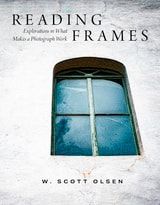
Reading Frames
Explorations in What Makes a Photograph WorkW. Scott Olsen
University of Utah Press, 2026
A collaboration between English professor and photographer W. Scott Olsen and Tomasz Trzebiatowski, founder of Frames magazine, Reading Frames gathers sixty-nine photographs first featured in Frames’ digital companion. Olsen’s essays interrogate the compositional and aesthetic elements of the photographs, but rather than offering technical instruction, Olsen writes with a literary sensibility, tracing how light, tone, color, and line evoke mood, meaning, and story. The essays ask us to linger with each photograph, guiding readers toward attentiveness, presence, and conversation with the image itself. Suited both to introductory photography classes and to general readers, this book is an example of how truly seeing an image is not the same as looking at it.

Reframing Reality
The Aesthetics of the Surrealist Object in French and Czech CinemaAlison Frank
Intellect Books, 2013
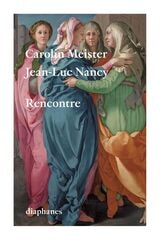
Rencontre
Carolin Meister and Jean-Luc Nancy
Diaphanes, 2021
Hasard, providence, intrication quantique, rituel, animisme, étreinte ou porosité, pensée ou art sont autant de tentatives de tourner autour de ce qui nous échappe quand nous nous rencontrons. Et autant de façons de se rencontrer là où la philosophie reconnait que l’art lui échappe.

Replacing Home
From Primordial Hut to Digital Network in Contemporary ArtJennifer Johung
University of Minnesota Press, 2011
From property deeds to shipping containers to wearable shelters to virtual spaces: what does it mean to draw a spatial boundary? To be at home? In a world in which notions of place are constantly changing, Jennifer Johung looks at new constructions of staying in place—in contemporary site-specific art, digital media, portable architecture, and various other imaginable shelters and sites.
Replacing Home suggests that while “place” may no longer be a sustainable category, being in place and belonging at home are nonetheless possible. By emphasizing reusability rather than fixed constructions, art and architecture together propose various systems of replacing home in which sites can be revisited, material structures can be renewed, and dwellers can come back into contact over time. Bringing together a range of objects and events, Johung considers the structural replacements of home as evident in artistic analogies of the prehistoric hut, modular homes, transformable garments, and digitally networked sites.
In charting these intersections between contemporary art and architecture, Replacing Home introduces a new framework for reconceptualizing spatial situation; at the same time, it presents a new way to experience being and belonging within our globally expanded environments.
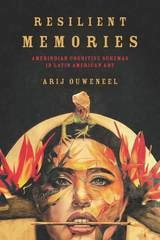
Resilient Memories
Amerindian Cognitive Schemas in Latin American ArtArij Ouweneel
The Ohio State University Press, 2018
Exploring works ranging in popularity, from Alfonso Cuarón’s Y Tu Mamá También to the paintings of Peruvian artists Claudia Coca and Jorge Miyagui, and from Mexican Zapatistas to hip-hop, Ouweneel details the ways in which artists interact with the embodied memory of the community but also assert their own place within it as crucial, furthering their audiences’ understanding of and interaction with existing cultural schemas. In this way, Ouweneel shows that memories must serve the present or they will be forgotten.
Restructuring Architectural Theory
Edited by Marco Diani and Catherine Ingraham
Northwestern University Press, 1989
Rethinking Borders
John Welchman
University of Minnesota Press, 1996
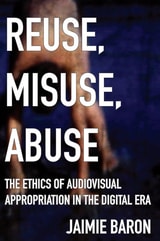
Reuse, Misuse, Abuse
The Ethics of Audiovisual Appropriation in the Digital EraJaimie Baron
Rutgers University Press, 2021
Revelation of Modernism
Response to Cultural Crises in Fin-de-Siécle PaintingAlbert Boime
University of Missouri Press, 2008
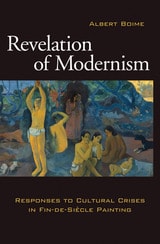
Among postimpressionist painters, Van Gogh, Seurat, Cézanne, and Gauguin produced a remarkable body of work that responded to a cultural and spiritual crisis in the avant-garde world—influences that pushed them toward an increasing reliance on science, literature, and occultism. In Revelation of Modernism, renowned art historian Albert Boime reappraises specific works by these masters from a perspective more appreciative of the individuals’ inner conflicts, offering the art world a new understanding of a period fraught with apocalyptic fears and existential anxieties.
Building on the seminal observations of Sven Lövgren from a half-century ago, Boime rejects popular notions of “art for art’s sake” and rethinks an entire movement to suggest that history, rather than expressive urge, is the driving force that shapes art. He reconsiders familiar masterpieces from a fresh perspective, situating the art in the contexts of history both real and speculative, of contemporary philosophy, and of science to depict modernism as a development that ultimately failed.
Boime expands on what we think we know about these figures and produces startling new revelations about their work. From the political history of Seurat’s Parade de cirque to the astronomical foundations of Van Gogh’s Starry Night, he draws analogies between literary sources and social, personal, and political strategies that have eluded most art historians. He offers a richer and more complex vision of Cézanne, considering the artist as an Old Testament figure in search of the Promised Landscape. And he provides a particularly detailed look at Gauguin—on whom Boime has never previously published—that takes a closer look at the artist’s The Vision after the Sermon and its allusions to Eliphas Lévi’s writings, sheds light on the sources for From whence do we come? and offers new thoughts about Gauguin’s various self-portraits.
Boime’s latest contribution further testifies to his status as one of our most important living art historians. As entertaining as it is eloquent, Revelation of Modernism is a bold and groundbreaking work that should be required reading for all who wish to understand the contradictory origins and development of modernism and its role in history.
Rhetorics of Value
Exhibition Design and Communication in Museums and BeyondCorinne A. Kratz
Duke University Press, 2025
Ribbon of Darkness
Inferencing from the Shadowy Arts and SciencesBarbara Maria Stafford
University of Chicago Press, 2019
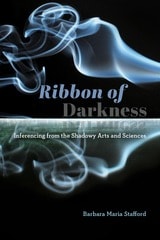
Stafford organizes these essays around three concepts that structure the book: inscrutability, ineffability, and intuitability. All three, she explains, allow us to examine how both the arts and the sciences imaginatively infer meaning from the “veiled behavior of matter,” bringing these historically divided subjects into a shared intellectual inquiry and imbuing them with an ethical urgency. A vanguard work at the intersection of the arts and sciences, this book will be sure to guide readers from either realm into unfamiliar yet undeniably fertile territory.
Ritual and Capital
Edited by Bard Graduate Center and Wendy's Subway
Bard Graduate Center, 2020
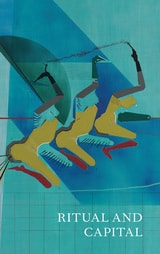
The publication of Ritual and Capital is the culmination of a series of public readings organized by Wendy’s Subway, a nonprofit organization in Brooklyn, as part of their Spring 2017 Reading Room residency at the Bard Graduate Center. Copublished by the Bard Graduate Center and Wendy’s Subway, Ritual and Capital is the first title in the BGCX series, a publication series designed to expand time-based programming after the events themselves have ended. Springing from the generative spontaneity of conversation, performance, and hands-on engagement as their starting points, these experimental publishing projects will provide space for continued reflection and research in a form that is inclusive of a variety of artists and makers.
Romantic Things
A Tree, a Rock, a CloudMary Jacobus
University of Chicago Press, 2012
Rubens in Repeat
The Logic of the Copy in Colonial Latin AmericaAaron M. Hyman
J. Paul Getty Trust, The, 2021
Winner of the Latin American Studies Association's 2022 Best Book in Colonial Latin American Studies.
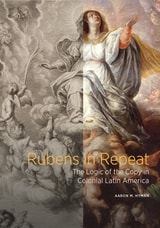
This book examines the reception in Latin America of prints designed by the Flemish artist Peter Paul Rubens, showing how colonial artists used such designs to create all manner of artworks and, in the process, forged new frameworks for artistic creativity.
Peter Paul Rubens (1577–1640) never crossed the Atlantic himself, but his impact in colonial Latin America was profound. Prints made after the Flemish artist’s designs were routinely sent from Europe to the Spanish Americas, where artists used them to make all manner of objects.
Rubens in Repeat is the first comprehensive study of this transatlantic phenomenon, despite broad recognition that it was one of the most important forces to shape the artistic landscapes of the region. Copying, particularly in colonial contexts, has traditionally held negative implications that have discouraged its serious exploration. Yet analyzing the interpretation of printed sources and recontextualizing the resulting works within period discourse and their original spaces of display allow a new critical reassessment of this broad category of art produced in colonial Latin America—art that has all too easily been dismissed as derivative and thus unworthy of sustained interest and investigation. This book takes a new approach to the paradigms of artistic authorship that emerged alongside these complex creative responses, focusing on the viceroyalties of New Spain and Peru in the seventeenth and eighteenth centuries. It argues that the use of European prints was an essential component of the very framework in which colonial artists forged ideas about what it meant to be a creator.
Ruins of Modernity
Julia Hell and Andreas Schönle, eds.
Duke University Press, 2009
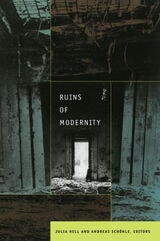
Several contributors discuss ideas about ruins developed by philosophers such as Immanuel Kant, Georg Simmel, and Walter Benjamin. One contributor examines how W. G. Sebald’s novel The Rings of Saturn betrays the ruins erased or forgotten in the Hegelian philosophy of history. Another analyzes the repressed specter of being bombed out of existence that underpins post-Second World War modernist architecture, especially Le Corbusier’s plans for Paris. Still another compares the ways that formerly dominant white populations relate to urban-industrial ruins in Detroit and to colonial ruins in Namibia. Other topics include atomic ruins at a Nevada test site, the connection between the cinema and ruins, the various narratives that have accrued around the Inca ruin of Vilcashuamán, Tolstoy’s response in War and Peace to the destruction of Moscow in the fire of 1812, the Nazis’ obsession with imperial ruins, and the emergence in Mumbai of a new “kinetic city” on what some might consider the ruins of a modernist city. By focusing on the concept of ruin, this collection sheds new light on modernity and its vast ramifications and complexities.
Contributors. Kerstin Barndt, Jon Beasley-Murray, Russell A. Berman, Jonathan Bolton, Svetlana Boym, Amir Eshel, Julia Hell, Daniel Herwitz, Andreas Huyssen, Rahul Mehrotra, Johannes von Moltke, Vladimir Paperny, Helen Petrovsky, Todd Presner, Helmut Puff, Alexander Regier, Eric Rentschler, Lucia Saks, Andreas Schönle, Tatiana Smoliarova, George Steinmetz, Jonathan Veitch, Gustavo Verdesio, Anthony Vidler