Results by title
161 books match the query 'Cuba' and 8 start with r
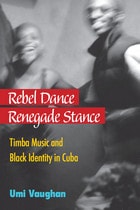
Rebel Dance, Renegade Stance
Timba Music and Black Identity in CubaUmi Vaughan
University of Michigan Press, 2013
Rebel Dance, Renegade Stanceshows how community music-makers and dancers take in all that is around them socially and globally, and publicly and bodily unfold their memories, sentiments, and raw responses within open spaces designated or commandeered for local popular dance. Umi Vaughan, an African American anthropologist, musician, dancer, and photographer "plantao" in Cuba—planted, living like a Cuban—reveals a rarely discussed perspective on contemporary Cuban society during the 1990s, the peak decade of timba, and beyond, as the Cuban leadership transferred from Fidel Castro to his brother. Simultaneously, the book reveals popular dance music in the context of a young and astutely educated Cuban generation of fierce and creative performers.
By looking at the experiences of black Cubans and exploring the notion of "Afro Cuba," Rebel Dance, Renegade Stanceexplains timba's evolution and achieved significance in the larger context of Cuban culture. Vaughan discusses a maroon aesthetic extended beyond the colonial era to the context of contemporary society; describes the dance spaces of Cuba; and examines the performance of identity and desire through the character of the "especulador." This book will find an audience with musicians, anthropologists, ethnomusicologists, interdisciplinary specialists in performance studies, cultural studies, and Latin American and Caribbean studies, as well as laypeople who are interested in Atlantic/African and African American/Africana studies and/or Cuban culture.

Rethinking Past and Present in Cuba
essays in memory of Alistair HennessyEdited by Antoni Kapcia
University of London Press, 2018
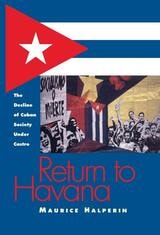
Return to Havana
The Decline of Cuban Society Under CastroMaurice Halperin
Vanderbilt University Press, 1994
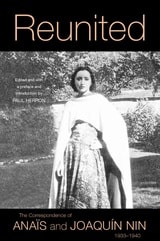
Reunited
The Correspondence of Anaïs and Joaquín Nin, 1933–1940Anaïs Nin
Ohio University Press, 2020
The incestuous affair between the writer Anaïs Nin and her father, the pianist-composer Joaquín Nin, is well documented in the volume of her unexpurgated diary published under the title Incest. What has been missing from that account is Joaquín’s point of view. Reunited: The Correspondence of Anaïs and Joaquín Nin, 1933–1940 presents more than one hundred intimate communications between these two artistic geniuses, revealing not only the dynamics of their complex relationship but also why Anaïs spent her life in a never-ending battle to feel loved, appreciated, and understood.
Reunited collects the correspondence between Anaïs and Joaquín just before, during, and after the affair, which commenced in 1933, twenty years after he had abandoned his ten-year-old daughter and the rest of his family. These letters were long believed to have been destroyed and lost to history. In 2006, however, a folder containing Joaquín’s original letters to his daughter was discovered in Anaïs’s Los Angeles home, along with a second folder of her letters to him. Together, these letters tell the story of an absent father’s attempt to reconnect with his adult daughter and how that rapprochement quickly turned into an illicit sexual relationship.
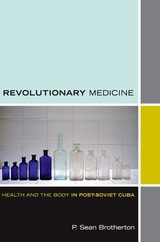
Revolutionary Medicine
Health and the Body in Post-Soviet CubaP. Sean Brotherton
Duke University Press, 2012
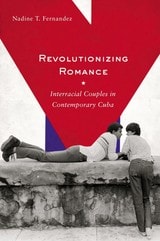
Revolutionizing Romance
Interracial Couples in Contemporary CubaFernandez, Nadine T
Rutgers University Press, 2010
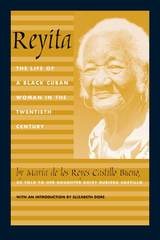
Reyita
The Life of a Black Cuban Woman in the Twentieth CenturyMaría de los Reyes Castillo Bueno
Duke University Press, 2000
Sensitive to and deeply knowledgeable of the systemic causes and consequences of poverty, Reyita’s testimony considers the impact of slavery on succeeding generations, her mother’s internalized racism, and Cuba’s residual discrimination. The humiliation and poverty inflicted on the black Cuban community as well as her decision to marry a white man to ensure a higher standard of living form the basis of other chapters. Reyita actively participated in the life of the community—often caring for the children of prostitutes along with her own eight children and giving herbal medicine and “spiritualist” guidance to ill or troubled neighbors. She describes her growing resistance, over five decades of marriage, to her husband’s sexism and negativity. Strong-willed and frank about her sexuality as well as her religious and political convictions, Reyita recounts joining the revolutionary movement in the face of her husband’s stern objections, a decision that added significant political purpose to her life. At book’s end, Reyita radiates gratification that her 118 descendants have many different hues of skin, enjoy a variety of professions, and—“most importantly”—are free of racial prejudice.

Rural Cuba
Lowry Nelson
University of Minnesota Press, 1950
Rural Cuba was first published in 1950. Minnesota Archive Editions uses digital technology to make long-unavailable books once again accessible, and are published unaltered from the original University of Minnesota Press editions.
Impoverished people in a rich land—that is the paradox of Cuba described with thorough documentation by Lowry Nelson, passed professor of sociology at the University of Minnesota. Professor Nelson studied rural Cuba's problems for a year during his appointment as rural sociologist for the U.S. Department of State.
With the cooperation of the Cuban government, Professor Nelson directed a series of detailed sociological surveys of representative rural districts. Data were gathered in these surveys on the family habits, agricultural methods, farm tenure, income, educational opportunities, social activities, and level of living of more than 700 rural Cuban families. This material is combined with historical background, census analyses, and on-the-spot observations for a comprehensive study that fills a gap in the available literature on the subject. The volume includes appendixes providing a description of the geography of the survey area and a verbatim sample report of a survey interviewer, together with a glossary of Spanish words, a bibliography, and tables.
In this book rural Cuba's problems are thoroughly discussed, present-day progress toward their solution is reported, and suggestions are offered for future agricultural policies that could help enrich the lives of Cuba's people.