Results by title
78 books match the query 'Developmental' and 5 start with r
RSF
The Russell Sage Foundation Journal of the Social Sciences: Low-Income Families in the Twenty-first Century: Effective Public Policy ResponsesMarcy Carlson
Russell Sage Foundation, 2021
The twenty-first century has seen dramatic shifts in the nature of work, including a decrease in economic security and job opportunities for low-skilled workers. At the same time, the nature of families has also changed significantly, including a delay and decrease in marriage and the development of new types of complex family structures. These changes in work and family have contributed to a rise in inequality, with many lower-income families experiencing poverty and economic hardship as a result. Yet, public policy has not adapted to address these issues. In this issue of RSF, sociologists Marcia J. Carlson, and Christopher Wimer, developmental psychologist Ron Haskins, and an interdisciplinary group of contributors examine the growing needs of low-income families and explore both the extent to which public policy effectively serves them and how it can be improved.
The nine articles in this issue examine various aspects of contemporary work and family life for low-income families, the challenges they face, and whether current policies help to mitigate these challenges. Sigird Luhr and colleagues find that unpredictable work schedules were associated with increased difficulty arranging childcare, work-life conflict, and missed work for working mothers. Elizabeth O. Ananat and colleagues show that Emeryville, California's Fair Workweek Ordinance decreased working parents' schedule unpredictability, and improved their well-being without reducing worker hours. Pamela Joshi and colleagues find that less than a quarter of low-income, full-time working families earn enough to cover a basic family budget, compared to two-thirds of all full-time working families. Katherine M. Michelmore and Natasha V. Pilkauskas reveal that nearly 60% of children in lower-income families reside in households with a complex family structure that may result in difficulty filing for important tax credits like the Earned Income Tax Credit (EITC) that can help increase their incomes. Jennifer Randles shows that income and public aid are insufficient for many mothers to cover the cost of one of children’s basic needs - diapers - and suggests policies to help bridge this gap in the face of widespread economic insecurity.
This volume of RSF illuminates the many obstacles faced by lower-income families due to changes in the labor market and family patterns as well as the ways in which public policy can better respond to alleviate these obstacles.
[more]
RSF
The Russell Sage Foundation Journal of the Social Sciences: Wealth Inequality and Child Development: Implications for Policy and PracticeChristina Gibson-Davis
Russell Sage Foundation, 2021
Wealth – a household’s assets minus its debts – is an important indicator of child well-being. Higher household wealth related to better academic achievement, behavior, and health among children. Yet a sizeable share of American children, including a majority of Black and Hispanic children, grow up in households with very low levels of wealth, and wealth inequality among households with children is rising even faster than among the general population. This volume of RSF, edited by social policy experts Christina Gibson-Davis and Heather Hill, provides the first comprehensive examination of the contours and consequences of wealth inequality for children under the age of 18. An interdisciplinary roster of contributors consider the vast racial and ethnic disparities in wealth and how those disparities affect child well-being.
Contributors Fabian Pfeffer and Nora Waitkus find that child wealth inequality is far worse in the U.S. than in other industrialized countries. Editors Gibson-Davis and Hill show that a relatively small group of American parents—mostly White—control the lion’s share of wealth, with Black and Hispanic parents having only pennies on the dollar for every dollar of White parental wealth. Nina Bandelj and Angelina Grigoryeva show how White parents with above median wealth are more likely than other parents to practice “financially intensive parenting,” saving and borrowing in ways that promote child achievement. After controlling for other measures of family resources and socioeconomic status, Portia Miller and colleagues demonstrate that family wealth is uniquely related to both academic and behavioral development throughout childhood and adolescence and that wealth helps buffer the negative effects of low family income. Jordan Conwell and Leafia Zi Ye find equalizing wealth is not sufficient to eliminate race- and ethnic-based gaps in academic achievement: even among families with the same levels of wealth Black and Hispanic children often have significantly worse scores than Whites.
High levels of childhood wealth inequality are not inevitable; they are the consequence of laws and practices that favor wealth accumulation among few, primarily White, families. Jin Huang and coauthors look at one of the few policy models for increasing savings in low-income child households, Child Development Accounts, which have been shown to increase educational savings and improve maternal mental health, but they have yet to be adopted nationwide. Two studies in this issue, by Margot Jackson and colleagues and by Katherine Michelmore and Leonard Lopoo, find that large-scale income-support programs, the EITC and Medicaid, have positive spillovers onto asset accumulation, but policies designed to fundamentally alter the distribution of wealth among families with children will require more expansive changes to the tax code and program asset caps.
This issue of RSF expands our understanding of wealth inequality and its effects on children, and provides important insights into policies and practices that either directly or indirectly boost wealth acquisition among child households.
[more]
Redefining Success in America
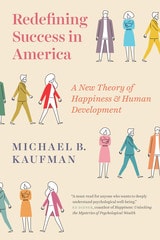
A New Theory of Happiness and Human DevelopmentMichael Kaufman
University of Chicago Press, 2019
Work hard in school, graduate from a top college, establish a high-paying professional career, enjoy the long-lasting reward of happiness. This is the American Dream—and yet basic questions at the heart of this competitive journey remain unanswered. Does competitive success, even rarified entry into the Ivy League and the top one percent of earners in America, deliver on its promise? Does realizing the American Dream deliver a good life? In Redefining Success in America, psychologist and human development scholar Michael Kaufman develops a fundamentally new understanding of how elite undergraduate educations and careers play out in lives, and of what shapes happiness among the prizewinners in America. In so doing, he exposes the myth at the heart of the American Dream.
Returning to the legendary Harvard Student Study of undergraduates from the 1960s and interviewing participants almost fifty years later, Kaufman shows that formative experiences in family, school, and community largely shape a future adult’s worldview and well-being by late adolescence, and that fundamental change in adulthood, when it occurs, is shaped by adult family experiences, not by ever-greater competitive success. Published research on general samples shows that these patterns, and the book’s findings generally, are broadly applicable to demographically varied populations in the United States.
Leveraging biography-length clinical interviews and quantitative evidence unmatched even by earlier landmark studies of human development, Redefining Success in America redefines the conversation about the nature and origins of happiness, and about how adults develop. This longitudinal study pioneers a new paradigm in happiness research, developmental science, and personality psychology that will appeal to scholars and students in the social sciences, psychotherapy professionals, and serious readers navigating the competitive journey.
[more]
Review of Child Development Research
Volume 1Lois Wladis Hoffman
Russell Sage Foundation, 1964
Makes a major contribution to current research on children by providing a broad view of up-to-date, authoritative material in many different areas. Contributors have selected and interpreted the relevant material in reference to the practitioner's interests and needs. The chapters, written by prominent specialists, cover various topics in child development from early periods of socialization to the development of higher mental processes, and include two chapters dealing with genetic and neurophysiological bases of behavior.
[more]
Review of Child Development Research
Volume 2Lois Wladis Hoffman
Russell Sage Foundation, 1967
Makes a major contribution to current research on children by providing a broad view of up-to-date, authoritative material in many different areas. Contributors have selected and interpreted the relevant material in reference to the practitioner's interests and needs. The chapters, written by prominent specialists, cover various topics in child development from early periods of socialization to the development of higher mental processes, and include two chapters dealing with genetic and neurophysiological bases of behavior.
[more]