Results by title
281 books match the query 'Disease & Health Issues' and 16 start with r

RSF
The Russell Sage Foundation Journal of the Social Sciences: Beyond Deaths of Despair: New Research on the Health and Well-Being of Low- and Moderately-Educated AmericansAnne Case
Russell Sage Foundation, 2026
The term “deaths of despair” was coined in 2015 by economists Anne Case and Agnus Deaton to describe the increasing mortality rate for White Americans without college degrees due to drug overdoses, suicide, and alcoholic liver disease. These deaths were attributed to the despondency experienced by the White working class, who were left behind by changes in the American economy. However, the mortality picture has changed since then. Mortality rates are now rising among both Black and White Americans without a college degree. Nearly all major causes of death are increasing more, or decreasing less, for people without college degrees. The educational gap in mortality has become so severe that, in 2021, adult life expectancy was more than eight years higher among college graduates. In this double issue of RSF, Case, Deaton, sociologist Andrew J. Cherlin, and an interdisciplinary group of contributors move beyond the concept of “deaths of despair” to explore the widening educational gap in mortality.
Issue 1 provides new perspectives on the education gap in mortality as well as new viewpoints on the non-college population. Christopher L. Foote and colleagues show that much of the educational gap in mortality may be due to smoking. One of the most popular explanations for the growing mortality gap is that college unlocks better job opportunities. However, Sam Arenberg and Sam Stripling find that what may matter for longer life expectancy is not so much having a “good” job as having a job at all, as high school dropouts with jobs have lower mortality rates than college graduates without them. Victor Tan Chen and colleagues reveal that people with opioid use disorders experience “precarity chains:” overlapping, connected hazards that combine to put people at increased risk of substance abuse.
Issue 2 also gives new viewpoints on the non-college population and examines geographic and international variation in mortality. Grace Landrum-Hall and colleagues discover that men with health issues repeatedly enter and exit the formal labor force—referred to as “churning”—due to inflexible employer policies and income support program policies. Jennifer Karas Montez and colleagues show that rural areas and small cities have seen increases in mortality, while large urban areas have seen decreases. Iliya Gutin and colleagues find that the educational gap in health and wellbeing is typically larger in the U.S. than in Britian. This may be because education in the U.S.—and the resulting higher salaries—allows for more access to health-promoting resources.
This double issue of RSF provides fascinating insights into the stark and alarming mortality gap between those with and without a college degree in the U.S.
RSF
The Russell Sage Foundation Journal of the Social Sciences: The Social, Political, and Economic Effects of the Affordable Care ActAndrea Campbell
Russell Sage Foundation, 2020
This journal issue explores the political dimensions of the rollout of the ACA and the attendant backlash. Contributors Helen Levy, Andrew Ying, and Nicholas Bagley argue that despite repeated efforts at repeal, over 80 percent of the Act has been implemented as it was originally intended. Julianna Pacheco, Jake Haselswerdt, and Jamila Michener show that when Republican governors support Medicaid expansion, Republican voters become more favorable toward the ACA, and polarization between Republican and Democrat voters decreases. Yet Charles Courtemanche, James Marton, and Aaron Yelowitz find little impact of the ACA on voter participation. Lisa Beauregard and Edward Miller examine states’ adoption of the ACA’s home and community-based care services for the elderly and people with disabilities, finding that states with more liberal elected officials and more fiscal capacity were more likely to adopt these provisions. Paul Shafer, David Anderson, Seciah Aquino, Laura Baum, Erika Franklin Fowler, and Sarah Gollust probe the role of different types of health insurance and political advertising on insurance enrollment. Richard Fording and Dana Patton explain the emergence of contentious Medicaid work requirements and patient co-pays that limit access to Medicaid.
Other contributors address how the ACA affects marginalized populations. Carrie Fry, Thomas McGuire, and Richard Frank link Medicaid expansion to lower rates of recidivism among the formerly incarcerated. Radhika Gore, Ritu Dhar, Sadia Mohaimin, Priscilla Lopez, Anna Divney, Jennifer Zanowiak, Lorna Thorpe, and Nadia Islam study primary care practices serving South Asian immigrants in New York City and highlight the importance of social context and organizational constraints in designing population health interventions. The issue also examines the economic effects of the ACA, especially on access to private and public health insurance. Both Mark Hall and Jean Abraham study instability in ACA health insurance markets, with Hall focusing on uncertainty arising from political factors and Abraham examining the factors that lead local markets to face high premiums and low insurer participation. Philip Rocco and Andrew Kelly explore the mechanisms included in the ACA to try to spur innovations in care delivery that both improve health and generate long-term cost savings.
As the COVID-19 pandemic affects healthcare in unprecedented ways, affordable healthcare access is critical. This RSF journal issue offers a timely, thoughtful consideration of one of the most pressing issues in American life.
Race and Environmental Justice in the Era of Climate Change and COVID-19
Tatiana Konrad
Michigan State University Press, 2025

Reading Victorian Deafness
Signs and Sounds in Victorian Literature and CultureJennifer Esmail
Ohio University Press, 2013
Winner of the 2013 Sonya Rudikoff Award for best first book in Victorian Studies
Short-listed for the 2013 British Society for Literature and Science Book Prize.
Reading Victorian Deafness is the first book to address the crucial role that deaf people, and their unique language of signs, played in Victorian culture. Drawing on a range of works, from fiction by Charles Dickens and Wilkie Collins, to poetry by deaf poets and life writing by deaf memoirists Harriet Martineau and John Kitto, to scientific treatises by Alexander Graham Bell and Francis Galton, Reading Victorian Deafness argues that deaf people’s language use was a public, influential, and contentious issue in Victorian Britain.
The Victorians understood signed languages in multiple, and often contradictory, ways: they were objects of fascination and revulsion, were of scientific import and literary interest, and were considered both a unique mode of human communication and a vestige of a bestial heritage. Over the course of the nineteenth century, deaf people were increasingly stripped of their linguistic and cultural rights by a widespread pedagogical and cultural movement known as “oralism,” comprising mainly hearing educators, physicians, and parents.
Engaging with a group of human beings who used signs instead of speech challenged the Victorian understanding of humans as “the speaking animal” and the widespread understanding of “language” as a product of the voice. It is here that Reading Victorian Deafness offers substantial contributions to the fields of Victorian studies and disability studies. This book expands current scholarly conversations around orality, textuality, and sound while demonstrating how understandings of disability contributed to Victorian constructions of normalcy. Reading Victorian Deafness argues that deaf people were used as material test subjects for the Victorian process of understanding human language and, by extension, the definition of the human.
Reading for Health
Medical Narratives and the Nineteenth-Century NovelErika Wright
Ohio University Press, 2016
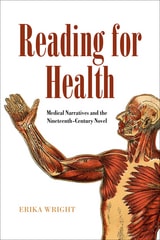
In Reading for Health: Medical Narratives and the Nineteenth-Century Novel, Erika Wright argues that the emphasis in Victorian Studies on disease as the primary source of narrative conflict that must be resolved has obscured the complex reading practices that emerge around the concept of health. By shifting attention to the ways that prevention of illness and the preservation of well-being operate in fiction, both thematically and structurally, Wright offers a new approach to reading character and voice, order and temporality, setting and metaphor. As Wright reveals, while canonical works by Austen, Brontë, Dickens, Martineau, and Gaskell register the pervasiveness of a conventional “therapeutic” form of action and mode of reading, they demonstrate as well an equally powerful investment in the achievement and maintenance of “health”—what Wright refers to as a “hygienic” narrative—both in personal and domestic conduct and in social interaction of the individual within the community.
Reflections on the Pandemic
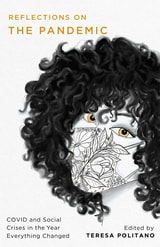
COVID and Social Crises in the Year Everything ChangedTeresa Politano
Rutgers University Press, 2024
Contributors include: Patricia Akhimie, Marc Aronson, Ulla D. Berg, Stephanie Bonne, Stephanie Boyer, Kimberly Camp, Jordan Casteel, Kelly-Jane Cotter, Mark Doty, David Dreyfus, Adrienne E. Eaton, Katherine C. Epstein, Leah Falk, Paul G. Falkowski, Rigoberto González, James Goodman, David Greenberg, Angelique Haugerud, Grace Lynne Haynes, Leslieann Hobayan, Jonathan Holloway, James W. Hughes, Naomi Jackson, Amy Jordan, Vikki Katz, Mackenzie Kean, Robert E. Kopp, Christian Lighty, Stephen Masaryk, Louis P. Masur, Revathi V. Machan, Yalidy Matos, Belinda McKeon, Susan L. Miller, Yehoshua November, Joyce Carol Oates, Mary E. O’Dowd, Katherine Ognyanova, David Orr, Gregory Pardlo, Steve Pikiell, Teresa Politano, en Purkert, Nick Romanenko, Evie Shockley, Caridad Svich, and Didier William.
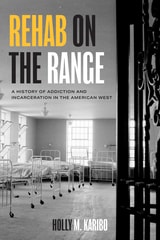
Rehab on the Range
A History of Addiction and Incarceration in the American WestHolly M. Karibo
University of Texas Press, 2024
2026 Texas Christian University (TCU) Texas Book Award Winner
2025 Coral Horton Tullis Memorial Prize, Texas State Historical Association
2025 Outstanding Academic Title, CHOICE
The first study of the Fort Worth Narcotic Farm, an institution that played a critical role in fusing the War on Drugs, mass incarceration, and public health in the American West.
In 1929, the United States government approved two ground-breaking and controversial drug addiction treatment programs. At a time when fears about a supposed rise in drug use reached a fevered pitch, the emergence of the nation’s first “narcotic farms” in Fort Worth, Texas, and Lexington, Kentucky, marked a watershed moment in the treatment of addiction. Rehab on the Range is the first in-depth history of the Fort Worth Narcotic Farm and its impacts on the American West. Throughout its operation from the 1930s to the 1970s, the institution was the only federally funded drug treatment center west of the Mississippi River. Designed to blend psychiatric treatment, physical rehabilitation, and vocational training, the Narcotic Farm, its proponents argued, would transform American treatment policies for the better. The reality was decidedly more complicated.
Holly M. Karibo tells the story of how this institution—once framed as revolutionary for addiction care—ultimately contributed to the turn towards incarceration as the solution to the nation’s drug problem. Blending an intellectual history of addiction and imprisonment with a social history of addicts’ experiences, Rehab on the Range provides a nuanced picture of the Narcotic Farm and its cultural impacts. In doing so, it offers crucial historical context that can help us better understand our current debates over addiction, drug policy, and the rise of mass incarceration.
Remaking the Urban Social Contract
Health, Energy, and the EnvironmentEdited by Michael A. Pagano
University of Illinois Press, 2016
Contributors: Alba Alexander, Megan Houston, Dennis R. Judd, Cynthia Klein-Banai, William C. Kling, Howard A. Learner, David A. McDonald, David C. Perry, Emily Stiehl, Anthony Townsend, Natalia Villamizar-Duarte, and Moira Zellner.
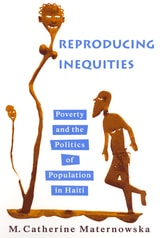
Reproducing Inequities
Poverty and the Politics of Population in HaitiMaternowska, M. Catherine
Rutgers University Press, 2006
Residents of Haiti-one of the poorest and most unstable countries in the world-face a grim reality of starvation, violence, lack of economic opportunity, and minimal health care. For years, aid organizations have sought to alleviate the problems by creating health and family planning clinics, including one modern (and, by local standards, luxurious) center in the heart of Cit Soleil. During its height of service in the 1980s and 1990s, the clinic boasted nineteen staff members, an array of modern contraceptives, an accessible location, and convenient hours-but very few clients.
Why did this initiative fail so spectacularly despite surveys finding that residents would like to have fewer children? Why don't poor women heed the message of family planning, when smaller families seem to be in their best interest? In Reproducing Inequities, M. Catherine Maternowska argues that we too easily overlook the political dynamics that shape choices about family planning. Through a detailed study of the attempt to provide modern contraception in the community of Cit Soleil, Maternowska demonstrates the complex interplay between local and global politics that so often thwarts well-intended policy initiatives.
Medical anthropologists, she argues, have an important role to play in developing new action plans for better policy implementation. Ethnographic studies in desperate, dangerous locations provide essential data that can point the way to solutions for the dilemmas of contraception in poor communities worldwide.
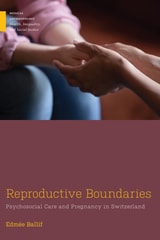
Reproductive Boundaries
Psychosocial Care and Pregnancy in SwitzerlandEdmée Ballif
Rutgers University Press, 2026
Reproductive Boundaries examines the shifting boundaries of prenatal care in Switzerland, focusing on the Pregnancy Support Center's innovative psychosocial model. By redefining the territory of care, the Center extends its reach beyond the medical domain, exemplifying the reproductivization of life, the increasing organization of various life aspects through a reproductive lens. The book explores how this approach challenges traditional borders between medical and psychosocial care, offering an alternative to Switzerland's heavily medicalized reproductive care. Through ethnographic insights into reproductive talk, it reveals how psychosocial advisors shift the boundaries of reproductive care, balancing support with broader state goals of reproductive governance. Set against Switzerland's history of stratified reproductive policies, the study critically examines how psychosocial care reshapes the landscape of pregnancy, raising questions about surveillance and evolving gender roles. This thought-provoking work invites readers to reconsider the limits and possibilities of care in a fragmented society.
This book is also freely available online as an open access digital edition. (https://www.rutgersuniversitypress.org/media/wysiwyg/documents/Reproductive_Boundaries_PDF.pdf)
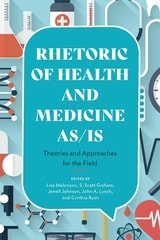
Rhetoric of Health and Medicine As/Is
Theories and Approaches for the FieldEdited by Lisa Melonçon, S. Scott Graham, Jenell Johnson, John A. Lynch, and Cynthia Ryan
The Ohio State University Press, 2020
With a foreword by Judy Segal and in sections that address interdisciplinary perspectives, representations of health and illness in online spaces, and health activism and advocacy, this volume proceeds in a unique format: essays tackle these key topic areas through case studies ranging from food and its relation to public health, to apps that track fertility, to mental health and disability, to racial disparities that exist in public health campaigns about sudden infant death syndrome (SIDS). The essays within each section are then followed by responses from prominent scholars in the rhetoric of health and medicine—including John Lyne, J. Blake Scott, and Lisa Keränen—who take on the central theme and discuss how the theory or concept under study can and should evolve in the next stages of research. Unifying the essays is a consideration of RHM as a theoretical construct guiding research and thinking alongside the conceptual parameters that constitute what RHM is and can be in practice. In asking questions about the role of rhetoric—both as analytic and productive framework—in health and medicine, this volume engages with broader theoretical and ethical concerns about our current healthcare system and how healthcare and medical issues circulate in all the social, cultural, economic, and political aspects of our world.
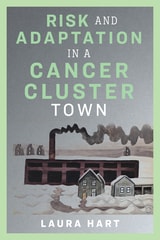
Risk and Adaptation in a Cancer Cluster Town
Laura Hart
Rutgers University Press, 2023
In Risk and Adaptation in a Cancer Cluster Town, Laura Hart examines another understudied dimension of community inaction: the role of emotion and its relationship to community experiences of social belonging and inequality. Using a cancer cluster community in Northwest Ohio as a case study, Hart advances an approach to risk that grapples with the complexities of community belonging, disconnect, and disruption in the wake of suspected industrial pollution. Her research points to a fear driven not only by economic anxiety, but also by a fear of losing security within the community—a sort of pride that is not only about status, but connectedness. Hart reveals the importance of this social form of risk—the desire for belonging and the risk of not belonging—ultimately arguing that this is consequential to how people make judgements and respond to issues. Within this context where the imperative for self-protection is elusive, affected families experience psychosocial and practical conflicts as they adapt to cancer as a way of life. Considering a future where debates about risk and science will inevitably increase, Hart considers possibilities for the democratization of risk management and the need for transformative approaches to environmental justice.

Romancing the Sperm
Shifting Biopolitics and the Making of Modern FamiliesDiane Tober
Rutgers University Press, 2019
In Romancing the Sperm, Diane Tober explores the intersections between sperm donation and the broader social and political environment in which “modern families” are created and regulated. Through tangible and intimate stories, this book provides a captivating read for anyone interested in family and kinship, genetics and eugenics, and how ever-expanding assisted reproductive technologies continue to redefine what it means to be human.

Rubbish Theory
The Creation and Destruction of Value - New EditionMichael Thompson
Pluto Press, 2017
When his highly influential Rubbish Theory, first published in 1979, Michael Thompson launched the discipline of waste studies. It remains the most comprehensive analysis on the culture of waste to date. Thompson argues that there are two mutually exclusive cultural categories that are socially imposed on the world of objects: a transient category and a durable category. However, he identifies a region of flexibility, wherein a transient object that declines in value and life span can linger in a valueless and timeless limbo of rubbish, until it is discovered by a creative individual and transferred into something deemed durable. He links stability and change on one hand, with materiality on the other, providing a rich analysis of social and cultural dynamics. His instrumental theory of rubbish draws on case studies and anthropological fieldwork to highlight the ever-changing subtleties of object value and our complex relationship to waste.
Bringing Rubbish Theory back into print, this updated edition includes a new introduction, preface, foreword, and afterword, thoroughly exploring how Thompson’s key theories have affected our world in the four decades since it was first published and placing it in a contemporary context that shines light on the continued relevance of the book today.
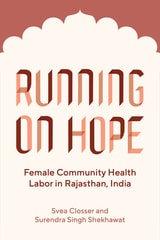
Running on Hope
Female Community Health Labor in Rajasthan, IndiaSvea Closser and Surendra Singh Shekhawat
Vanderbilt University Press, 2025
This book is freely available in an open-access edition thanks to the generous support of Johns Hopkins University.
Throughout India, Accredited Social Health Activists (ASHAs) visit households in their communities to deliver essential health services and link community members with key health benefits. Like many other female Community Health Workers across the world, ASHAs are often portrayed as virtuous, passive volunteers, selflessly providing services to their neighbors.
The reality is more complicated and much more interesting. Drawing on ethnographic work in Rajasthan, Running on Hope follows ASHAs through striking personal transformations. From their positions as rural daughters‑in‑law—a particularly low‑power position in Rajasthan—ASHAs have, over years of work, gained unprecedented autonomy for young rural women. They have also gained a deep understanding of what many argue is the exploitation involved in their low‑ranking position in the health system. ASHAs often earn less than $100 per month for extensive work, well below the legal minimum wage.
To counter this, many ASHAs have joined unions—an endeavor that has ultimately proven disappointing: union leaders’ desires for political advancement are often at odds with ASHAs’ own needs. However, ASHAs do not have connections, money, or social power to organize effectively on their own, without a political patron. In Running on Hope, authors Svea Closser and Surendra Singh Shekhawat interview women who work as ASHAs to learn about their organizing goals, their roles in their community as conduits to health education and resources, and their hopes for a better future.