Results by title
78 books match the query 'Diseases' and 2 start with r
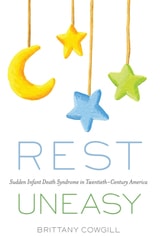
Rest Uneasy
Sudden Infant Death Syndrome in Twentieth-Century AmericaCowgill, Brittany
Rutgers University Press, 2018
Tracing the Sudden Infant Death Syndrome (SIDS) diagnosis from its mid-century origins through the late 1900s, Rest Uneasy investigates the processes by which SIDS became both a discrete medical enigma and a source of social anxiety construed differently over time and according to varying perspectives. American medicine reinterpreted and reconceived of the problem of sudden infant death multiple times over the course of the twentieth century. Its various approaches linked sudden infant deaths to all kinds of different causes—biological, anatomical, environmental, and social. In the context of a nation increasingly skeptical, yet increasingly expectant, of medicine, Americans struggled to cope with the paradoxes of sudden infant death; they worked to admit their powerlessness to prevent SIDS even while they tried to overcome it. Brittany Cowgill chronicles and assesses Americans’ fraught but consequential efforts to explain and conquer SIDS, illuminating how and why SIDS has continued to cast a shadow over doctors and parents.
[more]
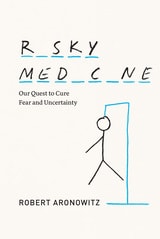
Risky Medicine
Our Quest to Cure Fear and UncertaintyRobert Aronowitz
University of Chicago Press, 2015
Will ever-more sensitive screening tests for cancer lead to longer, better lives? Will anticipating and trying to prevent the future complications of chronic disease lead to better health? Not always, says Robert Aronowitz in Risky Medicine. In fact, it often is hurting us.
Exploring the transformation of health care over the last several decades that has led doctors to become more attentive to treating risk than treating symptoms or curing disease, Aronowitz shows how many aspects of the health system and clinical practice are now aimed at risk reduction and risk control. He argues that this transformation has been driven in part by the pharmaceutical industry, which benefits by promoting its products to the larger percentage of the population at risk for a particular illness, rather than the smaller percentage who are actually affected by it. Meanwhile, for those suffering from chronic illness, the experience of risk and disease has been conflated by medical practitioners who focus on anticipatory treatment as much if not more than on relieving suffering caused by disease. Drawing on such controversial examples as HPV vaccines, cancer screening programs, and the cancer survivorship movement, Aronowitz argues that patients and their doctors have come to believe, perilously, that far too many medical interventions are worthwhile because they promise to control our fears and reduce uncertainty.
Risky Medicine is a timely call for a skeptical response to medicine’s obsession with risk, as well as for higher standards of evidence for risk-reducing interventions and a rebalancing of health care to restore an emphasis on the actual curing of and caring for people suffering from disease.
[more]