108 books match the query 'Diseases & Conditions' and 3 start with r
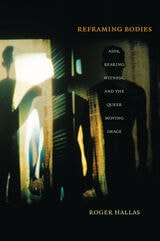
cover of Reframing Bodies: AIDS, Bearing Witness, and the Queer Moving Image

Reframing Bodies

AIDS, Bearing Witness, and the Queer Moving Image

Roger Hallas

Duke University Press, 2009

In Reframing Bodies, Roger Hallas illuminates the capacities of film and video to bear witness to the cultural, political, and psychological imperatives of the AIDS crisis. He explains how queer films and videos made in response to the AIDS epidemics in North America, Europe, Australia, and South Africa challenge longstanding assumptions about both historical trauma and the politics of gay visibility. Drawing on a wide range of works, including activist tapes, found footage films, autobiographical videos, documentary portraits, museum installations, and even film musicals, Hallas reveals how such “queer AIDS media” simultaneously express both immediacy and historical consciousness. Queer AIDS media are neither mere ideological critiques of the dominant media representation of homosexuality and AIDS nor corrective attempts to produce “positive images” of people living with HIV/AIDS. Rather, they perform complex, mediated acts of bearing witness to the individual and collective trauma of AIDS.

Challenging the entrenched media politics of who gets to speak, how, and to whom, Hallas offers a bold reconsideration of the intersubjective relations that connect filmmakers, subjects, and viewers. He explains how queer testimony reframes AIDS witnesses and their speech through its striking combination of direct address and aesthetic experimentation. In addition, Hallas engages recent historical changes and media transformations that have not only displaced queer AIDS media from activism to the archive, but also created new witnessing dynamics through the logics of the database and the remix. Reframing Bodies provides new insight into the work of Gregg Bordowitz, John Greyson, Derek Jarman, Matthias Müller, and Marlon Riggs, and offers critical consideration of important but often overlooked filmmakers, including Jim Hubbard, Jack Lewis, and Stuart Marshall.
[more]
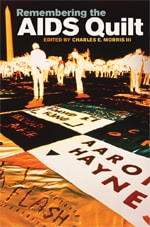
cover of Remembering the AIDS Quilt

Remembering the AIDS Quilt

Charles E. Morris III

Michigan State University Press, 2011
A collaborative creation unlike any other, the Names Project Foundation’s AIDS Memorial Quilt has played an invaluable role in shattering the silence and stigma that surrounded the epidemic in the first years of its existence. Designed by Cleve Jones, the AIDS Quilt is the largest ongoing community arts project in the world. Since its conception in 1987, the Quilt has transformed the cultural and political responses to AIDS in the U.S. Representative of both marginalized and mainstream peoples, the Quilt contains crucial material and symbolic implications for mourning the dead, and the treatment and prevention of AIDS. However, the project has raised numerous questions concerning memory, activism, identity, ownership, and nationalism, as well as issues of sexuality, race, class, and gender. As thought-provoking as the Quilt itself, this diverse collection of essays by ten prominent rhetorical scholars provides a rich experience of the AIDS Quilt, incorporating a variety of perspectives, critiques, and interpretations.
[more]
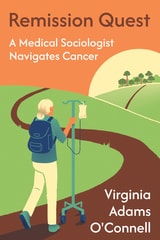
cover of Remission Quest: A Medical Sociologist Navigates Cancer

Remission Quest

A Medical Sociologist Navigates Cancer

Virginia Adams O’Connell

Temple University Press, 2025

As a medical sociologist, Virginia Adams O’Connell long studied the healthcare system and people navigating illness. Then, in 2019, she confronted her own reality of being diagnosed with primary bone lymphoma. “Since my diagnosis, I joined a club of current and past patients that I never wanted or intended to join,” she writes with both candor and poignancy, adding, “But we can collectively work to make it the best club it can be.”

In the course of diagnosis, treatment, and recovery, Adams O’Connell lived through theories she had researched and applied her sociological ideas to help make sense of her personal experiences. Remission Quest chronicles how the reality of living with cancer changed her perspective on what she had studied. Adams O’Connell found her knowledge illustrated and enriched her sociological analysis of our medical institutions and that her own illness narrative shone new light on her theories.

With moving prose, Remission Quest captures the emotions of having cancer and dealing with elaborate medical systems, learning how to be a “good patient” while also managing indescribable fear and fatigue, and confronting questions about the meaning of life. Adams O’Connell’s experiences are both personal and universal. They provide inspiration, compassion, and understanding.
[more]