Results by title
447 books match the query 'Eastern' and 21 start with r
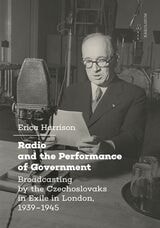
Radio and the Performance of Government
Broadcasting by the Czechoslovaks in Exile in London, 1939–1945Erica Harrison
Karolinum Press, 2023
Between 1939 and 1945, Czechoslovakia disappeared from the maps, existing only as an imagined ‘free republic’ on the radio waves. Following the German invasion and annexation of Bohemia and Moravia and the declaration of independence by Slovakia on 15 March 1939, the Czechoslovak Republic was gone. From their position in exile in wartime London, former Czechoslovak President Edvard Beneš and the government that formed around him depended on radio to communicate with the public they strove to represent. The broadcasts made by government figures in London enabled a performance of authority to impress their hosts, allies, occupying enemies, and claimed constituents.
This book examines this government program for the first time, making use of previously unstudied archival sources to examine how the exiles understood their mission and how their propaganda work was shaped by both British and Soviet influences. This study assesses the strengths, weaknesses, and limitations of the government’s radio propaganda as they navigated the complexities of exile, with chapters examining how they used the radio to establish their authority, how they understood the past and future of the Czechoslovak nation, and how they struggled to include Slovakia and Subcarpathian Ruthenia within it.
Re/imaginations of Disability in State Socialism
Visions, Promises, FrustrationsEdited by Katerina Kolárová and Martina Winkler
Campus Verlag, 2021
In Re/imaginations of Disability in State Socialism, an interdisciplinary group of scholars examines how disability has been conceptualized and treated in socialist states throughout global history. Drawing on intersectional theories that set disability in conversation with other identity categories such as race, age, gender, and sexuality, this book offers a unique approach to this crucial issue.
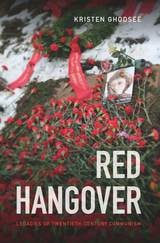
Red Hangover
Legacies of Twentieth-Century CommunismKristen Ghodsee
Duke University Press, 2017
Redefining Russian Literary Diaspora, 1920–2020
Edited by Maria Rubins
University College London, 2021
Since the start of the massive post-revolutionary exodus, Russian literature has thrived in multiple locations around the globe—but what happens to cultural vocabularies, politics of identity, literary canon, and language when writers transcend the metropolitan and national boundaries? This volume sets a new agenda for the study of Russian diaspora writing, reorienting the field from an excessive emphasis on the homeland to an analysis of transnational circulations that shape extraterritorial cultural practices. Integrating a variety of conceptual perspectives, ranging from diaspora and postcolonial studies to the theories of translation and self-translation, world literature, and evolutionary literary criticism, the contributors argue for a distinct nature of diasporic literary expression predicated on hybridity, ambivalence, and a sense of multiple belonging. As the complementary case studies demonstrate, diaspora narratives consistently recode historical memory, contest the mainstream discourses of Russianness, rewrite received cultural tropes, and explore topics that have remained marginal or taboo in the homeland.
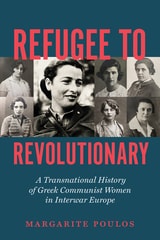
Refugee to Revolutionary
A Transnational History of Greek Communist Women in Interwar EuropeMargarite Poulos
Vanderbilt University Press, 2024
Refugee to Revolutionary examines the national and transnational world the female cadres of the Greek communist movement traversed, situated between their own aspirations, the objectives of the Greek Communist Party (KKE), and the global ambitions of the Comintern. Drawing largely on data contained in the individual files (anketas) of the KKE cadres located in the Comintern archive at the Russian State Archive for Socio-Political History (RGASPI), as well as Greek Communist Party archival materials, this history is told largely in the voice, albeit the “official” voice, of the subjects themselves. These voices reveal much about the personal, cultural, social, and gendered dimensions of their experience. They convey a story of opportunity and sacrifice and the sense of being part of something historic and extraordinary.
The overarching purpose of this book is two-pronged: The first is to address a historiographical void attributable to a combination of factors, which includes the inaccessibility of Soviet archival materials and a persistent hegemonic masculinity that continues to define the historiography of Greek communism. Second, this work is situated within a new literature represented by scholars such as Brigitte Studer, Lisa Kirschenbaum, Francisca De Haan, and others, which destabilizes Cold War paradigms that have long dominated evaluations of agency, identity, and subjectivity in the Western historiography of communism.
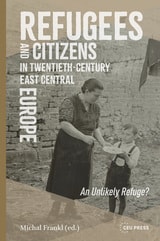
Refugees and Citizens in Twentieth-Century East Central Europe
An Unlikely Refuge?Michal Frankl
Central European University Press, 2026
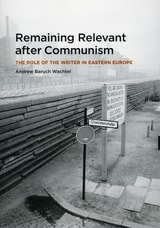
Remaining Relevant after Communism
The Role of the Writer in Eastern EuropeAndrew Baruch Wachtel
University of Chicago Press, 2005
According to Andrew Baruch Wachtel, the fall of the Berlin Wall and the creation of fledgling societies in Eastern Europe brought an end to the conditions that put the region's writers on a pedestal. In the euphoria that accompanied democracy and free markets, writers were liberated from the burden of grandiose political expectations. But no group is happy to lose its influence: despite recognizing that their exalted social position was related to their reputation for challenging political oppression, such writers have worked hard to retain their status, inventing a series of new strategies for this purpose. Remaining Relevant after Communism considers these strategies—from pulp fiction to public service—documenting what has happened on the East European scene since 1989.
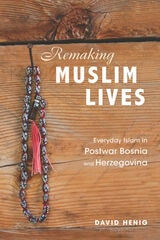
Remaking Muslim Lives
Everyday Islam in Postwar Bosnia and HerzegovinaDavid Henig
University of Illinois Press, 2020
Provocative and laden with eyewitness detail, Remaking Muslim Lives offers a rare sustained look at what it means to be Muslim and live a Muslim life in contemporary Bosnia and Herzegovina.
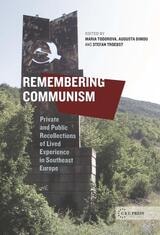
Remembering Communism
Private and Public Recollections of Lived Experience in Southeast EuropeContributors: Simina Bădica, Iskra Baeva, Tanya Boneva, Corina Cimpoieru, Liliana Deyanova, Albena Hranova, Nataliya Hristova, Petya Kabakchieva, Evgenia Kalinova, Anny Kirilova, Thomas Lindenberger, Tamás Lőnhárt, Izabella Main, Tsvetana Manova, Iliiana Marcheva, Vasil Markov, Andi Mihalache, Cătălina Mihalache, Milla Mineva, Cristina Petrescu, Dragoş Petrescu, Vania Stoyanova, Virgiliu Ţârău, Nikolai Vukov, Smaranda Vultur
Central European University Press, 2014
Remembering Communism examines the formation and transformation of the memory of communism in the post-communist period. The majority of the articles focus on memory practices in the post-Stalinist era in Bulgaria and Romania, with occasional references to the cases of Poland and the GDR. Based on an interdisciplinary approach, including history, anthropology, cultural studies and sociology, the volume examines the mechanisms and processes that influence, determine and mint the private and public memory of communism in the post-1989 era. The common denominator to all essays is the emphasis on the process of remembering in the present, and the modalities by means of which the present perspective shapes processes of remembering, including practices of commemoration and representation of the past.
The volume deals with eight major thematic blocks revisiting specific practices in communism such as popular culture and everyday life, childhood, labor, the secret police, and the perception of “the system”.
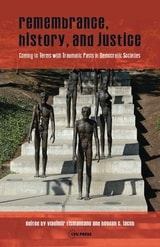
Remembrance, History, and Justice
Coming to terms with traumatic pasts in democratic societiesBogdan C. Iacob
Central European University Press, 2015
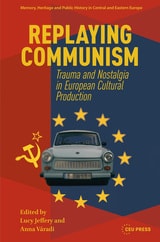
Replaying Communism
Trauma and Nostalgia in European Cultural ProductionLucy Jeffery
Central European University Press, 2026
The volume adopts an interdisciplinary approach to extend debates on the lasting impact of the communist era across Central and Eastern Europe with chapters thematically threaded through concepts including curation, immersion, interaction, humor and authenticity. A ‘trauma/nostalgia paradigm’ emerges as the tissue connecting the plurality of post-communist efforts employed to address the region’s contested pasts. Twelve original essays by contributors from both ‘inside’ and ‘outside’ the region detail how twenty-first-century cultural productions reengage the communist past. The impact of this past is seen as fundamental to understanding and shaping Central and Eastern European identities.
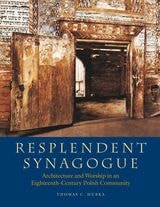
Resplendent Synagogue
Architecture and Worship in an Eighteenth-Century Polish CommunityThomas C. Hubka
Brandeis University Press, 2022
Thomas C. Hubka, an architectural historian, immersed himself in medieval and early modern Jewish history, religion, and culture to prepare for this remarkable study of the eighteenth-century Polish synagogue in the town of Gwozdziec, now in present-day Ukraine. Because the Gwozdziec Synagogue, like so many others, was destroyed by the Nazis, this book revives a spiritual community lost to history. Hubka selected the Gwozdziec Synagogue because of the completeness of its photographic and historical records. Graced with nearly two hundred historical photographs, architectural drawings, maps, diagrams, and color illustrations, Resplendent Synagogue vividly recreates the spiritual heart of a once-vibrant Jewish population. Hubka demonstrates that while the architectural exterior of the synagogue was largely the product of non-Jewish, regional influences, the interior design and elaborate wall-paintings signified a distinctly Jewish art form. The collaboration of Jewish and Gentile builders, craftsmen, and artists in the creation of this magnificent wooden structure attests to an eighteenth-century period of relative prosperity and communal well-being for the Jews of Gwozdziec. Part of a tradition that was later abandoned by Eastern European Jewish communities in the nineteenth and twentieth centuries, this truly resplendent synagogue exemplified a high point in Jewish architectural art and religious painting.
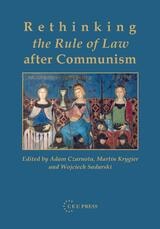
Rethinking the Rule of Law after Communism
Wojciech Sadurski
Central European University Press, 2005

Retuning Culture
Musical Changes in Central and Eastern EuropeMark Slobin
Duke University Press, 1996
During the period of state socialism, both the reinterpretation of the folk music heritage and the domestication of Western forms of music offered ways to resist and redefine imposed identities. With the removal of state control and support, music was free to channel and to shape emerging forms of cultural identity. Stressing both continuity and disjuncture in a period of enormous social and cultural change, this volume focuses on the importance and evolution of traditional and popular musics in peasant communities and urban environments in Hungary, Poland, Romania, Russia, the Czech Republic, Ukraine, the former Yugoslavia, Macedonia, and Bulgaria. Written by longtime specialists in the region and considering both religious and secular trends, these essays examine music as a means of expressing diverse aesthetics and ideologies, participating in the formation of national identities, and strengthening ethnic affiliation.
Retuning Culture provides a rich understanding of music’s role at a particular cultural and historical moment. Its broad range of perspectives will attract readers with interests in cultural studies, music, and Central and Eastern Europe.
Contributors. Michael Beckerman, Donna Buchanan, Anna Czekanowska, Judit Frigyesi, Barbara Rose Lange, Mirjana Lausevic, Theodore Levin, Margarita Mazo, Steluta Popa, Ljerka Vidic Rasmussen, Timothy Rice, Carol Silverman, Catherine Wanner
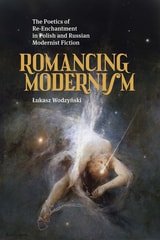
Romancing Modernism
The Poetics of Re-Enchantment in Polish and Russian Modernist FictionLukasz Wodzynski
University of Wisconsin Press, 2026
In the development of modernist fiction, perhaps no artistic product has had as vaunted a place as the novel, a genre theorized primarily with recourse to Western authors. Here, Łukasz Wodzyński challenges the primacy of the novel as the organizing principle of modernist prose in East-Central Europe, particularly in Poland and Russia. By carefully studying some of the most innovative texts in Polish and Russian from the early twentieth century, Wodzyński posits that the “novel” genre has hindered our understanding of long modernist narratives.
Instead, he proposes to read these pathbreaking works as a twentieth-century reclamation of the romance. Specifically, he argues that these latter-day romances channel early modernist apocalyptic and utopian ideals through popular genres like science fiction and adventure narratives—and thus imagine a human future freed from modern fixations on control, efficiency, and utility. The romance form, he suggests, was uniquely poised to address the deep civilizational anxieties underwriting modernist literary publications in East-Central Europe. Understanding these works and the ways in which they spoke to these anxieties thus informs not only the study of Polish and Russian literature but also the development of modernism itself.
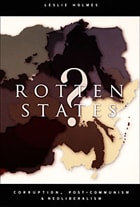
Rotten States?
Corruption, Post-Communism, and NeoliberalismLeslie Holmes
Duke University Press, 2006
Drawing on data including surveys commissioned especially for this study, Holmes examines the causes and consequences of official corruption as well as ways of combating it. He focuses particular attention on the timing of the recent increase in reports of corruption, the relationship between post-communism and corruption, and the interplay between corruption and the delegitimation and weakening of the state. Holmes argues that the global turn toward neoliberalism—with its focus on ends over means, flexibility, and a reduced role for the state—has generated much of the corruption in post-communist states. At the same time, he points out that neoliberalism is perhaps the single most powerful tool for overcoming the communist legacy, which is an even more significant cause of corruption. Among the conclusions that Holmes draws is that a strong democratic state is needed in the early stages of the transition from communism in order to prevent corruption from taking hold.
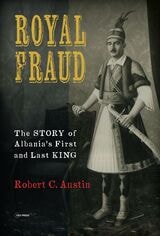
Royal Fraud
The Story of Albania’s First and Last KingRobert Austin
Central European University Press, 2024
Beginning its narrative in 1961, when Albanian King Zog I died in a Paris hospital after 22 years in exile, this book tells the colourful story of this Balkan country's first and only monarch. The road to becoming Europe's youngest president in 1925 and then king of Albania in 1928 was paved with feuds and assassinations, a political career-path common in the region. He craved the throne for several reasons; the Balkans were mostly run by kings, and Zog wanted to impress his mother and also give his six sisters an easy social rise.
Once king, his accomplishments were decidedly meagre. He spent most of his time keeping up appearances as a monarch despite the obvious fraud he had imposed on an illiterate and uninterested population. His one great success was that he had almost all his opponents assassinated, usually in broad daylight abroad.
Zog retained his power until his "friend" Mussolini ousted him in 1939. On the surface a Westernizer, this self-proclaimed ruler left Albania almost as he found it, with almost no roads or trains, thoroughly uneducated and utterly impoverished.
In his book, Robert Austin combines Zog’s adventurous life story with a studious analysis of Albania's political history from the fall of the Ottoman Empire to the threshold of Euro-Atlantic integration.
Rudolf
Marian Pankowski
Northwestern University Press, 1996
Russia on the Danube
Empire, Elites, and Reform in Moldavia and Wallachia, 1812–1834Victor Taki
Central European University Press, 2021
One of the goals of Russia’s Eastern policy was to turn Moldavia and Wallachia, the two Romanian principalities north of the Danube, from Ottoman vassals into a controllable buffer zone and a springboard for future military operations against Constantinople. Russia on the Danube describes the divergent interests and uneasy cooperation between the Russian officials and the Moldavian and Wallachian nobility in a key period between 1812 and 1834. Victor Taki’s meticulous examination of the plans and memoranda composed by Russian administrators and the Romanian elite underlines the crucial consequences of this encounter. The Moldavian and Wallachian nobility used the Russian-Ottoman rivalry in order to preserve and expand their traditional autonomy. The comprehensive institutional reforms born out of their interaction with the tsar’s officials consolidated territorial statehood on the lower Danube, providing the building blocks of a nation state.
The main conclusion of the book is that although Russian policy was driven by self-interest, and despite the Russophobia among a great part of the Romanian intellectuals, this turbulent period significantly contributed to the emergence, several decades later, of modern Romania.
Russia's Imperial Endeavor and Its Geopolitical Consequences
The Russia-Ukraine War, Volume TwoBálint Madlovics
Central European University Press, 2024
Aside from the near-complete devastation of a sovereign state and reversal of the global balance of power, the Russian invasion of Ukraine in 2022 is leading to a radical transformation in the Eastern European and Eurasian regions – including Russia itself.
The 13 chapters in this volume examine the main geopolitical consequences of the resurgent imperialist aspirations of the Russian Federation. They examine the ideological tools of history falsification as an integral part of hybrid warfare. Turning to the economy, the book discusses how the war and economic sanctions imposed on Russia are redrawing the geopolitical map and how economic relations would change following a regime transformation. The book discusses the reactions of members of the international community to the invasion, whether threatened or neutral parties or allies. The collection therefore offers a comprehensive picture of the main consequences of the resurgent imperialist aspirations of the Russian Federation. Equipped with the conceptual tools of the analysis with a focus on the patronal features of the political-economic system, the book considers the aftermath of the war. This collection complements the book entitled Ukraine. Patronal Democracy and the Russian Invasion.
Russia’s War on Ukraine and the Crisis of World Order
A Global ReaderDennis Dierks
Central European University Press, 2026