Results by title
1038 books match the query 'Economic conditions' and 38 start with r
RACE & THE CITY
Work, Community, and Protest in Cincinnati, 1820-1970Edited by Henry Louis Taylor, Jr.
University of Illinois Press, 1993
of black Cincinnati. These studies offer insight into both the dynamics of racism and a
community's changing responses to it." -- Peter Rachleff, author of Black Labor in
Richmond
RSF
The Russell Sage Foundation Journal of the Social Sciences: Financial Reform: Preventing the Next CrisisMichael S. Barr
Russell Sage Foundation, 2017
Several contributors evaluate the Dodd-Frank bill which mandated greater federal oversight of banks, increased regulation of credit rating agencies, and established the Consumer Financial Protection Bureau (CFPB), among other measures. Martin Baily and coauthors conclude that measures that require greater transparency and oversight in derivatives transactions have made financial institutions more resilient. Yet, the bill’s attempts to consolidate the fragmented financial regulatory system have not gone far enough.
Lauren Willis argues that instead of simply issuing disclosures, financial service providers should be required to meet more rigorous performance standards, such as proving through third-party testing that customers understand their fees and surcharges. John Macey advocates reforms that would afford home mortgage borrowers the same protections as investors in the securities market, including regulations that prevent brokers from encouraging borrowers to refinance their mortgages to collect fees.
The issue also addresses global financial regulation. Viral Achara examines the financial sectors in the U.S., Europe, and Asia, and assesses their vulnerability to capital shortfalls in the event of a future crisis. Niamh Moloney finds that institutions established in the wake of the crash, such as the European Supervisory Authorities, have improved European-level prudential and consumer financial regulations and have the potential to increase the EU’s influence in international financial governance.
The effects of the financial crisis continue to reverberate around the world today. Together, the articles in this issue document the steps necessary for creating a more robust financial system that works better for all consumers, investors and the financial system itself.
Race and Retail
Consumption across the Color LineBay, Mia
Rutgers University Press, 2015
Race, Ethnicity, and Economic Statistics for the 21st Century
Edited by Randall Akee, Lawrence F. Katz, and Mark A. Loewenstein
University of Chicago Press, 2026
Categorizing race and ethnicity for twenty-first-century statistics and economics.
The increasing racial and ethnic diversity of the US population raises the question of whether the race and ethnicity categories and definitions used by federal statistical agencies to create demographic statistics on which government officials, business decision-makers, and private citizens rely fully reflect the changing population. Official definitions of existing race and ethnic groups do not always command wide agreement, and over time, some definitions that were once widely accepted may become less so based on political, legal, and social factors. Comparable measures of race and ethnicity over time are needed to accurately track historical changes in economic and social outcomes, as well as racial and ethnic segregation.
This volume explores the production of economic statistics that accurately depict the complex racial and ethnic diversity of the US population in the twenty-first century. The chapters examine the consequences for economic analyses of different measurement choices concerning race and ethnicity, assess the likely implications of the 2024 changes in federal race and ethnicity measurement standards, introduce new data sets with richer demographic information, and compare measures of race and ethnicity in administrative versus survey data. They also apply existing data in creative ways to develop alternative characterizations of the changing US workforce and to illuminate important policy questions related to criminal justice, immigration, labor market discrimination, the social safety net, health care, and child welfare.
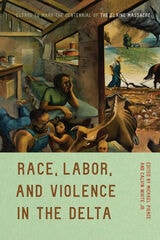
Race, Labor, and Violence in the Delta
Essays to Mark the Centennial of the Elaine MassacreMichael Pierce
University of Arkansas Press, 2022
Race, Nation, and Market
Economic Culture in Porfirian MexicoRichard Weiner
University of Arizona Press, 2004
Rebel Imaginaries
Labor, Culture, and Politics in Depression-Era CaliforniaElizabeth E. Sine
Duke University Press, 2021
Reconfiguring Racial Capitalism
South Africa in the Chinese CenturyMingwei Huang
Duke University Press, 2024
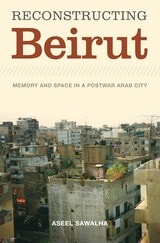
Reconstructing Beirut
Memory and Space in a Postwar Arab CityBy Aseel Sawalha
University of Texas Press, 2010
Once the cosmopolitan center of the Middle East, Beirut was devastated by the civil war that ran from 1975 to 1991, which dislocated many residents, disrupted normal municipal functions, and destroyed the vibrant downtown district. The aftermath of the war was an unstable situation Sawalha considers "a postwar state of emergency," even as the state strove to restore normalcy. This ethnography centers on various groups' responses to Beirut's large, privatized urban-renewal project that unfolded during this turbulent moment.
At the core of the study is the theme of remembering space. The official process of rebuilding the city as a node in the global economy collided with local day-to-day concerns, and all arguments invariably inspired narratives of what happened before and during the war. Sawalha explains how Beirutis invoked their past experiences of specific sites to vie for the power to shape those sites in the future. Rather than focus on a single site, the ethnography crosses multiple urban sites and social groups, to survey varied groups with interests in particular spaces. The book contextualizes these spatial conflicts within the discourses of the city's historical accounts and the much-debated concept of heritage, voiced in academic writing, politics, and journalism. In the afterword, Sawalha links these conflicts to the social and political crises of early twenty-first-century Beirut.

Reconstructing Chinatown
Ethnic Enclave, Global ChangeJan Lin
University of Minnesota Press, 1998
An exploration of this fascinating community as a window on globalization.
In the American popular imagination, Chinatown is a mysterious and dangerous place, clannish and dilapidated, filled with sweatshops, vice, and organized crime. In this well-written and engaging volume, Jan Lin presents a real-world picture of New York City’s Chinatown, countering this “orientalist” view by looking at the human dimensions and the larger forces of globalization that make this vital neighborhood both unique and broadly instructive.
Using interviews with residents, firsthand observation, archival research, and U.S. census data, Lin delivers an informed, reliable picture of Chinatown today. Lin claims that to understand contemporary ethnic neighborhoods like this one we must dispense with notions of monolithic “community.” When he looks at Chinatown, Lin sees a neighborhood that is being rebuilt, both literally and economically. Rather than a clannish and unified peer group, he sees substantial class inequality and internal social conflict. There is also social change, most visibly manifested in dramatic episodes of collective action by sweatshop workers and community activists and in the growing influence of Chinatown’s denizens in electoral politics. Popular portrayals of Chinatown also reflect a new global reality: as American cities change with the international economy, traditional assumptions about immigrant incorporation into U.S. society alter as well. Lin describes the public disquiet and official response regarding immigration, sweatshops, and the influx of Asian capital. He outlines the ways that local, state, and federal governments have directed and gained from globalization in Chinatown through banking deregulation and urban redevelopment policy. Finally, Lin puts forth Chinatown as a central enclave in the “world city” of New York, arguing that globalization brings similar structural processes of urban change to diverse locations. In the end, Lin moves beyond the myth of Chinatown, clarifying the meaning of globalization and its myriad effects within the local context.
Redeeming Objects
A West German MythologyNatalie Scholz
University of Wisconsin Press, 2023
Postwar advertising, film, and print culture sought to divest mass-produced goods—such as the Volkswagen and modern interiors—of their fascist legacies. But Scholz demonstrates that postwar representations were saturated with unacknowledged references to the Nazi past. Drawing on a vast array of popular and highbrow publications and films, Redeeming Objects adds a new perspective to debates about postwar reconstruction, memory, and consumerism.
Reform, Recovery, and Growth
Latin America and the Middle EastEdited by Rudiger Dornbusch and Sebastian Edwards
University of Chicago Press, 1994
Among the questions addressed are: What are the requirements for a stabilization policy that reduces inflation in a reasonable amount of time at an acceptable cost? What are the effects of structural reforms, especially trade liberalization, deregulation, and privatization, on growth in the short and long runs? How do macroeconomic instability and adjustment policies affect income distribution and poverty? How does the specific design of structural adjustment efforts affect results?
In this companion to Macroeconomics of Populism in Latin America, the authors confirm that macroeconomic stability has a positive effect on income distribution. The volume presents case studies that describe in detail the stabilization experiences in Brazil, Israel, Argentina, and Bolivia, and also includes discussion of Chile, Mexico, Peru, and Turkey.
Reforming the Welfare State
Recovery and Beyond in SwedenEdited by Richard B. Freeman, Birgitta Swedenborg, and Robert H. Topel
University of Chicago Press, 2010
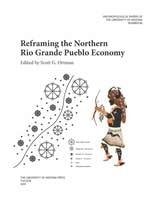
Reframing the Northern Rio Grande Pueblo Economy
Edited by Scott G. Ortman
University of Arizona Press, 2019
Economists recognize scale, agglomeration, the division of labor, international trade, and control over violence as important determinants of socioeconomic development in the modern world. But is a development framework appropriate for understanding Rio Grande archaeology? What do we learn about contemporary Pueblo culture and its resiliency when Pueblo history is viewed through this lens? What does the exercise teach us about the determinants of economic growth more generally?
The contributors in this volume argue that ideas from economics and complexity science, when suitably adapted, provide a compelling approach to the archaeological record. Contributors consider what we can learn about socioeconomic development through archaeology and explore how Pueblo culture and institutions supported improvements in the material conditions of life over time. They examine demographic patterns; the production and exchange of food, cotton textiles, pottery, and stone tools; and institutional structures reflected in village plans, rock art, and ritual artifacts that promoted peaceful exchange. They also document change through time in various economic measures and consider their implications for theories of socioeconomic development.
The archaeological record of the Northern Rio Grande exhibits the hallmarks of economic development, but Pueblo economies were organized in radically different ways than modern industrialized and capitalist economies. This volume explores the patterns and determinants of economic development in pre-Hispanic Rio Grande Pueblo society, building a platform for more broadly informed research on this critical process.
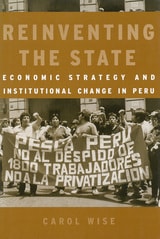
Reinventing the State
Economic Strategy and Institutional Change in PeruCarol Wise
University of Michigan Press, 2003
Remaking New York
Primitive Globalization And The Politics Of Urban CommunityWilliam Sites
University of Minnesota Press, 2003
Uses New York City to discuss the ways that policy has mismanaged the effects of globalization
Inequality increases, instability grows, communities fragment: this is the fate of a city in the wake of globalization—but is globalization really the cause? Proposing a new perspective on politics, globalization, and the city, this provocative book argues that such urban problems result in part from U.S. policies that can be changed.
William Sites develops the concept of primitive globalization, identifying a pattern of reactive politics—ad hoc measures to subsidize business, displace the urban poor, and dismantle the welfare state—that uproots social actors (corporations, citizens, urban residents) and facilitates a damaging, short-term-oriented type of international integration. In light of this theory, Sites examines the transformation of New York City since the 1970s, focusing on the logic of political action at national, local, and neighborhood levels. In the process, the story of late twentieth-century New York and its Lower East Side community emerges as something different: not a tale of globalist transformation or of local resurgence but a distinctly American case, one in which urban politics and the state, in their own right, exacerbate inequality and community fragmentation within the city.
Remittance as Belonging
Global Migration, Transnationalism, and the Quest for HomeHasan Mahmud
Rutgers University Press, 2025
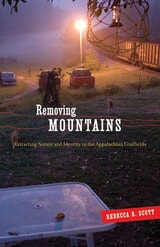
Removing Mountains
Extracting Nature and Identity in the Appalachian CoalfieldsRebecca R. Scott
University of Minnesota Press, 2010
In this rich ethnography of life in Appalachia, Scott examines mountaintop removal in light of controversy and protests from environmental groups calling for its abolishment. But Removing Mountains takes the conversation in a new direction, telling the stories of the businesspeople, miners, and families who believe they depend on the industry to survive. Scott reveals these southern Appalachian coalfields as a meaningful landscape where everyday practices and representations help shape a community's relationship to the environment.
Removing Mountains demonstrates that the paradox that faces this community-forced to destroy their land to make a wage-raises important questions related not only to the environment but also to American national identity, place, and white working-class masculinity.
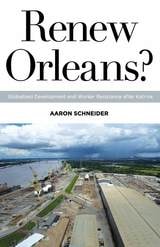
Renew Orleans?
Globalized Development and Worker Resistance after KatrinaAaron Schneider
University of Minnesota Press, 2018
Urban development after disaster, the fading of black political clout, and the onset of gentrification
Like no other American city, New Orleans since Hurricane Katrina offers powerful insight into issues of political economy in urban development and, in particular, how a city’s character changes after a disaster that spurs economic and political transition. In New Orleans, the hurricane upset an existing stalemate among rival factions of economic and political elites, and its aftermath facilitated the rise of a globally oriented faction of local capital.
In Renew Orleans? Aaron Schneider shows how some city leaders were able to access fragmented local institutions and capture areas of public policy vital to their development agenda. Through interviews and surveys with workers and advocates in construction, restaurants, shipyards, and hotel and casino cleaning, Schneider contrasts sectors prioritized during post-Katrina recovery with neglected sectors. The result is a fine-grained view of the way labor markets are structured to the advantage of elites, emphasizing how dual development produces wealth for the few while distributing poverty and exclusion to the many on the basis of race, gender, and ethnicity.
Schneider shows the way exploitation operates both in the workplace and the community, tracing working-class resistance that joins struggles for dignity at home and work. In the process, working classes and popular sectors put forth their own alternative forms of development.
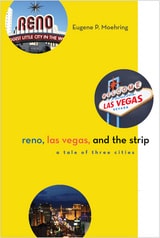
Reno, Las Vegas, and the Strip
A Tale of Three CitiesEugene P. Moehring
University of Nevada Press, 2024
Moehring brings the story of the three cities to the present day, examining lessons learned from the Great Recession and the efforts under way in all three metropolises to diversify their economies. Moehring makes an important contribution with the only current study of Nevada’s cities, focusing on urban development issues rather than social history or the gaming industry. As the service economy continues to grow, not only in Nevada but throughout the United States, Moehring’s work has many implications for urban studies and particularly the study of urban development in other metropolitan areas.
Reproducing Inequities
Poverty and the Politics of Population in HaitiMaternowska, M. Catherine
Rutgers University Press, 2006
Residents of Haiti-one of the poorest and most unstable countries in the world-face a grim reality of starvation, violence, lack of economic opportunity, and minimal health care. For years, aid organizations have sought to alleviate the problems by creating health and family planning clinics, including one modern (and, by local standards, luxurious) center in the heart of Cit Soleil. During its height of service in the 1980s and 1990s, the clinic boasted nineteen staff members, an array of modern contraceptives, an accessible location, and convenient hours-but very few clients.
Why did this initiative fail so spectacularly despite surveys finding that residents would like to have fewer children? Why don't poor women heed the message of family planning, when smaller families seem to be in their best interest? In Reproducing Inequities, M. Catherine Maternowska argues that we too easily overlook the political dynamics that shape choices about family planning. Through a detailed study of the attempt to provide modern contraception in the community of Cit Soleil, Maternowska demonstrates the complex interplay between local and global politics that so often thwarts well-intended policy initiatives.
Medical anthropologists, she argues, have an important role to play in developing new action plans for better policy implementation. Ethnographic studies in desperate, dangerous locations provide essential data that can point the way to solutions for the dilemmas of contraception in poor communities worldwide.
Research Findings in the Economics of Aging
Edited by David A. Wise
University of Chicago Press, 2010
While choices about when to retire are made by individuals, these decisions are influenced by a set of incentives, including retirement benefits and health care, and this volume includes cross-national analyses of the effects of such programs on these decisions. Furthermore, the volume also offers in-depth analysis of the effects of retirement plans, employer contributions, and housing prices on retirement. It explores well-established relationships among economic circumstances, health, and mortality, as well as the effects of poverty and lower levels of economic development on health and life satisfaction. By combining micro and macro evidence, this volume continues a tradition of expanding the research agenda on the economics of aging.
Resilient City
The Economic Impact of 9/11Howard Chernick
Russell Sage Foundation, 2005
Restructuring the Philadelphia Region
Metropolitan Divisions and InequalityCarolyn Adams, David W. Bartelt, David Elesh and Ira Goldstein with Joshua Freely Michelle Schmitt
Temple University Press, 2008
Restructuring the Philadelphia Region offers one of the most comprehensive and careful investigations written to date about metropolitan inequalities in America’s large urban regions. Moving beyond simplistic analyses of cities-versus-suburbs, the authors use a large and unique data set to discover the special patterns of opportunity in greater Philadelphia, a sprawling, complex metropolitan region consisting of more than 350 separate localities. With each community operating its own public services and competing to attract residents and businesses, the places people live offer them dramatically different opportunities.
The book vividly portrays the region’s uneven development—paying particular attention to differences in housing, employment and educational opportunities in different communities—and describes the actors who are working to promote greater regional cooperation. Surprisingly, local government officials are not prominent among those actors. Instead, a rich network of “third-sector” actors, represented by nonprofit organizations, quasi-governmental authorities and voluntary associations, is shaping a new form of regionalism.

Rethinking Pastoralism In Africa
Gender, Culture, and the Myth of the Patriarchal PastoralistDorothy L. Hodgson
Ohio University Press, 2001
The dominant trend in pastoralist studies has long assumed that pastoralism and pastoral gender relations are inherently patriarchal. The contributors to this collection, in contrast, use diverse analytic approaches to demonstrate that pastoralist gender relations are dynamic, relational, historical, and produced through complex local-translocal interactions. Combining theoretically sophisticated analysis with detailed case studies, this collection will appeal to those doing research and teaching in African studies, gender studies, anthropology, and history. Among the topics discussed are pastoralism, patriarchy, and history among Maasai in Tanganyika; women’s roles in peacemaking in Somali society; the fertility of houses and herds; gender, aging, and postchildbearing experience in a Tuareg community; and milk selling among Fulani women in Northern Burkina Faso.
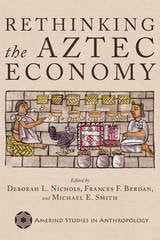
Rethinking the Aztec Economy
Edited by Deborah L. Nichols, Frances F. Berdan, and Michael E. Smith
University of Arizona Press, 2017
With its rich archaeological and historical record, the Aztec empire provides an intriguing opportunity to understand the dynamics and structure of early states and empires. Rethinking the Aztec Economy brings together leading scholars from multiple disciplines to thoroughly synthesize and examine the nature of goods and their movements across rural and urban landscapes in Mesoamerica. In so doing, they provide a new way of understanding society and economy in the Aztec empire.
The volume is divided into three parts. Part 1 synthesizes our current understanding of the Aztec economy and singles out the topics of urbanism and provincial merchant activity for more detailed analysis. Part 2 brings new data and a new conceptual approach that applies insights from behavioral economics to Nahua and Aztec rituals and social objects. Contributors also discuss how high-value luxury goods, such as feather art, provide insights about both economic and sacred concepts of value in Aztec society. Part 3 reexamines the economy at the Aztec periphery. The volume concludes with a synthesis on the scale, integration, and nature of change in the Aztec imperial economy.
Rethinking the Aztec Economy illustrates how superficially different kinds of social contexts were in fact integrated into a single society through the processes of a single economy. Using the world of goods as a crucial entry point, this volume advances scholarly understanding of life in the Aztec world.
Contributors:
Frances F. Berdan
Laura Filloy Nadal
Janine Gasco
Colin Hirth
Kenneth G. Hirth
Sarah Imfeld
María Olvido Moreno Guzmán
Deborah L. Nichols
Alan R. Sandstrom
Pamela Effrein Sandstrom
Michael E. Smith
Barbara L. Stark
Emily Umberger
Rethinking the Financial Crisis
Alan S. Blinder
Russell Sage Foundation, 2013
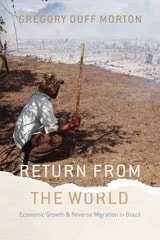
Return from the World
Economic Growth and Reverse Migration in BrazilGregory Duff Morton
University of Chicago Press, 2024
In Return from the World, anthropologist Gregory Duff Morton traces the migrations of Brazilian workers who leave a thriving labor market and return to their home villages to become peasant farmers. Morton seeks to understand what it means to turn one’s back deliberately on the promise of economic growth.
Giving up their positions in factories, at construction sites, and as domestic workers, these migrants travel thousands of miles back to villages without running water or dependable power. There, many take up subsistence farming. Some become activists with the MST, Brazil’s militant movement of landless peasants. Bringing their stories vividly to life, Morton dives into the dreams and disputes at play in finding freedom in the shared rejection of growth.
Return to Havana
The Decline of Cuban Society Under CastroMaurice Halperin
Vanderbilt University Press, 1994
Revivalism and Cultural Change
Christianity, Nation Building, and the Market in the Nineteenth-Century United StatesGeorge M. Thomas
University of Chicago Press, 1989
"Subtle and complex. . . . Fascinating."—Randolph Roth, Pennsylvania History
"[Revivalism and Cultural Change] should be read with interest by those interested in religious movements as well as the connections among religion, economics, and politics."—Charles L. Harper, Contemporary Sociology
"Readers old and new stand to gain much from Thomas's sophisticated study of the macrosociology of religion in the United States during the nineteenth century. . . . He has given the sociology of religion its best quantitative study of revivalism since the close of the 1970s."—Journal for the Scientific Study of Religion
Revolution From Without
Yucatan, Mexico, and the United States, 1880–1924Gilbert M. Joseph
Duke University Press, 1988
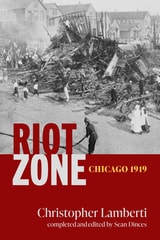
Riot Zone
Chicago 1919Christopher Lamberti, completed and edited by Sean Dinces
Temple University Press, 2027
Riot Zone presents a compelling forensic microhistory of the racial violence that exploded in Chicago starting on July 27, 1919, when a Black teenager named Eugene Williams drowned in Lake Michigan after white beachgoers attacked him as he swam with friends. In the days that followed, white gang members terrorized African Americans on the city’s South Side and Black Chicagoans armed and defended themselves in response. By the end of the first week of August, when the rioting finally ended, thirty-eight Chicagoans lay dead and hundreds nursed injuries as a result of what became known as America’s “Red Summer.”
The late Christopher Lamberti, with the help of editor Sean Dinces, recounts this sobering history using GIS software to map what occurred. The authors revisit and debunk ideas about the role race and ethnicity played in the riot and its aftermath, showing how the politics of housing and racial conflicts over residential space set the stage for the riots that ensued.
With insights that echo in today’s conflicts, Riot Zone proves that there is still plenty to learn about the history of America’s ongoing struggle with urban and racial violence.

Roman Corinth
An Alternative Model for the Classical CityDonald Engels
University of Chicago Press, 1990
Examining a wealth of archaelogical and literary evidence in light of central place theory, and using sound statistical techniques, Engels reconstructs the human geography of the Corinthia, including an estimate of the population. He shows that—given the amount of cultivatable land—rents and taxes levied onthe countryside could not have supported a highly populated city like Corinth. Neither could its inhabitants have supported themselves directly by farming.
Rather, the city constituted a thriving market for domestic, regional, and overseas raw materials, agricultural products, and manufactured goods, at the same time satisfying the needs of those who plied the various land and sea routes that converged there. Corinth provided key governmental and judicial services to the province of Achaea, and its religious festivals, temples, and monuments attracted numerous visitors from all corners of the Roman world. In accounting for the large portion of residents who participated in these various areas outside of the traditional consumer model, Engels reveals the depth and sophistication of the economics of ancient cities.
Roman Corinth is a much-needed critique of the currently dominant approach of ancient urbanism. It will be of crucial interest to scholars and students in classics, ancient history, and urban studies.

Rooster Town
The History of an Urban Métis Community, 1901–1961Evelyn Peters
University of Manitoba Press, 2018

Ross Sterling, Texan
A Memoir by the Founder of Humble Oil and Refining CompanyBy Ross S. Sterling and Ed Kilman
University of Texas Press, 2007
Born on a farm near Anahuac, Texas, in 1875 and possessed of only a fourth-grade education, Ross Sterling was one of the most successful Texans of his generation. Driven by a relentless work ethic, he become a wealthy oilman, banker, newspaper publisher, and, from 1931 to 1933, one-term governor of Texas. Sterling was the principal founder of the Humble Oil and Refining Company, which eventually became the largest division of the ExxonMobil Corporation, as well as the owner of the Houston Post.
Eager to "preserve a narrative record of his life and deeds," Ross Sterling hired Ed Kilman, an old friend and editorial page editor of the Houston Post, to write his biography. Though the book was nearly finished before Sterling's death in 1949, it never found a publisher due to Kilman's florid writing style and overly hagiographic portrayal of Sterling.
In this volume, by contrast, editor Don Carleton uses the original oral history dictated by Ross Sterling to Ed Kilman to present the former governor's life story in his own words. Sterling vividly describes his formative years, early business ventures, and active role in developing the Texas oil industry. He also recalls his political career, from his appointment to the Texas Highway Commission to his term as governor, ending with his controversial defeat for reelection by "Ma" Ferguson. Sterling's reminiscences constitute an important primary source not only on the life of a Texan who deserves to be more widely remembered, but also on the history of Houston and the growth of the American oil industry.
Routine Crisis
An Ethnography of DisillusionSarah Muir
University of Chicago Press, 2021
Anthropologist Sarah Muir offers a cogent meditation on the limits of critique at this historical moment, drawing on deep experience in Argentina but reflecting on a truly global condition. If we feel things are being upended in a manner that is ongoing, tumultuous, and harmful, what would we need to do—and what would we need to give up—to usher in a revitalized critique for today's world? Routine Crisis is an original provocation and a challenge to think beyond the limits of exhaustion and reimagine a form of criticism for the twenty-first century.
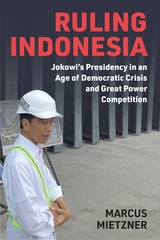
Ruling Indonesia
Jokowi's Presidency in an Age of Democratic Crisis and Great Power CompetitionMarcus Mietzner
University of Michigan Press, 2026
Joko Widodo—popularly called Jokowi—ruled Indonesia for a decade, from 2014 to 2024. The world’s fourth-largest nation and third-largest democracy, Indonesia had embarked on a messy democratic transition in the late 1990s, with the country’s ethnic and religious heterogeneity posing significant challenges to governance. Initially seen as a reformer who might challenge oligarchic structures, Jokowi was slowly but steadily seen as himself being a threat to democracy. By the time Jokowi wrapped up his presidency, he had achieved the highest approval ratings among Indonesia’s post-authoritarian presidents—and became the president with the tightest grip over Indonesia’s political elite.
Based on exclusive interviews with Jokowi and many of Indonesia’s top leaders, Ruling Indonesia shows Jokowi as a president obsessively preoccupied with his economic development agenda, subordinating all other aspects of governance to this goal. His focused approach delivered economic successes and unprecedented popularity, but also seriously undermined the health of Indonesia’s democratic institutions. Offering a holistic appraisal of his decade in office, Marcus Mietzner analyzes Jokowi’s domestic record in the context of his attempts to position Indonesia more favorably in the international competition for power and resources. Crucially, his obsession to push Indonesia closer to industrialized status while neglecting democratic development represented the ambitions and trials of many Global South leaders who are trying to juggle economic development, growing Sino-American tensions around the world, and concerns for democratic rights. As such, this book provides valuable insights into how the great power rivalry of the 21st century and the global recession of democracy are playing out in central arenas of the Global South.
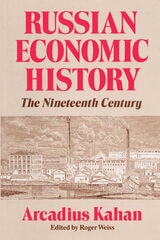
Russian Economic History
The Nineteenth CenturyArcadius Kahan
University of Chicago Press, 1989