Results by title
64 books match the query 'Ecuador' and 4 start with r
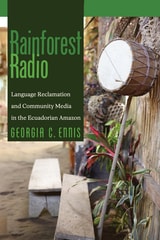
Rainforest Radio
Language Reclamation and Community Media in the Ecuadorian AmazonGeorgia C. Ennis
University of Arizona Press, 2025
Napo Kichwa communities in the Upper Ecuadorian Amazon find themselves doubly marginalized by settler colonialism and well-intentioned language revitalization projects.
In Rainforest Radio Georgia C. Ennis provides a comprehensive ethnographic exploration of Amazonian Kichwa community media, offering a unique look at how Indigenous broadcast and performance media facilitate linguistic and cultural reclamation in the Ecuadorian Amazon.
This work offers a critical analysis of how standardized language revitalization efforts, like the imposition of Unified Kichwa, can inadvertently perpetuate linguistic oppression. Ennis follows producers, performers, and consumers to understand the role of media in language reclamation. Through extensive fieldwork, she provides vivid portrayals of community efforts to sustain the language and cultural practices of their elders amid environmental and social upheaval.
Meticulously researched and beautifully written, Rainforest Radio is an essential work for anthropologists, linguists, and social scientists interested in language revitalization, Indigenous media, and environmental justice. This book showcases the transformative potential of community-driven media initiatives, highlighting the innovative responses of Napo Kichwa activists to the unique challenges they face. It serves as a powerful model for those working on similar issues worldwide, demonstrating the critical role of community media in language reclamation and cultural sustainability.
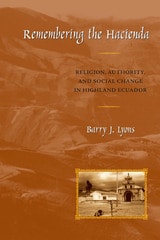
Remembering the Hacienda
Religion, Authority, and Social Change in Highland EcuadorBy Barry J. Lyons
University of Texas Press, 2006
From the colonial period through the mid-twentieth century, haciendas dominated the Latin American countryside. In the Ecuadorian Andes, Runa—Quichua-speaking indigenous people—worked on these large agrarian estates as virtual serfs. In Remembering the Hacienda: Religion, Authority, and Social Change in Highland Ecuador, Barry Lyons probes the workings of power on haciendas and explores the hacienda's contemporary legacy.
Lyons lived for three years in a Runa village and conducted in-depth interviews with elderly former hacienda laborers. He combines their wrenching accounts with archival evidence to paint an astonishing portrait of daily life on haciendas. Lyons also develops an innovative analysis of hacienda discipline and authority relations. Remembering the Hacienda explains the role of religion as well as the reshaping of Runa culture and identity under the impact of land reform and liberation theology.
This beautifully written book is a major contribution to the understanding of social control and domination. It will be valuable reading for a broad audience in anthropology, history, Latin American studies, and religious studies.
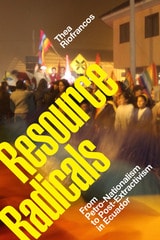
Resource Radicals
From Petro-Nationalism to Post-Extractivism in EcuadorThea Riofrancos
Duke University Press, 2020
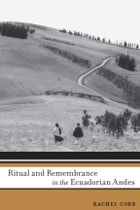
Ritual and Remembrance in the Ecuadorian Andes
Rachel Corr
University of Arizona Press, 2010
In this book Rachel Corr provides a knowledgeable account of the Salasacan religion and rituals and their respective histories. Based on eighteen years of fieldwork in Salasaca, as well as extensive research in Church archives—including never-before-published documents—Corr’s book illuminates how Salasacan culture adapted to Catholic traditions and recentered, reinterpreted, and even reshaped them to serve similarly motivated Salasacan practices, demonstrating the link between formal and folk Catholicism and pre-Columbian beliefs and practices. Corr also explores the intense connection between the local Salasacan rituals and the mountain landscapes around them, from peak to valley.
Ritual and Remembrance in the Ecuadorian Andes is, in its portrayal of Salasacan religious culture, both thorough and all-encompassing. Sections of the book cover everything from the performance of death rituals to stories about Amazonia as Salasacans interacted with outsiders—conquistadors and camera-toting tourists alike. Corr also investigates the role of shamanism in modern Salasacan culture, including shamanic powers and mountain spirits, and the use of reshaped, Andeanized Catholicism to sustain collective memory. Through its unique insider’s perspective of Salasacan spirituality, Ritual and Remembrance in the Ecuadorian Andes is a valuable anthropological work that honestly represents this people’s great ability to adapt.