Results by title
403 books match the query 'Environmental Science' and 19 start with r
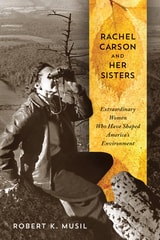
Rachel Carson and Her Sisters
Extraordinary Women Who Have Shaped America's EnvironmentRobert K. Musil
Rutgers University Press, 2015
On the fiftieth anniversary of her death, this book helps underscore Carson’s enduring environmental legacy and brings to life the achievements of women writers and advocates, such as Ellen Swallow Richards, Dr. Alice Hamilton, Terry Tempest Williams, Sandra Steingraber, Devra Davis, and Theo Colborn, all of whom overcame obstacles to build and lead the modern American environmental movement.
Re-envisioning the Anthropocene Ocean
Edited by Robin Kundis Craig and Jeffrey Mathes McCarthy
University of Utah Press, 2022
The world is at a critical moment, when humans must grapple with thinking about the planet’s oceans from ecological, physical, social, and legal perspectives. Warming ocean temperatures, changing currents, cultural displacement, Indigenous resilience, melting polar ice, habitat loss, are but a few of the global issues reflected in the planetary ocean as a front line in the unfolding drama of climate change. Re-envisioning the Anthropocene Ocean brings together leading scientists, lawyers, humanists, and Indigenous voices to tell of the ocean’s precarious position in the twenty-first century. The contributors affirm that the planetary ocean is crucial to our well-being and overdue for a positive change in public action to enhance the world’s resilience to climate change, ocean acidification, and other stressors. These essays engage that important work of positively re-imagining the ocean in the Anthropocene.
This volume brings diverse perspectives to the planet’s ocean future. New essays are contextualized with narratives woven by earlier ocean writers, showing readers how past perceptions of the ocean have led us to where we are today in terms of both problems and potential new visions. In this one volume, readers experience both the history of humanity’s multi- and interdisciplinary interactions with the ocean, find new perspectives on that history, and discover ideas for looking forward.
Reactivating Elements
Chemistry, Ecology, PracticeDimitris Papadopoulos, María Puig del la Bellacasa, and Natasha Myers, editors
Duke University Press, 2021
Contributors. Patrick Bresnihan, Tim Choy, Joseph Dumit, Cori Hayden, Stefan Helmreich, Joseph Masco, Michelle Murphy, Natasha Myers, Dimitris Papadopoulos, María Puig de la Bellacasa, Astrid Schrader, Isabelle Stengers
Recent Developments in Fisheries Economics
Special Issue of Land Economics 83:1 (February 2007)Ussif Rashid Sumaila
University of Wisconsin Press, 2007
Articles cover a wide variety of recent topical issues in fisheries economics and the latest developments in the field, including marine protected areas, individual transferable quotas, fisheries subsidies, habitat values, data fouling, and rotational management of sedentary fishery resources. Seven of the articles were presented at the 2005 North American Association of Fisheries Economics Forum at the University of British Columbia in Vancouver, Canada.
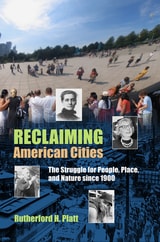
Reclaiming American Cities
The Struggle for People, Place, and Nature since 1900Rutherford H. Platt
University of Massachusetts Press, 2014
For most of the past century, urban America was dominated by top-down policies serving the white business and cultural elite, the suburbs, and the automobile. At times these approaches were fiercely challenged by reformers such as Jane Addams and Jane Jacobs. Yet by the 1980s, mainstream policies had resulted in a nation of ravaged central cities, sprawling suburbs, social and economic polarization, and incalculable environmental damage.
In the 1990s, this entrenched model finally yielded to change as local citizens, neighborhood groups, and other stakeholders, empowered by a spate of new laws and policies, began asserting their own needs and priorities. Though hampered by fiscal crises and internal disagreements, these popular initiatives launched what the author terms a new era of “humane urbanism” marked by a determination to make cities and suburbs greener, healthier, safer, more equitable, more efficient, and generally more people-friendly. In the process, the mayors, architects, engineers, and bureaucrats who had previously dominated urban policy found themselves relegated to supporting roles.
As Rutherford H. Platt points out, humane urbanism can take many forms, from affordable housing and networks of bike paths to refurbished waterfronts and urban farms. Often spontaneous, low-tech, and self-sustaining programs, their shared goal is to connect people to one another and to bring nature back into the city. Reclaiming American Cities examines both sides of this historic transformation: the long struggle against patricians and technocrats of earlier decades and the recent sprouting of grassroots efforts to make metropolitan America more humane and sustainable.
Recycling Land
Understanding the Legal Landscape of Brownfield DevelopmentElizabeth Glass Geltman
University of Michigan Press, 2000
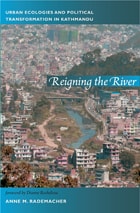
Reigning the River
Urban Ecologies and Political Transformation in KathmanduAnne M. Rademacher
Duke University Press, 2011
Rademacher conducted research during a volatile period in Nepal’s political history. As clashes between Maoist revolutionaries and the government intensified, the riverscape became a site of competing claims to a capital city that increasingly functioned as a last refuge from war-related violence. In this time of intense flux, efforts to ensure, create, or imagine ecological stability intersected with aspirations for political stability. Throughout her analysis, Rademacher emphasizes ecology as an important site of dislocation, entitlement, and cultural meaning.
Removing Mountains
Extracting Nature and Identity in the Appalachian CoalfieldsRebecca R. Scott
University of Minnesota Press, 2010
In this rich ethnography of life in Appalachia, Scott examines mountaintop removal in light of controversy and protests from environmental groups calling for its abolishment. But Removing Mountains takes the conversation in a new direction, telling the stories of the businesspeople, miners, and families who believe they depend on the industry to survive. Scott reveals these southern Appalachian coalfields as a meaningful landscape where everyday practices and representations help shape a community's relationship to the environment.
Removing Mountains demonstrates that the paradox that faces this community-forced to destroy their land to make a wage-raises important questions related not only to the environment but also to American national identity, place, and white working-class masculinity.
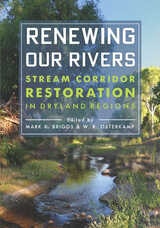
Renewing Our Rivers
Stream Corridor Restoration in Dryland RegionsEdited by Mark K. Briggs and W. R. Osterkamp
University of Arizona Press, 2020
Our rivers are in crisis and the need for river restoration has never been more urgent. Water security and biodiversity indices for all of the world’s major rivers have declined due to pollution, diversions, impoundments, fragmented flows, introduced and invasive species, and many other abuses.
Developing successful restoration responses are essential. Renewing Our Rivers addresses this need head on with examples of how to design and implement stream-corridor restoration projects. Based on the experiences of seasoned professionals, Renewing Our Rivers provides stream restoration practitioners the main steps to develop successful and viable stream restoration projects that last. Ecologists, geomorphologists, and hydrologists from dryland regions of Australia, Mexico, and the United States share case studies and key lessons learned for successful restoration and renewal of our most vital resource.
The aim of this guidebook is to offer essential restoration guidance that allows a start-to-finish overview of what it takes to bring back a damaged stream corridor. Chapters cover planning, such emerging themes as climate change and environmental flow, the nuances of implementing restoration tactics, and monitoring restoration results. Renewing Our Rivers provides community members, educators, students, natural resource practitioners, experts, and scientists broader perspectives on how to move the science of restoration to practical success.
Reparations and the Human
David L. Eng
Duke University Press, 2025
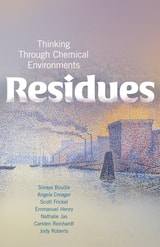
Residues
Thinking Through Chemical EnvironmentsSoraya Boudia
Rutgers University Press, 2022
Winner of the 2023 Merton Award from the Science, Knowledge, and Technology section of the American Sociological Association
Residues offers readers a new approach for conceptualizing the environmental impacts of chemicals production, consumption, disposal, and regulation. Environmental protection regimes tend to be highly segmented according to place, media, substance, and effect; academic scholarship often reflects this same segmented approach. Yet, in chemical substances we encounter phenomena that are at once voluminous and miniscule, singular and ubiquitous, regulated yet unruly. Inspired by recent studies of materiality and infrastructures, we introduce “residual materialism” as a framework for attending to the socio-material properties of chemicals and their world-making powers. Tracking residues through time, space, and understanding helps us see how the past has been built into our present chemical environments and future-oriented regulatory systems, why contaminants seem to always evade control, and why the Anthropocene is as inextricably harnessed to the synthesis of carbon into new molecules as it is driven by carbon’s combustion.
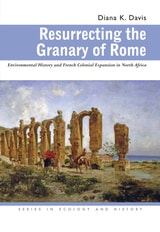
Resurrecting the Granary of Rome
Environmental History and French Colonial Expansion in North AfricaDiana K. Davis
Ohio University Press, 2007
Tales of deforestation and desertification in North Africa have been told from the Roman period to the present. Such stories of environmental decline in the Maghreb are still recounted by experts and are widely accepted without question today. International organizations such as the United Nations frequently invoke these inaccurate stories to justify environmental conservation and development projects in the arid and semiarid lands in North Africa and around the Mediterranean basin. Recent research in arid lands ecology and new paleoecological evidence, however, do not support many claims of deforestation, overgrazing, and desertification in this region.
Diana K. Davis’s pioneering analysis reveals the critical influence of French scientists and administrators who established much of the purported scientific basis of these stories during the colonial period in Algeria, Morocco, and Tunisia, illustrating the key role of environmental narratives in imperial expansion. The processes set in place by the use of this narrative not only systematically disadvantaged the majority of North Africans but also led to profound changes in the landscape, some of which produced the land degradation that continues to plague the Maghreb today.
Resurrecting the Granary of Rome exposes many of the political, economic, and ideological goals of the French colonial project in these arid lands and the resulting definition of desertification that continues to inform global environmental and development projects. The first book on the environmental history of the Maghreb, this volume reframes much conventional thinking about the North African environment. Davis’s book is essential reading for those interested in global environmental history.
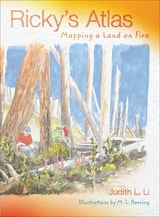
Ricky's Atlas
Mapping a Land on FireLi
Oregon State University Press, 2016
In this sequel to Ellie’s Log: Exploring the Forest Where the Great Tree Fell, Ricky Zamora brings his love of map-making and his boundless curiosity to the arid landscapes east of the Cascades Mountains. He arrives during a wild thunderstorm, and watches his family and their neighbors scramble to deal with a wildfire sparked by lightning. Joined by his friend Ellie, he sees how plants, animals, and people adjust to life with wildfires.
While hiking across a natural prairie, climbing up a fire tower, and studying historical photos and maps, Ricky and Ellie learn about the role of fire in shaping the landscape of the semi-arid plateau east of the mountains. They experience the scary days of wildfire in progress, explore a gritty site after a wildfire, and discover how some plants and animals depend on fire to survive.
Color pen-and-ink drawings accompany the text and vividly illustrate plants, animals, and events encountered in this exciting summer adventure. With his friend Ellie, Ricky creates a brightly colored diary of the fire, with maps, timelines, and sketches of what they see in this fire-prone land. Ricky’s notebook about his summer visit to his uncle’s ranch becomes an atlas of fire ecology, weather patterns, and life in the rain shadow.
Upper elementary kids will enjoy the mixture of amazing adventures with actual historical, physical, and ecological data about the region. Woven into the story are the small pleasures of ranch life, intriguing histories of Native Americans and early settlers, and almost unbelievable views of ancient fossils. Ricky and Ellie’s explorations, accompanied by their hand-written notes, introduce readers to a very special landscape and history east of the mountains.
Risk Communication and Miscommunication
Case Studies in Science, Technology, Engineering, Government, and Community OrganizationsCarolyn Boiarsky
University Press of Colorado, 2016
Drawing from research in rhetoric, linguistics, technical communication, educational psychology, and web design, Boiarsky provides a new way to look at risk communication. She shows how failing to consider the readers’ needs or the rhetorical context in which one writes can be catastrophic and how anticipating those needs can enhance effectiveness and prevent disaster. She examines the communications and miscommunications of original e-mails, memos, and presentations about various environmental disasters, including the Columbia space shuttle explosion and the BP/Deepwater Horizon oil rig explosion, and successes, such as the Enbridge pipeline expansion and the opening of the Mississippi Spillway, and offers recommendations for effective communication.
Taking into account the growing need to communicate complex and often controversial issues across vast geographic and cultural spaces with an ever-expanding array of electronic media, Risk Communication and Miscommunication provides strategies for clear communication of data, ideas, and procedures to varied audiences to prevent or minimize damage from environmental incidents.
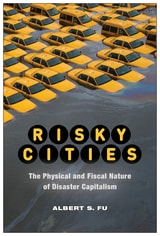
Risky Cities
The Physical and Fiscal Nature of Disaster CapitalismAlbert S. Fu
Rutgers University Press, 2022
Rock | Water | Life
Ecology and Humanities for a Decolonial South AfricaLesley Green
Duke University Press, 2020
Rocky Mountain Divide
Selling and Saving the WestBy John B. Wright
University of Texas Press, 1993
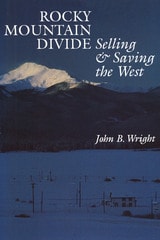
The opposing forces of conservation and development have shaped and will continue to shape the natural environment and scenic beauty of the American West. Perhaps nowhere are their opposite effects more visible than in the neighboring states of Colorado and Utah, so alike in their spectacular mountain environments, yet so different in their approaches to land conservation. This study explores why Colorado has over twenty-five land trusts, while Utah has only one.
John Wright traces the success of voluntary land conservation in Colorado to the state’s history as a region of secular commerce. As environmental consciousness has grown in Colorado, people there have embraced the businesslike approach of land trusts as simply a new, more responsible way of conducting the real estate business.
In Utah, by contrast, Wright finds that Mormon millennialism and the belief that growth equals success have created a public climate opposed to the formation of land trusts. As Wright puts it, "environmentalism seems to thrive in the Centennial state within the spiritual vacuum which is filled by Mormonism in Utah." These findings remind conservationists of the power of underlying cultural values that affect their efforts to preserve private lands.
Rubbish Belongs to the Poor
Hygienic Enclosure and the Waste CommonsPatrick O’Hare
Pluto Press, 2021

Rubbish Belongs to the Poor
Hygienic Enclosure and the Waste CommonsPatrick O’Hare
Pluto Press, 2021