Results by title
313 books match the query 'Environmental policy' and 21 start with r
Radiant Infrastructures
Media, Environment, and Cultures of UncertaintyRahul Mukherjee
Duke University Press, 2020

Rebellion and Reconnection for Sustainable Futures
A critical framework for practical politicsRobert Biel
University College London, 2026
A theoretical exploration of how human potential can be liberated by reevaluating our relationship with the environment and work.
We stand at a point of crisis for human society and life on Earth, with sustainability a constant theme in global discourse. Governments, industries, and individuals attempt to take constructive action, but their steps are everywhere countered by the habits and relationships built over three hundred years of capitalism, while right-wing populism and climate denial openly hold them back. Rebellion and Reconnection for Sustainable Futures proposes an urgent change of direction.
Grounded in the critical and theoretical tradition of political ecology, the book calls for a practical politics that rebels against the dominance of nature, resists fascist populism, and reconnects with human tradition. Robert Biel argues that two forms of “remembering” are needed: first, that we embrace humanity’s past connection with socio-ecological change through deep time, and second, that we assimilate still valuable socialist traditions such as dignity and creativity of work. From this basis, he proposes a novel synthesis between complex systems research, Indigenous approaches to human-environment relations, the “good Anthropocene,” and Marxist perspectives on nature. This unlocks a broad interrogation of the COVID experience by drawing on notions of biopolitics and queer theory, while also reframing theories of imperialism to critique the central role of racism. Written in an engaging style, the book builds a compelling case for a new practical and actionable politics based on reclaiming what we have lost.
Reckoning at Eagle Creek
The Secret Legacy of Coal in the HeartlandJeff Biggers
Southern Illinois University Press, 2010
Set in the ruins of his family’s strip-mined homestead in the Shawnee National Forest in southern Illinois, award-winning journalist and historian Jeff Biggers delivers a deeply personal portrait of the overlooked human and environmental costs of our nation’s dirty energy policy. Beginning with the policies of Thomas Jefferson and Andrew Jackson, chronicling the removal of Native Americans and the hidden story of legally sanctioned black slavery in the land of Lincoln, Reckoning at Eagle Creek vividly describes the mining wars for union recognition and workplace safety, and the devastating consequences of industrial strip-mining. At the heart of our national debate over climate change and the crucial transition toward clean energy, Biggers exposes the fallacy of “clean coal” and shatters the marketing myth that southern Illinois represents the “Saudi Arabia of coal.”
Reckoning at Eagle Creek is ultimately an exposé of “historicide,” one that traces coal’s harrowing legacy through the great American family saga of sacrifice and resiliency and the extraordinary process of recovering our nation’s memory.
Recovering the Commons
Democracy, Place, and Global JusticeHerbert Reid and Betsy Taylor
University of Illinois Press, 2010
This penetrating work culls key concepts from grassroots activism to hold critical social theory accountable to the needs, ideas, and organizational practices of the global justice movement. The resulting critique of neoliberalism hinges on place-based struggles of groups marginalized by globalization and represents a brave rethinking of politics, economy, culture, and professionalism.
Providing new practical and conceptual tools for responding to human and environmental crises in Appalachia and beyond, Recovering the Commons radically revises the framework of critical social thought regarding our stewardship of the civic and ecological commons. Herbert Reid and Betsy Taylor ally social theory, field sciences, and local knowledge in search of healthy connections among body, place, and commons that form a basis for solidarity as well as a vital infrastructure for a reliable, durable world. Drawing particularly on the work of philosophers Maurice Merleau-Ponty, John Dewey, and Hannah Arendt, the authors reconfigure social theory by ridding it of the aspects that reduce place and community to sets of interchangeable components. Instead, they reconcile complementary pairs such as mind/body and society/nature in the reclamation of public space.
With its analysis embedded in philosophical and material contexts, this penetrating work culls key concepts from grassroots activism to hold critical social theory accountable to the needs, ideas, and organizational practices of the global justice movement. The resulting critique of neoliberalism hinges on place-based struggles of groups marginalized by globalization and represents a brave rethinking of politics, economy, culture, and professionalism.
Refounding Environmental Ethics
Pragmatism, Principle, and PracticeBen Minteer
Temple University Press, 2011
Providing a bold and original rethinking of environmental ethics, Ben Minteer's Refounding Environmental Ethics will help ethicists and their allies resolve critical debates in environmental policy and conservation practice.
Minteer considers the implications of John Dewey's pragmatist philosophy for environmental ethics, politics, and practice. He provides a new and compelling intellectual foundation for the field—one that supports a more activist, collaborative and problem-solving philosophical enterprise.
Combining environmental ethics, democratic theory, philosophical pragmatism, and the environmental social sciences, Minteer makes the case for a more experimental, interdisciplinary, and democratic style of environmental ethics—one that stands as an alternative to the field's historically dominant “nature-centered” outlook.
Minteer also provides examples of his pragmatic approach in action, considering a wide range of application and issues, including invasive species, ecological research, biodiversity loss, protected area management, and conservation under global climate change.
Rejecting Climate Doomism
Diana Stuart
University of Michigan Press, 2026
Drawing from climate science, sociology, psychology, and philosophy, Rejecting Climate Doomism outlines the reasons to instead choose action grounded in active hope. It examines how global warming could be effectively limited through specific policy proposals. Despite the many obstacles to achieving some of the policies discussed in this book, they are still possible and worth pursuing. By outlining a positive vision of the far-reaching changes that can be used to minimize warming, the book encourages readers to advocate for the social and economic changes necessary to forge the best path for people and the planet.
Remaking the Urban Social Contract
Health, Energy, and the EnvironmentEdited by Michael A. Pagano
University of Illinois Press, 2016
Contributors: Alba Alexander, Megan Houston, Dennis R. Judd, Cynthia Klein-Banai, William C. Kling, Howard A. Learner, David A. McDonald, David C. Perry, Emily Stiehl, Anthony Townsend, Natalia Villamizar-Duarte, and Moira Zellner.

Reparation and World Remaking
Elise Klein, Erin Fitz-Henry, and Rachel Hughes
University of Michigan Press, 2027
Reparations are not only about money, legal remedy, or moral repair. They are about the radical reimagining and remaking of a world still deeply scarred by colonialism, slavery, and racial capitalism. Bringing together scholars, activists, and practitioners from across the Caribbean, Latin America, the United States, Australia, and beyond, Reparation and World Remaking asks what genuinely transformative reparations might look like—and shows that, in many places, they are already underway.
Drawing on theorizations from Indigenous, Black, feminist, First Nations, and critical antipodean traditions, the volume extends reparative thinking by attending to the contributions of scholars of decoloniality, post-development, abolition, feminism, community economies, and environmental and climate justice. Reparation and World Remaking illuminates the many ways world remaking reparations are already being envisioned and enacted, in communities and movements across the globe.
Residues
Thinking Through Chemical EnvironmentsSoraya Boudia
Rutgers University Press, 2022
Winner of the 2023 Merton Award from the Science, Knowledge, and Technology section of the American Sociological Association
Residues offers readers a new approach for conceptualizing the environmental impacts of chemicals production, consumption, disposal, and regulation. Environmental protection regimes tend to be highly segmented according to place, media, substance, and effect; academic scholarship often reflects this same segmented approach. Yet, in chemical substances we encounter phenomena that are at once voluminous and miniscule, singular and ubiquitous, regulated yet unruly. Inspired by recent studies of materiality and infrastructures, we introduce “residual materialism” as a framework for attending to the socio-material properties of chemicals and their world-making powers. Tracking residues through time, space, and understanding helps us see how the past has been built into our present chemical environments and future-oriented regulatory systems, why contaminants seem to always evade control, and why the Anthropocene is as inextricably harnessed to the synthesis of carbon into new molecules as it is driven by carbon’s combustion.
Resisting Extractivism
Peruvian Gold, Everyday Violence, and the Politics of AttentionMichael Wilson Becerril
Vanderbilt University Press, 2021
Peru is classified as one of the deadliest countries in the world for environmental defenders, where activists face many forms of violence. Through an ethnographic and systematic comparison of four gold-mining conflicts in Peru, Resisting Extractivism presents a vivid account of subtle and routine forms of violence, analyzing how meaning-making practices render certain types of damage and suffering noticeable while occluding others. The book thus builds a theory of violence from the ground up—how it is framed, how it impacts people’s lived experiences, and how it can be confronted. By excavating how the everyday interactions that underlie conflicts are discursively concealed and highlighted, this study assists in the prevention and transformation of violence over resource extraction in Latin America.
The book draws on a controlled, qualitative comparison of four case studies, extensive ethnographic research conducted over fourteen months of fieldwork, analysis of over nine hundred archives and documents, and unprecedented access to more than 250 semi-structured interviews with key actors across industry, the state, civil society, and the media. Michael Wilson Becerril identifies, traces, and compares these dynamics to explain how similar cases can lead to contrasting outcomes—insights that may be usefully applied in other contexts to save lives and build better futures.
Resource Radicals
From Petro-Nationalism to Post-Extractivism in EcuadorThea Riofrancos
Duke University Press, 2020
Revolutionary Parks
Conservation, Social Justice, and Mexico’s National Parks, 1910–1940Emily Wakild
University of Arizona Press, 2011
Revolutionary Parks tells the surprising story of how forty national parks were created in Mexico during the latter stages of the first social revolution of the twentieth century. By 1940 Mexico had more national parks than any other country. Together they protected more than two million acres of land in fourteen states. Even more remarkable, Lázaro Cárdenas, president of Mexico in the 1930s, began to promote concepts akin to sustainable development and ecotourism.
Conventional wisdom indicates that tropical and post-colonial countries, especially in the early twentieth century, have seldom had the ability or the ambition to protect nature on a national scale. It is also unusual for any country to make conservation a political priority in the middle of major reforms after a revolution. What emerges in Emily Wakild’s deft inquiry is the story of a nature protection program that takes into account the history, society, and culture of the times. Wakild employs case studies of four parks to show how the revolutionary momentum coalesced to create early environmentalism in Mexico.
According to Wakild, Mexico’s national parks were the outgrowth of revolutionary affinities for both rational science and social justice. Yet, rather than reserves set aside solely for ecology or politics, rural people continued to inhabit these landscapes and use them for a range of activities, from growing crops to producing charcoal. Sympathy for rural people tempered the radicalism of scientific conservationists. This fine balance between recognizing the morally valuable, if not always economically profitable, work of rural people and designing a revolutionary state that respected ecological limits proved to be a radical episode of government foresight.
Risky Cities
The Physical and Fiscal Nature of Disaster CapitalismAlbert S. Fu
Rutgers University Press, 2022
River Dialogues
Hindu Faith and the Political Ecology of Dams on the Sacred GangaGeorgina Drew
University of Arizona Press, 2017
India’s sacred Ganga River is arguably one of the most iconic sites for worship, with a continuity of rituals for the living and the dead that span over two millennia. Along the river, from high in the Himalaya to the vast plains below, people gather daily to worship the Ganga through prayer and song. But large government-sponsored dams threaten to upend these practices.
In River Dialogues, Georgina Drew offers a detailed ethnographic engagement with the social movements contesting hydroelectric development on the Ganga. The book examines the complexity of the cultural politics that, on the one hand, succeeded in influencing an unprecedented reversal of government plans for three contested hydroelectric projects, and how, on the other hand, this decision sparked ripples of discontent after being paired with the declaration of a conservation zone where the projects were situated.
The book follows the work of women who were initially involved in efforts to stop the disputed projects. After looking to their discourses and actions, Drew argues for the use of a political ecology analysis that incorporates the everyday practice and everyday religious connections that animated the cultural politics of development. Drew offers a nuanced understanding of the struggles that communities enact to assert their ways of knowing and caring for resources that serves as an example for others critically engaging with the growing global advocacy of the “green economy” model for environmental stewardship.
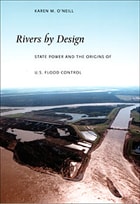
Rivers by Design
State Power and the Origins of U.S. Flood ControlKaren M. O Neill
Duke University Press, 2006
O’Neill focuses on the creation of flood control programs along the lower Mississippi River and the Sacramento River, the first two rivers to receive federal flood control aid. She describes how, in the early to mid-nineteenth century, planters, shippers, and merchants from both regions campaigned for federal assistance with flood control efforts. She explains how the federal government was slowly and reluctantly drawn into water management to the extent that, over time, nearly every river in the United States was reengineered. Her narrative culminates in the passage of the national Flood Control Act of 1936, which empowered the Army Corps of Engineers to build projects for all navigable rivers in conjunction with local authorities, effectively ending nationwide, comprehensive planning for the protection of water resources.
Rivers on Fire and Corporate Liars
The Monitoring and Sanctioning of U.S. Water Pollution CrimesJoshua Ozymy
Rutgers University Press, 2026
For over four decades, the US federal government has undertaken efforts to police and prosecute environmental crimes to protect public health and the natural environment. Yet, we still know very little about how US federal agencies have monitored and sanctioned water pollution violations and if these actions actually deter crime. In Rivers on Fire and Corporate Liars, Joshua Ozymy and Melissa Jarrell Ozymy examined over one thousand federal water pollution investigations and prosecutions undertaken by the US EPA and Department of Justice from 1983 to 2023 to answer these questions. Their analysis provides the most comprehensive empirical examination to date of how the criminal enforcement of water pollution has evolved over time, patterns in prosecutions, and how criminals were sanctioned.
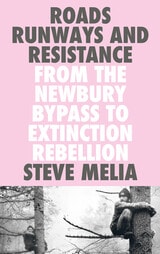
Roads, Runways and Resistance
From the Newbury Bypass to Extinction RebellionSteve Melia
Pluto Press, 2021
'As a movement for social change it is important that we understand our own history. This is a compelling read.'
From the anti-roads protests of the 1990s to HS2 and Extinction Rebellion, conflict and protest have shaped the politics of transport. In 1989, Margaret Thatcher's government announced 'the biggest road-building programme since the Romans.' This is the inside story of the thirty tumultuous years that have followed.
Roads, Runways and Resistance draws on over 50 interviews with government ministers, advisors and protestors - many of whom, including 'Swampy', speak here for the first time about the events they describe. It is a story of transport ministers undermined by their own Prime Ministers, protestors attacked or quietly supported by the police, and smartly-dressed protestors who found a way onto the roof of the Houses of Parliament.
Today, as a new wave of road building and airport expansion threatens to bust Britain's carbon budgets, climate change protestors find themselves on a collision course with the government. Melia asks, what difference did the protests of the past make? And what impacts might today's protest movements have on the transport of the future?
Rock | Water | Life
Ecology and Humanities for a Decolonial South AfricaLesley Green
Duke University Press, 2020
Rooted Resistance
Agrarian Myth in Modern AmericaNorie R. Singer
University of Arkansas Press, 2020
Through a careful examination of several case studies, Rooted Resistance traverses the ground of agrarian myth in modern America. The authors investigate key figures and movements in the history of modern agrarianism, including the World War I victory garden efforts, the postwar Country Life movement for the vindication of farmers’ rights, the Southern Agrarian critique of industrialism, and the practical and spiritual prophecy of organic farming put forth by J. I. Rodale. This critical history is then brought up to date with recent examples such as the contested South Central Farm in urban Los Angeles and the spectacular rise and fall of the Chipotle “Food with Integrity” branding campaign.
By examining a range of case studies, Singer, Grey, and Motter aim for a deeper critical understanding of the many applications of agrarian myth and reveal why it can help provide a pathway for positive systemic change in the food system.
Roots of Our Renewal
Ethnobotany and Cherokee Environmental GovernanceClint Carroll
University of Minnesota Press, 2015
Honorable Mention: Labriola Center American Indian National Book Award
In Roots of Our Renewal, Clint Carroll tells how Cherokee people have developed material, spiritual, and political ties with the lands they have inhabited since removal from their homelands in the southeastern United States. Although the forced relocation of the late 1830s had devastating consequences for Cherokee society, Carroll shows that the reconstituted Cherokee Nation west of the Mississippi eventually cultivated a special connection to the new land—a connection that is reflected in its management of natural resources.
Until now, scant attention has been paid to the interplay between tribal natural resource management programs and governance models. Carroll is particularly interested in indigenous environmental governance along the continuum of resource-based and relationship-based practices and relates how the Cherokee Nation, while protecting tribal lands, is also incorporating associations with the nonhuman world. Carroll describes how the work of an elders’ advisory group has been instrumental to this goal since its formation in 2008.
An enrolled citizen of the Cherokee Nation, Carroll draws from his ethnographic observations of Cherokee government–community partnerships during the past ten years. He argues that indigenous appropriations of modern state forms can articulate alternative ways of interacting with and “governing” the environment.
Running Dry
Essays on Energy, Water, and Environmental CrisisJones, Toby Craig
Rutgers University Press, 2015