Results by title
101 books match the query 'Environmentalism' and 7 start with r
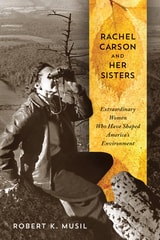
Rachel Carson and Her Sisters
Extraordinary Women Who Have Shaped America's EnvironmentRobert K. Musil
Rutgers University Press, 2015
On the fiftieth anniversary of her death, this book helps underscore Carson’s enduring environmental legacy and brings to life the achievements of women writers and advocates, such as Ellen Swallow Richards, Dr. Alice Hamilton, Terry Tempest Williams, Sandra Steingraber, Devra Davis, and Theo Colborn, all of whom overcame obstacles to build and lead the modern American environmental movement.
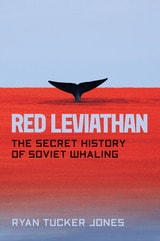
Red Leviathan
The Secret History of Soviet WhalingRyan Tucker Jones
University of Chicago Press, 2022
The Soviet Union killed over six hundred thousand whales in the twentieth century, many of them illegally and secretly. That catch helped bring many whale species to near extinction by the 1970s, and the impacts of this loss of life still ripple through today’s oceans. In this new account, based on formerly secret Soviet archives and interviews with ex-whalers, environmental historian Ryan Tucker Jones offers a complete history of the role the Soviet Union played in the whales’ destruction. As other countries—especially the United States, Great Britain, Japan, and Norway—expanded their pursuit of whales to all corners of the globe, Stalin determined that the Soviet Union needed to join the hunt. What followed was a spectacularly prodigious, and often wasteful, destruction of humpback, fin, sei, right, and sperm whales in the Antarctic and the North Pacific, done in knowing violation of the International Whaling Commission’s rules. Cold War intrigue encouraged this destruction, but, as Jones shows, there is a more complex history behind this tragic Soviet experiment. Jones compellingly describes the ultimate scientific irony: today’s cetacean studies benefited from Soviet whaling, as Russian scientists on whaling vessels made key breakthroughs in understanding whale natural history and behavior. And in a final twist, Red Leviathan reveals how the Soviet public began turning against their own country’s whaling industry, working in parallel with Western environmental organizations like Greenpeace to help end industrial whaling—not long before the world’s whales might have disappeared altogether.
Refounding Environmental Ethics
Pragmatism, Principle, and PracticeBen Minteer
Temple University Press, 2011
Providing a bold and original rethinking of environmental ethics, Ben Minteer's Refounding Environmental Ethics will help ethicists and their allies resolve critical debates in environmental policy and conservation practice.
Minteer considers the implications of John Dewey's pragmatist philosophy for environmental ethics, politics, and practice. He provides a new and compelling intellectual foundation for the field—one that supports a more activist, collaborative and problem-solving philosophical enterprise.
Combining environmental ethics, democratic theory, philosophical pragmatism, and the environmental social sciences, Minteer makes the case for a more experimental, interdisciplinary, and democratic style of environmental ethics—one that stands as an alternative to the field's historically dominant “nature-centered” outlook.
Minteer also provides examples of his pragmatic approach in action, considering a wide range of application and issues, including invasive species, ecological research, biodiversity loss, protected area management, and conservation under global climate change.
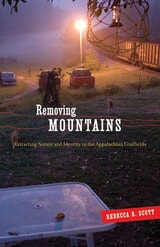
Removing Mountains
Extracting Nature and Identity in the Appalachian CoalfieldsRebecca R. Scott
University of Minnesota Press, 2010
In this rich ethnography of life in Appalachia, Scott examines mountaintop removal in light of controversy and protests from environmental groups calling for its abolishment. But Removing Mountains takes the conversation in a new direction, telling the stories of the businesspeople, miners, and families who believe they depend on the industry to survive. Scott reveals these southern Appalachian coalfields as a meaningful landscape where everyday practices and representations help shape a community's relationship to the environment.
Removing Mountains demonstrates that the paradox that faces this community-forced to destroy their land to make a wage-raises important questions related not only to the environment but also to American national identity, place, and white working-class masculinity.
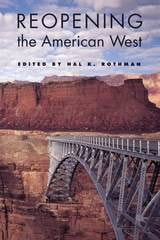
Reopening the American West
Edited by Hal K. Rothman
University of Arizona Press, 1998
In this book Mike Davis, Stephen Pyne, William deBuys, Donald Worster, Dan Flores, and others re-examine the relationship between people and the environment in the American West over five hundred years, from the legacy of Coronado's search for the Cities of Gold to the social costs of tourism and gaming inflicted by modern adventurers. By exploring places in the West, aspects of the region's past, and ways of understanding some of its pressing issues, the authors foster a better understanding of how people interact and perceive land.
Reopening the American West takes a fresh approach to the history of the region, examining the premises of earlier scholars as well as those who have redefined the study of the West over the past two decades. It combines provocative essays with insightful analyses to address issues that are representative of the West in the twentieth century—multiculturalism, water issues, resource exploitation—and to reopen the West for all readers interested in new ways of looking at its wide-open spaces.
Contents:
Places
Dreams of Earth, William deBuys
Environmentalism and Multiculturalism, Dan L. Flores
Pyre on the Mountain, Stephen J. Pyne
Las Vegas Versus Nature, Mike Davis
Pasts
The Legacy of John Wesley Powell, Donald Worster
Pokey’s Paradox: Tourism and Transformation on the Western Navajo Reservation, Hal K. Rothman
Negotiating National Identity: Western Tourism and "See American First," Marguerite Schaffer
Understanding
Place Humanists at the Headgates, Helen Ingram
Tapping the Rockies: Resource Exploitation and Conservation in the Intermountain West, Char Miller
The Meaning of Place: Reimagining Community in a Changing West, Robert Gottlieb
Resisting Extractivism
Peruvian Gold, Everyday Violence, and the Politics of AttentionMichael Wilson Becerril
Vanderbilt University Press, 2021
Peru is classified as one of the deadliest countries in the world for environmental defenders, where activists face many forms of violence. Through an ethnographic and systematic comparison of four gold-mining conflicts in Peru, Resisting Extractivism presents a vivid account of subtle and routine forms of violence, analyzing how meaning-making practices render certain types of damage and suffering noticeable while occluding others. The book thus builds a theory of violence from the ground up—how it is framed, how it impacts people’s lived experiences, and how it can be confronted. By excavating how the everyday interactions that underlie conflicts are discursively concealed and highlighted, this study assists in the prevention and transformation of violence over resource extraction in Latin America.
The book draws on a controlled, qualitative comparison of four case studies, extensive ethnographic research conducted over fourteen months of fieldwork, analysis of over nine hundred archives and documents, and unprecedented access to more than 250 semi-structured interviews with key actors across industry, the state, civil society, and the media. Michael Wilson Becerril identifies, traces, and compares these dynamics to explain how similar cases can lead to contrasting outcomes—insights that may be usefully applied in other contexts to save lives and build better futures.
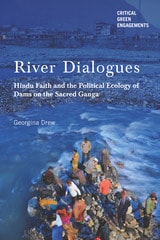
River Dialogues
Hindu Faith and the Political Ecology of Dams on the Sacred GangaGeorgina Drew
University of Arizona Press, 2017
India’s sacred Ganga River is arguably one of the most iconic sites for worship, with a continuity of rituals for the living and the dead that span over two millennia. Along the river, from high in the Himalaya to the vast plains below, people gather daily to worship the Ganga through prayer and song. But large government-sponsored dams threaten to upend these practices.
In River Dialogues, Georgina Drew offers a detailed ethnographic engagement with the social movements contesting hydroelectric development on the Ganga. The book examines the complexity of the cultural politics that, on the one hand, succeeded in influencing an unprecedented reversal of government plans for three contested hydroelectric projects, and how, on the other hand, this decision sparked ripples of discontent after being paired with the declaration of a conservation zone where the projects were situated.
The book follows the work of women who were initially involved in efforts to stop the disputed projects. After looking to their discourses and actions, Drew argues for the use of a political ecology analysis that incorporates the everyday practice and everyday religious connections that animated the cultural politics of development. Drew offers a nuanced understanding of the struggles that communities enact to assert their ways of knowing and caring for resources that serves as an example for others critically engaging with the growing global advocacy of the “green economy” model for environmental stewardship.